Screen Shot 2016-09-02 at 09.47.23

Screen Shot 2016-09-02 at 10.09.03

From top: The panel on last night’s Prime Time and Dr Aidan Regan, of UCD

Last night.

On RTÉ’s Prime Time.

The panel – Eoin Fahy, chief economist with KBI Global Investors, Minister for Housing Simon Coveney, Anti-Austerity Alliance TD Ruth Coppinger and Dr Aidan Regan, from the School of Politics and International Relations in UCD – discussed the Apple tax bill with presenter David McCullagh.

During the discussion…

Dr Aidan Regan: “This is the crucial point that really wasn’t picked up either, in the preceding interviews, the ruling that the Commission have issued basically states that Ireland should apply its tax laws, 12.5% consistently.

“It’s basically said that allowing Apple to set up a subsidiary, split it into two companies, allow them to transfer the sales profits to one of those companies, the head office, that is basically stateless, it’s in the cloud, ensures that they don’t pay tax – call it aggressive tax planning, call it corporate tax avoidance.”

“Now the point from the Commission’s perspective is that that’s perfectly legal and it has been legal. Now, the Government has since closed it. The argument of the Commission is that’s illegal state aid. So this is an argument about competition. The Commission is saying that Ireland has broke the laws of the European Union by facilitating a large multinational to have comparative advantage over its competitors in the market.

“So it’s not actually saying Ireland’s laws were wrong, it’s not about morality, it’s not about legality. They accept that was perfectly legal. They’re pointing out that it’s illegal to facilitate a company, like Apple.”

David McCullagh: “But that only applies if other companies didn’t get similar treatment and there doesn’t appear to be any evidence that if another company had come along and asked the same question that Apple asked, that they wouldn’t have got the same answer. In fact, it’s probably pretty obvious that they would have got the same answer.

Dr Regan: “Possibly and this, I think, is what we don’t fully know. The full ruling is confidential and I would be very curious to see precisely what it was about those two particular tax rulings in 1991 and 2007 that clearly signal to Apple that it was OK for them to avoid paying the 12.5% by transferring their profits to another company and effectively pay zero.”

Watch back in full here

Clodaghgarygannon

From top; Clodagh Hawe; Gary Gannon

A man can kill his partner and we care more about his ‘motives’ than her life.

Gary Gannon writes:

I was curating the @ireland account on Monday, when the story of the ‘tragic deaths’ in Cavan broke.

We heard in hushed tones how the police were ‘not looking for anyone else’ and how ‘the answers lay within the family home’, how five people had lost their lives unnecessarily like there had been some sort of unprecedented carbon monoxide incident.

In the aftermath of these ‘tragic deaths’, I learned that a man can literally get away with murder.

He can kill his partner and his children and we will still eulogise him. We will care more about his ‘motives’ than her life. We will even go so far as attribute some sort of nobility to his well-intentioned but unfortunately murderous actions.

You know what the worst thing is? Not just that the murder of a woman and her children becomes the footnote in a story about a man’s mental health, but that the woman is totally disappeared in all media discourse.

The Irish Times screamed ‘Wonderful children who will be greatly missed’. The Independent asked poignantly ‘How could he kill those boys?’

What about their mother?

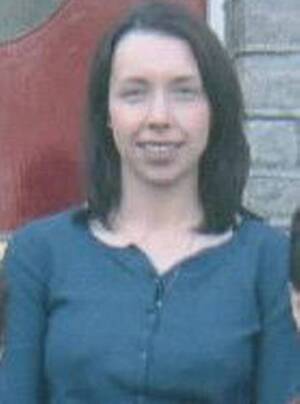
Her name was Clodagh. She was a teacher. She had a life, thoughts, opinions. She mattered.

On Tuesday morning, I tweeted the Women’s Aid statistic that never fails to shock; one in two women murdered in Ireland will die at the hands of a male partner.

Men murdering women is unfortunately not unusual; an average of one woman is murdered every month and in half of resolved cases, it was by an intimate partner, someone she is supposed to be able to trust the most. In the majority of cases, this occurs in her own home.

By Tuesday evening, I was engaged in full blown @ireland Twitter rant about the media’s failure to name the murder of a woman and children as murder.

The support received was tremendous, from hundreds of people who were also sitting at home, wondering why Clodagh Hawe’s photograph was only just released when her husband’s face had been smiling at us all day.

Wondering why we knew about his job, his hobbies and his normal, everyday life, than anything about Clodagh. Wondering why we were so intent on minimising the culpability of the man who murdered Clodagh, and her children.

There was also criticism. Why was I speculating? Didn’t I know this wasn’t the time? Why couldn’t I wait until I was sure of the facts?

To these people, I ask – is there any other crime in which we hold the perpetrator’s reasons to be more important than his actions? It is not speculation that he murdered his wife but let’s be clear, it is the absolute height of a culture of violent misogyny that we are not allowed to say this.

In Ireland, our silence kills us. It enables us to lock women behind Magdalene walls, to force them to different countries for essential healthcare, to minimise the violent tendencies of abusive men and to allow coercive, controlling perpetrators of domestic abuse up and down the country to sleep easy.

In refusing to name the murder of Clodagh and her three children as the violent actions of an abusive man, we enable ourselves to reach the logical conclusion that this man was A Good Man, one who simply snapped.

We act like their murders were inevitable, that even Clodagh couldn’t have seen it coming. We let him, and all men like him, off the hook.

The reality is, many women living in abusive relationships do ultimately fear that they will be killed. Many can’t leave, because the coercive control exerted by their partners is so absolute, or because they are so isolated by silence, and a lack of support structures, that they see no way out. Heartbreakingly, for women who do leave, it is the most dangerous time for them.

The lies about ‘The Good Man Who Snapped’ allow us to continue to underfund women’s shelters and front line violence against women services.

We enable the horrendously stupid argument about USC cuts to dominate the airwaves in the lead up to the 2017 Budget. How can we afford tax cuts when we apparently cannot properly fund support services to enable women to leave abusive relationships? (I’ll leave the argument about political choices for another day.)

We can make Ireland the safest country in the world for women and their children. We can do this by facing the fact that one in five women experience domestic violence, and that for many of these women, this violence ends in their death and in cases like Clodagh’s, the deaths of her children.

In response to the murders of Clodagh, Liam, Niall and Ryan, we can and must pledge to properly resource the full and immediate ratification and implementation of the Istanbul Convention, as Women’s Aid, Safe Ireland and the National Women’s Council of Ireland have been screaming for, for years.

The Istanbul Convention leaves no room for doubt ; it is the obligation of the state to fully address it in all its forms and to take measures to prevent violence against women, protect its victims and prosecute the perpetrators.

There can be no real equality between women and men if women experience gender-based violence on a large-scale and state agencies and institutions turn a blind eye.

Gary Gannon is a Social Democrats Councillor on Dublin City Counicil for Dublin’s North Inner City. His column appears here every Friday before lunch. Follow Gary on Twitter: @1garygannon


538419_10150831139218703_831426088_n

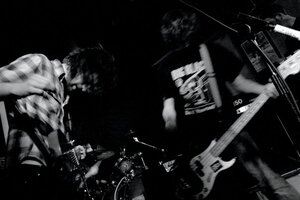
Hope is NoiseCork alt-rock veterans release fifth album

What you may need to know…

01. The last time we stopped in with Hope is Noise, the lads were getting ready for their fifth full-length.

02. The story of Hope is Noise is a remarkable one, of four lads that got together in secondary school, and after years of touring, labels, UK/US press, and the usual passage of life like relationships and families, are still together eighteen years later, being conferred godfather status in the Cork scene as a result. A documentary on same is currently in post-production.

03. Streaming above is the aforementioned full-length, entitled Demons. A concept piece, each tune deals with a different worry or recurring thought. Available for download now, and on CD from next week at gigs and in Leeside institution PLUGD Records.

04. The band launch the record on October 8th in the Pine Lodge, Myrtleville, Co. Cork on October 8th, with the usual bus/ticket package for city folk. Joining them will be the returning Ten Past Seven, hardcore brow-beaters Horse, and new band Onkalo. Closer to home, they’ll be playing City Hall as part of the Great Irish Beer Festival from the 22nd to the 24th.

Verdict: Over the years, the lads have alternated between polished alt-rock and feral post-hardcore broadsides, and Demons sees them reconcile these urges to immediate and impactful effect.

Hope is Noise

wildlife-photographer-of-the-year-2016-national-history-museum-10-57c824cc75d22__880

After a few decades, the Danube mayfly (Ephoron virgo) have returned to the river Danube, probably due to the increasing water quality. The fantastic mass swarming of these mayflies is one of the most exciting phenomenon for me. My image was taken in a dark, near-natural bank of Rába river (a tributary of the Danube) with long exposure, flash and flashlight. Unfortunately, the lamp-lit bridges have negative influence to them, because they are attracted to the lamps, become exhausted, lay their eggs to the asphalt roads of the bridge and perish immediately. The team of the Danube Research Institute in cooperation with the Environmental Optics Laboratory plan to solve this biooptical and environmental problem. This image is very precious to me as I can draw the attention to these spectacular water insects and their complex ecological light trap, which endanger their survival. Rába river, Hungary. Nikon D90, Sigma 17-70 mm, f/2.8-4.5 1.3 sec, f/14, ISO 800, 17 mm.

Exact location: Near the northern entrance to the 14ht borehole, Kgalagadi Transfrontier Park, South Africa Description – This image was near the northern entrance to the 14th borehole water hole, Kgalagadi Transfrontier Park, South Africa. We saw group of Southern Yellow Hornbill birds foraging on the ground as we drive pass the entrance to the waterhole. They were feeding on termites and it was interesting to see how the termite was thrown into the air and then the bird catches it again in order to swallow it. One of the birds came close my vehicle and it was catching termite after termite. Eventually this one bird ended up about 6 meters from my vehicle and I did some macro photography with my 600mm lens as the bird was tossing the termites in the air in order to swallow it. No baiting was used.

Some fishermen may use the whales to localize the herring shoals. Likewise, many whales have during the years learned the sounds from specific fishing boat when they retrieve their fishing gear, and thereby seek to the boats with the hope to get a “free meal”. This is seemingly a win-win-situations for both parties, but some whales also actively tries to steal the fish form the fishing gear, which can in some cases destroy both the fishing gear and the herring caches. This has led to a debate about the fishing quotas and the interactions between whales and fishing boats. These interactions have also lead to an increasing number of accident where the whales have been entangled in the fishing gear. I developed my own underwater housing to be able to take split pictures like this under very low light conditions. Ordinary underwater housings for split pictures will not work due to several optical challenges during low light conditions. (some dust/ flare due to salt crustal on the underwater housing glass is removed in the digital post-processing). Canon 5DIII, Canon 11-24 f4; 1/200 sec; f/6,3; ISO 640, self made underwater housing, Lee filter 1.2.

Finallists from this years Wildlife Photographer of The Year competition at London’s Natonal History Museum.

Above: An urban fox in Bristol by Sam Hobson; swarms of mayflies on Hungary’s River Rába by Imre Potyó; a hornbill flicking insects into the air by Willem Kruger and a large male killer whale feeding on herring in the Arctic Norwegian waters by Auden Rikardsen.

MORE: boredpanda

Broadsheet.ie