

Author Archives: Dan Boyle

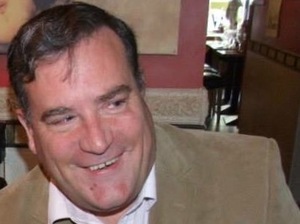
From top: Sinn Féin’s Barry McElduff; Dan Boyle

One of the extra curricular activities I most enjoyed, while in Leinster House, was being a member of the British Irish Parliamentary Assembly. This brought together elected representatives not only from the Houses of the Oireachtas and Parliament, but also from the Scottish Parliament, the Northern Irish and Welsh assemblies, as well as representatives from The Isle of Man and the Channel Islands.

For many who took part it was seen as something of a jolly. Getting away to some nice location where the vicissitudes of normal politics could be hidden. Those appointed seemed an often curious mix of those on their last political lap, blended with many who would never likely achieve ministerial position. My sore thumb status was amplified by being the only Green from any of the parliamentary bodies.

I thought, and still think, that it has greater potential than it has shown. I took it seriously enough to involve myself in one of its sub-committees, which sought to compare and contrast the approach taken to social disadvantage in the various jurisdictions.

The sub-committee was chaired by an extraordinary man, Alf Dubs. Now Lord Dubs, he had been a junior minister at the Northern Ireland office, working with Mo Mowlam. He had a far better understanding of the situation there than most of those who were members of the assembly.

His personal story was even more incredible. An orphaned refugee at the end of the Second World War, he has in recent years, used his experience to embarrass the Tory government to address the fate of similar children now found in the Calais refugee camp. It was a privilege to have worked to have worked with a person of such calibre and dignity.

Barry McElduff, as an MLA, was also a member of the Assembly. I write that not to contrast Barry with Alf, only to illustrate the range of people who were involved. I found Barry to be friendly, jovial, if not particularly deep.

As with many Sinn Féin representatives he seemed wedded to an ideological version of history. To these there was to be no veering from the belief that a just war was waged in Northern Ireland over that horrible 30 year period.

To the many, so many, innocent victims of that violence, there hasn’t been a tinge of regret. Various mantras get repeated ‘Terrible things happen in wars’ or ‘We need to look forward not back’. When these trite cliches fail to convince, argument falls back into a seemingly endless well of whataboutery.

Black humour sustained many individuals and communities through those awful times. No amount humour can repackage those events into a guilt-free future.

This will be Mary Lou McDonald’s biggest obstacle. Sinn Féin’s glass ceiling will be double, if not triple, glazed. Until the party can present a worst critique of itself than its opponents do, it will always find itself carrying that wee bit more additional political baggage.

Dan Boyle is a former Green Party TD and Senator. His column appears here every Thursday. Follow Dan on Twitter: @sendboyle

Meanwhile…

Dan Boyle’s ‘Making Up The Numbers – Smaller Parties and Independents in Irish Politics‘ published by the History Press is available at all good bookstores now.
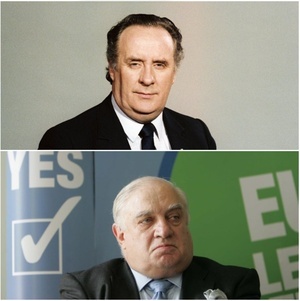
From top: Paddy Harte and Peter Sutherland; Dan Boyle

This week has seen the passing of two Fine Gael luminaries, Peter Sutherland and Paddy Harte. Much like Marc Antony’s speech in Shakespeare’s ‘Julius Caesar’ I write to praise them, because I feel they are deserving of respect for doing what they did, in the way in which they so did.

There are many, many things on which I would never be in agreement with Fine Gael about. The party’s general approach to economic and social issues brings about, to me, a more unequal society. It pays little more than lip service to environmental issues. Its attitude to policing and general justice issues ranges from the aggressive to the possessive.

The party, for some reason best known to itself, believes itself to be morally superior to Fianna Fáil. It isn’t.

These caveats I add in anticipation of those who are about to disagree with me, that to like someone, respect them or to acknowledge some of their achievements, is somehow to bend towards their political worldview.

It is a shared characteristic of both the Rabid Right and Rigid Left that any deviation from the standard orthodoxy must see the heretics challenged.

For my part I have no difficulty in saying that Peter Sutherland performed well as a European Commissioner. The Erasmus programme is a singular achievement. As a Attorney General he was right to state that inserting the Eight Amendment into The Constitution, would ultimately turn out to be self defeating.

Would I be a fan of his work at GATT/WTO? No I would not. The emphasis in these agreements sees the sustainable welfare of people, if at all, then as very much a distant afterthought. However, I do believe that his subsequent work on immigrants rights was formed on his belief for a more inter related, more inclusive World.

Was I impressed by his chairmanship of Goldman Sachs, or his board membership of several banking organisations? Again not really. He was a creature of his circumstance. I don’t believe there is any inconsistency in not liking what someone does, whilst admiring the ability they have in doing what they do.

Paddy Harte was a gruff conservative. He had left front line politics before I had entered it. I doubt there would many subjects of public policy on which we would have found ourselves in agreement.

He was implacably opposed to the murderous campaign of the IRA. As a TD for a border constituency that was a difficult opinion to hold. Nevertheless he succeeded in being elected time and time again, even if he never really troubled the higher echelons of national politics (he briefly was a junior minister in the early 1980s).

What I most admired him for was the work he did with Glenn Barr (once of the Ulster Defence Association) in bringing proper recognition to all the Irishmen who fought in the First World War.

History tells us that WW1 was a fruitless, unnecessary carnage brought about by the dying embers of empires. For many who participated they truly believed they were fighting for the rights of small nations, especially the right to become one.

Paddy Harte should be given enormous credit in helping bring the memory of these men back from the historical cold. As does Glenn Barr, whose own death in October 2017 seems to have gone largely gone unacknowledged.

I intend to continue my eccentric and eclectic approach to politics. I will still admire the skills, abilities and achievements of those with whom I vehemently disagree. Damn me.

Dan Boyle is a former Green Party TD and Senator. His column appears here every Thursday. Follow Dan on Twitter: @sendboyle

Pics: RTÉ/Rollingnews

Meanwhile…

Dan Boyle’s ‘Making Up The Numbers – Smaller Parties and Independents in Irish Politics‘ published by the History Press is available at all good bookstores now.

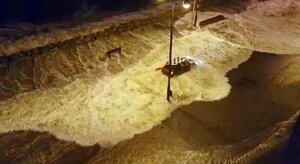
From top: A Mini car driving through flood water in Salthill, Galway, as Storm Eleanor hit Ireland on January 2; Dan Boyle

Two days into the new year brings with them two storms. There is no novelty in recognising that the only predictable thing about the Irish weather is its very unpredictability.

Now is not the time for smugness. Sadness and justified anger should be the predominant emotions. Climate Change has been researched, recorded and its effects have been anticipated for more than forty years.

We can’t say we haven’t been warned. The antipathy of a vocal, ignorant and sadly far too powerful minority, hasn’t helped. When I see how Conor Skehan, retiring chair of the Housing Agency, views the issue he was supposed to working towards solving, then it isn’t surprising to realise that he is also a climate change sceptic.

We sadly still live in a world, where to oppose change, or to seek to maintain unfairness or injustice, is a better passport to seek position, and thus the ability to hinder progress, in what we dare call the ‘developed’ World.

If it hasn’t been outright opposition, it has been the push it down the road attitude, that has most permeated official responses to threats to the natural environment, and to the planet itself.

I have myself leaning, against my better instincts, more and more towards direct confrontation against those troglodytes, through whose antipathy or indifference, have helped bring us to where we are.

I am not going to listen to statements like “we’re too small a country to make a difference” anymore. Our carbon emissions per head of population is one of the highest in the World, and they are going in the wrong direction.

Nor do I want to hear that there are more important priorities. Every important economic and social priority can be and should be linked to how we deal with climate change.

We should be building new houses designed to prevent future fuel poverty. We should be creating energy through maximising our renewable resources, also enhancing community benefit, wherever possible through community ownership. We should be properly subventing our public transport systems to help prevent the number of single person vehicle traffic.

Each one of these policies initiatives would result in win win scenarios that would work towards meeting our climate change commitments, and improve the state of our economy. If done as part of a holistic suite of policy measures, we may even see better health outcomes.

It isn’t accidental that it is among right wingers where climate change denial is most prevalent. Conservatives want to maintain the status quo. They are most protective of the vested interests in whose interest the status quo is being maintained.They fear, rightly, the redistributive aspect of climate change policies.

The sharing of proportionate responsibility between ‘developed’ and ‘developing’ nations, would see ‘developing’ World countries increase their capacity and thus improve global trade.

Within developed and developing nations redistribution of environmental responsibility must be used as a trigger to achieve better equality in society.

For those whose instant response will be why the Greens didn’t achieve this in three and a half years in government, consumed with dealing with an economic collapse, I can only say:

You might say I’m a dreamer, but I’m not the only one. I hope someday you’ll join us. If not, we might become a bit more than mildly agitated.

Dan Boyle is a former Green Party TD and Senator. His column appears here every Thursday. Follow Dan on Twitter: @sendboyle

Pic: Galway Latin Quarter

Meanwhile…

Dan Boyle’s new book ‘Making Up The Numbers – Smaller Parties and Independents in Irish Politics‘ published by the History Press is available at all good bookstores now.

From top, left to right: Taoiseach Leo Varadakar, Minister for Business, Enterprise and Innovation Heather Humphreys, Minister for Culture, Heritage and the Gaeltacht. Josepha Madigan and new Tanaiste and Minister for Foreign Affairs Simon Coveney at Government Buildings inin November; Dan Boyle
.

It says a lot for most people’s expectation for 2017, that the minimal hope was that it wouldn’t be an extension of 2016.

That was a year that will be seen as a ground zero for democracy, beaten by its biggest contradiction that the best decisions get made by the largest number of those who choose to participate on a given day.

Before I release a chorus of ‘you lost get over it’, I have to admit I still am unaware of any better system. Neither should it be seen that disgust at the triumph of reactionaries be is wholehearted, unquestioning support of any alternative. I’ve been on the losing sides of too many such decisions to believe that it is the system that is at fault.

Where it has fallen down in recent years, has been the strength that self interest has held over any sense of the common good. It has also been a time when so many chose not to inform themselves, relying on instinct in making their decisions. Ignorance has become the preserve of the alt realists.

2017 has seen something of a fight back by the alt. ignorant. Wilders in The Netherlands and Le Pen accumulated large amounts of votes, but nothing like the totals that had been feared.

Although by the end of the year we have the Freedom party in government in Austria, with the AfD (Alternative for Germany) winning one in every seven votes in the German general election.

In that election the immigration scare was played to its highest. The psephological graphs produced on that election showed, that just as with Brexit and Trump, those with least interaction with immigrants, were most likely to have that as the basis for making their votes.

In our neighbouring isle Brexit Britain has become a year long pantomime. Its surreal nature being enhanced by the Democratic Unionist Party who now seem to be providing the intellectual ballast for its future basis.

As a lily livered liberal, long committed to the idea that the notion of Irish unity cannot occur but through the winning the hearts and minds of the Unionist community in the North of Ireland, I find the notion of continuing to placate the DUP component of that community to be completely unrealistic and more than a little infuriating.

There is nothing whatsoever wrong with aspiring to the idea of an United Irish state being realised within my lifetime (I am ten years older than Simon Coveney!). It will never be done through coercion nor should it be ever be apologised for.

On the other side of the pond The Donald gave full vent to his anarcho-capitalist routine. The hope is that his incapacity to act in any way honestly or honourably, will eventually catch up with him. However he may yet survive his entire term, during which he will be able to cause untold havoc.

This year saw the transfer of power within Fine Gael and by extension within Government Buildings. Enda had been a somewhat lucky general. Despite an almost Trump like attachment to the truth, and a lack of willingness to initiate anything, he was there when things happened.

His successor, Leo Varadkar, would prefer if very little happens. He’s unlikely to be fooled by distracting opinion poll ratings. He should have learned the lesson of Theresa May’s bolt to the nation in the UK.

An Irish general election still seems likely sometime next year, as it seems unlikely that Fianna Fáil would want Fine Gael to go to the country on foot of what will be presented as a giveaway budget. When that election gets called it will be more about housing and healthcare than any curiosity with the novel.

Before that we will have again our national obsession over abortion. At this remove it looks like the 1983 insertion into the Constitution may finally have overstayed its questionable welcome. The campaign will, sadly, open many wounds. It may be ugly. One more bout of ugly might have to be endured, if we are ever have sanity on this issue.

At the very least in 2018 we should try to move further from the hate filled societies created by events in 2016. The movement will be slow and small, but should be in the right direction.

Dan Boyle is a former Green Party TD and Senator. His column appears here every Thursday. Follow Dan on Twitter: @sendboyle

Meanwhile…

Dan Boyle’s new book ‘Making Up The Numbers – Smaller Parties and Independents in Irish Politics‘ published by the History Press is available at all good bookstores now.
From top: Christmas shopping in Grafton Street, Dublin 2; Dan Boyle

Throughout my adult life I’ve moved house no more than half a dozen times. I’ve never enjoyed the experience. Outside of the effort involved there is something almost soul destroying in seeing your life reduced to a number of boxes. An occasional smile is given on finding a photo, a newspaper clipping or a well thumbed much read book, but mostly the content of the boxes often ask more questions than they answer.

The most obvious question is why? Why have I acquired so much along the way, so much that doesn’t seem to have any ongoing value? As I get older the longest and slowest lesson I’ve had to learn is that doing things is worth far more than owning things.

It’s a well worn and excessively used cliché that money doesn’t buy happiness. It sadly remains a philosophy that still informs how economies are structured and how they are seen as being successful.

At this supposed time of human achievement it seems we have been reduced to ‘we are what we buy’. A strong economy cannot exist, we are told, unless we consume and continue to consume. We are mere economic actors whose job it is to push economic activity further and higher.

All this results of in is clutter. We are the box fillers of the future. For as long as economic success is determined as how much we buy, then ultimately what satisfies us will be subject to diminishing returns.

In today’s global economy that only thing we can be certain that money buys us is other money, in other words debt. This is the ultimate paradox of modern life. We buy so much that we don’t need on the basis of wealth that we don’t properly define, wealth that in reality is borrowed from the future. Or as told to me over the years by several romantic co-conspirators of mine  – we can’t continue to go on like this. Like those conversations the reassuring statement that ‘it isn’t you’ sugarcoats the deceit. Except that it usually is us.

Minimal changes in our lifestyles could bring about a considerable impact without major changes in our collective quality of life. That’s the positive distillation of the Green message.

Some would argue that there is no real choice. To continue consuming as we are, means consuming resources that are becoming all too scarce on this all too finite planet we share. Soon we may no longer have the luxury of continuing to buy luxuries.

More are realising that the future, the short term future is a very uncertain thing. The Green movement has gathered to preach, preach the operable word, this message to a sparse number of believers. There is a danger has been that such a doom laden approach has also alienated many. I would like to think that a Green future can be, should be, must be a happy future.

Apocalyptic narratives don’t persuade. They push heads even further into the sand. There is a comfort in doing things as they’ve always been done. Persuading people to do otherwise in such circumstances is, and always be difficult. But in making do with less of much of what we never needed, we begin to do more with what can be shared between us, and then begin to own less.

Dan Boyle is a former Green Party TD and Senator. His column appears here every Thursday. Follow Dan on Twitter: @sendboyle

Meanwhile…

Dan Boyle’s new book ‘Making Up The Numbers – Smaller Parties and Independents in Irish Politics‘ published by the History Press is available at all good bookstores now.
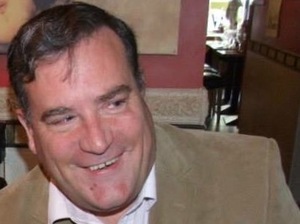
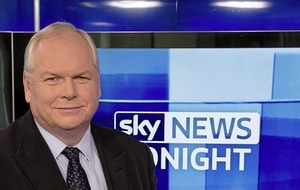
From top: Sky News’ Adam Boulton: Dan Boyle

Let’s admit that this is hard for them. The reflected glow of Empire no longer sustains them in their dotage. The strain of being considered just another country has really become too much for them to bear.

The realisation other nations have interests that may equal or supercede theirs, is a thought that they never before have had to countenance.

Within the British political class this level of ignorance is more easy to understand. Politicians, after all, are generalists. They can’t be expected to know everything.

It is the ignorance of many within the British media that truly astounds. A media that it meant to be informed so it can inform, seems particularly easy to manipulate.

No one British ‘journalist’ seems to exemplify this more than Sky News presenter, Adam Boulton. Already compromised though working with Rupert Murdoch’s UK version of Fox News, Boulton’s puffed out vanity has led him to believe that his access to the British establishment makes him an integral part of that establishment, entitled to speak on its behalf.

The wedding for his second marriage to Anji Hunter, then Head of the Policy Unit at 10 Downing Street, was attended by her then boss the British Prime Minister, Tony Blair.

But romantic New Labour is dead and gone. It’s with Dr. David Kelly in his grave. It’s the Tory line that Boulton now has to spout. And spout he has, particularly during his recent interview with Simon Coveney.

I like Simon. I get on well with Simon. That’s despite the fact there are many, many things on which we politically disagree. However, to give him his due, he was spot on in identifying Boulton’s questions to him as nothing other than British/Brexit spin.

Boulton could have phrased his question as the British Government believe that you… Instead he parroted the British Government line as if it were absolute truth. It was shoddy, shoddy journalism.

Wading into the twitter storm that followed, his use of the Ivory Coast flag instead of the Irish, and claiming the dismissive phrase ‘You Irish’ was the type of ‘You Guys’ banter no one should take offence at, is typical of an English arrogance we used to describe as being phlegmatic.

And yet…

Maybe this is the best opportunity we have ever had to rid ourselves of this national inferiority complex. The people we have been feeling inferior towards are idiots. At this point of our history we have a glorious chance to crush forever the pre-internet meme the ‘Paddy the Irishman’ joke.

Say it loud. Say it proud. Boris the Brexiteer walks into a bar…

But let’s not be so cruel as Punch magazine was for many, many decades in caricaturing the Irish as apes. Apes are more evolved than Brexiteers.

Dan Boyle is a former Green Party TD and Senator. His column appears here every Thursday. Follow Dan on Twitter: @sendboyle

Meanwhile…

Looking for a political stocking filler?

Dan Boyle’s new book ‘Making Up The Numbers – Smaller Parties and Independents in Irish Politics‘ published by the History Press is available at all good bookstores now.

Meanwhile…

Ah here.

Is RTE Lol-ing At Its Own Since opening our doors in 2003, has delivered thousands of web and digital experiences, across a multitude of website design new delhi platforms alarge enough to offer you the knowledge and expertise we’ve gained servicing the Corporate and website design australia Government sectors, yet small enough to care. .

From top: A box fresh copy of Making Up The Numbers by Dan Boyle ; Dan Boyle

Having made myself the unofficial historian for the Green Party in Ireland, I produced two books – ‘A Journey To Change’ an account of the party’s first twenty five years in existence; and ‘Without Power or Glory’ a personalised account of party’s period in government (2007/11).

When I undertook a Masters degree in Government (2013/14), I thought it might be interesting that my thesis should be to compare and contrast the experiences of the six smaller parties, that have been part of governments in Ireland. In the back of my mind I thought it might form the basis of a future book.

The thesis being twenty thousand words in length was far too short to be made into a book. I also began to think that focus of such a book, concentrating on only the six parties concerned, may have been too narrowly focussed. There was a wider story to be told about smaller parties and independents in Irish politics, and I wanted to tell it.

A number of books have been written on some of the smaller, now largely disappeared, parties. Books have also written been about individual independents and about the concept of independents. I wanted to write a comprehensive account of others in Irish politics. It may not be fully comprehensive but I am hoping that the gaps that are identified may become easier to fill in.

I believe it is a story worth telling. On average around 15% of the vote has been won by others. Over five hundred and fifty Dáil seats have been won by others, more than the number won by the Labour Party. These seats have often been vital in determining whether governments could be formed, or if a sitting government could continue in existence.

Those with large p​ersonalities and their willingness to be different are traits that are found more often among smaller parties and independents. There are many interesting personal stories among those others who have been elected in Ireland, some of those stories quite tragic. There can be no denying that others have brought large amounts of colour into a political system that has otherwise been quite moribund.

Others have been the source of much of the change that has occurred in Irish politics, even when the achievement of change has been a factor in hastening the end of many smaller parties.

Probably the biggest achievement of others in Irish politics has been to slowly move our politics from a politics of tribes to a politics of more coherent political beliefs, born from philosophies that bend less to the breeze of perceived public opinion. That change may not yet be complete, although we have moved considerably in that direction.

The vote for others may oscillate in future elections. It is likely though that it will remain a significant vote, and thus will continue to be necessary when new governments are being formed.

Our borrowed Westminster system of government now operates with a European style political diversity that helps underline the uniqueness of Irish politics. So much for the better.

Dan Boyle is a former Green Party TD and Senator. His column appears here every Thursday. Follow Dan on Twitter: @sendboyle

Making Up The Numbers – Smaller Parties and Independents in Irish Politics‘ published by the History Press is available at all good bookstores now.

We have three copies of Making Up The Numbers to give away

To enter the give away, simply answer this question:

How many political parties with the word ‘Clann’ have had Oireachtas representation?

Lines MUST close at 1pm

Making Up The Numbers – Smaller Parties and Independents in Irish Politics

From top: Frances Fitzgerald with Minister for Finance Paschal Donohoe and Fine Geal South Dublin County Councillor Vicki Casserly at the Fine Gael Election Convention for Dublin Mid West last Monday; Dan Boyle

An alternative interpretation of The Wizard of Oz questions whether the witch Glinda, was a ‘good’ witch, but was instead a more Machiavellian figure, who used the character Dorothy as a weapon in which to depose her rivals – the ‘Wicked’ Witch of the West and the Wizard of Oz himself.

I’m not saying the Frances Fitzgerald is any way a witch. During the time that we worked together in the Seanad, I found her to be quite a pleasant woman. She was in the midst of a political comeback then. She had lost her Dáil seat in Dublin South East (also the constituency of John Gormley of the Greens). I admired her capacity to fight back and seek to secure a presence in the Dáil once again.

That opportunity came in the 2011 general election when she became elected in Dublin Mid-West, whilst living in Dublin West. Enda Kenny looked kindly upon her and she became Minister for Children, a newly created Department, with a brief to bring about a children’s rights referendum to insert a new wording into the Constitution.

This was a ball that very nearly was dropped. The turnout for the referendum revealed an electorate that was less than enthused. Its validity was challenged (and rightly so) when Fitzgerald, as minister, blatantly set aside the McKenna judgement in spending public money in order to try to bring about the government’s desired result.

She was more fortunate, but also more deserving of praise, in her later handling of the same sex marriage referendum.

After the first fallout from the revelations surrounding the appalling treatment of Maurice McCabe, which brought about the departures of then Garda Commissioner, then Secretary General of the Department of Justice, and the Minister for Justice himself, Alan Shatter; Frances Fitzgerald found herself as the big political winner.

While she was lucky in her advancement, she was also given a clear agenda of what changes needed to be made within the Department of Justice. Forearmed with this knowledge she showed herself unable, but more likely, unwilling to make any changes.

By the end of her tenure at the Department of Justice she had gone quite native, not challenging the Garda Commissioner (who she had appointed) or any of her senior officials in the department.

Her failure in any way to challenge has made her a passive participant in the appalling behaviour that has continued to be exerted upon Maurice McCabe.

With the end of the Enda era, Fitzgerald’s political luck seemed to continue. Destined to be brushed aside by Leo’s new broom, Fitzgerald found herself not only still in the cabinet and free of the straitjacket of Justice, but also clinging to the prestige title of Tánáiste.

However luck carries anyone only so far. Silo thinking produces closed minds. Seeking to avoid appalling vistas tends to create even worse scenarios.

With her passivity and failure to inform or consult, Frances Fitzgerald deserved to be dismissed. Those who should have done so, in failing to do so, have shown up their own inadequacies.

The eventual falling on the sword may have postponed for now a still inevitable election, but that only means that the twitch is dead. Sadly it will return.

Dan Boyle is a former Green Party TD and Senator. His column appears here every Thursday. Follow Dan on Twitter: @sendboyle

Rollingnews

Meanwhile…

Looking for a political stocking filler?

Dan Boyle’s new book ‘Making Up The Numbers – Smaller Parties and Independents in Irish Politics‘ published by the History Press is available at all good bookstores now.
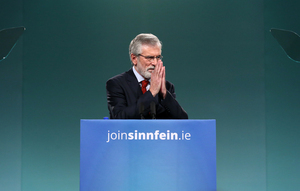
From top: Gerry Adams during his Presidential Address at the Sinn Féin Ard Fheis last weekend; Dan Boyle

A Brave New World awaits Sinn Féin Mark Six, the political party which came out of the Hunger Strikes of 1981, inheriting the Sinn Féin franchise as the minority of the minority of the minority of those who had previously laid claim to that title.

Its Moses like leader, the benighted Gerry Adams, having almost led his people to the Promised Land (and having done so five years more quickly than his biblical predecessor), is about to step aside and allow someone else lead his people into Israel (sorry Stormont, sorry government in Dublin).

Making fun of the Dear Leader will probably reawaken the trolls in their hundreds. Let me seek to correct myself. Gerry Adams has been one of the most significant figures of modern Irish politics. He deserves respect and admiration for the way he has led his movement from a fruitless, violent path, towards democratic respectability.

His party is now firmly ensconced as the third force in Ireland. Its mathematical strength may yet bring about a historic realignment in Irish politics.

And yet. The achievement has not been solely his. The Peace Process could never have happened, if it weren’t for John Hume. Without him the initiative would not have gotten off the ground. His reward, in a life now lived in shadows, has been to be minimised and marginalised, especially by the Republican movement.

The role played by Martin McGuinness was equally as important in helping to put, and keep Gerry Adams where he was.

The initiation of the Peace Process with Hume, and the directing and managing of the Republican movement with McGuinness, have been Gerry Adams’ greatest achievements. Achievements for which he should be continually acknowledged.

It is his subsequent role as a political leader that deserves a critique. After the Good Friday Agreement the political growth of Sinn Féin was slow and patchy.

At the 2007 general election the party actually lost a seat. It took the arrival of the International Monetary Fund to the country,and the subsequent election of Pearse Doherty in the Donegal South West by election, for the party to begin its upward trend in support.

Much new support was easily gained through a slavish addiction to the politics of No. Whenever the party nudged towards being more responsible, it found itself going backwards, such as when the Anti Austerity Alliance beat Sinn Féin to the punch over the issue of water charges during the Dublin South West by-election in 2014.

Sinn Féin has been thought to have a glass ceiling on its potential support, as long as Gerry Adams remained its leader. A bright new future awaited the party, as and when Gerry decided it would be time to move on.

This analysis may have been oversold. There are many negatives that attach to Sinn Féin, that exist regardless of who its leader is. A further bee in the bonnet is that Adams may have made this change too late.

This indicates that any bounce the party may expect may not as deep or as long lasting as it hopes for. No Big Bang is likely.

Dan Boyle is a former Green Party TD and Senator. His column appears here every Thursday. Follow Dan on Twitter: @sendboyle

Rollingnews

Meanwhile…

Looking for a political stocking filler?

Dan Boyle’s new book ‘Making Up The Numbers – Smaller Parties and Independents in Irish Politics‘ is being published by the History Press on November 27.