



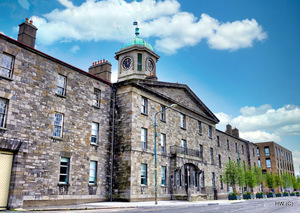

The Clock Tower, Grangegorman, Dublin 7, formerly the Cholera Hospital
Dublin and the Cholera Pandemic.
Harry writes:
Tragically, too many Irish people have died of a Covid-19 infection due to the current worldwide Pandemic and many of them were Dubliners. It is not the first time that Dubliners succumbed to a Pandemic disease and here’s a little history of another particularly nasty one that killed thousands in Ireland, Cholera.
The first cholera pandemic spread from India in 1817 -1824 and hundreds of thousands died. From 1823-1829, the initial outbreak remained outside of much of Europe. In the years following the initial outbreak further outbreaks of the disease spread through the Russian Empire and relentlessly moving westward it finally ravaged through Europe during 1831. Many hoped Ireland’s location as an island on the edge of the continent would save it. Inevitably the first cases were recorded in Dublin and Belfast in 1832.
Cholera killed thousands in Dublin, between 1832-3 upwards of 50,000 died in Ireland. A terrified writer described the new pestilence sweeping the globe. ‘It has mastered every variety of climate, surmounted every natural barrier, conquered every people.’. It was endemic on the Indian subcontinent for centuries, and the inhabitants of Lower Bengal worshipped it as the goddess Oolee Beebe. It was a new disease in Europe and Ireland, and was highly lethal due to a lack of immunity, thriving in the unsanitary crowded conditions that the poor lived in.
Early in 1831, with Cholera raging in Europe, it was realised that it was only a matter of time before it spread to Ireland. As it afflicted all classes of society and not only the poor, it led to greater government intervention. In preparation for the coming onslaught, the government re-activated the Irish Central Board of Health, a body that was formed during a previous Typhus epidemic.
The Board, more commonly known as the ‘Cholera Board’, ordered the public to bring their sick to hospital, to ventilate rooms, to scrape dirt from the floors and scrub surfaces with lime., warning: ‘Everyone affected is to seek medical attention or run the risk of death’. All straw bedding was to be burned. Recovered patients were to self-isolate: “not to visit in a family, or go to a place of worship, or any crowded assembly“. Funerals and mass gatherings were banned.
With the infection raging in Dublin, so many were dying hospitals refused to accept patients ill with cholera. A public meeting of medical officers was held in the Coffee Room of the Royal Exchange (now the Council Chamber in City Hall, above), to demand that cholera patients be treated, resulting in some existing hospitals being reconfigured into fever hospitals as an emergency measure. It was even suggested to use the police to force hospitals to admit cholera patients.
In 1832, many of the sick were treated in the Richmond Penitentiary (the Clock Tower building in Grangegorman) now put to use as the Dublin Cholera Hospital. A group of women known as the “Walking Nuns” members of an order that later became The Sisters of Charity, selflessly cared for those who were sick and dying. Taking a huge personal risk, they worked four-hour shifts, four people at a time. They washed, cleaned, fed, and offered emotional and spiritual support to the sick and dying. When their shift ended, they bathed both themselves and their clothes in lime and water thus minimising the dangers of contamination. Because of their sanitary practices only one of these ladies contracted the disease from which she recovered and none died.
Over 5 days in the middle of 1832, more than 600 patients were admitted. Patients dying from cholera in the hospital was extremely high. Relatives checked a list of names pinned daily on the entrance doors of the Clock Tower building to see if any family members had died overnight. Recent Luas works revealed over 1,600 cholera victims buried in mass graves nearby.
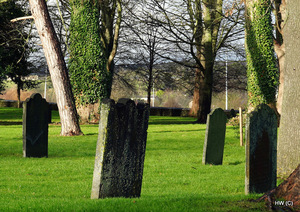
Cholera forced the closure of Dublin’s oldest cemetery, Bully’s Acre in Kilmainham (above), as it ran out of burial space. The plot in Glasnevin Cemetery’s in which Charles Stewart Parnell is buried sits atop a cholera pit. There was a mass grave here during a later cholera outbreak in 1849. Leakage from the cemetery flowed into the nearby Tolka river and it spread infection as locals used the water for washing and bathing.
After infection, cholera can strike dead 50% of its victims in a matter of hours in the most miserable and agonising of ways. As related about a family at the time, “we left them all well at half past nine, and the next morning at 9 o’clock we heard that six of the family were dead and had already been buried.”. Individuals suffered a sudden onset of stomach cramps, vomiting, fever, and explosive-severe-voluminous diarrhoea. Within hours of the disease’s onset, the cholera victim had expelled immense quantities of bodily fluids. The head, hands, and extremities turned cold, bluish in colour, shrinking due to dehydration and death like to touch. Death followed within hours of the first symptoms by cardiac failure due to a severe electrolytic imbalance.
It was a vile and repulsive death. The victims lost consciousness and it was difficult to determine if the individual was genuinely dead. There were reports of the body “twitching” for hours after an individual’s apparent death. Reports of live burials of unconscious victims were common. Burials were forbidden to take place less than 24 hours after death due to this phenomenon.
Anyone having contact with the individual, their soiled bedding, clothing, or infected water sources was a potential victim and carrier of the disease. Being highly virulent, cholera overwhelmingly proved fatal for the elderly, infants, and the otherwise infirm.
Cholera thrived in the unsanitary living conditions of Dublin’s poor, many of whom lacked access to clean water. Medical professionals had little knowledge of how cholera spread, believing it to be a “Miasma”, a mysterious atmospheric phenomenon of poisonous air, alternatively, some thought it spread by contagion by touching the infected.
Fear of the disease and the lack of knowledge about how it spread led to bizarre beliefs and conspiracy theories, paralleling today’s false misinformation about the Covid-19 pandemic.
Public protests and rioting broke out; false stories were spread that doctors poisoned their patients for profit or that they killed them so their bodies could be sold for dissection. A cholera doctor assigned to various towns in Ireland described riots he witnessed at Ballyshannon, Ballina, Claremorris, and Sligo, reporting that the crowds believed, “the doctors, … were to have 10 guineas a day: £5 of every one they killed; and to poison without mercy.”. Others blamed the supernatural, a Dublin chaplain described it as “a pestilence, which walketh in the darkness”.
In early 1832 Thomas Rumley a future president of Royal College of Surgeons in Ireland and a Dr. Stoker, diagnosed a case of Asiatic Cholera in Kingstown, (Dun Laoghaire). Rioting broke out as enraged boarding -house keepers fearful of losing business and an ‘infuriated mob’ attacked the two doctors with stones and bricks, they narrowly escaped with their lives
Nationwide incidents of mass hysteria occurred. A letter sent to Dublin Castle by Major General G H Barry, Co. Cork reported, “The Virgin Mary appeared in Charleville church, leaving certain ashes, which she warned were the only protection against cholera. These were to be delivered to four houses, and then these four householders were to proceed to four more homes to spread the message”.Long before mass communication and the internet, the message and its messengers reached Ulster within a few days.
The message was embellished as it was relayed across the country, 7 prayers were to be recited, ashes, turf and stones were used in the east, while straws were used further west. Locals in Ardara on June 14th 1832, ran into the town bearing lit straws to distribute, warning (falsely reporting) deaths had occurred in neighbouring counties that didn’t pass on the “blessed” straws.
Eventually, research proved that the disease was passed on via contaminated water. It was not until 1883 that Robert Koch, directing a German scientific commission in Egypt, succeeded in isolating the organism that causes cholera, a motile, comma-shaped bacterium. Today infection is treated by re-hydration therapy, by antibiotics and several vaccines have been developed.
So, Dublin suffered thousands of deaths and today many corners of cemeteries have generally unknown mass graves of cholera victims. The aftermath of the pandemic eventually resulted in an improved clean water supply for Dublin citizens and better sanitation as well as improved medical treatment. The interesting story of the water supply may become the subject of a future article.

Harrys’ Dublin appears here every Friday.
All pics by Harry Warren


I didn’t know Bill Gates was around back then. Thanks for the history lesson – Great work.
Thanks Formerly,
History illustrates that Pandemics begin with a terrifying moment where it is impossible to explain what is happening. Many, many times Jewish people were easily scapegoated, singled out and blamed for spreading disease. Needless to add, later in the 30’s National Socialism focusing on racial hatred spread lies and hate and we all know where that led. With the absurd things wrote about Bill Gates today it is very easy to see where its morally repugnant ideas originate. Scarily people today who are misled into believing such absurdities unwittingly hurt themselves and society .
Well done Harry, a topical and poignant piece, keep up the good work.
Thanks Liam!
That’s chilling stuff, well done, H.
A great read indeed. A maestro of a story teller. Once again many thanks H.
Thanks for this Harry
Great pictures, great stories. This one is part allegorical too. We still have lessons to learn from our past.
Thanks Daisy, The scary thing is history repeats itself over and over. Some people today would rather believe in absurdities that lead to hate rather than plain old boring but truthful reality.
good read as usual Harry
fair play harry, top drawer as usual.
I think this is one of my favourites that you’ve done Harry. Really enjoyed today’s read.
Thanks Millie, Scottser, Janet,dav,perricrisptayto,Papi I hope you all have some time to enjoy the sunny weather :)
Great stuff, Harry – and swirling away in the background we had ‘Signor Pastorini’ and his prophecies adding fuel to the fire. Pope was right, a little learning is a dangerous thing!
Just catching up on another great article Harry. Can’t wait for the water one..!!! Thanks