



And other mysteries.
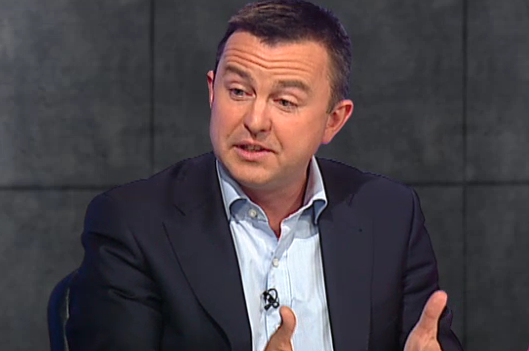
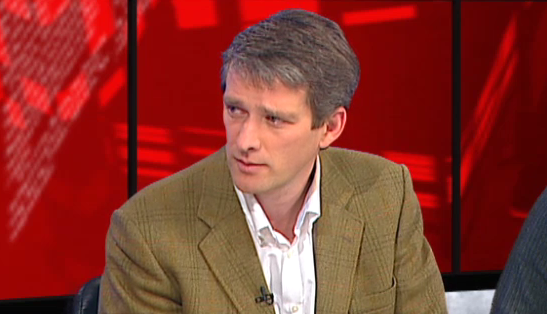
Fine Gael’s Brian Hayes (top), Minister of State at the Department of Finance, went on Vincent Browne’s show on TV3 on Thursday alongside David Malone (bottom), author of Debt Generation. We thought we’d share a belated transcript for the week what appears to be in it.
Brian Hayes: The whole objective in going into this programme is to get out of it as soon as we can to get our sovereignty back. People at this country know…I would argue that we have been making progress. Steady, slow and deliberate progress. That’s the nature of these negotiations. It doesn’t happen over night.
Vincent Browne: And what’s the progress?
Brian Hayes: I’ve already said that there’s very considerable progress, not only on the banking side in terms of recapitalisation…I think we’ve had…look the progress is that the bond rate has gone down by a half. I think that’s important, do you not think that’s important?
Vincent Browne: Well, yeah. But I think it would be more important if we just did what we were required to do, under the EU/IMF agreement, and did nothing more.
Hayes: But do you not think..Can I put it to you…”
Browne: That I think would be significant progress. Rather, that isn’t progress. That’s the status quo. You guys made it much worse.
Hayes: Can I just say, would it not be more sensible, and in the terms of the progress that we all need to see. If, instead of paying back 3.5billion, over a ten-year period, for the Anglo situation, that this Government has inherited, that we could renegotiate, redesign that framework. To say that over a 40-year period, you could pay it back at a lower cost. Would that be beneficial to this country? I think it would. Now if other people say ‘it wouldn’t’, fine.
Browne: Would it be better if we didn’t, if we simply said, we’re not paying, we’re not paying any of this. The only thing we’re paying is what we’re legally required to pay.
Hayes: And, if you, that’s the option you take.
Browne: That’s right yeah.
Hayes: But, but the consequences, the consequences of that.
Browne: Are what?
Hayes: The consequences of that are quite straightforward.
Browne: What are they?
Hayes: That this country would not have the funds to continue to do the things it wants to..
Browne: “But Brian, rubbish. We have an agreement, we have a legally-binding agreement with the EU/IMF and the ECB, whereby if we agree to the terms of that agreement we get funding. Now part of that agreement does not require us to pay off all this other billions to these other financial institutions.”
Hayes: I have explained to you that it’s, that it’s..
Browne: Now just a minute, let me finish.
Hayes: OK.
Browne: So. I’m saying why are we doing this?
Hayes: Because..
Browne: Because we’d still get the funding under the agreement.
Hayes: Yeah but we’re doing this to redesign the means through which we’ve got to pay back on these promissory notes. And if you compare the €3.5 billion on the unsecured Anglo debt that remains and the €31 billion that remains on the promissory notes, I would contend if you redesign the €31 billion over a longer period with a lower interest rate..
Browne: What are you saying? We’re not paying the promissory notes?
Hayes: That decision has been taken by the previous administration. And it has already factored in to the agreement that was put in place in the memorandum.
Browne: No, it isn’t.
Hayes: It was part of it.
Browne: It is not part of it. It doesn’t matter, it’s not part of the deal. Sorry let David in again.
David Malone: You make it sound as if, because it was agreed, it’s somehow written in stone, like they came down in tablets, from the mount. You’re a sovereign nation. Your sovereignty was compromised, it was given away but you simply take it back. There are lots of nations that have defaulted on their bonds.
Hayes: Can I ask a straight question? We face a difference between our expenditure and our taxation this year I think it’s somewhere in the order of around 18billion, is it 15 or 18 billion? I can never remember the difference?
Browne: It’s €18 billion.
Hayes: I think it’s €18 billion, yeah. We face that immediate deficit, ok? We could decide to unilaterally change this and I will tell you, automatically, those funds, which are available to keep this economy afloat between now and 2013 would not be there. We then cannot afford to raise funds on the international markets. And the deficit this year becomes €18 billion. And rather than €6 billion. Now we could take a punt on that. we could take a view ‘well that sounds good, let’s just try it’. Well I know the consequences. I live in ordinary communities and I see the consequences…
Malone: And you think I don’t?
Hayes: ..In schools and hospitals and I’m not prepared to take that punt on people’s lives, quite frankly. You might. But I’m not.
Browne: The Greeks did..
Hayes: Well, precisely, let’s talk about the Greeks
Browne::..And look how much better they’ve done.
Hayes: Well exactly.
Browne: Yeah.
Hayes: Yeah. Did you know social welfare is going down by 20 per cent.
Talk over each other..
Browne: I do know that the Greeks are suddenly now getting huge cuts on their sovereign debt.
Hayes: OK.
Browne: And the banking debt.
Hayes: I’m glad you raised that issue. Let’s talk about what’s facing the Greek situation at the moment. An immediate reduction of 20 per cent in all social welfare. Anyone with a pension of over 1,000 euros a month will see it down by 20 per cent. The knocking out of at least 50,000 workers immediately from the public sector. At the moment in this economy. If you have €26,000 and you’re married with one income, you’re not in the tax system. At the..In Greece..
Browne: Oh you are, you are..
Hayes: Sorry indirectly you are.
Browne: Yeah but also there’s the universal social charge, you forgot about that didn’t you?
Hayes: Yeah but no, just to compare it with Greece. Now you raised the issue of Greece and I’d like to stick with it. Because you raised it and I want to stick with it. In Greece the tax allowance is going from €12, 000 to €5,000. In Greece, indirect taxation..
Browne: Like here..
Hayes: Hang on for a moment, it’s totally different.
Browne: Right.
Hayes: In Greece indirect taxation is going up by a third.
Browne: Up by what?
Hayes: 33%. Now I make the case to you, if you’re producing the argument that the haircut that Greece have obtained from the 21st of July, and possibly a further haircut they’re going to get this week or next week or whenever, is going to produce some fantastic new horizon for people in Greece, I think that’s an absolutely non-sensical position.
Browne: Ok. Right. Now deal with this point.
Hayes: I will.
[Later]
Browne: Right. Because the Greeks have been obturate with regard to compliance to previous agreements, the EU/IMF have capitulated with regard to this…let me finish…don’t go..hystrionics won’t do..With regard to the sovereign debt and the banking debt. And suddenly they’re getting a huge discount, you’d probably like to call it a haircut. But they’re getting a huge discount on both the sovereign debt and on the banking debt. Now I’m not..of course we’re not in the same distress in our fiscal situation as the Greeks were so there’s no reason for the kinds of austerity imposed on Greece to be applied here. But the point I’m making is that because of their obturacy they were able to get massive improvements on their situation whereas we, by being goody two shoes and passing the exam every three months, we get nothing.
Hayes: Greece are going to be in the A&E ward for many, many years to come.
Browne: Like us.
Hayes: No. Our objective, the Government’s objective, and I think people understand this, despite the histrionics of both of us possibly, is that..
Browne: Speak for yourself.
Hayes: I think most people understand our objective is to get out of this programme, to get back to the markets, regain our sovereignty. And the way to do that is to stick with the programme, as we’ve set out. But to try to grow the economy at the same time. And I’m..I’m convinced. If people compare the situation in Greece to the situation here, I’d prefer to be here any day of the week.
Browne: Of course because our situation wasn’t as bad to begin with.
[Later]
Browne: David if you were to advise the Irish government, what would you advise?
Malone: I would advise them to make common cause with the other debtor nations. Ireland doesn’t have to go on his own. A man once said ‘if you owe a bank 10 quid, you’ve got a problem. If you owe them a million quid, they’ve got a problem’. If Ireland, Portugal and Greece said to the EU and IMF and anybody else, we collectively will not subject our people to this, they would come begging because together you would have the power to bring it all down. And they would have to sue?? on your terms.
When I hear you speaking, you’re a sincere man but it sounds so like listening to someone who goes back to their husband, who beats them, because they say ‘well I can’t get away and it would be so much worse if I tried to go to the police and say anything’. You just sound like a whipped dog who’s afraid of the person who’s whipping you and saying ‘if I just wag my tail, and I’m nice, they won’t hit me quite so much’.
Hayes: I don’t want to bring the house of cards down.
Watch full show here