



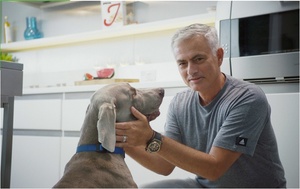
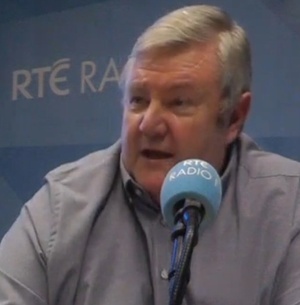
 From top: Paddy Power campaign with football manager Jose Mourinho; Derek Mooney
Maybe it’s the recent media talk about the perils of online gambling. Perhaps it’s the publicity around Minister James Browne’s proposed Gambling Regulation Bill. Whatever the cause I am sure I am not alone in noticing a dramatic increase in the volume of gambling ads on TV, but especially, online.
It’s striking. I cannot count how many times I have heard “the special one” ad coming at me from my screens, both small and big.
I read somewhere that gambling adverts have now replaced beer and drinks adverts, in pre-eminence, particularly when it comes to an association with sports.
The argument is that gambling advertising has now filled the void left by the disappearance of beer advertising. It’s a potential void which also has an entertainment component, thanks to the vast amounts of money the big breweries spent on creating entertaining and memorable adverts.
Which brings me back to that annoying Jose Mourinho/Special One advertising campaign. It first appeared on our screens over two years ago. While it has none of the wit or creativity of a “Wassup” Budweiser commercial or the memorable Guinness dancing man ad of the 1990s, the ad’s makers knew their audience. So the ad is more targeted, including some clever easter eggs for the more informed viewer.
But could there be another reason why we seem to be seeing so many more gambling ads these days?
It is just to do with them replacing drinks ads, or might the pandemic have something to do with it? Could the reduced opportunities for us to pop down to the bookies to place the occasional bet, persuaded the gambling companies that they had to drive more of us to start using their Apps and websites?
Might this explain why some of the adverting, particularly the ones promoting online gaming and virtually casinos, have the underlying theme of: now that we cannot together in the real world, let’s get together to have a punt in the online world instead?
But it’s not just the volume of online gambling advertising that has risen. So have the problems. It’s as if the two things have some correlation. There is more than a little evidence that problem gambling has increased during the pandemic.
GamblingCare.ie, a website which aims to help people with gambling problems, observed back in March that its site was was seeing a 180% increase in visits. The website is funded and administered by the Gambling Awareness Trust, a charity funded by donations from the online and retail betting and gaming industry in Ireland.
Studies on gambling patterns during Covid-19 lockdowns found that while the general population gambled less frequently during lockdown, partly due to betting shops being closed, some forms of gambling increased.
Research from the University of Bristol and published in May, found that occasional gamblers were more than twice as likely (than before the pandemic) to gamble online, while regular gamblers were six times more likely to gamble online.
In these cases online gambling included playing online poker, bingo, and casino games.
Professor Alan Emond, of the University of Bristol’s Medical School, said:
“This study provides unique real time insights into how people’s attitudes and gambling behaviour changed during lockdown, when everyone was stuck inside and unable to participate in most social activities. The findings reveal that although many forms of gambling were restricted, a minority of regular gamblers significantly increased their gambling and betting online. As with so many repercussions of the pandemic, inequalities have been exacerbated and particularly vulnerable groups were worse affected.”
It can be entertaining to take a chance and have a bet on a race, a football match, or the outcome of an election. Most of us can gamble occasionally with no negative impacts. There is no argument for outlawing gambling.
But many cannot do this. Gambling can be a addictive and it is an addiction which causes huge problems for a sizeable number of us. The increasing move to online gambling may make is easier for many to have a harmless punt, but it causes a potential crisis for some, particularly young males. Minister James Browne’s move to regulate both advertising and online gambling is to be welcomed, but based on the experience of other countries it will take more than just a piece of legislation.
The phrase “gamble responsibly” now features prominently on many of these adverts, but what does it mean? Isn’t it an oxymoron that is along the lines of advising someone to drink drive soberly?
The phrase itself comes from the industry itself, being coined by a Las Vegas casino.
Though the sentiment behind it is well meant, the problem for many is that this approach takes all the blame away from the addictive nature of the games and puts it on the addicted player instead. To quote Sol Boxenbaum, a Canadian expert on gambling addiction:
“the compulsive gambler can no more gamble responsibly than the alcoholic can drink responsibly or the drug addict can inject cocaine or heroin responsibly.”
Derek Mooney is a communications and public affairs consultant. He previously served as a Ministerial Adviser to the Fianna Fáil-led government 2004 – 2010. His column appears here every Monday. Follow Derek on Twitter: @dsmooney
Pic: Paddy Power


I bet they’re not.
Betway Jose.
If the man bets then his screens will show him betting related services. This ‘I can bet and not become an addict’ argument is very much outdated and it only serves to reinforce the feeling of failure that might stop people seeking help or even just speaking about their situation. One man’s harmless punt is another’s harmless bump. And when you bring such politics into the issue of recurrent behaviours you create a lot of dark spaces in which people can hide their apparent failure.
‘Less worse’?
Ah Derek
Down with online gambling ads. Down with online gambling.
+ 1
yes, and down with Paddy-vulgar-blood-sucking-leeches-preying-on-people’s-vulnerabilitie’s-all-in-the-name-of-greedy-shareholder’s-obscene-profits-Power