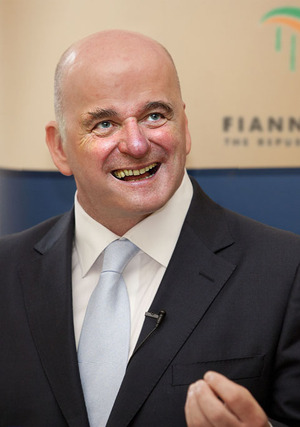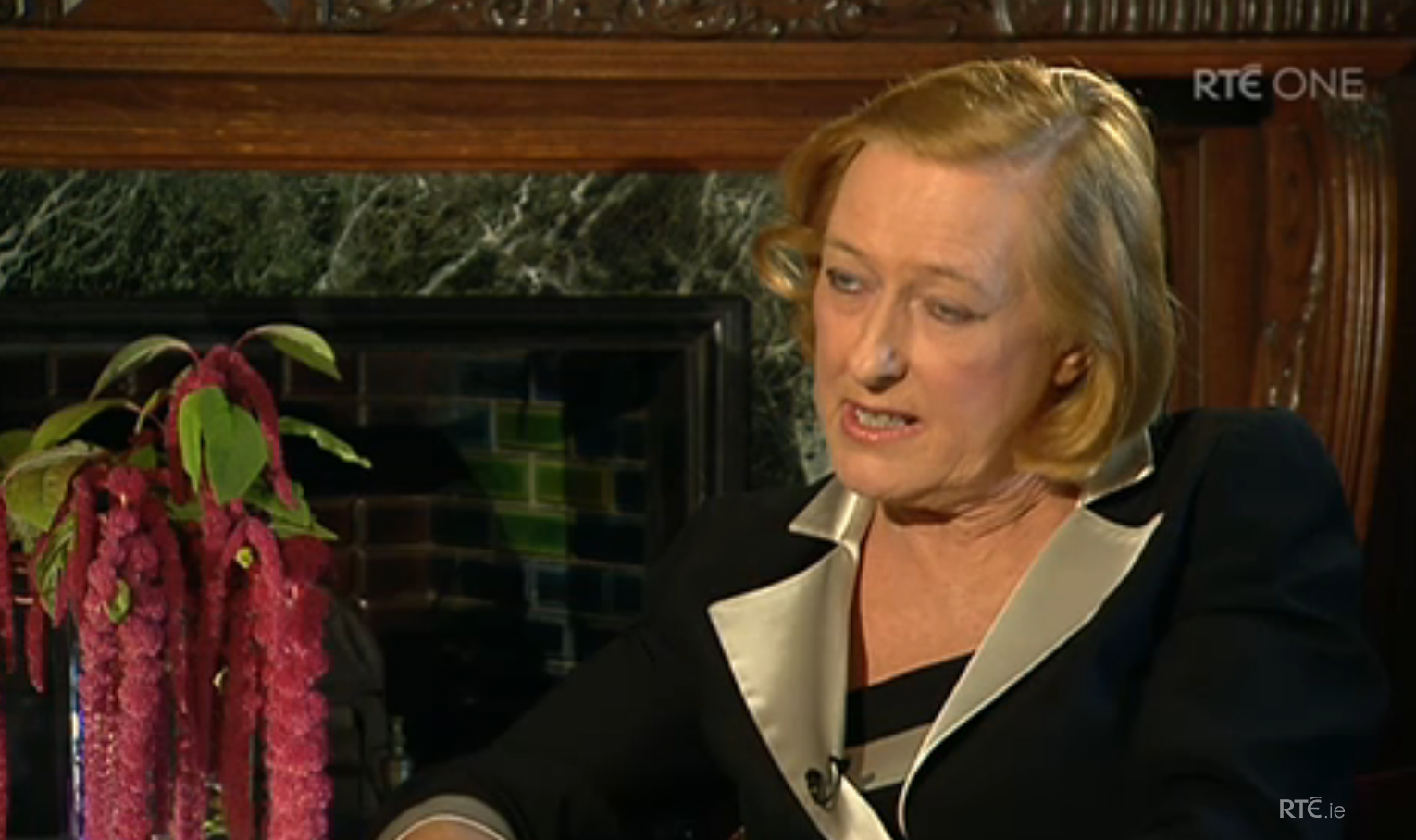



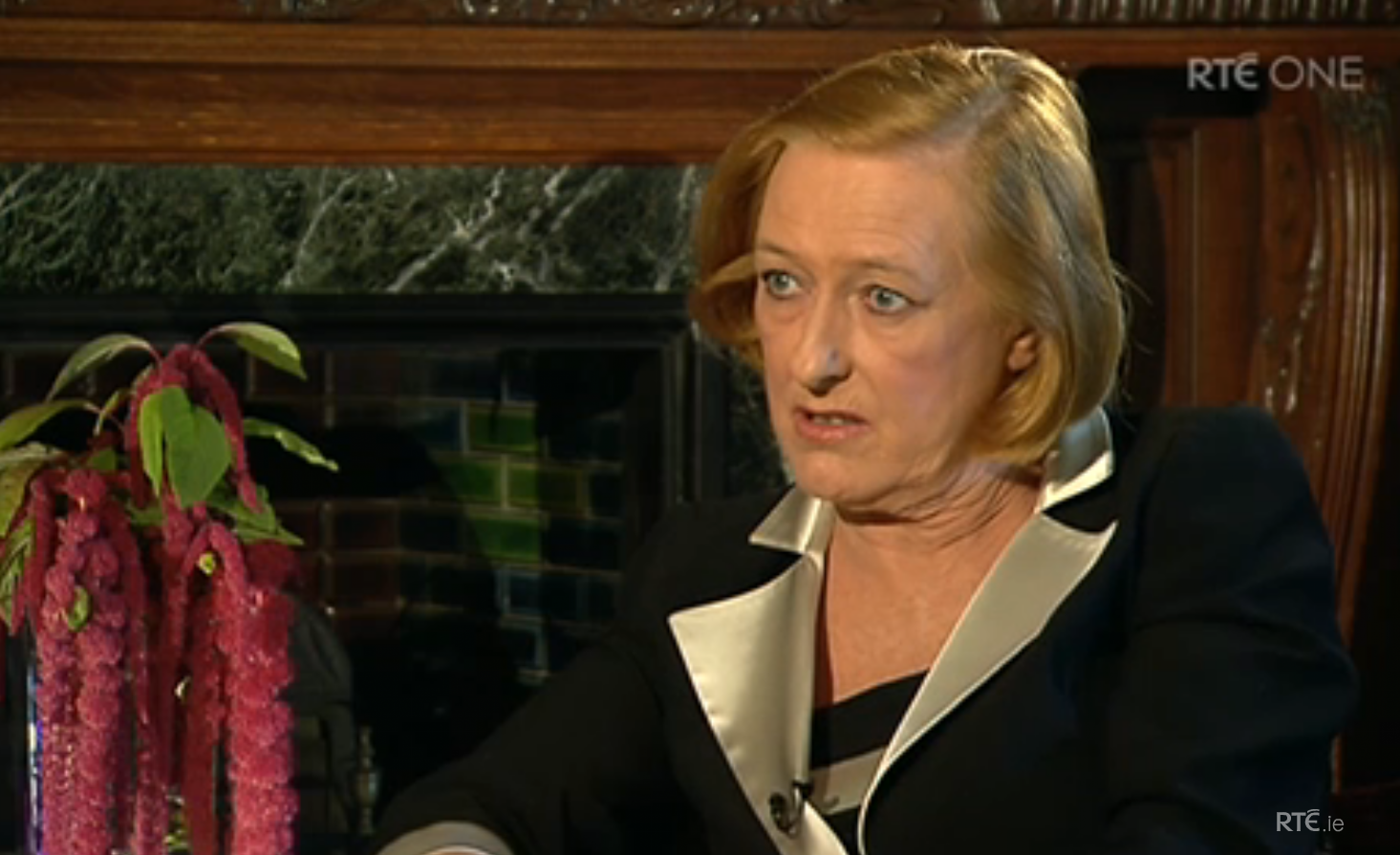
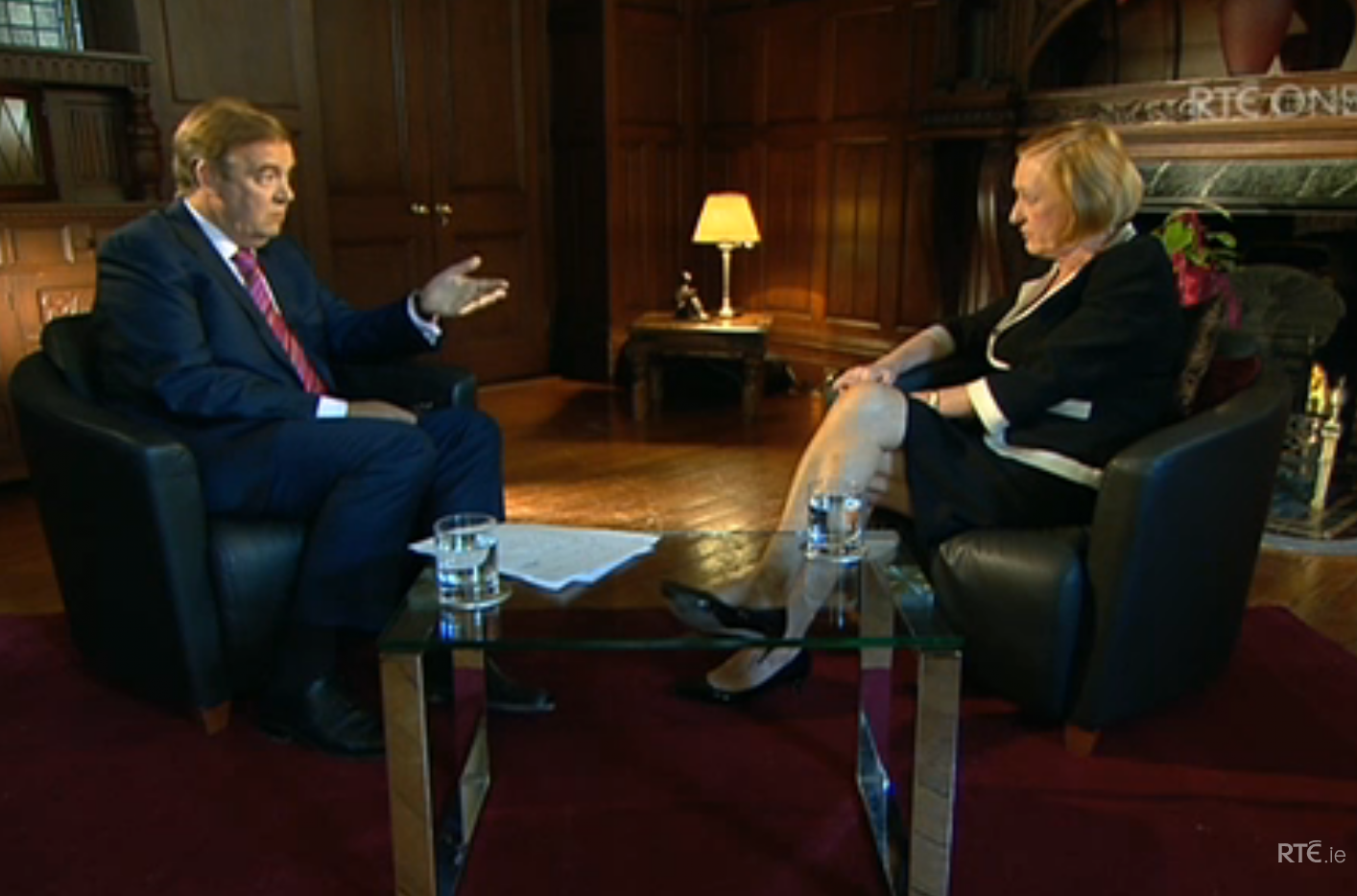
 Geraldine Kennedy, former Madam editor of The Irish Times, appeared on RTE’s splendid One On One last night (with Bryan Dobson asking the questions).
Of considerable interest to Irish Times readers (and staff) was Geraldine’s thoughts on the huge salaries the paper’s management paid themselves during the boom, even as journalists and others were being made redundant. We will have the second part where Madam discusses the investments made during her tenure (including the myhome.ie purchase) in a bit.
Bryan Dobson: “Within a short period of your appointment, I think within a year or two, there was a big internal controversy, never mind externally?”
Geraldine Kennedy: “Yes.”
Dobson: “About payments to directors, your own salary, which I think at the time was in excess of €300,000.”
Kennedy: “Eh-em.” (in agreement).
Dobson: “Which is ten years ago, which is a lot of money now and back then. And you had some of your own reporters and columnists saying these payments flew in the face of what the Irish Times was meant to be about. What was ..was that a difficult period for you?”
Kennedy: “It was difficult enough. There were two things tied up in that. One was that you always had a tradition in the Irish Times which I would fully support. And it makes the Irish Times the distinctive newspaper that it is. The commercial head and editorial head, i.e. the managing director and the editor, are paid equal. And that you operate on a structure of a partnership of equals with different responsibilities. So the managing director is responsible for money in the company and the editor is responsible for the content of the newspaper. And, em. So there was that argument on the one hand.”
Dobson: “So Maeve Donovan, the senior commercial figure, she was your benchmark, if you like?”
Kennedy: “Yes, and would have been [the same pay structure] as two editors before me aswell. And the second thing then was how on earth could you expect the first woman editor to be paid less than her male counter..or male predecessors.”
Dobson: “And yet at the same time…”
Kennedy: “I mean you wouldn’t, for example, have said Mary Robinson is first woman president but we’ll give her, we won’t give her the Paddy Hillary rate, would you?”
Dobson: “Right. My recollection is the criticism wasn’t of you specifically, it was generally of directors.”
Kennedy: “Yeah.”
Dobson: “Of the company.”
Kennedy: “Yes.”
Dobson: “Being made large payments. I mean I think one year it was almost €4million was paid out, which was a substantial proportion of the entire profits of the
Kennedy: “Yeah.”
Dobson: “Company.”
Kennedy. “Yeah, yes.”
Dobson: “And at the same time some hundreds of people were being laid off, there was a redundancy program. So the company was under financial pressure and yet the directors were receiving, including yourself, were receiving very substantial payments.
Kennedy: “That happened just before I came in. I’m not excusing it and we will talk about it. Eh, I don’t think that €300,000 is an excessive salary for a managing director or an editor who’s on call, ready to take a call 24 hours a day..no end to things, 365 days a year. And if you compare it with salaries of some of your own colleagues, it’s far less than what they receive, for what appears to be much less work.”
Dobson: “Hmm. But comparison were made, I don’t want to labour the point, but with the editor of the [Daily] Telegraph, in Britain, which would have nine times the circulation of the Irish Times.”
Kennedy: “Yeah, yeah, yeah.”
Dobson: “…which would be comparable figure. And the usual ones the President of the United States for example.”
Kennedy: “Yes.”
Dobson: “That it was a substantial amount of money. But it was more in the context of the payments made to the directors of the company during a time when the company was under financial difficulty and financial stress.”
Kennedy: “Yes, but there have been great reductions in payments over the last number of years. Great reductions.”
Dobson: “During the period that you were editor, there was a series of investments made by the Irish Times. There was famously the purchase of myhome.ie for 45 million pounds, that was the investment…”
Kennedy: “40, yeah.”
Dobson: “40 million pounds, and an investment in the Metro, and so forth. Do you think the Irish Times, from a commercial point of view of operations, has been run well over the last decade?”
Kennedy: “I could, I could say to you that things haven’t turned out well on the commercial front for the Irish Times, nor for any other company. I think it was perfectly reasonable for the Irish Times, in about 2003/4 to accept the policy of diversification because if you looked at the charts and…”