



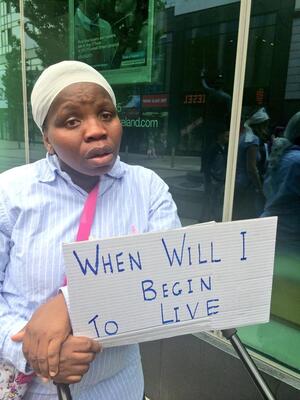
An asylum seeker protesting in Limerick last week, following the recent removal and transfer of several asylum seekers from the Mount Trenchard Direct Provision centre
How many?
The Irish Refugee Council has conducted a study, called Counting The Cost, focusing on the experience that people previously in the Direct Provision system had when they attempted to find work after they were granted permission to remain in Ireland.
The IRC based the report on interviews with 20 people – 11 men and nine women – who had been in the Direct Provision system for at least three years.
Seventeen of those interviewed had been in the Direct Provision system for five years or more, while three had been in the system for at least three years.
Readers should note that as asylum seekers in the Direct Provision system are not allowed work, those interviewed were trying to find work after many years of being excluded from the labour market.
The report found that, at the time of the interviews, only one person was in employment – working with autistic children. One other had been in two short-term jobs – three weeks as a pizza chef and four months in a meat factory.
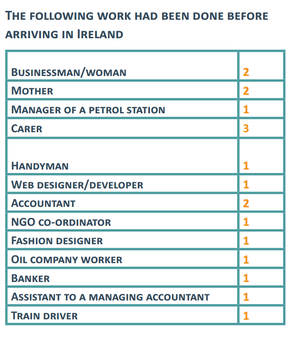
This is despite the fact that many had experience before they came to Ireland:
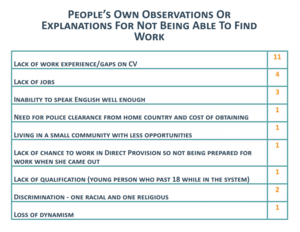
Those interviewed were also asked about what they believed were the reasons for their inability to find/get a job. The answers varied with the responses ranging from ‘gaps on their CV’ to ‘discrimination’:
Meanwhile, although the study focused on the matter of employment, it also sheds light on the mental health issues related to the Direct Provision system.
For example, of those interviewed, two, at least, had tried to take their life while in the Direct Provision system, while others had self-harmed.

In its conclusion, the IRC found:
“In light of the evidence presented in this study, it is clear that the asylum system is creating barriers and causing long-term harm, working against the benefits of both seeking international protection and the society into which they have been granted permission to live.”
Read the report in full here
Pic: Paula Geraghty