


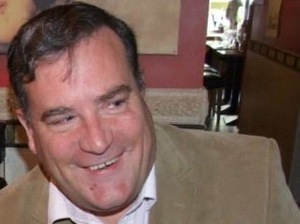
From top: Met Eireann’s Evelyn Cusack and Taoiseach Leo Varadkar after a meeting of the National Emergency Coordination Group during Storm Emma; Dan Boyle
The politics of the Beast from the East seem to have worked quite well for the government. Politics is a small component of responding effectively to an emergency.
The actual heroes were front–line workers who ironically enough are often further away from the public eye.
I found myself snowed in, pleasantly and enjoyably, at a hotel in Tallaght. Most of the other guests were ambulance workers, most civil defence volunteers. Whether as paramedics, or in running a radio centre, I found their presence there comforting and decidedly pride evoking.
Emergency plans get tweaked from time to time, benefitting from the appropriate finessing of long term planning along with lessons learned.
The political element of emergency response is quite properly small and narrow. It largely revolves around communication, giving information, offering reassurance, bolstering public confidence.
In this 24 hour multi media World, the metaphorical political holding of the baby fills most politicians with dread. The odds on becoming the face of any public information campaign, and not getting associated with negative news become extraordinarily low.
The protection of the Gulf Stream has really only deserted us on four occasions over the last seventy years or so – 1947, 1982, 2010 and now the year of the Beast of the East 2018.
We should remember that Ireland is on the same latitude as Hudson Bay in Canada, The Kamchatka Peninsula of Russia and the southern reaches of Alaska. Without the Gulf Stream, the more extreme wintery conditions we experienced last week would be far more typical.
The folk memory of 1947, with the number of waterways which ended up frozen, would seem to rate the Irish Winter Olympics winner, although each of the four climate lapses carry with them unhappy, uncomfortable memories.
The political consequences of 1947 were probably negligible. The then excitement of a new party breakthrough of Clann na Poblachta, combined with a public lethargy with a Fianna Fáil government in power since 1932 (with a cabinet of Civil War participants), meant that a lousy winter would have been the last thing on most voters minds.
The media created the sobriquet ‘The Minister for Snow’ for the then Tánaiste and leader of the Labour Party, Michael O’Leary, in 1982, for which he never forgave them. As the country went into a ten day lockdown, O’Leary struggled to receive political support especially from his own political party. It would probably was a contributing factor that led to his resignation as Labour leader, followed perversely by his joining with Fine Gael.
John Gormley inherited the Minister for Snow in 2010. He too found himself sidelined by cabinet colleagues, particularly his Fianna Fáil colleagues. The cabinet sub committee dealing with national emergencies was meant to be jointly chaired by Gormley and FF Transport Minister, Noel Dempsey, who lingered too longingly on a foreign sun holiday.
The current Minister, Eoghan Murphy, has not been seen to be affected. For that he should be grateful. Any real gratitude should go the front line people I had the privilege of meeting in Tallaght.
For politicians no pain is gain. The irony for this government is that in trying so hard in overselling its own achievements, while using considerable public funds, will probably see no real benefit from having had a good freeze.
Dan Boyle is a former Green Party TD and Senator. His column appears here every Thursday. Follow Dan on Twitter: @sendboyle
Top pic: Rollingnews
Meanwhile…
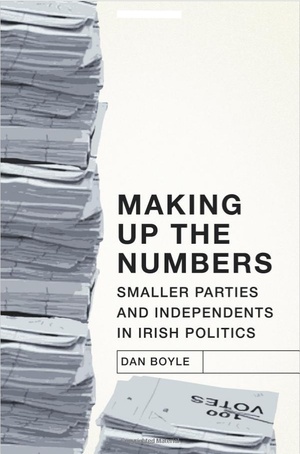
Dan Boyle’s ‘Making Up The Numbers – Smaller Parties and Independents in Irish Politics‘ published by the History Press is available at all good bookstores now.