Monthly Archives: March 2011

httpv://www.youtube.com/watch?v=4B2xOvKFFz4

According to the data crunchers at National Geographic, the world’s most typical person (that’s him up there, depicted by 7000 human ‘pixels’, each representing a million people) is a ‘he’. And that’s just one of several surprising factoids in this nifty typographic video.

Part of Nat Geo’s ongoing 7 Billion human population series.

via

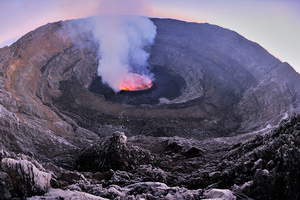
Last June, an intrepid team of scientists and explorers ventured onto the shore of the world’s largest lava lake –  8 million cubic meters of liquid rock, boiling in the depths of the Nyiragongo Crater on the Rwanda/Congo border in Africa.

To get a sense of scale, look at the figure on the bottom left of the fourth image.

Now check out the full sequence.

Nyiragongo Crater: Journey to the Center of the World – 28 hi-res photos – (Boston Globe)

To our colonised cousins, it’s more important than that:

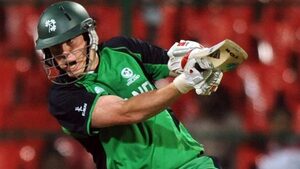
“Ireland’s victory over England in this instant’s World Cup game in Bangalore can raise a tumult of emotion, a whoosh of ideas that churn in a post-colonial world, invoking history, politics and sociology — not least because the Irish, colonised first by the British, also inspired the freedom struggle in Bengal and India.

But most of all it is a lesson in life: passion beats powerplay.

“In the club in Delhi where I watched tonight’s game, Indians to a man stood as one to watch Ireland’s triumph. History played a marginal role. The mood was of empathy for the underdog. One gentleman remarked: “Wow, this is like India beating Pakistan.”

“It is much more than that. This wasn’t a victory. It was a triumph, an overcoming.

“The Irish have set an example that has been noted in the West for decades. It has taken cricket and the World Cup in India to bring that home.

“The Irish have been better than the English in English. Think James Joyce. Think, in journalism, a hero, the war correspondent Robert Fisk, now the Middle East representative of The Independent, London, who risks the sneers of the elite as he sinks his teeth into the epochal moments in Egypt, Bahrain and Libya even as the Arab world is simmering. Fisk would be hardly the journalist he is today if not for his origins and coming-of-age with the Irish conflict and his time in Dublin.

“One afternoon, in the half-year I spent in Ireland on a fellowship, a tennis ball hoicked from a pitch on the tar road hit a second-floor window sill, ricocheted to a fence and plopped into a football field where University of Ulster students were playing in deep winter.

“The footballers were angry. Cricket, they said, was banned by the Gaelic Sports Council, because it was an English sport.

“In the University of Ulster in Derry/Londonderry, on the edge of the border with the Republic of Ireland, the Catholics were more Irish than the Irish. The cricket gear was gifted to us, a group of South Asians, by the Protestant director of our institute. (Not because she was Protestant but because we were South Asian).

“Tonight, a country half the size of Sri Lanka, the first to be colonised by England, where cricket was banned by hyper-nationalism, has ground to dust its imperialist master.

Two nights back, on the self-same pitch, England and India tied. The hype that has overtaken discourse on the Indian cricket team — a clutch that fields sloppily and bowls waywardly — is like the “India Shining” campaign: full of over-promise and unaudited for under-delivery. Tonight the “Men in Blue” are a memory; it is the “Men in Green” who are the toast. India does not know how much it has to learn from Ireland, on and off the pitch.”

Sujun DuttaThe Calcutta Telegraph

Thanks Brock Landers

The Tubmeister is literally being haunted by Gerry Ryan as he told Gay Byrne during an interview on 2FM yesterday. More bizarrely perhaps both admit having no idea about the ‘other’ Gerry when he was alive.

Ryan Tubridy [to Gay Byrne]: “Do you think about Gerry much?”

Byrne: “Yes. I think, his name comes up and you suddenly realise, ‘my God, he’s dead, he’s gone, and we’re still here’. And it is so sad. And it is so sudden and so quick and so complete.”

Tubridy: “I’ve had two very vivid dreams actually of him.”

Byrne: “Have you?!”

Tubridy: “And I don’t get into dreams. I’m not one of those, you know, dream interpret… But very vivid and lucid moments. One was him sitting in his chair and me saying to him, ‘Are you alright?’ and him saying ‘I’m grand, don’t be worrying’ – you know, like that, strangely? And the other one was two nights ago, and he was getting on a train and the door was closing and I said, ‘You know I’m missing you an awful lot you know’. And he said, eh, he said, ‘I understand but I’m ok’. Isn’t that the strangest thing?”

Byrne: “Isn’t that extraordinary?”

Tubridy: “Yeah, yeah. I think it’s had more of an effect on me than I realise. I don’t know about you but, we haven’t met as much as we should have, but I find it almost difficult because of the… He was our mutual friend. ”

Byrne: “I wasn’t anything like as close to him as you were”

Tubridy: “Well, I don’t know about that.”

Byrne: “No, I wasn’t, I know, physically I wasn’t…. But I would have to say to anybody who questions me about this thing that never – I would meet him with Kathleen and Morah at functions… Never ever did I see him when I thought he was drunk, and never ever did I see him under the influence of anything else either. Never ever. Never ever. And so I’m wondering did I miss out on things or am I dumb or am I blind or…? But at the age I’m at I can probably spot somebody who’s drunk – ”

Tubridy: “Yeah. Precisely.”

Byrne: ” – pretty smartly, or even tipsy. Or even tipsy. But never did I see anything like that.”

Tubridy: “Likewise. So again. But that’s, that’s –”

Byrne: “But your dreams are extraordinary… You don’t remember dreams vividly but yet you do remember those two so you must interpret that as meaning something?

Tubridy: “Again I don’t know.”

Tubridy: Ryan Has Visited Me In My Dreams (Irish Independent)