



The Garda Síochána Ombudsman Commission released its annual report for 2012 this morning.
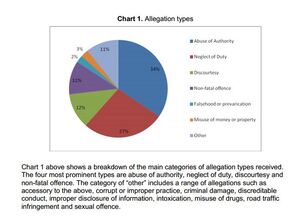
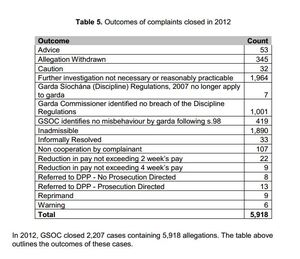
In 2012, GSOC received 2,089 complaints from members of the public which resulted in 5,449 allegations of misconduct by Gardaí. The outcome of these complaints can be deciphered in the table above.
The report also includes criticisms about the delays in disciplinary investigations and the manner in which Gardaí handles GSOC’s requests for information pertaining to the complaints.
“At any one time there are several hundred disciplinary investigations with Garda Síochána Investigating Officers. These matters normally lie at the less serious end of the disciplinary scale and we believe these should be completed quickly. There is an agreement that they will be dealt with within 12 weeks, however, this is rarely achieved. There were 567 investigations with the Garda Síochána at the close of 2012; 73% of these were over time. It is of great concern that 21 of these were over two years old. This situation must improve substantially.”
“The Ombudsman Commission and the Garda Commissioner also agreed systems to cover information exchange in more sensitive cases; examples might include matters involving an informant or intelligence of a sensitive nature to establish a material fact. Sensible caveats were agreed at the time of signature. These types of requests do not occur frequently. However, timeframes have not been observed. In one matter GSOC waited 542 days for a request to be satisfied; in some cases requests have been refused; in some cases GSOC has been given only partial or controlled access to information or documents. None of these practices meet the standards agreed.”
“There have been times when requests that GSOC would view as routine, non-sensitive requests have been treated by the Garda Síochána as being of a different nature. On some occasions the Garda Síochána declined to operate the agreed protocol and sought to create conditionality around GSOC’s access to the information, withholding it if conditions were not satisfied. In GSOC’s view, unjustifiable caveats have been placed on a basic request. On some occasions we have been refused information and/or documents offered within a controlled access situation. This has led to a situation where GSOC, a State investigative body, undertaking important enquiries, has been obliged to justify why it needs certain items germane to its enquiries to the very body whose members’ behaviour is under investigation. As stated, undue justification, refusals, part disclosure, or part access, were never envisaged especially as in these cases the matters asked for are considered by GSOC to be non-contentious. We consider this situation unacceptable.”
View full document here