



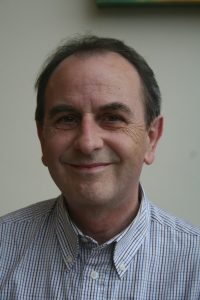
From top: Taoiseach Leo Varadkar joins an unnamed busker last week while canvassing for the European Elections in Limerick; Eamonn Kelly
Seeing Leo Varadkar singing along with the late Dolores O’Riordan’s “Zombie” filled me with what they used to call, mixed emotions. But despite the general sicky feeling, it occurred to me that here was proof of the value of the arts.
The taoiseach, for that is his title, deserved or not, thinks it politically beneficial to sing along with a pop song as he stares into the abyss of an unavoidable election.
Because a pop song reaches into the hearts and minds of many people. This is its power, and by extension the power of all arts and culture. A power recognised, when it suits him, by even the most right-wing leader this country has ever produced.
But I was thinking of something else when I witnessed the unholy sight of the singing taoiseach with over 10,000 homeless people to his name. I was thinking about arts and jobs and community employment schemes (CE).
A CE scheme is designed to seem like what is called a “real” job, in order to prepare people who haven’t had a “real” job, to take one up. CE schemes are aimed at those who are “long-term unemployed or otherwise disadvantaged.” Note how long-term unemployment is collapsed into the definition of “disadvantaged”.
But from an arts practitioner’s point of view, unemployment is an advantage, in terms of opportunity costs.
In cost/benefit analysis, opportunity cost refers to the loss from potential gain from other alternatives when one alternative is chosen.
For the artist it means that the forty-hour work week is forty quality hours not making art. For the artist this is the main opportunity cost paid in taking up a “real” job.
This dilemma for artists and creatives is so widely recognised in the arts sector that for many years in Ireland unemployment assistance acted as a kind of unofficial arts grant for those who had the vocation or balls to go for it.
And it’s not at all easy to choose this route in order to open up time for arts practise. The culture is set against it. But for years the political class turned a blind eye, and the economy, particularly via the pubs, benefited from the ensuing widespread arts practise supported by the welfare stipend.
Even so, the mainstream culture mocked and jeered the artist “drawing the dole”, while simultaneously benefiting from the tourism attracted to creative Ireland, a term later appropriated by our present taoiseach for his own PR machine.
Everyone knows the value of the arts. But it was never easy to drop out and devote yourself to art. To the extent that Brian Eno once said that you have to really work hard to avoid getting a “job” if you hope to have an arts career.
Charles Bukowski and many other artists and writers have said similar, because to the artistic sensibility, a “job” can often seem like a soul execution.
Bukowski wrote of “the job”:
“…People simply empty out. They are bodies with fearful and obedient minds. The color leaves the eye. The voice becomes ugly. And the body. The hair. The fingernails. The shoes. Everything does…What do they do it for? Sex? TV? An automobile on monthly payments? Or children? Children who are just going to do the same things that they did?”
Creatives are creative because they are more sensitive than most, and when you put them in a restrictive, regimented, authoritarian system, they feel the squeeze more than most. It’s not that they hate working. It’s that they hate slavery.
But even so, employers are often attracted to artistic types. They can’t help but see the skills on offer. But they want to cherry-pick them. They want this bit at their disposal, and this bit tamed, or even eradicated.
The standard job in this respect is totally destructive of the artist. And since CE schemes are designed to shape people into getting a “job”, they themselves, unless they are specifically geared towards arts practise, are also destructive of artists, for all the same reasons.
CE schemes are arguably only of benefit to people with little or no skills. But for people who are highly skilled or highly qualified or highly creative, one must query a system that delivers the skills of such people into the service of organisations, with no cost to those organisations, as the DEASP does in its ongoing mission to create full employment in officially defined “real” jobs.
And the benefits of such schemes may be negligible or even non-existent to artists swept up in the JobPath welfare cheats witch-hunts led and orchestrated by the now singing taoiseach.
Furthermore, the opportunity cost to both the artist and the community in terms of loss of potential cultural gain, must also be factored in to the overall cost to the artists and the community as losses rather than gains.
In this respect, there comes a tipping point when the level of qualification and possession of skills being delivered to CE schemes, features a strong element of structural inequality; since the organisations are benefiting from skills and experience they had no input in creating, and don’t have to pay for; plus the opportunity costs to the artist of unrealised projects that the organisation also absorbs as a benefit, which it then wastes because it has no use for the finer skills of the creative individual.
For instance, using a trained actor to man the switchboard because they sound good on the phone. While for the artist, the opportunity cost in particular is a tangible cost in unrealised arts practise.
From this perspective, the delivery of a creative’s skills to an organisation for no pay, amounts to structural exploitation of a natural human resource – artistic potential – that is by its nature the property of and potentially to the benefit of the wider community; including even the cynical political candidate inclined to invoke some culture to garnish his questionable profile at election time.
The ongoing harassment of the arts community into “real” jobs is a crying waste of human resources on a par with the destruction of food to balance market prices.
But Varadkar thinks it “successful” to turn an artist into a McWorker and call it job creation. It’s more like soul murder. He should consider that the next time he feels inclined to appropriate a cultural artefact to aggrandise his image.
Because his “violence caused such silence, Who are we mistaken?” So sang Dolores O’Riordan in the same song. To appropriate the line, it might mean, in this context, that Varadkar’s privatisation policies have been systematically killing the arts, creating cultural silence for the sake of fake job-creation stats.
For the last few years he has been selling artists out as low-grade employees, ignoring their gifts and costing them as worthless. The other day he borrowed one of their “worthless” products, a song to ride his ego around the place for the cameras, succeeding only in revealing his own hypocrisy.
But despite the official hypocrisy concerning the arts, there is still an opportunity to create the possibility of introducing a universal basic income, not as a payment exclusive to artists – that’s unfair and divisive – but as an opportunity to recognize individuality and creativity as being worth supporting for the benefits that accrue to the greater good.
Then, let those who enjoy the routine of “jobs”, go do that, and there are many people who do like that way of life. And let those who desire to dream and paint, play music or write or dance, do that if they so wish without having to starve to death in the process, or endlessly explain themselves to some comfortably unimaginative civil servant in the DEASP happily wielding a stick handed out by Varadkar to motivate the “lazy”.
In this way it would be possible to call off the attack dogs of the DEASP and JobPath, who labour under the misapprehension that, not only is there a job for everyone, but that everyone should be in what they term a “proper job”.
In other words, that everyone should be of the same uniform weight and value, even artists, like so many human battery hens.
This old-world thinking needs to be faced head on, because the costs to the community of destroying the sensibility of creatives, to fit into such a narrow definition of work, may well have to be paid further down the line in a dearth of original thinking, at a time when original thinking is most needed.
When we reach for people with ideas, all we may find are corporate zombies.
Eamonn Kelly is a freelance journalist, His column appears here monthly


hmm… for an artist to be “let” go do his thing someone has to fund him/her. Drawing pictures wont necessarily put food in your mouth. Im not saying we should forget about the arts. The arts are vital to a vibrant society. But the fact is that sometimes its not a self sustaining occupation and maybe that is becuase they are not particularly good. I dont see why it shoud be just funded without question. Like everything there is give and take.
If we’re going to have successful “insertion of the artist into the community” it needs to be done through new plans separate from the dead hand of national and city arts administration.