





MOREto folly



MOREto folly

Are you having a wet January?
Read on.
Richard Walshe writes:
Galway Bay Brewery are bucking the dry January trend. Buy one of our party platters (min €75) and well’ll give you a keg of beer for free (that’s about 50 pints, or the equivalent in Galway Bay Brewery pint vouchers for variety).
It’s the best value and tastiest night out you and your mates will ever enjoy. Perfect for parties of 25 or more. And with 9 participating Galway Bay Pubs around the country, you’ll find one to suit. Book at www.galwaybaybrewery.com But book soon, offer ends, end February.
We would like to give away to two Broadsheet readers TWO of the above packages to include a free platter of food and a free keg of beer.
To enter, just name three Galway Bay Brewery bars?
Lines MUST close at 9pm extended until 11pm
Entries will be picked from the ‘hat’ tomorrow morning.

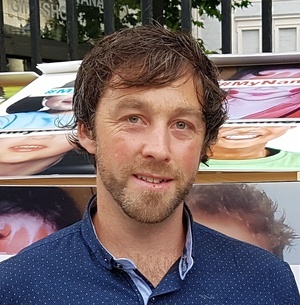
From top: Minister for Housing Eoghan Murphy; Dr Rory Hearne
Not one affordable home was built in 2017 and the government did not meet its new social house building targets as the homelessness and housing crisis continues to worsen.
That is what the headlines on news articles covering the Minister for Housing’s ‘Social Housing Delivery 2017’ statement released this week should have read. Instead we had articles like this one from RTE stating that “Department of Housing figures show social housing delivery exceeded”.
Again it’s a case of manipulation of figures, spin, and half-truths being put out by Government Departments and Ministers that were left largely unchallenged by the mainstream media.
The reality is the homelessness crisis is worsening. Just in the last year the number of homeless families has increased by 26% (from 1,205 in Nov 2016 to 1530 in Nov 2017) and the number of children homeless increased by 30% (2549 to 3333).
On this government’s watch, an additional 784 children, or two children a day, became homeless into emergency accommodation the last year.
The number becoming homeless was even larger (Focus Ireland figures show 85 families newly homeless in Dublin alone in November 2017, or over two families a day).
Why will the government not declare this human catastrophe a national emergency and give it the political attention it requires?
The housing crisis also includes low and middle income households in the private rental sector who continue to be affected by rents at ever more unaffordable levels and they face the constant threat of losing their home by being evicted by their landlord.
For those hoping to buy a home, house prices are also rising further pushing a permanent home in their community out of reach and meaning, if they do get a mortgage, it will be even more unaffordable to them.
To really address the crisis the government should be building a minimum 10,000 social housing units and 20,000 affordable housing units per annum (10,000 affordable rental and 10,000 affordable purchase).
This new building by local authorities, and not-for-profit housing associations (and a new housing and homes agency which should be set up to drive delivery) is essential because it would actually increase the new supply of housing and thus address the heart of the crisis –the lack of affordable housing supply.
Meanwhile in this Republic of obfuscation, the government claims that it met the social housing need of 25,892 households in 2017 and “exceeded its overall target for new social housing supports”.
This gives the impression it provided a significant new supply of housing. But the overwhelming majority of these, 73% (18,900) are where low income households in the private rental sector are given housing support.
This is not new supply – it is using existing housing stock in the private rental sector – and so making the crisis worse by adding to demand in the private rental sector. Neither is it social housing as we would understand it – a secure home.
Landlords can evict these tenants easily as they can others in the private rental sector. It is also very poor long term value for money as it is a huge corporate welfare transfer to landlords –almost €500 million per year to some of the wealthiest in society for which the state gets no long term return.
So if we take away the housing provided under HAP, RAS and leasing from the private sector that leaves 6,268 new social housing units. Now, that is still not new build social or affordable housing supply, 1757 of this is existing local authority housing being refurbished (referred to as ‘voids’) and 2,266 is acquisitions, or purchases from the private market, again, not new build supply.
That leaves, just 2245, of which 388 is bought from private developers in Part V. This means that in 2017 the total actual new build social housing was just 1,857 (1,058 by local authorities and 799 by housing associations).
Therefore, of the new social housing trumpeted by the government in their statement this week, just 7% is actually new build social housing. At that rate of building it would take over 50 years to meet the housing needs of those on social housing waiting lists.
The facts are that the new build of 1,857 (or, 2,245 if you include Part V units) doesn’t even meet the government’s own housing plan Rebuilding Ireland targets – set out in July 2016.
The tables below shows that the new build targets for 2017 were 3,200. So the actual new build is just over half the Rebuilding Ireland targets.


Minister Eoghan Murphy said on the release of the statement that “Rebuilding Ireland is working”. The truth is Rebuilding Ireland is not working and the government is not meeting its targets.
The overall Rebuilding Ireland housing strategy is actually going to continue to make the crisis worse because it is not providing a significant increase in affordable and social housing supply. There is no sign of the government building actual affordable housing, like affordable rental and social housing any way near the scale required.
It has money to invest in building social and affordable housing – such as the hundreds of millions planned to be given away in tax cuts, the €1.3bn allocated to a ‘rainy day’ fund and instead of allocating €750 million to finance private developers that should have used it to seed fund the setting up a of new semi-state affordable homes building company that would actually build affordable homes.
The state through local authorities, and state agencies and NAMA has significant land banks that it could be building affordable housing on now – and not be waiting for the private sector to build.
The State Lands Management Group identified a tranche of public land including 700 local authority and Housing Agency owned sites (totalling some 1,700 hectares), and 30 sites (200 hectares) owned by state or semi-state bodies in the Greater Dublin Area and other major urban centres that could build up to 50,000 homes.
Instead we have 3,333 children with their childhood being stolen from them as they are left languishing in emergency accommodation and Family Hubs.
Myself and others in #MyNameIs highlighted their plight this morning by standing in the cold outside government buildings and greeting the Taoiseach on his arrival to work (at a tardy 8.20am!), unfortunately he drove straight past us and didn’t take the time to listen to our concerns.
Instead we have hundreds of thousands of young people, couples, families, the elderly, migrants, Travellers, those with disabilities and many others denied their human right to housing–as they are left in the private rental sector, at home overcrowded with family, couchsurfing, or in emergency accommodation and Family Hubs -languishing in unaffordable and inappropriate housing.
Welcome to Leo’s Republic of (Unequal) Opportunity.
Dr Rory Hearne is a policy analyst, academic, social justice campaigner. He writes here in a personal capacity. Follow Rory on Twitter: @roryhearne
Earlier: Mel Reynolds on The Echo Chamber








MORE to folly

Ashley Perry
While stepping out of the Dublin airport into the brisk chill of an average late September afternoon in Ireland, my body immediately recognised the stark contrast of the climate that I was accustomed to.
My journey began in my hometown of Tuscaloosa, Alabama. The humidity and summer blaze can never be escaped that time of year. Ironically, at the drop of a few degrees women, idealistically called ‘southern belles’, would emerge from their well to-do neighbourhoods in knee-high snow boots and the occasional faux fur vest if that day’s events called for more upscale encounters despite the sweat accumulating before walking out their doors.
My thoughts raced but I had hoped, in a sense, I would escape the South to emerge myself in the culture of Europe. Albeit, the weather was different and women weren’t dawned in faux fur vests despite the temperature being drastically unfathomable by ‘southern belles’ but something felt familiar.
I would come to recognize that despite the weather, Ireland and Alabama had more in common than I could have ever imagined.
Studying abroad had always been my dream. As a small, town girl from Alabama, I can even recount doing a Little Miss Beauty Pageant that vaguely reiterated a small questionnaire about my hopes and dreams as I attempted, but failed, to gracefully glide across a poorly lit gymnasium.
‘Contestant Number 13, Miss Ashley Perry, would like to backpack across Europe instead of pursuing a college degree.’ As fate would have it I would move to Europe at 21, but to pursue a Masters in Human Rights.
In meeting my Irish classmates the conversation seemed to always shift to the political climate of Alabama. Questions mainly boiled down to if Alabama was still racist and if so, what were my thoughts on this. Although my classmates, who I now consider dear friends, didn’t intentionally mean to be so inconspicuous, their questions were asked to discover if I in fact was racist.
Of course, my reaction would be dripping with pure optimism about the trajectory of race relations in the South but in the beginning, I never had the heart to tell them the reality. Despite my adamant stance on the equality of all, my own maternal grandfather was an avid member of the Ku Klux Klan.
Forever haunted by my genealogical past, I did everything in my power to be the antithesis of who he was and what he stood for without exposing a well-kept family secret. At some stages of my younger life I genuinely questioned if things would ever get better or if this little portion of America would stay forever halted in the past.
When discussing race in Alabama, one will often find, within a white dominated crowd, people acknowledge the past to a degree but there will always be a quite daunting sentiment that seemed incongruent with the current race relations of America today stated. ‘When will people get over it?’
That sentence would be reiterated to me by an Irish Department of Justice and Equality official when I found myself working for an organisation that advocated for survivors of the Magdalene Laundries. Although I took the internship position to fulfil my requirements for my masters degree, I had at this point become deeply entrenched in the institutionalized abuse of women by the Catholic church.
The Official in question would ask me this at a post-United Nations review session cocktail event while still in Geneva. Even at the very meeting, him and all the others involved with the Magdalene redress scheme were to be questioned on their productivity, there was still a lack of understanding of how demeaning Ireland treated women by eliminating their own autonomy and entrapping them for almost a century.
As the words left his mouth, it was as if I’d already knew the discussion that was going to ensue because I’d had it multiple times before in Alabama. I firmly pleaded with him to understand that the issues of the past are most definitely the issues of today’s Ireland. I was met with a smug smile that seemed to purvey a sense of insignificance.
The stage and actors had been transformed but the narrative still remained. It was when I knew I had not escaped Alabama’s tumultuous race relations but simply exchanged one group of oppressors for another.
I reminisce on this day quite frequently when wrestling with the love I have for Ireland and Alabama, while recognising the horrible truths of the societies’ biases. As my Irish classmates questioned me about Alabama and the treatment of African Americans, there was cognisant thoughtfulness on how the issues of the past still were perceived as issues of today.
Although it took time, I eventually felt the responsibility to express the realities of incomplete justice to those foreign to me and acknowledge my own family member’s contribution to discrimination in the not so distant past. If only I had the courage in the moment that question left the official’s mouth to ask him to do the same.
To address that we have all been complicit in allowing the past to impede into the future and by merely admitting this sentiment allows for instigation of growth and progressive action. As a new wave of feminism sweeps Ireland, it should not be lost on anyone that the treatment of women in the Magdalene laundries is similar to the repression of women’s bodily autonomy today.
To simply ‘get over it’ would require transitional justice to be paid in full and not a conditional response to public outcry. To successfully ‘get over it’ the same issues dressed in different garments shouldn’t resurface. Whether it be race or sex, the mistreatments of the past will always reappear if not truly handled with careful consideration.
As the airwaves fill daily with new stories of African Americans being severely mistreated for the colour of their skin, my heart is always reminded that this is not isolated in progressive America but a consequence of prolonged, conditioned racism to which those who benefit from such discrimination greet with indifference. Similarly, Magdalene laundries and abortion are linked in Ireland and should be considered a consequence of prolonged, conditioned sexism.
Although the weather maybe undeniably different, the political mistreatment of vulnerable populations parallels each other in their very ignorance to the consequences of just ‘getting over something’ in juxtaposition of tactful transitional justice.
Although the air in Ireland will also be infiltrated with wind chill and the incessant heat of Alabama will be a staple of the climate, does inequality have to be?
Ashley Perry is an alumni of the University College of Dublin Human Rights MSc program. She is currently working for ‘Reclaiming Self’, an advocacy organization geared towards promoting survivors’ rights of industrial schools. She is also obtaining a MA in International Law and Diplomacy at the American University of Paris. You can follow Ashley on Twitter @ashleyyperryy






MORE to folly


From top: Taoiseach leo Varadkar with Fine Gael members commemorating the 100th anniversary of women getting the vote in Ireland last January 6; Gormla Hughes
If the first nine days of 2018 are an indicator, it’s going to be a year of spin, worthy of a Man Booker Prize; a year where people continue to show their true colours and where the Irish Government will get exactly what it wants.
More money for its corporate allies, more dinner parties and more cutsie socks, but more importantly, the creation of a career path to Europe – because it appears that there has been a mass exodus, an immigration—to Noddy Land.
I potter along sometimes, under the illusion that because I have a certain perspective on things, so do others and when I am reminded this is not the case, on occasion, very sharply, it sends me back to look at the structure of my perspective or how I developed my opinion.
It seems, from attending the school I enjoy and learn from, Twitter, opinion has been replaced with projectile verbal vomiting, which of course everyone is entitled to, in their own buckets – the problem is, by not paying attention to what is happening, they are in fact giving the government the peace and quiet it needs to continue to move forward with its undemocratic, unethical strategies and plans.
I believe it is four years ago now when I received my letter from the Department of Transport, advising me that the renewal process for Driving Licences had changed. I was now required to have my photograph (bio metric data) taken and my signature witnessed in the presence of a civil servant.
As someone who was filling herself up with knowledge on money laundering and fraud at the time, I mentally knit the new process with these. I arrived in Trim, County Meath, as early as possible to avoid the so-called queues that were being talked about.
I found the visit to be efficient and friendly. I expressed my delight with all the new technology and the woman behind the counter told me that the goal was to eventually get everyone’s details on one card. I told her that I thought this was a great idea as it increased efficiency and reduced the use of plastic which was a big plus for the environment and off I went on my merry way.
I didn’t give it a second thought until last year, when Martin McMahon (author and co-host of The Echo Chamber Podcast) began sharing his research on the PSC (Public Service Card) and the bullying tactics being used by government agents/representatives to make people use them as an identity card, but more importantly, the use and sharing of personal data without public debate or knowledge.
I do appreciate that people will jump in and say there are bigger things to get angry about, but, this behaviour is an erosion of democracy. Without holding power accountable, we begin to weave towards autocracy.
And we really do.
Eighteen months ago, a woman came to my front door and announced she was doing a survey on behalf of the European Union and asked would I be willing to participate. I said of course, it was nice to talk to a live human.
One of the questions asked was “Do you think there should be a European Army?” to which I responded yes. It is a subject I have read about, thought about and written about, privately – in other words, I didn’t take a figary that particular day.
Several weeks after the survey, the previous prime minister (I refuse to address him as Taoiseach), Enda Kenny was asked by a reporter about a European Army to which he responded “There’ll be none of that nonsense”.
Imagine my amusement and concern when, at the end of November 2017, the Irish Cabinet passed a motion for us to support PESCO (European Defence). Richard Boyd Barrett (Solidarity-PBP) accused the government of pulling a fast one, and I agree.
What the government is doing is letting the plebeians get used to the idea of defending Europe before introducing the next phase—and I am very confident there will be one.
Europe is being built in the direction of a Super State, but this concept is being micro-managed in an attempt to avoid civil disobedience or unrest. Even the Irish President, Mr. Higgins has been organised – observed with his use of the term European, even to describe ‘God’s Banker’ – Peter Sutherland.
The introduction of a European Army will impact every household in Ireland and its societal structure and therefore, I am of the opinion that it should be a matter for public debate and collective decision. The power assigned to government, the mandate to act on behalf of the people is part of the democratic process—what is not part of the process is making some citizens more equal than others, the outcome of which is detrimental.
As was done with the banking crisis.
The Central Bank of Ireland and the Irish Government colluded in assisting their corporate and banking allies. Company Law was amended to facilitate vulture funds. The Central Bank of Ireland authored and published pretty narratives that held no legal or ethical weight for the ordinary mortgage holder to lean on or use in their defence against harassment and bullying and those in the corporate world who broke the law, operated outside regulation were excused. (Even now, with the tracker mortgage scandal, there is a unwillingness to upset corporate power).
Board room tables were polished, and women were brought out to serve anything the investors wanted, with Enda Kenny assuring them there would be no ‘unrest’ in Ireland, while publicly appealing to the masses to remain calm while he brought stability to the country.
The number of people without homes is heading to nearly ten thousand. The new prime minister, who inherited the position is telling us, from his private jet wearing his cutsie socks, that homelessness is a normal outcome of recovery and there is no mention of the fact that the reduction in unemployment figures is because ‘those’ people are immigrating; in zero hour contracts; earning minimum and less than minimum wage and have to receive welfare subsidies to survive and that thousands of women in this country will not get their full pensions because it’s too expensive to reverse the austerity measures.
But there was five millions euros available to come up with a narrative to say those who did not survive the crisis and needed assistance were cheats.
Over the past decades, we have permitted the leaders of this country, through our silence and their greed, to sell our seas. Our fishing rights. Our land. Our property and use our money to fight on behalf of foreign corporations so they don’t have to pay us taxes.
But we are still not moved to demonstrate our anger. We are still not angry enough to engage in the political arena (though I note an improvement of people beginning to be public about their political affiliations).
We are engaging in civil conversations, adopting power speak in the hope they will listen, instead of demanding change, demanding accountability; demanding the authoring of new governmental ethics, where we can hold politicians to account for lying, fraud or misuse of public monies and insistence that they declare any conflict of interest eg. If a politician is a landlord he must recuse himself from engaging in any matters pertaining to rental laws or policies—where the consequences are real. The loss of position or pension – because it is in the absence of consequence that toxic masculinity begins to seep its poison.
The two main political parties, Fine Gael and Fainna Fáil are utilising the national broadcaster and many of the mainstream newspapers as extensions of their public relations campaign, for which the tax payer is also paying for.
They spend their time spewing their vitriol on Sinn Fein, probably because they pose the biggest threat to their power—and by doing so demonstrate their political immaturity (I’m being really polite).
Leo Varadkar’s defence of his political mammy, Frances Fitzgerald while she mislead the Dáil, was nothing short of embarrassing. Yet, with all his talk on properness; why has he or Simon Coveney, who have expressed their love of children and their rights, not engaged with Gemma O’Doherty on her findings on the disappearance of Mary Boyle?
Asked that the Tuam Babies scandal is investigated and support DNA testing? And as for Micheál Martin, with all his talk about ‘shadowy’ goings on in Sinn Féin—why hasn’t he taken steps to have the outcome of the investigation done by the Council of the European Union into Padraig Flynn, FF, made public; why isn’t he leading the charge on the covering up of Bill Kinneally and his abuse of children?
They are demonstrating my belief, weak leaders attack, strong leaders build—and they have brought their mediocrity into the arena of digital democracy, also.
The relatively new narrative being injected into the Irish psyche are the dangers of social media and technology. The abuse, the mob mentality, the bullying, the harassment, the implications on the legal system. My problem is that all of this existed before social media and they did and have done sweet FA about it. Their problem is that technology and social media is beginning to influence the electorate—so their actual concern is destroying that influence.
Their sense of entitlement has evolved so much, they are now throwing a noose at Digital Democracy. I’m still waiting for some tech savvy to write a piece on what has happened on Google searches.
In October last year, I was collecting information for a piece I was writing on Bosnia-Herzegovina but on the third day of writing, something happened. When I searched for domestic information, the only links that unfurled before me were tourist pages, Wikipedia and Irish business names related to the domestic information I sought. I was flabbergasted.
In November 2017, my phone was hacked. I’m not even close to being a technology expert, but I do love it. I think it is a wonder. I’m also big on personal responsibility, so made it my business long before the hack to find out how to spot it and what to do about it when it does occur.
So, yes, absolutely there are concerns (equal to the number of assholes). But with education and a portion of personal responsibility, those threats are mitigated. However, educating the public makes us less easy to scare. Less easy to manipulate—and that doesn’t serve power.
When I woke up on the January 6, 2018 to a photograph of Leo Varadkar putting a vote into a ballot box being held by five grown women, to mark the centenary of the vote for women, I wanted to release a string of expletives.
The vote was the result of women (and men) who fought, who understood the need for civil disobedience, who marched, who were prepared to interrupt their lives for women’s standing in society—and these Fine Gael women were holding a box for a man who’s just been weaned.
It was at this precise moment I wondered had everyone gone to Noddy Land.
Or were they behaving like frogs you would put into a pot of water and start boiling. They don’t notice what’s happening—until they are about to take their last breath.
Gormla Hughes is an essayist and you can follow her on Twitter @Paradisefound64
Pic: Fine Gael

Staying in tonight?
Broadsheeet on the Telly returns at 10pm streaming LIVE above and on our YouTube channel.
Join a fearless panel of old friends PLUS a couple of surprise guests as they tackle the stories of the week with honesty and an adult beverage.
All welcome.
Some ‘salty’ language.
Previously: Broadsheet on the Telly