
Author Archives: Anthony Sheridan

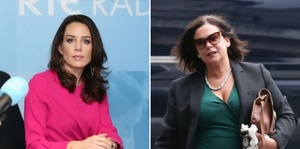
From top: RTÉ Radio One presenter Sarah McInerney; Sinn Féin President Mary Lou McDonald; Anthony Sheridan

Former RTÉ broadcaster Sean O’Rourke never made a secret of his contempt for Sinn Fein. At times his contempt bordered on outright hatred as he interrogated and insulted members of that party at every opportunity.

For O’Rourke, journalistic objectivity was never as important as keeping Sinn Féin away from the levers of power.

Sarah McInerney, O’Rourke’s replacement, seems intent on continuing in his biased footsteps.

We witnessed the latest example of this unprincipled journalism in what has become a regular RTÉ strategy when it comes to Sinn Féin – the propaganda ambush.

The ambush followed an interview of the Sinn Fein leader by the Sunday Independent. The Independent is a propaganda newspaper with a rabid hatred of Sinn Féin so it was no surprise that the interview was manipulated to demonise Mary Lou McDonald and her party.

Someone in RTE then apparently decided to follow up on the Independent’s rogue journalism by setting up their own propaganda ambush, Sarah McInerney seemed more than happy to cooperate.

I should make clear, this article is not about Mary Lou McDonald, Sinn Fein or the IRA. Those interested in how McDonald handled the interview can listen back here on the RTÉ website.

This article is about how media organisations with a particular agenda, such as RTÉ, set out to damage the credibility or reputation of certain people and organisations who are considered a threat to the political status quo.

The form and delivery of questions asked are crucial if such ambushes are to be successful. In this case the strategy used by RTÉ/McInerney can be broken down into three parts.

One: Ask a question that’s impossible to answer.

Two: Repeatedly and forcibly put the question in pursuit of self-condemnation while ignoring all answers given in defence.

Three: Include a deeply emotional element to the question.

The impossible to answer question consisted of two parts:

Was the IRA justified in killing people, and, would you have taken up arms in the conflict?

While repeatedly putting the question RTE/McInerney introduced the emotional element of the ambush by exploiting the death of a 13 year child in the conflict.

Do you really think it was justified to kill a 13 year old child?

Over three thousand people died in the Northern Ireland conflict. Tens of thousands suffered serious physical and psychological injuries. British soldiers, police officers, Unionists militia, the IRA and the British Government all engaged in the killing.

In a propaganda ambush it is important to leave out this bigger picture because it provides objective context that could weaken the damaging impact of the strategy.

RTÉ/McInerney didn’t need or indeed expect McDonald to actually say the killing of children was justified in the conflict.

It was only necessary to repeatedly throw the deceitful question at her to create an impression in the minds of listeners that McDonald was being dishonestly evasive and therefore guilty in some way – damage done, mission accomplished.

We know this was a propaganda ambush because the Northern Ireland conflict ended 22 years ago with the signing of the Good Friday Agreement.

To demand explanations from one party to the agreement so long after the conflict has ended without context and without demanding the same explanations from all other parties is clearly an exercise in propaganda.

Practically the entire world, including the United States, the United Nations, the European Union and the vast majority of citizens in the Republic and the United Kingdom, accepted the agreement and by so doing recognised Sinn Fein as a legitimate political party that was genuinely intent on pursuing its policies by peaceful means only.

Only two groups rejected the agreement, the Democratic Unionist Party and the political establishment in the Republic. Fianna Fáil and Fine Gael along with fellow travellers such as  Michael McDowell have never accepted what the world has accepted, that Sinn Féin is a legitimate political party.

By so doing they are, effectively, rejecting the Good Friday Agreement.

Their motive is as cynical as it is self-serving – Sinn Féin, as an outsider, poses a major threat to the exclusive power the established parties have wielded since independence. A power they have consistently abused at great cost to the quality of Irish democracy and the interests of Irish citizens.

The Irish media, led by RTÉ, is overwhelmingly conservative and pro establishment. The historic and, for the establishment, shocking public endorsement of Sinn Fein in the recent election has panicked them into abandoning all semblance of objectivity and professionalism in defence of that establishment.

Anthony Sheridan is a freelance journalist and blogs at PublicEnquiry.

RTE: Propaganda ambush of Sinn Fein (Anthony Sheridan, Public Enquiry)

RTE/Rollingnews

From top: Protesters rally against China’s national security law, in Hong Kong, on May 27; Anthony Sheridan

Hong Kong belongs to the Chinese in exactly the same way as the Isle of Wight belongs to the British.

Here’s how Britain came to own Hong Kong. In the 19th century the British East Indian Company was making huge profits in the illegal smuggling of drugs [opium] into China.

This criminal activity did serious damage to the Chinese economy and resulted in widespread drug addiction among the population.

The Chinese authorities appealed to Queen Victoria to stop the drug trade, she ignored them. The authorities then offered to allow the merchants to trade in tea in place of opium but this too was rejected. As a last resort the authorities confiscated supplies of opium and imposed a blockade of foreign ships.

The British responded by going to war. They defeated the Chinese and in the subsequent peace treaty demanded and were given ownership of Hong Kong.

For the next 150 years Hong Kong was ruled from London through a British appointed governor, there was no democracy under British rule.

Hong Kong citizens were never happy with this lack of democracy and frequently rebelled. In 1856, for example, when a very limited form of democracy was suggested the Colonial Office rejected the idea on the grounds that:

‘Chinese residents had no respect for the principles upon which social order rests.’

The current Chinese dictatorship holds the exact same anti-democratic view.

Chris Patten, the last Governor of Hong Kong before the territory was handed back to the Chinese in 1997, is outraged by this anti-democratic policy.

Here’s some of what he had to say in  a recent article:

“The world simply cannot trust this Chinese regime. Liberal democracies and friends of Hong Kong everywhere must make it clear that they will stand up for this great, free and dynamic city.”

But Patten’s complaints are futile and hypocritical.

They are futile because China is now an empire and Britain a mere backwater on the world stage. They are hypocritical because the Chinese are not doing anything the British did not do during their occupation of Hong Kong.

And there’s another important point, Hong Kong is geographically and culturally part of China. Britain, on the other hand is nearly six thousand miles away from its former colony.

Let’s imagine a reversal of history. Let’s imagine that China was the most powerful empire in the world in the 19th century and went to war with Britain because it was prevented from selling illegal drugs to the British people. Let’s imagine that after defeat the British were forced to hand over the Isle of Wight to the Chinese.

Fast forward to the present day and the Chinese, having lost their empire, are forced by the British to give the island back.

How would the British respond if the former Chinese colonists, from six thousand miles away in Beijing, began to lecture London on how they should govern the newly liberated territory.

I think we know the answer to that.

China agreed to give some political and social autonomy to Hong Kong through a ‘one country, two systems’ policy for a 50 year period.

That a ruthless communist regime should actually honour that promise for nearly half that period is nothing short of a miracle. Again, if the situation was reversed, would the UK honour such an agreement, particularly if its political and commercial interests were threatened – highly unlikely.

And it is principally commercial interests that lie behind the, so far, relatively benign response by the Chinese government to events in Hong Kong. The city is an extremely rich capitalist money-making machine and China is fast becoming the most powerful and richest capitalist country in the world.

The Chinese government want two things, to continue sharing the wealth generated by Hong Kong but, at the same time, exercise total political power over its citizens. In a word – they want capitalism but not democracy.

And that policy is a carbon-copy of the policy imposed by the British during their undemocratic rule of the territory.

Anthony Sheridan is a freelance journalist and blogs at PublicEnquiry.

Hong Kong And Democracy (Anthony Sheridan, Public Enquiry)

Pic: Getty

From top: Oliver Callan; Anthony Sheridan

Comedian Oliver Callan is a confused man and his confusion is getting him into all kinds of trouble.

He’s in trouble because he doesn’t understand the difference between harmless political satire and serious political comment.

If Callan was an ordinary Joe Soap comedian his confusion would not be a problem.  But Callan is not an ordinary Joe Soap, much of his income comes from powerful sources within the establishment such as RTÉ and The Irish Times.

The rule is simple:  If you work for the establishment, you don’t attack the establishment.

There’s just one exception to this rule. If you’re a comedian you can slag off the establishment if, and only if, your comments are made within the strict confines of comedy.

Clearly, Callan doesn’t understand this rule.

Recently he tweeted a very strong criticism of the leader of the establishment itself – Leo Varadkar.

‘The arrogance is astounding.  As covid19 kills scores and puts 500k on dole, Taoiseach [on full pay & exp] alleges without proof that workers are seeking layoffs to exploit benefits.  The SF leader gloats the crisis proves she’s ‘’right’.  Are we in  this together or not??? FFS’

Somebody must have had a word in his ear.  Perhaps a call from RTÉ or The Irish Times or maybe even a call from the Great Leader himself.

In any case, Callan quickly deleted the tweet with the following seriously pathetic excuse:

‘OK OK so I deleted my tweet referencing Leo’s comments on welfare applicants and Mary Lou’s opinion piece in IT.  I wasn’t fair to either of them and if we are in this together, I’ll have to simmer down too.’

This wimpish but understandably self-interested climbdown was rightfully torn to shreds on twitter.

So let’s have a look at the difference between Varadkar’s comments and McDonald’s Irish Times article.

McDonald wrote a well balanced, well informed article on the current political situation focusing particularly on the disgraceful, anti-democratic exclusion of Sinn Féin from government formation talks by Fianna Fail and Fine Gael.

Varadkar, on the other hand, obnoxiously and without any proof accused citizens of exploiting layoff benefits.

But, according to Callan’s flaky logic, Varadkar’s vile accusation is no worse than McDonald’s reasoned political analysis.

This is the mindset of a man running in fear of those with power to damage his interests.

All went quiet then…for a while.  Callan probably thought he was off the hook, that he was still in the establishment’s good books. But, once again, he made the massive error of mixing up satire with serious political comment.

In another tweet he described a speech delivered by the Great Leader as wooden and robotic.

Clearly, Callan was not getting the message – If you work for the establishment you cannot criticise the establishment.

To hammer home that message, the mistress of the establishment’s high moral ground was called into action, Irish Times columnist Kathy Sheridan.

Personally naming Callan, Sheridan did not mince her words:

‘Cheap, personal shots at politicians demean everyone involved.’

Callan, at last, got the message.

In an article that would embarrass even the most toadying, most servile supporter of the establishment Callan prostrated himself in a spineless effort to regain favour.

The Great Leader, who just days before was described by Callan as  an arrogant robot, suddenly morphed into a man of passion for his country, a man who was going to deal with the [evil] ‘shinners’, a man who was determined to leave a legacy of greatness on history.

Climbdowns as abject as this only happen after a serious slap on the wrist has been delivered.

And to copper-fasten his total allegiance to his masters, Callan jumped on the bandwagon that is the establishment’s hatred of social media, a hatred second only to its loathing for Sinn Fein:

Here’s Sheridan’s comment:

‘Just the kind of hot take that characterises the swamplands of social media along with idiotic #notmyTaoiseach hashtags.’

And Callan’s servile parrot:

‘Social media…a place where the cringey hashtag ‘Not My Taoiseach’ trends with regularity.’

Ah yes, I think we can safely conclude – Callan has definitely been put back in his box.

Anthony Sheridan is a freelance journalist and blogs at PublicEnquiry.

Back In His Box (Anthony Sheridan, Public Enquiry)

Rollingnews


From top: Tesco, Parnell Street, Dublin 1; Anthony Sheridan

Mindfulness is a positive and very popular activity that enhances the lives of many people. Here’s a basic definition of the practice:

Mindfulness is the basic human ability to be fully present, aware of where we are and what we’re doing.

But now, darkly on the horizon, the evil cousin of mindfulness is upon us – forgetfulness. Here’s my definition of forgetfulness:

People who are away with the birds, not in the least bit aware of where they are or what they’re doing.

The initial response to the Coronavirus lockdown was almost 100% cooperation and awareness by the population, especially the supermarket population. But now, as complacency sets in, the virus of forgetfulness is rapidly spreading.

Last week when I visited a local supermarket there was two gel dispensers and two wipe dispensers. Yesterday, the dispensers were still there…but empty.

OK, I might have been unlucky to arrive just as the last drop of gel and the last wipe had been used from the four dispensers but, you know, what are the chances? Still, it’s a great supermarket so perhaps somebody just forgot to make a re-fill.

Anyway, on to the next supermarket and I’m having a look at some Easter eggs…one must indulge from time to time, mustn’t one?

I’m acutely aware that a woman is patiently waiting at a safe distance for me to finish, so I’m on a high speed scan of the goodies.

Suddenly, a father and daughter duo arrives…right next to me, with no awareness whatsoever of the danger they were putting the three of us in and no awareness that there’s a safety queue.

Because I don’t want to die I immediately retreat a safe distance while they excitedly discussed their options.

The patient, safety aware woman in the queue rolled her eyes to heaven and [perhaps because of the weekend that’s in it], I was miraculously granted direct access to her thoughts…’’I hope the bastards die’’, she screamed in her head.

My goodness, I thought, that’s a bit extreme hoping she hadn’t been granted the same miraculous powers as me.

I decided to head back to the first supermarket where there was a very large range of Easter eggs, so lots of room to peruse. When I arrived I was delighted to see just one man having a look.

Unfortunately, he was one of those very strange people that seem to inhabit supermarkets. Initially, he stood stock still looking at one item for what seemed like forever and then, slowly but ever threateningly, he began to move towards me.

When he began to breach my safety space I [again] retreated and waited for him to choose…and waited…and waited…and waited.

Exasperated, and beginning to understand the mindset of the woman in the other supermarket I went to the other end of the display. But, like some evil monster in a horror movie, he began to sidle his way back towards my safety space even though he had already forensically stared at every item there.

Now, anybody who knows me will confirm that I’m a timid, retiring, very reluctant to express an opinion type of guy…but…the forgetfulness virus of my fellow citizens is beginning to warp my gentle, Mother Teresa type personality into a….GET THE FUCK OUTTA MY SPACE YOU IDIOT…type of guy.

I mean, I’m fighting it…but I can see it happening.

Anthony Sheridan is a freelance journalist and blogs at PublicEnquiry.

Deadly forgetfulness virus is spreading (PublicEnquiry)

Rollingnews

From top: Elaine Byrne’s column in the Business Post; Anthony Sheridan

Anthony Sheridan writes:

Elaine Byrne believes Mary Lou McDonald and her party are lacking in moral courage and are therefore unfit to govern.

Sinn Féin does not deserve a pass until Mary Lou and her leadership demonstrate genuine moral courage.

Ms Byrne is not alone in holding such an intolerant, undemocratic and hypocritical view.

The entire horde of establishment journalists have been scrambling around in panic ever since polls indicated that Sinn Fein have become a major force in Irish politics.

This development comes as no surprise to ordinary citizens who have suffered catastrophe after catastrophe as a direct result of political corruption in Fianna Fáil and Fine Gael.

The very fact that Ms Byrne obviously believes that these two parties are in possession of any semblance of moral courage destroys her credibility as an objective commentator.

But Ms Byrne may not recognise this criticism because, like all establishment commentators, she operates from within the extremely restricted realm of the political establishment.

Looking out from that bubble Ms. Byrne can see and is indeed very angry at the massive damage inflicted on Ireland and its people by the disease of political corruption.

We know this because she wrote a book outlining in great detail every major incident of political corruption perpetuated principally by Fianna Fail and Fine Gael since the formation of the state.

Unfortunately, Ms. Byrne does not, for whatever reason, possess the moral courage to actually name Fianna Fáil/Fine Gael as the guilty parties.

Instead, she falls in with the rest of the baying mob of ‘journalists’ in passing judgement on those, such as Sinn Féin, who challenge the power and privilege of our corrupt ruling political class

Anthony Sheridan is a freelance journalist and blogs at PublicEnquiry.

Sinn Féin must show moral courage on modern issues (Elaine Byrne, Business Post – behind paywall)

Elaine Byrne: Lacking moral courage to name names (Anthony Sheridan, Public Enquiry)

Earlier: ‘Will I Get The Coronavirus If I Vote Sinn Féin’

When reading I tend to scribble notes, underline and even, from time to time, express an opinion in response to the subject matter of the book.

I always keep at least two biros handy in case one runs out of ink and I’m suddenly left without the means to record my thoughts before they escape through my ears.

The other night one of my biros did run out of ‘fuel’ so it was quickly consigned to the wastepaper basket. But then, I stopped and looked at the abandoned pen and began to ponder its existence.

My first thought was that I had just casually and unthinkingly thrown away an amazing and perfectly operating machine just because it had run out of its once-off supply of fuel.

Given the rapidly dwindling resources available to us avaricious humans, I thought, wouldn’t it make much more sense to design the pen so that the fuel could be replenished thus extending the life of the machine by many years.

It is true that some biros are designed to take a refill but these are usually in the more expensive range. And, it’s fair to say, it wouldn’t make economic sense to manufacture refills for the ubiquitous BIC biros.

But the biro featured here (above), the one I threw away so casually comes under a category I would call – promotional. Trillions of them are manufactured every year and given away free to promote an endless list of causes and businesses.

Just look at it. It’s a superbly designed and, I would say, beautiful machine with simple parts. It’s easily disassembled with the capacity to refill.

It’s my favourite pen design – slim, metal, with good balance weight and comfortable to hold. I would keep this pen for a lifetime if refills were available.

And then my thoughts came back to us modern avaricious humans and I wondered.

Suppose this pen, fully fuelled up, was to slip into a worm hole and travel back in time to a human occupied cave of about 20,000 years ago.

It would cause a sensation, it would be revered as a gift from the gods or, even, a god in itself. The cave humans would use it to create cave art. They would probably draw the pen itself, such was its incredible design and power.

And when the pen ran out of its magic fluid they would mourn the loss of its lifeblood. But the pen would remain, would still be worshipped and be seen for what it is, an amazing machine unlike anything they had ever seen in nature.

The pen would be handed down to generation after generation with ever fantastic stories and myths surrounding its origin, power and destiny.

It would eventually be discovered by the descendants of the cave people – us.

And promptly consigned to the nearest wastepaper basket.

Anthony Sheridan is freelance journalists and blogs at PublicEnquiry.

Death of The Pen God (BackGardenPhilosophy)

Pic via Anthony

From top; Construction at the National Children’s Hospital; Tom Parlon, Director General of the Construction Industry Federation [CIF]; Anthony Sheridan

Tom Parlon, former politician and Director General of the Construction Industry Federation [CIF] has come out as a comedian.

It’s not clear if Parlon intends continuing with his job at the CIF but the quality of his comedy sketch on yesterday morning’s Today with Sean O’Rourke on RTÉ Radio One would surely indicate that he’s bound for global fame on the comedy circuit.

Basing his sketch on the Government’s open cheque book joke for contractors to build the National Children’s Hospital Parlon led with one of his oldest but most hilarious jokes.

This is the one about contractors, while struggling to make a few cents profit against all the odds, recklessly risking everything they possess in order to help out the national economy and those seeking to put a roof over their heads.

He continues with some brilliant one liners on why costs continue to rise into the stratosphere.

“It’s a busy, busy time for contractors.”

“There’s been some big accidents in China and elsewhere in the world.”

“Stuff is scarcer.”

“Contractors don’t get a penny more than they’re entitled to.”

[No, seriously, he did say ‘stuff is scarcer‘.]

And the new comic genius introduced a brand new type of joke – the one worder.

“Brexit,” snapped Tom and the audience fell about in stitches.

Before listeners could catch their breath with their laughing he followed up with some great new jokes.

The rising costs of the 2 billion hospital, said the budding comedian, can be compared to someone ordering a gear-change car and, when going to collect it, suddenly says:

‘Jesus, I want to change my mind and buy an automatic, only to discover that it will cost more.’

And, like all great comedians Parlon roped in a member of the audience to help him make his jokes even funnier.

After telling Sinn Féin health spokesperson Louise O’Reilly that a delay in the delivery of fireboards had added substantially to cost overruns she helpfully asked:

“Tom, what percentage of the 1.7 billion overrun is down to the delay in fireboards?”… the

Hilariously, Tom responded:

“Haven’t a clue.”

Poor old Sean O’Rourke finally realised he had been set up by his producers. This wasn’t a serious interview analysing the out of control billions for the National Children’s Hospital.

It was the launch pad for Tom Parlon’s new career.

Listen to the full sketch here, highly recommended.

Anthony Sheridan is freelance journalists and blogs at PublicEnquiry.

Rollingnews

From left: Paul Anthony McDermott SC; Mass Card

During a discussion on RTE Radio 1’s Today with Sean O’Rourke surrounding the controversial bail granted to a taxi driver accused of sexual assault Senior Counsel and lecturer in Law at UCD Paul Anthony McDermott was crystal clear:

“We have the concept of bail because of the presumption of innocence. Under our system nobody can decide you have committed a crime other than the jury. So, not the media, not the Gardai, not anyone. It is only a jury.

So we take the view that unless and until twelve members of the public decide you have committed a crime the system works on the basis that you didn’t commit it.

That is regarded as a constitutional right but even if we amended the constitution in the morning the European Convention on Human Rights to which Ireland is a party also requires a presumption of innocence.”

I’m sure Mr. McDermott will be greatly surprised to learn that his statement is incorrect.

The Irish state does not universally extend the presumption of innocence to its citizens.

There is one very specific crime that the State considers to be so heinous that those found guilty are not just liable to a prison sentence of ten years or a €300,000 fine but are also deprived of the presumption of innocence principle.

That crime is the selling of even one Mass card without the written permission of a Catholic bishop.

There are many who will find it difficult to believe that such a law could exist in a modern democratic republic; so here it is in black and white.

Charities Act 2009

99: [1] A person who sells a Mass card other than pursuant to an arrangement with a recognised person shall be guilty of an offence.

[2] In proceedings for an offence under this section it shall be presumed, until the contrary is proved on the balance of probabilities, that the sale of the Mass card to which the alleged offence relates was not done pursuant to an arrangement with a recognised person.

I am not a legal person so I am open to challenge on my interpretation of this law; which is:

A person who sells a Mass card without the permission of a Catholic bishop will be presumed guilty until he/she can prove the contrary.

The crux of the presumption of innocence principle is very straighforward:

It is not for the accused to establish his/her innocence. It is for the prosecution to prove the guilt of the accused.

Article 99 [1] turns this principle on its head.

Therefore; in Ireland:

The presumption of innocence that is implicit in Article 31.1 of the Irish Constitution does not apply to those accused of this crime.

The presumption of innocence under Article 6 of the European Convention of Human Rights does not apply to those accused of this crime.

The presumption of innocence under Article 11 of the United Nations Universal Declaration of Human Rights does not apply to those accused of this crime.

To my knowledge nobody from the legal profession has challenged this draconian law so it is reasonable to assume that, for that profession, there is no difficulty.

It is, however, reasonable to expect members of the legal profession such as Mr. McDermott to include this exemption to the presumption of innocence principle when delivering an opinion on the issue.

Anthony Sheridan is freelance journalists and blogs at PublicEnquiry.

Rollingnews

From top: Irish Times’ Pat Leahy; Anthony Sheridan

The standard of political analysis within Irish journalism is disturbingly poor. There is one simple but very troubling reason for this.

Most journalists are loyal members of the establishment and as a consequence refuse to even acknowledge never mind actually write about the dark, underlying reality that lies at the heart of Irish politics.

The dark reality is that the three centrist parties, Fine Gael, Fianna Fáil and Labour, are not separate political parties struggling to attain power in order to implement policies for the greater good of Ireland and its people.

The dark reality is that these three parties constitute a corrupt political class that, for the most part, works to enrich itself and those who support its agendas.

The economic catastrophe and consequent extreme austerity inflicted on the people of Ireland by this ruling political class since 2008 has resulted in very serious damage to its credibility and as a consequence to its power.

Labour has been virtually wiped out by an angry electorate while Fianna Fáil and Fine Gael have been so damaged they have been forced into a coalition of desperation where they are engaged in a life or death struggle for political dominance.

The establishment media plays a major role in propping up the power of this corrupt political class. Journalists do this by simply ignoring political corruption altogether or by retreating into a parallel reality.

A recent article by Irish Times journalist Pat Leahy provides us with a good example of how establishment journalists ‘analyse’ politics from within this parallel reality.

In the article Leahy is making the point that the Left in Irish politics is not serious about achieving its political goals. They prefer talking to doing, he says. He goes on:

If power is impossible without compromise and personal sacrifice, they prefer the empty dance of politics without the prospect of power.

This, of course, is a ridiculous conclusion. But such silly opinions are not unusual among journalists like Leahy because, while they must be able to see the rot in the political system, they are not, for whatever reason, prepared to expose it.

Clearly, Leahy doesn’t realise that the three centrist parties are a political class masquerading as separate entities.

We witness his ignorance by his use of the term ‘go figure’ when describing how Fianna Fail and Fine Gael can operate on any point of the political spectrum without apparent scruple.

Political parties of integrity and principle do not do this. They avoid associating with parties of opposite ideologies altogether or lay down very strict conditions for any coalition deal.

A single ruling political class, particularly one infected with the disease of corruption, has no scruples about moving to any position on the politcal spectrum if it suits its purpose.

That’s why, for example, the Labour Party had no difficulties in collaborating with Fine Gael’s extreme right-wing austerity policies.

Leahy further demonstrates his ignorance of the political landscape by asking the following question:

What, exactly, is the difference between the Labour Party and the Social Democrats apart from the fact that they cannot get along together at a personal level?

The answer, of course, is that the Labour Party is a loyal member of the corrupt ruling class. The party sold out on its socialist principles and political integrity in 1992 when Dick Spring went into coalition with the criminal politician Haughey shortly after [accurately] describing Haughey and Fianna Fail as ‘a cancer on the body politic’.

The Social Democrats, on the other hand, represent the complete opposite of what Labour has become. The Social Democrats came into existence as a direct result of exposing corruption within the ruling class.

The party’s leadership know very well that they would be signing their political death warrant if they were to associate themselves with any of the parties that constitute the corrupt political class.

It is incredible and deeply disturbing that a journalist such as Leahy, who is considered an expert on political analysis, is not aware of this obvious political reality.

But, as I said at the beginning – the standard of political analysis within Irish journalism is very poor.

Anthony Sheridan is freelance journalists and blogs at PublicEnquiry.

Top Pic: Dalkey Book festival

From top: RTÉ’s Miriam O’Callaghan; Mary Lou McDonald and Arlene Foster in Derry for the funeral of murdered journalist Lyra McKee; Anthony Sheridan

Falling revenue coupled with a serious challenge from social media has in recent times prompted the establishment media to emphasise how important professional, objective and well researched journalism is to society [See here and here for examples].

Unfortunately, these claims of high quality journalism are more fake news than fact particularly when the establishment media is reporting on those who pose a threat to the interests of the ruling political centre made up of Fine Gael, Fianna Fail and Labour.

Sinn Féin represents the greatest threat to this exclusive political club and for that reason is frequently targetted by establishment media.

RTÉ in particular has effectively abandoned all pretence of objectivity when it comes to interviewing Sinn Fein representatives.

A comparison between an RTE interview with DUP leader Arlene Foster and what can only be described as the interrogation of Sinn Fein leader Mary Lou McDonald on the day of the funeral of murdered journalist Lyra McKee clearly exposes the blatant bias of the national broadcaster.

Foster was interviewed on Morning Ireland in a carefully choreographed piece that portrayed her and her party, the DUP, in a largely positive light.

First we heard a short 37 second clip of Foster speaking earlier on BBC Radio Ulster in which she expressed her feelings during the funeral of murdered journalist Lyra McKee.

RTÉ reporter Tommie Gorman was then invited to respond and proceeded to give a glowing account of how the DUP was ready to engage in talks but [unfortunately] Sinn Fein was adopting a strategy of caution.

Arlene Foster was then respectfully and professionally interviewed by RTÉs Gavin Jennings without interruption or bullying but also without any serious challenge of her views.

She was allowed to promote the view that she and her party were very willing to sit down with Sinn Féin [if only they would cooperate] and sort out any issues they had.

Tommie Gorman was again invited to give his assessment of Foster’s views. He proceeded to give another glowing account of how the DUP was eager to get politics back on track in Northern Ireland and, again, concluded his analysis with a negative description of Sinn Fein’s election strategies North and South of the border.

Later on in the morning, and in stark contrast, Sinn Féin leader Mary Lou McDonald was interrogated, bullied and insulted in a disgraceful display of bias by Miriam O’Callaghan/RTE on Today with Seán O’Rourke.

The interrogation was preceded by yet another clip of Arlene Foster speaking as if her only wish in life was to bring peace and harmony to the whole world.

In the fifteen minute interrogation that followed McDonald was agressively interrupted no less that 31 times. She got to answer just one question without a bullying intervention.

It was clear to any objective listener that O’Callaghan/RTE was not in the least bit interested in McDonald’s views but rather in trapping her into expressing a negative opinon on the question of resolving the political stalemate at Stormont.

It was also clear that O’Callaghan/RTE were not interested in informing listeners that the DUP were responsible for the collapse of the Northern Ireland Assembly. That it was the DUP who initially accepted but then walked away from a compromise agreement with Sinn Fein in 2018.

In her efforts to trap McDonald, O’Callaghan didn’t bother too much with facts. For example, she claimed that in his sermon Fr. Magill was asking people to compromise when in fact he did no such thing.

McDonald, rightly, upbraied O’Callaghan for putting words into Fr. Magill’s mouth.

The moment of ‘victory’ for O’Callaghan/RTE came when McDonald said that Sinn Fein would not be capitulating to those [DUP] who wish to hold back progress in every form.

Triumphantly, O’Callaghan crowed:

“So am I hearing – ‘Sinn Fein says NO’?”

This was the whole point of the interrogation, to extract a negative soundbite from McDonald that would portray Sinn Fein as the party that was refusing to compromise on talks to restore the Assembly.

But there’s a bigger, more important reason for the constant attacks on Sinn Féin by the establishment media and that is the threat that Sinn Féin, as an outsider, poses to the power of the ruling centre of Irish politics.

For years now, in election after election, this ruling political elite, that has done so much damage to Ireland, has been losing the trust and consequently the votes of Irish citizens.

The weaker the political centre becomes the more strident and more blatant the attacks on all outsiders who pose a threat to its political power.

Over recent years RTÉ has drifted from a position of relative objective journalism to a point where many see the station as nothing more than an obedient mouthpiece for the ruling political class.

I would recommend listening to the O’Callaghan interrogation of McDonald to obtain a true sense of just how biased RTE has become.

Alternatively, take a quick scroll down the reproduced interrogation below which signposts every interruption by O’Callaghan.

Continue reading →