



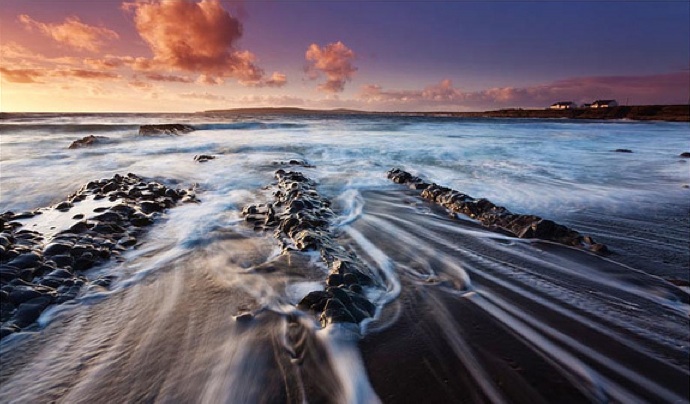
 Taken at sunset on Saturday in Ireland.
But where?
Lines close at 5pm.
 Via Balls.ie
 httpv://www.youtube.com/watch?v=eXfc12BqFkc
Three years this has been languishing in the vaults of MGM. At least it’s not just another paint by numbers serial killing yokel story.
Release Date: April 2012
Knee Ha
at
 Irish Times Letters


Previously: We Loved That Knee


The new Irish star has achieved the A standard to compete in the 3,000 metres steeplechase in the London Olympics next year but [coach Chris] Jones said yesterday that she will not be running in this event.
Instead she will go about qualifying for the two longest events on the track, the 5,000m and 10,000m.
“Fionnuala is just not suitable to the steeple for a couple of reasons,” said Jones. “Primarily because of her slight physique it takes a real effort for her to get over the hurdles which is a handicap when compared to the best steeplechasers in the world.
“It took me quite a while to convince her that the ‘chase was just not her best event and it was unfair to keep asking her to compete at world-class level. And if you look at the best runners in the ‘chase they all have impressive times in the 1,500m and that is another disadvantage for Fionnuala.
“I would be confident that if things go according to plan in the next six months that Fionnuala will get the standards for both event and give a good account of herself in the 10,000m in London because she has the stamina and this ability to absorb whatever discomforts she will encounter.”
Britton’s London Ambitions Take New Course (Tom O’Riordan, Irish Times)
(Sasko Lazarov/Photocall ireland)

Piercing ball of hotness Economist Stephen Kinsella of the University of Limerick, writing in Foreign Affairs:
Ireland is broke. The value of the country’s output is at a virtual standstill (around 160 billion euros), and the IMF projects it to stay that way for the next few years. Meanwhile, unemployment is at 14.5 percent, and roughly half of the unemployed have been jobless for a year or more. Ireland’s households are among the most indebted in the world. Several indexes, such as the EU’s Survey on Income and Living Conditions, show that the country’s poorest are worst affected. Accordingly, suicides, alcohol consumption, and violent crime have all risen since the construction bubble first burst in 2007. Although there have been protests and muted anger over the dinner table, however, there has been no rioting on the scale of that in Greece. All told, the Irish are bearing a considerable burden fairly well.
But it’s not all bad news.
Oh, hang on. It is.
Their resilience is especially striking considering that the Irish economy is much worse than that of the eurozone as a whole. Eurozone private consumption is expected to rise by 1.4 percent this year, but Ireland’s will grow by only 0.6 percent. The eurozone’s governments will be increasing spending on public services by 0.1 percent, but Ireland will be cutting spending by 3.1 percent. Since 2007, investment as measured by gross capital formation in Ireland has fallen by 74 percent, but in the eurozone it has fallen by only 11 percent.
But let’s end on a happy note.
And by ‘happy’ we mean:
The nation is also indebted; the current budget deficit stands at 16 billion euros. To cover it, in 2010, Ireland borrowed 67.5 billion euros from the European Union, the IMF, and others, in exchange for punitive austerity measures. The recent EU deal to strengthen its fiscal compact will most likely prolong Ireland’s period of austerity. Noonan is powerless to go another way, as any finance ministers who follow him will be. Within three years, Ireland is bound to return to budget sustainability, reformulate its banking sector into two highly capitalized “pillar” banks with a mandate to deleverage, and deregulate its protected sectors, such as the legal and medical professions.
.