



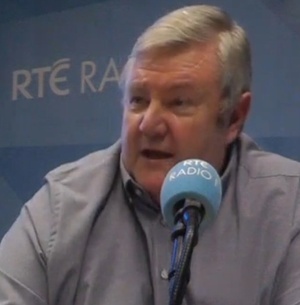
 From top: Irish Times’ New Year’s Eve 2018 message; David Runciman’s How Democracy Ends; Derek Mooney
A well-known Irish politician once allegedly opined that: “Irish Times editorials read as if they were written by an auld wan sitting in a bath of lukewarm water”. He may also have suggested, a little more colourfully, that the bathwater reached less than halfway up the tub.
The bath water must have been on the chillier side of lukewarm December 29th’s editorial entitled: “Democracy in Retreat” was being written. It expressed an almost dystopian concern that democracy is now under threat across the globe.
It cited a range of phenomena and political shifts to support its claim, including: Trump, Brexit, the rise of populism of nationalism and of xenophobia and the gains made by the both the far-left and far-right.
Even as I sit down to start writing this piece more evidence, which would seem to support the Irish Times line, is appearing with videos of the vile and nasty abuse Tory MP Anna Soubry endured on Parliament Square yesterday at the hands of a gang of ultra-hard-line brexiteers.
The irony of a group of aggressive and loutish middle-aged men trying to intimidate and bully an elected representative who is doing nothing more than expressing her sincerely held views, while calling her a Nazi and fascist is doubtless lost on them.
More worryingly it also seemed lost on the band of pundits and commentators who took to Twitter to suggest that Soubry was responsible for what was happening.
Though not the worst of them, the Conservative blogger and columnist Tim Montgomerie, who usually makes a virtue of his liberal democratic credentials, wrote:
“The abuse is unacceptable and I condemn it but a parliamentarian who advocates overturning a referendum result she promised to respect should not be surprised at unleashing such ugliness.”
The rough translation into plain English of these weasel words is:
I should be deeply embarrassed by some of my fellow brexiteers and should be finding a way to see how we can unite to tackle the extremists but, instead, I want people to blame Soubry and others for not going along with us and persisting in having views of their own
Are these all threats to very existence and continuance of democracy or are they the challenges that we cyclically face that serve to knock us out of our complacency and remind us that democracy can be fragile is at all times worth protecting and defending.
Is there a really and systemic threat to democracy today, or is what we are seeing with Trump, Brexit, populism etc., a worrying but manageable response to the climate of uncertainty following the 2008 global crash?
Indeed, has there ever been a time in modern history when, in the aftermath of an economic crash, there hasn’t been a group of people sitting in lukewarm baths thinking that the world outside their immediate social circle was going to hell in a handcart?
We should not be surprised that many people question the competence of their democratic and political institutions when the events of the past decade suggest that world of finance and banking has more sway than democracies.
Neither should we be complacent about the future of liberal democracy when the claim can be made that some banks are a bigger source of repression than extremist regimes.
Yes, there are very worrying signs and trends across Europe and the Globe.
Yes, far too many people feel that governments serve the vested interests of others and are not responsive to them, but all is not yet lost.
As the pro market economy academic Johan Norberg has argued:
”Contrary to what most of us believe, our progress over the past few decades has been unprecedented. By almost any index you care to identify, things are markedly better now than they have ever been for almost everyone alive.”
On almost every single metric life is better now than it was in the past. The world is now a safer, better educated and more peaceful place than it was.
It is a trend that continued in 2018.
Global poverty is falling steadily with more people being lifted out of poverty worldwide – at a rate of about 125,000 per day – than fall into it.
While there are still wholescale atrocities being carried out in Syria, Yemen and Sub Saharan Africa (Sth Sudan Mali, Chad etc), according to the Global Terrorism Index 2018 deaths from terrorism declined by 27% last year and are now 44% below their peak. According to the Uppsala Conflict Data Program (UCDP) the number of war fatalities is dropping and is now half of what it was four years ago.
At 3.9% the global child mortality rate is still far too high, but it is half what it was in 1998. According to UNESCO there are now 99.7 girls in primary and secondary schools for every hundred boys.
Democracies own numbers are also on the rise. According to any of the four academic ratings systems used to classify political systems in various counties around the globe, the proportion of democracies is at an all-time high. The Polity measure says the percentage that are now democratic is 59% compared to 50% in 2000.
Where there is an issue is the number of those democracies earning the top score. In 2005, 32% scored the top mark, that had fallen 28% by 2016 – though bear in mind that was during the period when the number of democracies significantly increased.
I could go on quoting stats, but you hopefully get the point.
The examples that the Irish Times gave are just as real as the ones I offer. So, where lies the balance?
I am, perhaps, being a bit unfair to Irish Times. I am sure their editorial was intended, on the eve of 2019, as a call to action: a reminder that we all have duty to protect the democracy that ultimately protects all of us.
It’s a call I heartily endorse, but I would strongly suggest that what is now in threat is not democracy itself – and at this point it is worth noting that their editorial was based on the warnings contained in David Runciman’s book: How Democracy Ends – but rather the norms of tolerance and fair play that underpin democratic discourse.
Picking the right target would make be easier to call more people to action – especially if you avoid telling them that the cause you are calling them to is destined to fail. Perhaps the lapping of lukewarm bath water took their mind off this?
Derek Mooney is a communications and public affairs consultant. He previously served as a Ministerial Adviser to the Fianna Fáil-led government 2004 – 2010. His column appears here every Tuesday Follow Derek on Twitter: @dsmooney


