Tag Archives: Great irish Non-Fiction

Number 6: A Secret History Of The IRA by Ed Moloney.

Selected by: ‘Otis Blue’

First published: 2002 by Penguin with a revised edition in 2007.

Available? Still in stock and available at most library branches in Ireland.

Why? “No shinner I, but this is a revelatory and essential read about the risks taken to secure peace in the North.”

Craft: “Meticulously written and richly-detailed, for me it’s as much about what Ed Moloney doesn’t say.”

Surprising nugget: “Though not necessarily intended to be sympathetic to Gerry Adams, you sense from this book that History may yet be kind to him.”

Who would like this? “It’s one for revanchists, revisionists and realists.”

Great-Irish Non-Fiction’ is a reading list of 100 books chosen by YOU and highlighted over the coming weeks. If you would like to include a favourite leave your suggestion below.

Previously:

Gene Kerrigan
Bobby Sands
George O’Brien
Terence Patrick Dolan
Eamonn Sweeney
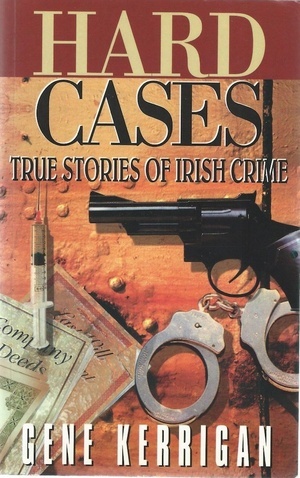
Number 5: Hard Cases: True Stories of Irish Crime by Gene Kerrigan.

Selected by: NIgel.

First published: 1996.

Availability: No longer in stock but available at most library branches with second-hand copies  on Amazon and eBay.

Why:Hard Cases was the first Irish non-fiction book I truly fell in love with. Written with polished journalistic clarity and precision, these are absolutely riveting true crime stories.

It stays with you: “Ending with the epic account of the Border Fox that is tense, fast-paced and amazing with its twists and turns, an extraordinary and vivd sustained narrative of pure human folly. It reads like the best Irish crime film never made.”

Who would like this?Anyone who likes crime writing, true or fiction. Anyone who likes good journalism. Anyone who enjoys good strong, well-written, unputdownable narratives, made all the more hair-raising by knowing this stuff actually happened.

Great-Irish Non-Fiction’ is a reading list of 100 books chosen by YOU and highlighted over the coming weeks. If you would like to include a favourite leave your suggestion below.

Previously:

Bobby Sands
George O’Brien
Terence Patrick Dolan
Eamonn Sweeney

Great Irish-Non Fiction List

Number 4: One Day In My Life by Bobby Sands

Selected by: Bernie.

First published: 1983 (having being written on ‘toilet paper with a biro refill’ in Long Kesh three years earlier).

Available: Still in stock, also at most library branches nationwide with second-hand copies available on Amazon and eBay

Why: “Owing to it being written by an undaunted man of such tender years, who sacrificed his life for five very basic human demands.”

Reading experience: “It’s the most harrowing and raw book that I have read to date, detailing the sadistic, punishing torture and beatings of a man by prison guards. No matter how vicious and cowardly they were to him, and the other nine men also on hunger strike, they could not break them’.”

Ongoing resonance: “I read this book aged 13  his words (and the unchecked acts of the prison officers) remain ingrained on my brain and heart. He and the other nine hunger strikers paid the ultimate price in a war they should never have had to fight. Bobby Sands’ poem, ‘The Rhythm Of Time’ is a poem that everyone should read, also, the strength of his unflinching spirit is something I still draw on, in testing times.”

‘Great-Irish Non-Fiction’ is a reading list of 100 books chosen by YOU and highlighted over the coming weeks. If you would like to include a favourite please leave your suggestion below.

Previously: Great Irish Fiction: Number 3

Great Irish Non-Fiction: Number 1

Great Irish Fiction: Number 2

Great Irish-Non Fiction List


Number 3:  The Four Green Fields by George O’Brien.

Selected by: ‘Hans Zeuthof’

First published: 1936.

Available?: Available at most library branches with second-hand copies on eBay and Amazon.

Why? “A beautifully-written, brilliant oversight of the young State, the North and relations with our nearest neighbour.”

Contemporary resonance?: “O’Brien laments the national question going to the fore when the social question needed more urgent tackling.”

Significance: “For this line, among many, O’Brien deserves to be on the shelf: ‘The anti-treaty party has certainly made the Free State safe for the bourgeoisie‘.”

‘Great-Irish Non-Fiction’ is a reading list of 100 books chosen by YOU and highlighted over the coming weeks. If you would like to include a favourite please leave your suggestion below.

Previously: Great Irish Non-Fiction: Number 1

Great Irish Fiction: Number 2

Great Irish-Non Fiction List

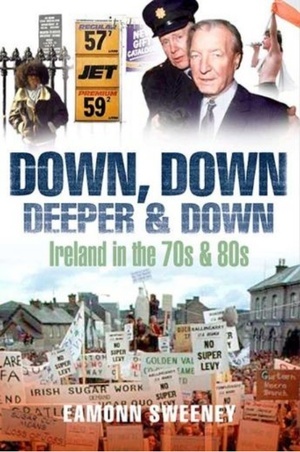
Pic via Amazon

Number 2: Down Down Deeper & Down by Eamonn Sweeney

Selected by: Cian.

First published: October, 2010 by Gill and MacMillan.

Available?: In stock.

Why? “An example of great Irish non-fiction owing to its ability to effectively be an academic paper equivalent of ‘Reeling in the Years‘ – including bits too bad to ever go on RITY Had to go dig it out as thinking of a submission led me to ‘that 80s book by that journo’.”

Significance?: “Thorough and usable as a tertiary historical source yet written in an entirely accessible manner.”

Sequel?: “There was some suggestion of an 80s/90s follow up but nothing as yet.”

Great-Irish Non-Fiction’ is a reading list of 100 books chosen by YOU and highlighted over the coming weeks. If you would like to include a favourite please leave your suggestion below.

Previously: Great Irish Non-Fiction Number 1

Great Irish-Non Fiction List

The Dictionary of Hiberno-English (1998)

Number 1. The Dictionary of Hiberno-English by Terence Patrick Dolan.

First published: 1998 by Gill and MacMillan (not in stock).

Closen by: Sarah K

Why?: “Owing to its legitimising and honouring of the Irish use of English and recognition and promotion by the author [a UCD professor of Middle English] of Dublinese as a dialect rather than us just ‘not knowing how to speak proper’. It’s also a record of the Irish words in use today that are intertwined with our use of English. With the constant erosion of local words and phrases this book presents an archive of our unique dialect and tongue.”

How is it significant? “The language of our every-day is recognised and not seen as something less than that of our English neighbours. It shows how we have taken an inherited tongue and made it our own. The dictionary presents a fascinating etymology of words and can be treated as a living document that will evolve and grow as our demographic and language evolves and grows.”

Who would like this? “Anyone who is new to living in Ireland and has no clue what people are talking about. Helps them not feel like a right gobshite when having the craic down the pub.”

‘Great-Irish Non-Fiction’ is a reading list of books chosen by YOU and highlighted over the coming weeks. If you would like to include a favourite please leave your suggestion below.

Previously: Great irish Non-Fiction