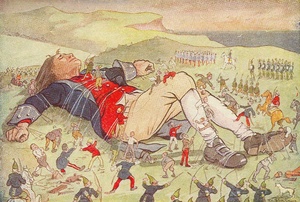
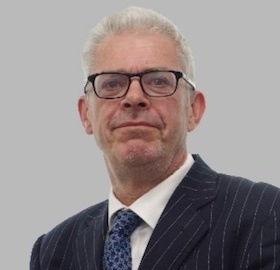
 From top: Jonathan Swift face mask; David Langwallner
A Ted Talk by Brendan O’ Fúcbag, Eminent Irish Civil Servant to a Meeting of the Bilderberg Group in Lockdown. Location Geneva.
It is a melancholy object to those, who walk through this great town of Dublin, or travel in the country, when they see the streets, the roads, crowded with beggars, children, teenagers, all in rags, importuning every passenger for an alms, their simple homes now requisitioned by legitimate – if unfortunate – legal procedure.
Such people would traditionally face the happy prospect of a migratory adventure, to Britain, America, or the Indies. But now all borders are closed and that state policy of exporting the surplus population is impossible. And work at home is impossible because of the Level 5 lockdown and the tourism and hospitality trade now on the brink of extinction.
Decision Makers and Thought Leaders in these times have to make hard choices, tough choices, and honest choices.
I think it is agreed by our representatives of all Irish parties – that is to say, FG and FF – that this prodigious number of children in the arms, or on the backs, or at the heels of their mothers, and frequently of their fathers, is in the present deplorable state of the kingdom, a very great additional grievance; and therefore whoever could find out a fair, cheap and easy method of making these inappropriate adults and children sound and useful members of the commonwealth, without the necessity for export or internal destitute deserve so well of the public, as to have his statue set up for a preserver of the nation.
But my intention is very far from being confined to provide only for the children of professed beggars: it is of a much greater extent, and shall take in the whole number of infants, children and adults, of the vulnerable, so they no longer need seek the charity of the state – our state, built by our forefathers – making great demands upon the welfare system, the charitable- that is to say, the NGO sector, and the courts by bringing frivolous and entirely valid cases. These people regrettably are welfare spongers, a drain on our resources.
As to my own part, having turned my thoughts for many years upon this important subject, and maturely weighed the several schemes of our projectors, I have always found them grossly mistaken in their computation. Now I have a rough calculation on the fiscal cost of such people, who contribute nothing to the economy. I believe they are part of humanity as are we all (hands raised to heaven for dramatic effect) – and we owe them compassion but firm treatment.
The number of souls in this kingdom being usually reckoned three million and a half, of these I calculate based on governmental estimates, helpfully provided, that in the light of current and future plagues, the potential decamping of all industry thanks to the presently suspended Apple judgment, the destruction of the hospitality and tourism trade and the depression now upon us, that we can no longer afford even to debate such frivolous notions as a wealth tax, social – that is, free – homes, or any other such redresses posited for ‘inequality’ (for to put it plainly, there is no more a solution to Inequality than to Gravity!).
Our learned friends in NAMA – National Association for Misery and Austerity and our esteemed thought leaders have advised us prudentially.
While acknowledging that austerity is the fate and burden of a great many of these fine people, we must also consider that with immigration now only a slight possibility, drastic measures will have to be introduced to deal with the over 2 and a half million surplus in the light of the virus.
How then should this awful number be reared and provided for? Which, as I have already said, under the present situation of affairs, it is utterly impossible by all the methods hitherto proposed. For we can neither employ them in handicraft or agriculture – those industries in receivership or bankruptcy and soon to be without the steady subvention of European subsidy.
They cannot afford houses or apartments – not even a humble rural cottage – many resort to entrepreneurship in the form of controlled substances or – worse, being idle, they take it upon themselves to play at lawyering, busying our judiciary with frivolous and costly actions “in the public interest”.Continue reading →