



No point just sitting there crying.
Further to much concern among readers who rent.
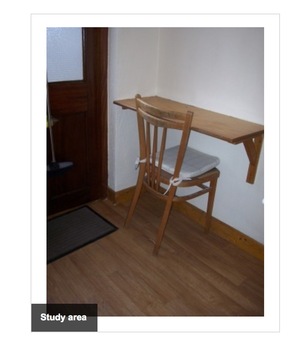
With zero control, zooming prices and broken crying chairs littering Daft is there anything tenants can do if a landlord notifies them that their rent is being increased?
We asked Legal Coffee Drinker what’s it all about.
Broadsheet: “Legal Coffee Drinker, what’s it all about?”
Legal Coffee Drinker: “It’s about landlords trying to get as much as they can out of tenants in an apparently rising rental market.”
Broadsheet: “Is this even legal?”
Legal Coffee: “Part III of the Residential Tenancies Act 2004 provides that a review of the rent under the tenancy may be effected by either party. Section 22 of the Act states that where the landlord reviews the rent, he must serve a notice in writing on the tenant stating the amount of the new rent and the date from which it is to have effect. If the tenant doesn’t challenge the reviewed rent, it takes effect 28 days from the date of the notice or the date on which it is stated to have effect, whichever is the latest.”:
Broadsheet: “The tenant doesn’t have to accept the reviewed rent?”
LCD: “Absolutely not. All residential tenants have the right to challenge a reviewed rent by making an application to the Private Residential Tenancies Board (‘the PRTB’) to have the Board determine whether it is really market rent. The tenant has 28 days from the date of receipt of the notice of rent review to make that application, which should be made by registering with the PRTB as a tenant [link below], submitting the Dispute Resolution Form available and paying the necessary fee of €15-25 (€15 Euros for online application; €25 for paper application).”
Broadsheet: “And what happens then?”
LCD: “Well, once a dispute resolution form has been submitted, the dispute resolution in Part 6 of the 2004 Act comes into force. The parties are given a choice between having the correctness of the rent determined by mediation or arbitration. Mediation involves both parties trying to agree the rent; arbitration involves an individual nominated by the PRTB listening to both sides and coming to a decision. If either party is unhappy with the decision of the arbitrator, or if no agreement can be reached on mediation, the matter may be appealed/referred to a three-person body known as the Tenancy Tribunal, which will make the final decision. ”
Broadsheet: “And what sort of view is the Tenancy Tribunal taking on market rent?”
LCD: “Difficult to say, as there have been very few applications challenging rent increases to date. The Tenancy Tribunal will only approve a reviewed rent which is equal to or less than the rent the landlord would get for the premises on the open market. Ideally each side should have examples of rents charged in respect of similar premises, which have been recently let in the area.”
Broadsheet: “So if all the landlord is looking for in the increase is the rent that he would genuinely get the premises for in the open market, there’s no point in challenging the review.”
LCD: “Agreed. If the increased rent is indeed the open market rent, the PRTB must uphold it. But it’s up to the landlord to prove this. And the PRTB generally is not unsympathetic to tenants, where there is room for doubt.
Also, the 2004 Act provides that the rent may not be reviewed at all during the first year of a lease or more often than once a year. Rent reviews breaching these timelines can be struck down by the PRTB even if at market rent.”
Broadsheet: “Do you need a lawyer to take proceedings before the PRTB?”
LCD: “No. In fact the PRTB encourages parties to represent themselves or be represented by a friend. It’s just a question of turning up and having your say. Threshold often provides volunteer advocates for tenants on request.”
Broadsheet: “Is there a risk that it will end up costing you money? ”
LCD: [drains coffee] “Only the dispute resolution fee, your time spent, and the expense of any witnesses you bring along. Although in theory the PRTB can make costs orders against parties, this is rarely exercised against the tenant – except maybe in cases where they fail to turn up for the hearing without excuse. ”
Broadsheet: “As it would demonstrate tardiness.”
LCD: “Right.”
Broadsheet: ” If you can’t even be bothered to show up for the hearing. Anarchy!”
LCD: “Are we done?”
Broadsheet: “We are. Thank you Legal Coffee Drinker. Hopefully you’ll be our ‘friend’ at a future board hearing if Karl’s mum starts charging us to use the den.”
LCD: *click*