Tag Archives: Seanad Referendum

senate1


Thirty senators were appointed to the Senate by WT Cosgrave, Liam’s father, in December 1922 and a further 30 were elected by the Dáil. The recreations listed by senators were as intriguing as the senators themselves and ranged from pig-sticking to collecting English china. The New York Times remarked that the first Senate was “representative of all classes”.
In all, seven peers, a dowager countess, five baronets and several knights were represented. The Senate consisted of 36 Catholics, 20 Protestants, three Quakers and one Jew. Cosgrave’s nominees numbered 16 southern unionists. The first Senate was the most curious political grouping in the history of the Irish state.


They were pig-sticking loons.

But they were OUR pig-sticking loons.

The Hands that Shaped History (Elaine Byrne)

Picture; irish Times

12/1/2012. Mary Rafterys Funeral ScenesfotIrish Times journalist and writer Fintan O’Toole suggests writing the word ‘Reform’ on the voting slip in tomorrow’s Seanad referendum.

All fine and dandy but the Returning Officer for Galway Marian Chambers Higgins has said there “is a strong possibility” that the vote will be rejected.

Anyone?

Say No to Seanad abolition and the Coalition’s reform charade (Fintan O’Toole, Irish Times)

‘Strong possibility’ extra writing will spoil vote (Hilary Martyn, Galway Independent)

Laura Hutton/Photocall Ireland

H/t Adrian Devane

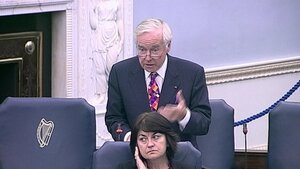
0007f088-642Last night the Government lost the vote in the Seanad on the Upwards Only Rent Review Bill 2013.

We asked Legal Coffee Drinker what’s it all about.

Broadsheet: “Legal Coffee Drinker, what’s the Upwards Only Rent (Clauses and Reviews) Bill 2013 all about?”

Legal Coffee Drinker: “It’s a Bill, initiated by Senator Fergal Quinn [above], designed to abolish upwards only rent review clauses in pre-2010 leases.”

Broadsheet: “Upwards only rent review clauses?”

Legal Coffee Drinker: “Most commercial leases provide for five-yearly rent reviews. An upwards only rent review clauses is a clause which provides that the rent on review cannot fall below previous rent or rents. It is designed to protect landlords in a falling rent market but can be extremely harsh on tenants.”

Broadsheet: “Upwards only rents? In this market? How come these clauses haven’t been abolished already?”

Legal Coffee Drinker: “Well, it’s not for want of people asking the Government to abolish them. In 2009 legislation was enacted prohibiting upwards-only rent review clauses in post-2010 leases; but by 2010 most tenants knew better than to agree to a upwards-only rent review clause anyway…
“What no Government to date (despite pre-election promises) has been prepared to do is invalidate upwards only rent review clauses in pre-2009 Act leases, which are the ones causing the real harshness.
“One reason given for this is possible unconstitutionality in interfering with parties’ rights and obligations. Another possible reason is that the Govenment doesn’t want to annoy lenders who granted mortgages in the belief that these clauses guaranteed rents. Of course, they don’t really, because a landlord, no matter how much the law is in their favour or how good their legal team, can’t get money off a tenant which that tenant doesn’t have.”

Broadsheet: “So the new Bill? What does that do?”

Legal Coffee Drinker:“Initiated by Senator Fergal Quinn, it does precisely what the Government was asked to do, and didn’t – it abolishes upwards-only rent review clauses altogether.”

Broadsheet: “And yesterday the Seanad voted in favour of the Bill, despite the Government specifically asking them to vote against it. What’s the significance of that?”

Legal Coffee Drinker: “One of the main criticisms of the Seanad, put forward by the ‘Yes’ campaign in the Referendum, is that it has no useful purpose and will never act differently from the Government, because the Government controls its composition and can therefore always secure a majority vote.
“This is an argument which was made on a previous thread, and it’s not an entirely unfair one given the history of the Seanad – there are only a very few occasions, until yesterday none of them particularly recent, when the Seanad as a body has failed to approve Goverment bills or has voted in favour of a Bill with which the government does not agree.”

Broadsheet: “Is this simply a desperate attempt to justify the Seanad’s existence?”

Legal Coffee Drinker:
“You could call it that. You could also call it a message, from the Seanad, that it has the potential to act independently; that it is not the lapdog of the Government and that it is prepared to exercise its powers – one of which, Article 27, was discussed in a previous post – so as to act as a check and balance on the Government when necessary. Perhaps a message communicated rather late in the day, but, some might say, better late than never.”

Broadsheet: “And will the Bill now be passed?”

Legal Coffee Drinker: “Not a bit of it, unless there’s a Dail rebellion. Bills initiated in and passed by the Seanad have to be approved by a majority of the Dail before they can become law. But the approval of the Bill can only add to the pressure on the Government to do something about upwards-only rent review clauses, and weakens the argument that the Seanad, being merely a government lapdog, has no useful role to play as a check and balance. People who – like me – might have considered voting YES tomorrow may perhaps [drains coffee] reconsider in light of the, extremely belated, discovery by the Seanad of its teeth.”

Broadsheet: “Thanks Legal Coffee Drinker.”

Four Labour senators absent as Govt loses Seanad vote on rent reviews (RTE)

(RTE)

debateThe current issue of Metro Eireann.

Rachel Mathews McKay, of Democracy Matters, writes:

Looks like we were waiting for the debate in the wrong direction. ‘Metro Éireann’ Ireland’s Multicultural Newspaper accepted an article from me and said nothing about the opposing article/debater. To my surprise I have discovered it’s no less than An Taoiseach himself. Worth the €1.90 if you can find a shop that sells it.

Metro Eireann

onehouseonehouse

Former ministers Alan Dukes (Fine Gael) and Liz McManus (Labour) launching the One House last-minute poster campaign for Friday’s Seanad referendum outside Leinster House this morning.

Both are walking on pretty thin ice in fairness supporters of the” civil society campaign” for a Yes vote organised by the One House group.

Hang on….

senatorFIGHT!

Previously: “It’s Crude And It’s Wrong”

Pictures: Conor McCabe

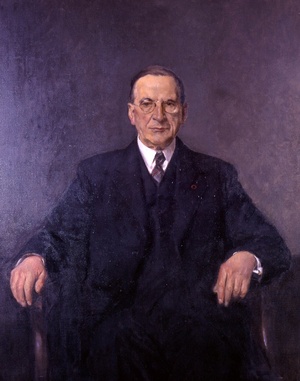
devaleraEamon De Valera on Sen and the art of motor maintenance.

“We are apt to think of a Second Chamber and base our conclusions upon it on two very false assumptions. One is that it is a check or a brake which will operate at the time that we think brakes and checks ought to act; and secondly, that we can compose a Seanad of persons who will take a detached view, and will not be affected by political passions at a moment of crisis. Those are two absolutely false assumptions. That they are false appears at once the moment you examine them closely. The very idea of a brake is that there is somebody who will put it into operation just when it is wanted. When the motor is speeding downhill the person at the wheel has got this particular device at his command, by which he is able to check the mad career of the car which may take him over a precipice.

There is there the controlling power, but what is a Second Chamber when we think of it as a brake? Does it act in that way? Will it act just as we want it to act, supposing at a time when democracy is heading for ruin? We cannot provide that it will act. It is much more likely to act like a badly adjusted brake, which will act when it is a cause of friction; when it is preventing the car from getting up the speed which is necessary in order to travel properly. It operates in times of ordinary activity. It operates to prevent the speed which is necessary, and which otherwise could be attained. It is a cause of friction. It operates then because it is easy for it to operate then. It certainly does not operate at the time when we want it most—at the time of crisis—because, as I have said before, in times of revolution it is swept aside.”


Eamon De Valera, 1934.


FIGHT!

Noël Browne speaking on Seanad abolition, November 1957 (William Quill)

Portrait via Oireachtas.ie

Thanks Kieran Binchy

90315894Let’s go to work.

Urging a yes vote to abolish the senate introduce a Court of Appeal on the ‘plinth’ this afternoon were cross-party members from left: Labour’s Mr Pink Alex White, Fine Gael’s Alan Shatter, Sinn Fein’s Padraig MacLoughlainn and Fianna Fail’s Sean O’Fearghail.

Louis Copeland.

So much to answer for.

(Laura Hutton/Photocall Ireland)

Olivia+O+Leary1-1Olivia O’Leary’s radio column for RTE R1’s Drivetime on the Seanad referendum.

It is all so crude, that’s what strikes me about the message on those lurid blue posters. Save 20 million, fewer politicians, abolish the Seanad. It’s crude and it’s wrong. Quite apart from the fact that of course you won’t be saving 20 million Euros, because among other things you’ll have to pension them all off, there’s a bigger issue.

My big worry is that we’re choking off voices, closing down an arena for debate and free and open debate is the stuff of democracy. Governments like silence; democracy is noisy. Of course the Government wants rid of the Seanad- scrutinising legislation, it can hold things up; it takes up Ministers’ time. OK, the Seanad as it stands urgently needs reform.

“It doesn’t work” says the Government. “And it didn’t do much barking as a watchdog during our boom and bust”, it says. Well, neither did the Financial Services Regulator, you know, and yet the Government didn’t decide to abolish the Financial Services Office, it set about reforming it.

This country, more than most, needs debating arenas, it needs the breathing space in which proper debate can be held.

People think the Irish are argumentative. We’re anything but argumentative. We have a very weak sense of civic society, our rights and influence. And that’s partly the influence of a once all-dominant church. But it’s also because government here is centralised more than any other country in Europe. And time and again we accept without question what our government masters lay down.

Even when we knew what the disastrous consequences of the property bubble could be because we’d seen it all in the UK in the 80s, we bought into our own bubble and we didn’t question the Government’s decision to inflate it with tax breaks. i mean, I realised only when I read Anton Murphy and Donal Donovan’s book “The Fall of the Celtic Tiger” this summer, that our government gave tax breaks for people buying property to rent outside this country, so Irish tax payers were asked to subsidise borrowings for apartments in Bulgaria and Croatia. How did that happen to the Irish economy? Why didn’t we debate and challenge it? And later, even when the blanket bank guarantee was given with the massive debt implications we face now, only a few TDs, including the Labour Party, challenged it.

You’ll say quite rightly that the Seanad didn’t challenge these things either. No it didn’t. Because as now elected, it is dominated by two main political parties. Reformed, a range of vocational bodies could nominate candidates and then they could be democratically elected on the same day and with the same electorate as the Dail. that way you get a range of people from across Irish life; even more of the WB Yeatses, the Douglas de hIdes, the Mary Robinsons, the Catherine McGuinnesses, the Mary Hanrys, the Gordon Wilsons, the Brid Rogers, the John A Murphys, the David Norrises, the John Crowns that we have had already, because these were the people who made the Seanad worthwhile.

I will never forget Gordon Wilson’s Enniskillen voice bringing into the Senate his own brand of wisdom and of generosity, Mary Robinson in the Seanad arguing passionately for family planning rights for Irish people, for the human right to divorce and warning of the dangers of putting a ban on abortion into the Constitution, Catherine McGuinness pointing out that she was perfectly happy to see the Adelaide Hospital become less Protestant as long as Catholic hospitals became less Catholic, Michael D Higgins reminding us that our consciences had to extend to South and Central America too.

These are people of ideas and there is nothing in the world more powerful than ideas. That’s why the Seanad often seemed a bigger place than the Dail. It spent more time concentrating on legislation and the ideas behind legislation than the point scoring we see at Leader’s Questions in the Dail. And the Seanad seemed more representative of Irish life, including particularly the dissenter tradition of Trinity senators, many of whom counted Northern Irelanders among their electors and who were fearless in challenging the status quo. We will be much poorer without that dissenter debating tradition, we will be much poorer without that debating chamber.

I am not surprised that Sinn Fein, with their record on democracy, want to get rid of the Seanad, but I am saddened to see Richard Bruton from Fine Gael’s Social Democratic wing leading the posse. I don’t think Garret Fitzgerald would have done that, or Liam Cosgrave. And as for Enda Kenny, doesn’t it strike you as a bit sinister that as well as closing down this debating chamber he is refusing to come out on the public airwaves and debate the issue with the opposition leader?


 Listen here

Earlier: Three Days To Save Democracy

senate

The Seanad Takeover.

A documentary looking at some famous faces and their thoughts on the Seanad including Michael Collins, Mary Robinson, John Fitzgerald Kennedy, W.B. Yeats and David Norris… The documentary ends with discussion regarding the Seanad Reform Bill 2013 which could by Christmas help get people more democratically involved.

FIGHT!

Directed and edited by Marcus Howard.

Thanks Naoise


Article 27?

We asked Legal Coffee Drinker.

Broadsheet: “Legal Coffee Drinker, what is Article 27?”

Legal Coffee Drinker: “It is a provision in the Constitution which provides for a referendum on a proposed law, where the President, a majority of the Seanad and at least one third of members of the Dail are of the view that the change proposed is of such national importance that the will of the people should be ascertained before it becomes law.”

Broadsheet: “Is it exercised very often?”

Legal Coffee Drinker: “To my knowledge it has never been exercised to date.”

Broadsheet: “Why is it significant?”

Legal Coffee Drinker: “Its operation is dependent on there being a functioning Seanad. If the Seanad is abolished, this provision goes as well by default.”

Broadsheet: “Will we even miss it?”

Legal Coffee Drinker: “Well, the fact that it’s never been used to date doesn’t mean it might not be needed in the future. Also, I wouldn’t underestimate its deterrent effect. There’s a great quote by the American constitutionalist Thomas Paine:

a single legislature, on account of the superabundance of its power, and the uncontrolled rapidity of its execution, becomes as dangerous to the principles of liberty as that of a despotic monarch.”

I see these checks and balances on the Dail as a bit like insurance; we may not need to rely on them, but it’s handy to have them in case the worst arises. We have to remember that any abolition of Article 27 – or the Seanad – doesn’t just apply for the life of this current Dail; it will continue for generations into the future. Are we really confident we can do without them?”

Broadsheet: “Anything else?”

Legal Coffee Drinker: “Speaking personally, I don’t like the idea of increased concentration of power. Just because Article 27 hasn’t been used to date, doesn’t mean it might not be needed in the future. Also [drains coffee] I wouldn’t underestimate its deterrent effect.”

Broadsheet: “Thanks Legal Coffee Drinker.”

The Constitution