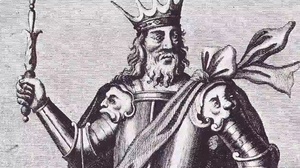
Another part of UCD’s History Hub’s video series on the Battle of Clontarf – Commemorating Clontarf: 1014 through the Ages.
Mick Liffey writes:
The video looks at how the battle has been commemorated in the last 1000 years. It focuses on how the story of the battle was reshaped for political purposes at various different times in Irish history, beginning with Brian Boru’s great-grandson at the start of the twelfth century, through the romanticisation of the story in the seventeenth and eighteenth centuries, to Daniel ‘O’Connell’s use of the battle in the mid-nineteenth century during the Repeal movement. Finally, it looks at the relationship between the Irish Volunteers and the Battle of Clontarf at the time of the 900th anniversary in 1914, and later, on the eve of the 1916 Rising.
The video features contributions from UCD historians Dr Elva Johnston, Dr Eamon O’Flaherty, Dr Conor Mulvagh as well as Dr Meidhbhín Ní Úrdail of the UCD School of Irish, Celtic Studies, Irish Folklore & Linguistics. It was wholly funded by the UCD School of History and Archives.
Meanwhile…
Piper Mark Redmond (top) plays a specially-commissioned [by Dublin City Council] piece for the uileann pipe composed by Sandie Purcell to commemorate the Battle of Clontarf.
We won the battle, but lost King Brian, beheaded in his tent by a fleeing Manx viking called Brodir invited over to kill him by his estranged Viking Princess wife, Gormflaith. Brodir himself was killed himself shortly afterwards by somebody called Wolf the Quarrelsome, whom he had annoyed on the battlefield. The outcome of the battle discouraged Viking invaders, but Brian’s death caused the Irish leadership to disintegrate into chaos. The only real winner was Gormflaith’s son Sitric Silkbeard, King of Dublin, who had been sensible enough to keep his forces within the walls of Dublin for the entire battle. He remained King of Dublin for the next twenty or so years.