
Tag Archives: Vincent Browne

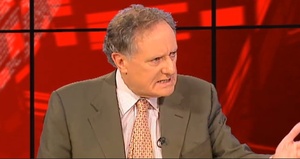
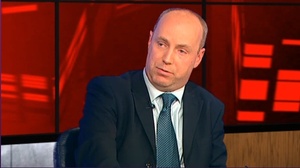
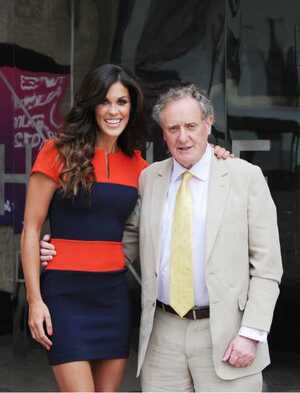
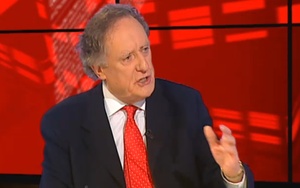
You may have witnessed the ideological clash between Vincent Browne (above) and Dan O’Brien (top), Irish Times Economics Editor over the extent of the wealth gap in Ireland on last night’s Tonight with Vincent Browne on TV3.

It got pretty intense.

Browne said despite the bank debt Ireland is the16th richest country in the world (if you exclude the oil sheikdoms).

O’Brien disagreed (with the ranking of 16th) and said we’re actually 35th, accusing the host of excluding countries he didn’t like. (Dan even brought in the figures).

He added that wealth taxes are ‘very unusual’ around the world and quizzed Browne on how more equal distribution could possibly happen – and even suggested the electorate isn’t interested in such measures.

He said: ‘Nobody is voting for this. You’ve been talking about this for decades. People don’t seem to want it when it comes to election time. How is it going to be achieved? Are you going to go in and take their bank accounts? Are you going to take their homes off them? How do you achieve this equality issue?’

During the boom, he claimed, more money went on welfare than public sector pay – despite public sector workers being very well organised.
Browne replied: “We were one of the most unequal countries in the western world, according to the OECD in the boom years.”

O’Brien literally exclaimed “Vincent, if I hear you say that again, I’m really gonna knock my head off the desk. That is absolute rubbish and because you repeat it a million times, will not make it true.”

BOTH men then said that OECD figures would back up their relative positions.

They then discussed the gini coefficient.

Which is when we went to bed rang Ewok’s dad.

He said:

The Gini Coefficient is a measurement from zero to  one [ zero – perfect egalitarianism. 1 – perfectly unequal wealth distribution]. That’s what all these figures are saying. And according to this, “Ireland is the eight most unequal country in OECD countries’.
If you scroll down to page 2, top of the page I think Figure 2 is what illustrates VinB’s argument best. It basically shows from 2009 to 2010 a rapid growth in inequality. Dan was wrong. What 2010 to 2012 figure would show is another question…

Watch show here

Just answer the question.

Sigh,

Etc.

Simon HallI writes:

I’ve been watching Vincent Browne for years, and have never seen him interviewed.  I wanted to get some of his views first-hand.

So I sent him an email…


Simon Hall: As a child, in the 1950s, you spent a year at Coláiste na Rinne, the Gaeltacht near Dungarvan, Co. Waterford. I, too, spent many summers in that same spot. What are your memories of that time, and place?

Vincewnt Browne: It was very raw. Cold, bleak and at times cruel. But I became fluent in Irish there and easily got honours in the Leaving Certificate six years later having learnt no Irish in the interval. It also taught me maths.

Simon Peter Hall: While attending UCD in the 1960s, you must have taken part in discussions about the move to Belfield, Minister of Education Donagh O’Malley’s proposed merger of UCD and Trinity, and much more besides. You also established the ‘College Tribune’ in 1989, so you’ve been involved in college life for decades. Do you have a favourite story about UCD? Did anyone, in particular, influence you strongly?

Vincent Browne: I have no recollection of any discussions or debate in UCD in the mid-Sixties about the move to Belfield, which, in retrospect, seems odd. I do remember thinking however that it was a bad decision. It would have been possible for UCD to buy up properties on Stephen’s Green at the time and extending down Dawson St; more interesting than what it has become.
The argument I know is that it would have been very difficult to cater for the 25,000 students that now populate UCD but, I think, it could have been done at a time when property was relatively cheap.

Hall: You once wrote, reflecting on your coverage of the Soviet invasion of Czechoslovakia in 1968, and the quashing of the “Prague Spring,” that you had learned “the falsehood of optimism. That the belief of inevitable progress towards democracy, freedom, equality, fairness and justice was unfounded. And not just in Czechoslovakia.” Do you think the results of the Arab Spring alters that conclusion?

Browne: I hope I didn’t write about the “falsehood” of optimism but I do believe there is not an “inevitable” progress towards democracy, freedom, equality and justice. Indeed western societies are a good deal less equal, more unjust and less free than they were in the 1960s.

Hall: You’ve had a hand in breaking many controversial stories over the years, to do with the links between the Workers’ Party and Official IRA, the DIRT scandal, and so on, and you’ve also been the subject of controversy from time to time. What is the most important fact, from all that time, which you think the people of Ireland should know about, but is widely ignored or forgotten?

Browne: By far the most important fact is the scale of inequality here and how this is not at all inevitable or unavoidable. The Institute of Public Health published a report ten years ago, “Inequality in Mortalities” which found that because of inequality there were around 5,400 premature deaths here every year. The political establishment is in denial about this and society in general is too.

Hall: What piece of advice would you give to fledgling writers beginning in journalism?

Browne: Don’t. No jobs, no prospects and, anyway, it is not what it is cracked up to be.

(Short) Vincent Browne Interview (SimonHall.ie)

Another night.

Another Big Phil apologist fan.

Fine Gael’s James Daly, for Cork South West, on Tonight With Vincent Browne, where he was pressed to say what he thought of Fine Gael Environment Minister Phil Hogan’s intervention in the housing of a Traveller family.

You know how this ends.

Browne: “Phil Hogan, joining in an effort to deny constituents of his housing in Kilkenny. Did you have any reserves about that Jim? Did you feel embarrassed by that?”

Daly: “As I understand it, he wrote to the council to make an enquiry on behalf of a constituent. That’s something that a lot of us have to do. I don’t share the views of all my constituents but many times they’ll ask me to find out something for them, or…”

Browne: “He wrote, saying, assuring the constituent who had protested about the possibility of a Traveller family entering their area. He wrote, as it happened, wrongly reassuring them this wouldn’t happen. In other words, he was on their side, in attempting to deny a Traveller family accommodation. How do you feel about that?”

Daly: “Well, you see, like constituency politics isn’t always easy. And you’ll often be asked to make enquiries for people that you may not support yourself down deep. And, as I understand it, and at this stage, I’m not here to defend Phil Hogan, he’s well able to speak for himself and how he carries out his constituency work is not something that I want to be…”
Browne: “But the question is…that you talk for yourself I assume?”

Daly: “Yeah.”

Browne: “The question I asked you is about yourself.”

Daly: “Right.”

Browne: “How do you feel about what Phil Hogan did?”

Daly: “How do I feel about it?”

Browne: “Yes, that’s exactly what I’ve asked you. Four times now. Go on.”

Daly: “Ehm. First of all, I’m not certain that he did anything wrong in making an enquiry to the council.”

Browne: “How do you know it’s only an enquiry? Isn’t it likely that it was a representation and he seemed to be claiming credit, for denying a Traveller. Even if he didn’t make a representation to the council on this behalf. To claim credit for keeping a Traveller family out of a home, how do you feel about that?

Daly: “The first thing I took from it, from that story when I head it, is that it does maintain the integrity of the system in allocating houses through the council. I mean the council did what they were going to do anyway. And I’m delighted that that happened one way or the other. But, as I understood it, and I’m not here to defend Phil Hogan, he can do that himself. The way I understood it, he made an enquiry to the council and…”

Browne: “I’m asking you what you think, what do you think about him, claiming credit for a Traveller being denied accommodation. A family constituent being denied accommodation? What do you think of that?”

Daly: “Well, irrespective of it being a Traveller or not, I wouldn’t be proud of denying anybody accommodation, on any…I think it’s immaterial whether…”

Browne: “You’re not happy about it?”

Daly: “I personally think it’s immaterial whether it was a Traveller or whether it was somebody from an ethnic minority…or…”

Browne: “But isn’t it particularly vicious if it’s a Traveller, a community that’s already subjected to discrimination and prejudice?”

Daly: “Well, I don’t know the details of the case…”

Browne: “Don’t mind about the details. You know in general about Travellers.”

Daly: “No, no, you’re trying to…I won’t comment on a specific of it being a Traveller. I’m making the point. I think it’s immaterial if it was a Traveller, or whether it was a member of another ethnic minority. It was a person being denied housing. And I certainly wouldn’t be supportive of that. But I’m not sure if you’re going be making an enquiry to know if they’re going to be given a house, is that the same thing as trying to deny him a house? I don’t know. I didn’t see the correspondence. I didn’t see that detail.”

Browne: “But you saw the letter that he wrote?”

Daly: “I didn’t. I didn’t see the letter he wrote.”

Browne: “You didn’t see it in any television programme. You didn’t see it in any newspapers, nothing?”

Daly: “I didn’t actually. I didn’t see the letter, no. I did not see it, no.”

Watch here.

Previously: “I Don’t Get Paid Enough For This”


Last night’s Tonight with Vincent Browne

Kieran O’Donnell, Limerick Fine Gael TD, refuses to condemn Phil Hogan’s intervention in the housing of a traveller family in his constituency.

Much to the host’s eventual mental breakdown.

Browne: “Kieran, are you proud of what your party colleague, Phil Hogan, did in this instance – reassuring or assuring neighbours in this area that a Traveller family wouldn’t be housed in that area?”

O’Donnell: “Well Vincent, my understanding is that, this was, one particular family went to Minister Hogan with a query. And the minister’s office, they actually I think got on to his office, the minister’s office went back to the local authority and basically gave back the information. I think, once again, I go back to my own view, and I represent a lot of Travellers in my own constituency. So I don’t differentiate between people.”

Browne: “My question was are you proud of what Phil Hogan did, in this instance?”

O’Donnell: “But Phil Hogan basically represented a constituent with a query and went back.”

Browne: “We know that. I’m asking you though: Are you proud of what you did?”

O’Donnell: “What he actually did was he made a representation.”

Browne: “So you think it’s fine. You think it’s fine, it’s OK.”

O’Donnell: “No, no, I think that. A query came in from a constituent which he got from the local authority.”

Browne: “We know that.”

O’Donnell: “And he went back.”

Browne: “Do you think that what Phil Hogan did was OK?”

O’Donnell: “And the system, Vincent, is robust. The family are in the house, which is important.”

Browne(wailing): “Do you think what Phil Hogan did was OK?”

O’Donnell: “But what he did…”

Browne: “Don’t mind Yes, or no? Is it OK to…”

O’Donnell: “What he said himself, what he said himself Vincent…”

Browne: “Don’t mind…”

O’Donnell: “What he said is he did his work as a constituency TD. And we get a lot of representations.”

Browne: “Right. I’ll try it again. I’ll try one final time and then I give up. Do you think what Phil Hogan did in this instance was OK?”

O’Donnell: “I think..he made..what he’s said himself, he stands over what he did…”

Browne (crying voice): “No but we know, we know, we know…”

Speak over each other.

O’Donnell: “I can’t say any more than that, Vincent.”

Browne: “You can. You can tell us whether you think it’s OK or not.”

O’Donnell: “I think that the system…”

Browne: Just say ‘yes’ or ‘no’.

O’Donnell: “The system was robust.”

Browne: “‘Yes’ or ‘no’. Was this conduct OK or not?”

O’Donnell: “His conduct was that he went and made a rep…”

Browne: “WE KNOW! Was it OK or not?”

O’Donnell: “No, no, but what I want..”

Browne: “What is the problem? Do you have a problem in saying ‘yes’ or ‘no’?”

O’Donnell: “No, Vincent, you’re not listening to me. You’re not listening to me.”

Browne: “Yeah… I am I wish I weren’t but yeah.”

O’Donnell: “Martin (from Pavee Point) made reference to it earlier. I don’t see people. If this representation was made by someone, we’ll say, in respect of someone who wasn’t a Traveller, right?”

Browne: “I don’t get paid enough for this.”

O’Donnell: “What? You don’t get paid enough? I’ll look for an increase on your salary,

Watch here

The strident claims that privacy legislation would curtail vigorous investigative journalism in holding the powerful to account are laughable. Laughable not just because privacy legislation would have no relevance to holding the powerful to account, but because there is almost no journalism here that seeks to hold the powerful to account and, in truth, there never has been.


Ah.

Media Continues To Fail To Hold Powerful To Account (Vincent Browne, Irish Times)


Yay.

The gang’s back.

A colourful, Flathan-free cast of TV3 regulars at the Lighthouse Cinema in Smithfield, Dublin, earlier for the launch of the station’s shows for Autumn/Winter.

From top: Glenda Gilson, Kirsteen O’Sullivan, Karen Koster and Lisa Cannon; Rosanna Davison and Celia Holman-Lee, Alan Hughes and Karen Koster, the cast of Dublin Housewives; Roz Flanagan and Virginia Macari; Head girl and boy Collette Fitzpatrick and Alan Cantwell, and the cast of Celebrity Salon with UTV’s Julian Simmons.

Meanwhile, round the back of the bike shed:

On the mitch with Gilson again…

(Sasko Lazarov/Photocall Ireland)

That storm you ordered.

And how plausible is it that the removal of Sam Smyth from a Sunday morning radio programme on Today FM, which Denis O’Brien controls, and his ostracisation now within the Irish Independent to which he is contracted (not one article by him has been published for some months), isn’t part of the same campaign which Denis O’Brien and Leslie Buckley, conducted against Sam Smyth in 2010?

Denis O’Brien has said he does not control INM. However, given his interference in editorial matters in INM, in contradiction of the principles he himself has enunciated, even aside from the findings of the Moriarty tribunal against him, I do not believe Denis O’Brien is a fit person to be allowed control the country’s second most powerful media enterprise.


Gulp.

Why I Think O’Brien Is Not A Fit Person To Control INM (Vincent Browne, Irish Times)

(Laura Hutton, Mark Stedman/Photocall Ireland)


From Politico.ie:

The correspodence was initiated by Denis O’Brien in a letter dated June 21 addressing an Irish Times article and broadcasts in which Vincent Browne refers to Denis O’Brien’s media interests and the findings of the Moriarty Tribunal.


There’s FOUR more pages of this [Redacted} utter [Yikes} steaming, self-obsessed, pile of bladder-***** [Is That Even A Word?} gooey entrails of [Ah Here] at the link below.

Correspondence Between Denis O’Brien And Vincent Browne (Politico.ie)

And Vincent’s response:

Previously: A Boy Named Sue

(Thanks MK)