



His name is Fred and no, he would not like to participate in a brief survey regarding his online habits thank you very much.
via
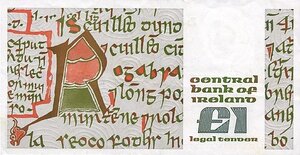 Life after the Euro?
Economist Brian Lucey of TCD writes:
The first thing that must be said is that hopefully the government has a plan. After all, governments should plan for all eventualities. Planning to deal with an eventuality is not the same as willing it to happen and failure to plan can be catastrophic. Sadly, history suggests a coherent, competent and analytically sound plan is not likely to be found in the county’s department of finance.
Secondly, in the event of the euro breaking up, which may be as a result of the cascade outlined above or perhaps due to the German political system not being able to persuade itself or its constituents of the need to foot the bill, there will be significant winners and losers in Ireland.
The first decision that would have been made by the government would be whether or not they would allow a freely-floating currency (which would almost certainly depreciate significantly and immediately), or to put in place some form of managed float. While depreciation would be attractive, in that it would be a boost to exports and therefore assist in putting the country back on a growth path, it would also result in imports becoming more expensive. A third of Irish imports come from the United Kingdom, and in all likelihood the new Irish pound would be weaker than sterling. It would also likely be weaker than the dollar, which given the country’s extreme dependence on imported oil would result in significant increases in the price of petroleum based products.
All of these would rise in price, bringing inflation and penalising both businesses and consumers.
The country would also have to very quickly move to achieve a surplus instead of a primary deficit in government finances. This would be necessary in order to pay down the accumulated national debt. When you consider the pain the country is going through in order to reduce its deficit to three percent over four years it is hard to imagine the wrenching dislocation that would be required to achieve a primary surplus over the span of just a couple of years. And yet, that is precisely what would be required.
Preparing Ireland For a Post-Euro Economy (Brian Lucey, PressEurop)
Previously: Ireland And The Euro: There Really is No Plan B
Thanks DD
The daftest sport in the world made slightly less daft by being set to Li’l Kim’s Lighters Up (NSFW lyrics).
All dressage should be presented this way.
via


Labour MEP Nessa Childers (above with Eamon Gilmore) has said she has been threatened with expulsion from the party because of her strong opposition to Kevin Cardiff’s proposed appointment to the European Court of Auditors.
Mr Cardiff hit the headlines at the beginning of the month, when it emerged Department of Finance officials had miscalculated €3.6bn from the national debt last year.
Speaking in Strasbourg today, Ms Childers said she was told to tow the line and support Cardiff’s appointment or face expulsion.
She said she was shocked at the threats she has been subjected to.
(Photocall Ireland)

From UPC
UPC and The Oireachtas announce a first for Ireland. From today, UPC will broadcast on a pilot basis a dedicated parliamentary channel called Oireachtas TV on digital channel 801. To celebrate the channel launch, today’s (Tuesday) Dáil proceedings will be broadcast live from 2pm. This service will be provided free of charge to all digital cable customers.
Oireachtas TV is a public service broadcast for the two houses of the Oireachtas. For the first time, extended coverage of sittings in Dáil Éireann will be available to view on digital television. The channel will also broadcast coverage of sessions of Seanad Éireann and sittings of the Oireachtas Committees will be aired when the Dáil is not in session. The Houses of the Oireachtas is creating innovative partnerships to meet an increasingly diverse and media-savvy population.

 “I spotted this graffiti on Nassau Street, Dublin this morning. It was just beside the House of Ireland store. It looked so depressing, I just had to take a picture.” (Maire Walsh)