

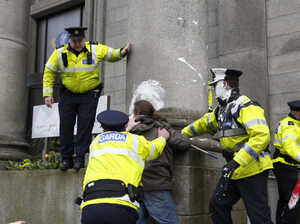


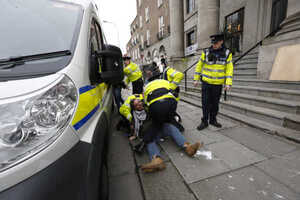
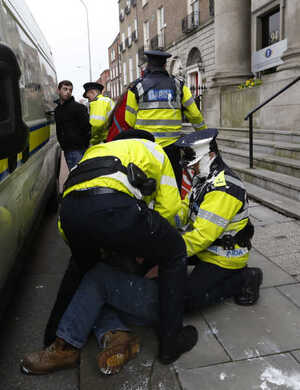

Scenes outside the Department of Justice, Merrion Street, Dublin last night involving protestors from Occupy Dame Street calling on the resignation of Justice Minister Alan Shatter.
(Sasko Lazarov/Photocall Ireland)



Scenes outside the Department of Justice, Merrion Street, Dublin last night involving protestors from Occupy Dame Street calling on the resignation of Justice Minister Alan Shatter.
(Sasko Lazarov/Photocall Ireland)
Govt statement says a new cabinet committee on justice reform will be set up, chaired by taoiseach. Enda Kenny taking control.
— Sarah McInerney (@SarahAMcInerney) April 1, 2014
OK, panic.
Meanwhile…
Taoiseach: on March 26 Irish Prison Service confirmed phone calls of 84 prisoners and their legal reps were “inadvertently” recorded
— Páraic Gallagher (@paraicgallagher) April 1, 2014

[Former Garda Commissioner Martin Callinan, Secretary General of the Department of Justice Brian Purcell and Justice Minister Alan Shatter in 2012]
Pat Leahy, political editor of the Sunday Business Post, spoke to Seán O’Rourke this morning about Justice Minister Alan Shatter’s claims that he wasn’t aware of a letter sent by Martin Callinan to the Department of Justice on March 10 until two weeks later.
The letter sent to General Secretary Brian Purcell – which specifically stated that Minister Shatter be told of its contents – included details of recorded conversations between gardaí in Bandon Garda Station and Marie Farrell, a key witness in the Sophie Toscan du Plantier murder case.
On Monday, March 24, a meeting was held between the Attorney General Máire Whelan, Taoiseach Enda Kenny, Justice Minister Alan Shatter and the Secretary General of the Department of Justice Brian Purcell.
Speaking to Seán O’Rourke, Mr Leahy said:
“That evening, that is to say the Monday evening, before he says he became aware of this letter, he was at a meeting discussing this matter with the Secretary General of the Department of Justice. [This is] The man who sent the letter, who forwarded the letter to him, having been sent it by the Garda Commissioner, discussing the fate of the Garda Commissioner, following which the Secretary General of the Department is sent by the Taosieach out to the home of the Garda Commissioner to express the grave disquiet of the Taoiseach about this issue.
“But, by Alan Shatter’s account, not having known about this letter until the following day, the Secretary General of the Department [of Justice] didn’t mention it at all at that meeting. He didn’t say ‘oh yeah I got this letter two weeks ago about this from the Garda Commissioner, the man we’re now consider…who’s future we are now considering’, it seems very strange to me.”
Listen back here
Eamonn Farrell/Photocall Ireland
Meanwhile, at a citizenship ceremony in the Convention Centre Dublin this morning:

There’s always one, etc.
Thanks Jenny McCarthy

[From left: Fianna Fails Sean Fleming , Barry Cowen, Micheal Martin and Dara Calleary at Leinster House today]
Micheal Martin, speaking on the ‘plinth’ at Leinster House this afternoon proposed a motion of no confidence in Minister for Justice Alan Shatter to be put to the house next week.
Earlier he told the dail:
“Even the Government’s most craven supporters now concede that we are facing a profound crisis which touches on one of our most important institutions. In the face of this we have for months seen a strategy of attacking opponents, false claims left on the record, a reluctance to investigate serious allegations and an absolute refusal to accept even the most basic principles of democratic accountability.”
Fianna Fáil to table no-confidence motion in Shatter (RTE)
(Sam Boal/Photocall ireland)


[From top: Nicola Wilson; Aileen O’Sullivan; Victoria Adrienkov; Unknown and unknown]
Scenes outside government buildings, Merrion Street, Dublin this afternoon. Protestors from the campaign group Justice4All called for the resignation of justice minister Alan Shatter over ongoing scandals within the Gardai.
Meanwhile…

Alan Shatter and Labour Leader Eamon Gilmore at the funeral of Fine Gael TD Nicky McFadden this morning in Athlone.
(Sasko Lazarov and Laura Hutton/Photocall Ireland)
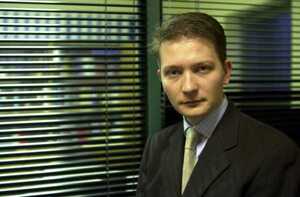
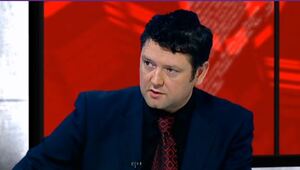
[Solicitor and Chair of Law Society Human Rights Committee Michael Finucane, who is also son of murdered solicitor Pat Finucane and Sunday Times security correspondent John Mooney on TV3’s Tonight With Vincent Browne last night]
Last night Cormac Ó hEadhra stood in for Audrey Carville on RTÉ’s Late Debate while the panel included Mary Lou McDonald, Sinn Féin TD; Alan Farrell, Fine Gael TD; Michael Finucane, solicitor; and Mark Kelly, Director, Irish Council for Civil Liberties.
During their discussion Mr Finucane outlined the serious implications of the the recording of incoming and outgoing Garda station calls, from the point of view of people arrested and convicted, and their solicitors.
Later, on TV3’s Tonight with Vincent Browne, Mr Mooney – who broke the GSOC bugging story – hinted that there are other matters of concern in relation to separate to that of the solicitor/client concerns.
From the Late Debate discussion:
Cormac Ó hEadhra: “Michael Finucane, when Alan Farrell was talking about the GSOC report not being noticed by the Minister [for Justice Alan Shatter] or his department, you were shaking your head, why?”
Michael Finucane: “Well [Alan Farrell] called it a press release. I mean I’m sitting here looking at a section, or an an extract from it, and it’s entitled ‘Report in accordance with section 103 of the Garda Síochána Act’. It’s not a press release and to minimise it and try to sort of downplay the significance of the whole episode that exposed the practice of recording phonecalls at all is disingenuous. This was in the context of Garda officers being prosecuted for assaulting a man in custody so I mean it’s ludicrous to suggest that the minister wouldn’t have been aware of that case.”
Ó hEadhra: “He said he simply wasn’t and he also said that GSOC themselves didn’t feel that the report was important enough to send him a copy.”
Finucane: “This prosecution was the first successful prosecution brought by GSOC against serving members of An Garda Síochana, certainly for indictable offences, if not the first then one of the first. I mean if we’re going to talk about competence of office holders, if you’re not aware of the detail of that investigation and that prosecution then you’re seriously into incompetence territory.”
Talk over each other
Finucane: “Before Alan comes back in with, you know, in sort of another ‘let’s defend the Government line, I think we do need to move this on because the sum total of what has happened over the last number of months with regard to our police force, the people that the citizens look at as the frontline representative face of the State, what has happened, if you think about this in terms of what a police officer does, their job: their road traffic practices have been seriously called into question, the quality of their criminal investigation in more serious offences has been called into question by members of An Garda Síochána, they’ve been accused of bugging the watchdog organisation, the Ombudsman Commission; they’ve been accused or seriously suspected of having illegally recorded phonecalls which may include phonecalls between arrested and detained persons and their solicitors. And right at the top of the organisation is the Garda Commissioner who eventually, after defending all of this tooth and nail was forced to resign. Now what must an Irish citizen feel when they look and see a Garda in uniform after all of this has happened. We do not need some sort of parliamentary seeping-under-the-carpet exercise of statutory tinkering and reform and revision. There needs to be root and branch reform of something meaningful in the way that people deal with An Garda Síochána so that they can see for themselves that things have changed and it needs to happen quickly.”
Later
Ó hEadhra: “Michael, are you reviewing clients now?”
Finucane: “Actively. And I would say anyone with a criminal defence practice, who’s been representing people that were detained in Garda custody for the purposes of police interview is doing exactly the same because of the way the detention regime is operated by An Garda Síochána in this country, the solicitors are not permitted to remain with their clients while they’re being interviewed so you can go to the Garda station to advise someone but then you have to leave again when they’re being interviewed and the dynamic of the situation requires telephone contact and, with your client, it’s unavoidable. And because people are detained these days for longer and longer periods of time, you can find yourself speaking to a client early in the morning or right up until midnight and sometimes even beyond midnight in certain circumstances so it’s often not possible or practical to go to a Garda station so you’re reliant on the telephone.”
Ó hEadhra: “Are we talking then about a huge number of convictions likely to be appealed?”
Finucane: “Well it’s too early to say, it’s too early to say how many cases will reach the stage of appeal but I think we can assume, with a reasonable degree of confidence that a huge number of cases are going to have to be reviewed and I think one thing the Government needs to do urgently is to decide and explain how that review is going to take place. Who’s going to do it? And most important of all how it is going to be demonstrably independent of any agency with any potential of interest in the outcome. So no Garda involvement, no DPP involvement, no Justice Ministry involvement, demonstrably, completely and effectively independent of any agency that has a role in prosecution.”
Ó hEadhra: “Can I make a massive leap if you don’t mind, let’s say a conviction, let’s say there is an appeal and evidence was, should have been inadmissable and the conviction is quashed, what happens then is it a retrial or is the person free to go?”
Finucane: “Well there’s a number of possibilities but I think, I mean I think, all of those things are possible aswell as the revelation of a huge number of miscarriages of justice, people are convicted of things wrongly as a result of evidence or information that was gathered by An Garda Síochána through listening to confidential conversations between people and their solicitors.”
Ó hEadhra: “And then are we talking, possibly, and this is another leap, civil action against the State and a huge amount of compensation.”
Finucane: “A fair degree down the road, yes, but that is a possibility but..which is why I say action needs to be taken swiftly and so that the process of review at least can begin as quickly as possible.”
Meanwhile, on Tonight With Vincent Browne:
John Mooney: “I’d be pretty confident that this story has a few twists and turns and will have by next week.”
Vincent Browne: “Have you ever heard about this, in all your dealings with the gardaí over the years, did you ever hear that incoming and outgoing calls to garda stations were being recorded?”
Mooney: “Surveillance in this country is a free-for-all, there’s all sorts of fun and games going on outside the normal system and within the legislative system. Technology, legislation isn’t able to keep up with technology, it’s just..”
Browne: “This is…landlines have been recorded apparently…”
Mooney: “Yeah but from 2008 they were doing it with a digital apparatus which is a different kettle of fish to tapes and it’s much more open to, I suppose, very targeted use and that kind of thing, those systems are in place.”
Browne: “In other words, for instance when the posh voice of a solicitor would come on the phone that they’d be able to pick that up immediately and record it, is that it?”
Mooney: “I’m not so convinced that these matters all relate to solicitors because solicitors, by and large, will not…”
Browne: “I thought you were going to challenge me on solicitors all having posh voices but em..”
Mooney: “I don’t believe that many solicitors would, they may be advising their clients but it’s usually to say nothing. I’ve yet to meet a criminal defence lawyer. I think there are other issues.”
Browne: “What?”
Mooney: “Well, I’m not going to go into them but I think there are…”
Browne: “Ah go on, give us an idea?”
Mooney: “Buy the paper on Sunday, Vincent, but I think there are other issues that are at play here that may have not come into the public domain.”
Later
Mooney: “By and large, I would interpret Alan Shatter’s apology as almost like a flare, it’s acted as a detraction from other issues that are far more serious and I think Enda Kenny is now fairly put himself squarely in the line-up as in responsibility for some of these actions and activities that are going on. For example, I have yet to get any explanation as to why the Taoiseach communicated with the Secretary General of the Department of Justice [Brian Purcell] and send him to deal with Martin Callinan and, somehow, Alan Shatter was left out of that. Alan Shatter is the line manager that Brian Purcell would answer to. It seems an extraordinary state of affairs that you would have the Secretary General answering directly to the Taoiseach because there’s no relationship there and, effectively, as Fianna Fáil alleged today going off and giving the Commissioner an ultimatum to either go or, as they’re officially stating, express his displeasure and concern about what was happening. I think this is major, major, major..”
Browne: “It raises the question about Máire Whelan [the Attorney General] telling him something that Enda Kenny thought was extraordinary, leading to representations to the Commissioner and eh..”
Mooney: “I think it’s also very noteworthy, Vincent, you can’t..Enda Kenny, I think said something in the Dáil today that possibly he didn’t realise the import of what he was saying, was that the Attorney General wouldn’t discuss this issue with him on a phone.”
Listen back to Late Debate here
Watch Tonight With Vincent Browne here
Gareth Chaney/Photocall Ireland

[Minister for Justice Alan Shatter with Taoiseach Enda Kenny at the launch of the Child and Family Agency in Dublin Castle in January]
“I don’t know the scale of the actual contents of what are in all those tapes but we’re concerned about it. It’s a serious issue where in some cases, court cases have been dealt with, others reaching as far up as, Tribunals may have, may have implications for some of the findings there.“
Taoiseach Enda Kenny speaking at an event to mark Intel’s 25 years in Ireland
Taoiseach warns garda phone recordings could impact Tribunals (Newstalk)
Leon Farrell/Photocall Ireland


Alan Shatter in opposition, questions the Minister for Justice [John O’Donoghue] on bugging in Garda stations (May 23 2001) during an exchange concerning the McBrearty scandal in Donegal.
Thanks Ronan Emmett and Paul Reynolds
Meanwhile…
“Chairman, at this stage it would be appropriate for the senior Garda authority to come clean in relation to bugging. It cannot be covered up. There are at least two hundred men alive at the moment, and women, probably a lot more, who know exactly what went on over the years, some of them are still serving in the job, and to try and cover it up on a nationwide scale, it can’t be done. It just can’t be done. It did happen. The equipment was bought and purchased at extensive cost to do it. It was not a universal approach, in certain cases they were done and it’s not just down to interview rooms. It’s houses, cars, apartments and phones. And it’s done illegally, totally illegally, and the senior Garda authority know this is the case.”
Garda John White during the subsequent Morris tribunal
(Eamonn Farrell/Photocall Ireland)

BREAKING: Alan Shatter corrects the #Dáil record and withdraws claim that whistleblowers did not co-operate with O'Mahony report
— Gavan Reilly (@gavreilly) March 26, 2014

Further to reports in The Guardian of several Dublin-based journalists set to allege that their phones were routinely monitored by gardai…
The question of journalists being put under surveillance was brought up by Independent TD Luke ‘Ming’ Flanagan and Labour Senator Susan O’Keeffe to Justice Minister Alan Shatter when he appeared before the Joint Committee on Public Service Oversight and Petitions on February 19.
Mr Flanagan mentioned a ‘prominent’ male journalist who told him that he believed he was under surveillance while Ms O’Keeffe made the point that, due to a legal loophole, a journalist here can be added to another person who is under lawful surveillance.
From the appearance:
Luke Ming Flanagan: “My final question is on the basis of a rather alarming meeting I held in my office with a prominent journalist approximately 17 months ago. It has been asked whether the Minister sanctioned surveillance of GSOC. Has he sanctioned the surveillance of any journalist, be it in his job as Minister for Justice and Equality or his other job as Minister for Defence? Has he put any politician under surveillance during that time? I was blown away by the information, but it is difficult to be blown away by anything one hears now. A prominent journalist stood in my office and told me that he believed the Garda Síochána was involved in dealing heroin, which was quite astonishing…”
Chairman Padraig MacLochlainn: “I cannot allow that question, as it is not related. I have given the Deputy a little latitude.”
Flanagan: “I will tell the Chairman why it is related. The journalist also suggested…”
MacLochlainn: “No.”
Flanagan: “We will leave at that then.”
MacLochlainn: “Will you?”
Flanagan: “I will, indeed.”
MacLochlainn: “I gave the Deputy a fair degree of latitude concerning the surveillance. We will get a response.”
Flanagan: “The journalist also suggested – actually, he said “definitely” – he was under surveillance.”
MacLochlainn: “That is the Deputy’s question.”
Flanagan: “That is from where I was coming.”
MacLochlainn: “I have shown latitude.”
Deputy Alan Shatter: “Information on Alan Shatter Zoom on Alan Shatter I note that the Deputy had an alarming meeting with a journalist. Journalists can be very alarming on occasion for a whole range of reasons that I cannot always identify.”
Flanagan: “Will the Minister answer my question?”
Shatter: “I can assure the Deputy that I have no knowledge of any journalist being put under surveillance and have ever arranged for any journalist to be put under surveillance.”
Flanagan: “It was a legitimate question and the condescending reply was ludicrous.”
MacLochlainn: “The Minister has answered, “No.”
Later
Senator Susan O’Keeffe: “I want to follow up Deputy Flanagan’s remark about journalists. I know that the Minister has said before that he has never bugged journalists and I completely accept that remark. I wonder has he asked Commissioner Callinan. There is a loophole that allows journalists who, which they may not be under lawful surveillance, may be added to another person who is under lawful surveillance. Let us say that I was under lawful surveillance then that person, because they have contact with me, can be added to that list. I wonder if the Minister has ever asked Commissioner Callinan about this aspect? The reason I raise this – it is relevant – is because a number of journalists have said to me that there has been inordinate concern in regard to this story and in regard to GSOC about journalists being bugged. I am not seeking to raise the matter in an hysterical fashion. Has the Minister raised that matter with Commissioner Callinan about names being added in a way that would then allow deniability of that surveillance?
Shatter: “I do not know. We are getting into such a weird area at this stage. I cannot account for people’s level of paranoia. I am not aware of any journalist being under surveillance. That is all I can tell the Senator. I am aware that we have a system in place where a High Court judge can exercise oversight in certain circumstances.
O’Keeffe: “Yes.”
Shatter: “I cannot add any further, Chairman, to this. We have now gone way outside the issue that we are dealing with.”
MacLochlainn: “That is my job to adjudicate, with respect.”
Shatter: “We are now seemingly getting generally into the issue of surveillance. It is not normal or appropriate that the Minister for Justice and Equality, for a whole range of security reasons, enters into lengthy dialogue on surveillance issues. I gave the Senator that simple reply. No doubt we will have a headline tomorrow, “Minister for Justice refuses to deny that journalists under surveillance”.
O’Keeffe: “No. I am sorry I did not…”
Shatter: “I am unaware of any journalist under surveillance…”
MacLochlainn: “Is the Minister…”
O’Keeffe: “No, I asked the Minister a different question.”
Shatter: “…of an authorised nature by the Garda Síochána or any other body in the State. Of course if a journalist was engaged in criminality of some kind that gave rise to some issue I could not guarantee…”
O’Keeffe: “That was not my question.”
MacLochlainn: “I suggest that the Senator waits until the Minister is finished and then she can come back in.”
Shatter: “…that if a journalist wanted to rob a bank, or trade in drugs, would not, at some stage, be under surveillance. They would not be under surveillance because they were a journalist; they would be under surveillance for other reasons. I do not know of any journalists under surveillance.”
O’Keeffe: “I thank the Minister. I did not mean to suggest that. I was asking simply had he asked the Garda Commissioner if that capacity had been every utilised.
Shatter: “No, I did not.”
O’Keeffe: “I thank the Minister.”
Shatter: “I have had no conversations with the Garda Commissioner about journalists who may or may not be under surveillance.”
O’Keeffe: “That is fine.”
Read transcript in full here
Previously: Overheard In Dublin
Sasko Lazarov/Photocall Ireland