
Tag Archives: Derek Mooney

donald

derek

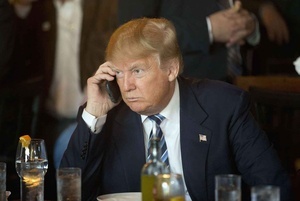
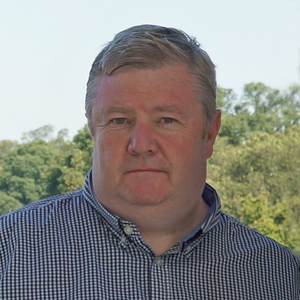
From top: Donald Trump; Derek Mooney; Twitter spat.

Tragedy brings the worst out of Donald Trump and his supporters.

Derek Mooney writes:

When faced with a massive tragedy the natural inclination of most democratic political leaders, from across the spectrum, is to put partisan politics aside for a time and stand together in solidarity and grief.

Campaigns are put on hiatus, genuine political differences are temporarily put aside while the country mourns and tries to cope with the enormity of what has befallen it.

It is what happened in the wake of recent terrorist attacks in France and in Belgium and countless times in the USA in the aftermath of yet another mass slaying of innocent victims.

Yet, last night, even before the names and details of the 50 men and women callously slaughtered in the Pulse Nightclub in Orlanda had been released, the Republican Party’s presumptive candidate for the US Presidency chose to take the other route, going was online to whip up anger and score political points off the worst instance of US domestic terrorism.

Within minutes of the news emerging, Trump took to Twitter to express his commiserations and grief saying: “Horrific incident in FL. Praying for all the victims & their families. When will this stop?”. He was expressing a sentiment shared by countless millions learning the news of the horrific homophobic attack.

But Trump could not leave it there. Within the hour he was back to acknowledge the messages he had received from his supporters. Now his focus was not on the yet unidentified Orlando victims and their families: he was shifting it back on him.

His tweet began: “Appreciate the congrats for being right on radical Islamic terrorism…”. One hour out of the spotlight was too much for him to handle. Donald the Ego was back. His descent deep into the quagmire continued, actually it worsened, shortly after President Obama went on TV to express the grief and outrage of the American people.

Where President Obama sought to be measured calm and reassuring, Trump was reaching for the dog whistle both on twitter and in an intemperate statement calling for Obama’s resignation.

On Twitter he said: “What has happened in Orlando is just the beginning. Our leadership is weak and ineffective. I called it and asked for the ban…”

I responded to him on Twitter pointing out that a ban on Muslim immigrants would not have stopped the Orlando attack as the reported perpetrator was a US citizen, born in New York city.

Within minutes Trump’s online supporters were attacking me from all sides. Apart from their collective abhorrence of the prospect of more gun control, their arguments and rebuttals flatly contradicted each other.

Some said that I was missing the point and that an immigration ban would have stopped the killer’s parents from immigrating (though they were somewhat sketchy on how a ban imposed in 2017 could be backdated to prevent them entering 30+ years ago).

Others, the more hard-line ones, said that Trump would not just introduce a temporary ban on Islamic immigrants, but that he was in favour of banning Muslims – full stop.

Some of these talked about how they could set up internment camps like (according to one deluded soul) those set up in WW2 or perhaps, even, deport them.

Another smaller set of Trump supporters, identifying themselves as immigrants for Trump, harangued me saying that it was me who was implying that all Islamic immigrants were terrorists and that Mr Trump had never said that.

It was hard not to be struck by the glaring inconsistencies and absolute contradictions between these most steadfast and passionate of Trump advocates and to reflect on how it is not the detail of what Trump says, but its vagueness and hollowness that attracts them.

He presents them with a blank platform upon which they can unload their own prejudices, grievances and bigotry without reference to what their fellow Trump supporters say or think.

While ugliness and confusion of these yelped Twitter responses can possibly be explained by the anger, ignorance and frustration of those involved, no such excuse can be applied to the man who lets loose this anger by, in the guise of leadership, blowing the dog whistle on this tragedy.

One of the reasons political leaders come together in the face of crisis or attack, be it internal or external, is that there know that there is strength in unity. They know the importance of being strong in the face of attack and signalling that there is more that unites us, than divides us.

Trump took the opposite course last night. In comments that might have been viewed, in days gone by, as treasonous and unpatriotic, Trump went well beyond usual partisan politics and dismissed America’s leadership as weak and ineffectual. He as good as said that the terrorists are winning.

How can you ever hope to make “America great again” by publicly talking it down in the wake of an attack?

Prof Simon Schama’s Tweet in the midst of the anger and turmoil last night summed it up best: “…we have a cultural civil war now in USA”.

Derek Mooney is a communications and public affairs consultant. He previously served as a Ministerial Adviser to the Fianna Fáil led government 2004 – 2010. Follow Derek on Twitter: @dsmooney

Pic: Getty
trump
derek

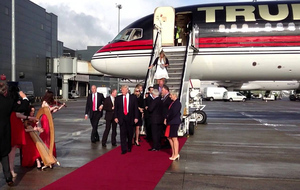
From top: Donald Trump arrives at Shannon Airport; Derek Mooney

Many of Donald Trump’s potential voters are not blind to the fact that the few solutions he offers are unworkable or that he has no grasp of foreign policy.

They are using him as much as he is using them.

Derek Mooney writes:

“Donald Trump looks as if he was playing a President in a porn movie.”

This was Scottish comedian Frankie Boyle’s scathing put down of the Donald on BBC radio four’s News Quiz last Friday.

Maybe it is something to do with the Donald’s addiction to calling everything ‘huge’ (or as he says it: huuuuuge ) and lauding his own achievements with outlandish superlatives but Boyle’s taunt perfectly captures Trump’s OTT and hammy public appearances.

Trump’s emergence as a real contender for the White House has surprised most pundits including – if one of his former publicists is to be believed – himself.

How could this gauche, egotistical, property dealing demagogue tear up the US presidential campaign playbook and beat a string of long established Republican hopefuls?

Hard though we may find it to comprehend from this side of the Atlantic; but part of the Trump phenomenon is that he has teed-up this US presidential election to be a fight between the Washington insider: Hillary Clinton and the outsider: Trump.

Though we may find it difficult to conjure up the image of Trump as an outsider, but in the contest of Clinton Vs Trump, that is what he is.

The term “outsider” is a relative one, not an absolute. It is nothing to do with his history, background or experience, it is about the attitude and outlook he conveys.

Trump does not embody the outsider spirt, but he speaks to it – bluntly – to rally many millions of ordinary middle Americans who, rightly or wrongly, feel that they are now outsiders.

Since the 1970s the American middle class has shrunk from 61% of the population to 50%, while the American dream has become an increasingly distant prospect for the majority.

Many voters believe that America has lost its way and believe Washington is to blame. So, Trump paints the former First Lady, Senator, Secretary of State and member of the newest US political dynasty as a member of the Washington elite and a part of their problem.

It is hardly a new tactic. First you paint your opponent, particularly if [s]he is an incumbent, as out of touch and elitist and then contrast yourselves with [s]he while reciting your voters complaints back at them.

But what Trump has done is a few steps beyond that. He is riding a zeitgeist that he didn’t create, but that others have missed.

Many of his potential voters are not blind to the fact that the few solutions he offers are unworkable or that he has no grasp of foreign policy. They almost embrace these failings.

They are using Trump as much as he is using them.

He is the battering ram with which they can break what they perceive as a broken and corrupt political system. It is why (and how) you can have the seeming incongruity of some Sanders supporters telling pollsters that they are willing to back Trump now that Hillary has beaten Sanders.

Though the analysis and solutions on offer from Senator Sanders differ huuugely from those hinted at by Trump, the core message is the same – America cannot tolerate more of the same.

Things have to change.

The insider versus the outsider analysis also applies in Ireland, particularly an Ireland still coming to terms with the economic upheavals of the last decade.

It explains, in part, the last election results and the massive losses suffered by Labour and Fine Gael.

The Irish Labour Party’s problem is that it has too many insiders and is now led by the arch insider. Though its one “token” ministerial outsider, Alan Kelly tried hard to portray himself as an outsider, but as I mentioned in a Broadsheet piece a few weeks ago, his fast-tracked “rise without trace” to the top makes him an insider.

Meanwhile, Labour’s former BFF, Fine Gael, is also replete with insiders, both generational and aspirational – by aspirational, I mean those whose career paths has followed the line: college – YFG – FG research office – TD’s parliamentary assistant – Ministerial Sp/Ad – TD – minister, without any stop offs in the real world.

With his capacity for kicking against the traces, Leo Varadkar is possibly the closest thing that FG has had to an outsider since John Deasy.

On the other end of the spectrum, Sinn Féin and the various alphabet left alliances are, on the surface at least, full of political outsiders. Though, in the case of SF, it is hard to portray yourself as a complete outsider when your leader predates the electrification of the Howth/Bray rail-line and shares Trump’s penchant for the outrageous tweets.

Traditionally, in Irish Politics, the Independent TDs have been the outsiders. In particular, people like Neil T. Blaney or Jim Kemmy, who broke away from their parties or Tony Gregory who described party politics as strangling.

Which of today’s much larger crop of Independents from the Healy-Raes to the McGraths to Ross, Halligan and Zappone will still be regarded as outsiders in two or three years time will be interesting to see.

Which brings us to Fianna Fáil: Ireland’s outsider insiders.

For most of its history, there has been something of the outsider edge to Fianna Fáil, indeed the party has been at its most successful when led by outsiders, such as Ahern and Lemass.

Even Haughey, for his love of horses, fine dining and hand tailoring had a bit of the outsider/arrivisté about him – especially when contrasted with Garret Fitzgerald’s professorial, relic of aul’ deceny.

As I said earlier, in the context of Trump’s positioning of himself, being the outsider is a relative position, not an absolute one. It is how Michéal Martin’s Fianna Fáil has repositioned itself on the political spectrum.

Compared to Enda Kenny’s Fine Gael and Joan Burton’s Labour, Martin is – despite his long experience around the cabinet table – more of an outsider.

Not only has he has learned the lessons of the crash, he demonstrated over the course of the last election and in the weeks since that he has grasped that we need to change the way we do politics and that what kind of worked in the 90s will not work today.

Derek Mooney is a communications and public affairs consultant. He previously served as a Ministerial Adviser to the Fianna Fáil led government 2004 – 2010. Follow Derek on Twitter: @dsmooney

mmitteeroom

derek

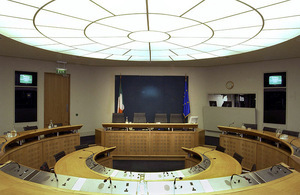
From top: Committee Room, Leinster House: Derek Mooney

Everyone’s talking about New Politics.

But no one will say what it means.

Until NOW!

Derek Mooney writes:

What exactly is this “New Politics” we have been reading and hearing about so much lately?

It was the question that should have occurred to me as soon as the Public Relations Institute asked me to participate in a panel discussion they held last Thursday as part of a half day seminar entitled: Public Affairs in the era of ‘New Politics’.

But it didn’t. Like many others, I have been throwing about the phrase “new politics” in the two and a half weeks since the Dáil elected a Taoiseach as if everyone understands what it means.

But do we? Do the people who are supposedly responsible for our ‘new ‘politics even understand what the phrase means or what the concept is meant to encompass, apart from differentiating it from the “old politics”?

Do we know in what way it is supposed to be different or why?

Unfortunately for me, this simple basic question only popped into my head while sitting on the dais last Thursday rather than during the days of preparation beforehand.

But with each challenge comes an opportunity. Just as the question came in to my head the discussion opened out to the floor and with it came a rare moment of lucidity, dare I say: an epiphany.

Just then I heard a familiar voice re-enter the discussion to offer a definition “new politics”. It was a very familiar voice: it was mine.

The definition I came up with is quite simple: ‘new politics should be about policy not personality’.

Don’t get me wrong, I am no Pollyanna. I do not think that politics has changed overnight and that we have reached now some utopian perfection where every TD and Senator has suddenly become high-minded and abandoned all thoughts of party loyalty and personal advancement in favour of the common good

I also grasp that my definition might sound a little glib or overly simplistic but bear with me and I will try and explain why I think the definition I offer is valid.

One of the greatest failing of our supposed “old politics” was that most political crises of the past were not resolved by any great changes of policy or direction but by the drama of a political head on a platter.

Someone, usually not one of the main protagonists, was designated as the fall guy, they paid the price and the system continued along without change or reform, once the crowd’s lust for some blood on the carpet was sated.

By making a few boring, even tedious, changes to how Dáil committees operate and allowing them to actually oversee public policy and by making parliamentary questions work, we may just have moved the focus back on to the more complex issues of policy rather than the more simplistic and entertaining issue of personality.

One of the many reasons why the global economic crisis hit Ireland worse than other places is because public policy and economic dogma here had gone for too long unchallenged. The regulators went unregulated, civil society and the party system failed to advance realistic alternatives.

One of the most curious, and perhaps most re-assuring aspects to this gradual move to new politics is the fact that it has not come about by design. It is not the brain child of some think-tank or research group, rather it is the response of practising politicians working together to find a way of dealing with the result of the results of the last general election.

To their credit, the reform committee chaired by Ceann Comhairle, Sean Ó Fearghaill, comprising TDs from across the political spectrum worked quietly and quite speedily to devise an agreed reform package which though hardly exciting or thrilling may just be about to make day-to-day politics more responsive and more about policy.

The reforms agreed by committee from the establishment of a budgetary oversight committee to allowing the Ceann Comhairle to decide on the relevance of ministerial replies to parliamentary questions and the establishment of a league table of ministers who fail to properly answer questions move us closer to the levels of accountability and answerability we should have had long back.

No doubt we will continue to see “old politics” re-emerge from time to time, indeed it is hard to see Enda Kenny’s appointment of his expanded cohort of Minsters of State as an exercise is anything other than the old politics of personality – the personality in question being his and its maintenance in office for as long as it possible.

We see it too in the handling of the O’Higgins Report and the embroiling of the Garda Commissioner in the controversy.

We can hope however, as the Dáil and its committees begin to exert their new powers and their responsibilities, to see less of the old politics, but not so much less that politics losses its touch of theatricality, drama and odd moments of farce.

Not all aspects of the old politics should be abandoned.

Derek Mooney is a communications and public affairs consultant. He previously served as a Ministerial Adviser to the Fianna Fáil led government 2004 – 2010. Follow Derek on Twitter: @dsmooney

90418806derek

From top: Brendan Howlin and Alan Kelly at Labour Party’s Annual James Connolly Commemoration at Arbour Hill Cemetry yesterday; Derek Mooney

Labour’s Alan Kelly rose without trace and now won’t go away.

Derek Mooney writes:

“There’s no Labour problem that Ken (Livingstone) can’t make worse.”

This was Alan Johnson’s response to the former London Mayor’s latest unwelcome intervention in a UK Labour row.

Substitute the name “Alan Kelly” for “Ken Livingstone” and Johnson’s axiom could just be as applicable here.

Perhaps it’s his pugnacious ‘I tell it like it is’ style, but Alan Kelly has come to be personally identified with two of the last government’s biggest political failures: Irish Water to the housing crisis, not to mention his “power is a drug… it suits me” interview or his penchant for adding to his own party’s travails.

While Kelly’s supporters can argue that he inherited the policy messes that were Irish Water and housing/homelessness, he knew what he was getting into and still decided that the best approach was the one he adopted: the unpopular populist.

So, why is the Labour party giving even the slightest consideration to making Kelly its next leader?

The sad reality for Ireland’s oldest political party is that the choices facing it are severely limited. While it can opt for the safe pair of hands that it is Brendan Howlin, Howlin comes with a lot of baggage, not least over 20 years as a political insider, even when Labour was in opposition, Howlin managed to hold office as Leas Ceann Comhairle 2007 – 2011.

Sean Sherlock may seem, in contrast, like a more likeable and fresher option, indeed the 400+ people who replied to my Twitter poll rated him much higher than Kelly, but that very freshness that may be his biggest weakness.

Sherlock has never been seriously tested and does he possess the gravitas or presence to carve out a niche for Labour against so many bigger opposition beasts? The same questions hang over Jan O’Sullivan.

So does Labour have to take another look at Kelly?

It’s the question Labour TDs will be asking themselves over the coming days and – depending on their decision – it may be the question that party members will have to wrestle with thereafter, if Kelly’s nomination can get past the parliamentary party.

Given that Kelly secured over 50% of the vote when he won the Deputy Leadership back in July 2014, the parliamentary party would be unwise to deny members the right to have the final say.

To deny Kelly the right to run, in favour of a Howlin coronation, may look like a good idea on paper, but it is the last thing that a party – that is now closer to extinction than Fianna Fáil was back in early 2011 – should do
.

Labour needs to reconnect itself with its members and supporters – finding a way to cut the membership out of deciding on who should lead the fightback, is no way to start that fightback.

If they handle it right Labour can benefit from having a leadership contest, with plenty of constituency hustings, where members get to grill those looking to lead them back from the wilderness.

Let Kelly run. Let him explain his record as deputy leader and his central role in the party’s demise and – most importantly – allow him the opportunity to show if there is something… anything… more to him than political ambition and hunger.

How much do we really know about Kelly, even after last Friday’s Late Late Show interview and his July 2015 Saturday Night with Miriam one?

No a lot, I suspect – well not anything substantive. There is more than a hint of the “rose without trace” about Kelly.

It is as if he arrived fully formed on the political scene back in 2007 when he became a Senator.

His progress to the Cabinet table was fast-tracked thereafter in two-yearly steps: in 2009 he was elected to the European Parliament; in 2011 he returned from Europe to become a T.D. (managing to jump two steps in one bound by becoming a Minister of State within a month of becoming a TD), leading finally to his becoming deputy leader and Minister for the Environment in 2014.

Though his supporters may point to his less than flattering media coverage as a counter argument, to the outside observer Kelly has had a charmed political career to date.

He has moved seamlessly up the political ranks and achieved senior ministerial office in the same time that it has taken others to manage to just make it on to the local Council (or not, in the case of yours truly).

Has that all been due to his drive and ambition alone?

Perhaps it has – and as other pundits have observed, drive energy and ambition are in desperately short supply in the Labour party right now.

But so too is humility and the capacity to recognise just how far out of touch the Labour Party became with its voters under Gilmore Burton and Kelly.

Are these traits readily associated with Kelly? That’s a matter the Labour party members will have to consider in the weeks ahead – if they are given the chance.

Derek Mooney is a communications and public affairs consultant. He previously served as a Ministerial Adviser to the Fianna Fáil led government 2004 – 2010. Follow Derek on Twitter: @dsmooney

Rollingnews

00093186

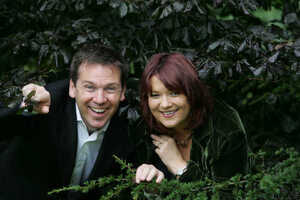
Derek Mooney and Brenda Donohue

USTom writes:

I am listening to The Derek Mooney show [RTÉ Radio One] on t’internet from abroad. For the last two days they have been running a competition to send a relative or friend who has emigrated back to Ireland for Christmas. The competition launched yesterday with a selection of songs which included the word ‘home’ accompanied by the host pretending he was an emigrant and faux crying along with laughter from the co-host [Brenda Donohue].
This afternoon (my morning) they played voice mail messages from people wishing to enter. People left their sad messages.  The most heartbreaking story  – and all their are stories are heartbreaking – will win the prize. How badly do you miss a loved one? Yeah, prove it…
This is Hunger Games style stuff and crass beyond measure or satire….

Anyone?

(Leon Farrell/Photocall Ireland)

award

http://www.youtube.com/watch?v=m76ighn8mKM

[Top from left: Derek Mooney, Presenter of the Secrets of the Irish Landscape; Barry Donnellan, director of photography and Colm Crowley, head of RTE Cork, and, above, a trailer for The Secrets of The Irish landscape]

Rugged. Distinctive. Dramatic.

Derek Mooney is all these things.

Karen Fitzpatrick writes;

The RTÉ Cork series Secrets of the Irish Landscape, presented by Derek Mooney which was broadcast on RTÉ One last May, has won gold at the final of one of the world’s most prestigious film and television competitions – the New York World’s Best Film and Television Awards 2014, for the best documentary series in science and technology, competing against entries from 36 countries. The three-part series follows in the footsteps of Robert Lloyd Praeger, Ireland’s greatest naturalist and author of the iconic book ‘The Way That I Went’.

Fair play though in fairness.

(RTE)

Mooney D 8.4.10 0073

Not him, silly.

Just one of the young girls to volunteer to ‘test-drive’ the €1.49 Dealz DIY vajazzle kit on Derek Mooney’s RTE radio 1 yesterday.

T-shock writes:

A new low for Irish Broadcasting.

Or harmless item demystifying ladies’ ‘secret’ place.

You decide.

Listen here

(Pic:RTE)