

Tag Archives: Direct Provision

Screen Shot 2016-04-27 at 13.16.08

Retired judge Bryan McMahon

Former chairperson of the Working Group on the Protection Process, retired Judge Bryan McMahon spoke at an event in the Jesuit Refugee Service this morning.

It came after a review of the working group’s report – delivered last June – showed little progress in relation to the group’s recommendations.

Criticising the length of time asylum seekers have to live in direct provision, Mr McMahon called for a blanket, one-off amnesty for the 3,500 people who’ve been in direct provision for more than five years – in the spirit of 1916.

He said:

“That would be a great start, in my view, just to take the 3,500 people and say, ‘it’s not going to happen again, it’s a one-off and it’s a gesture to 1916 and the men in the GPO’.”

“No one, in my view, would object, that’s my instinct on it and, in fact, au contraire, most people would applaud us for doing something like that.”

Time to process refugee applications doubled from 15 to 30 weeks last year (Newstalk)

Direct Provision recommendations not implemented, analysis finds (RTE)

Mark Stedman/Rollingnews

CepCNADWQAQjONT

CeQbbpUWsAAvXOU

Screen Shot 2016-03-30 at 18.06.17

Screen Shot 2016-03-30 at 18.06.31

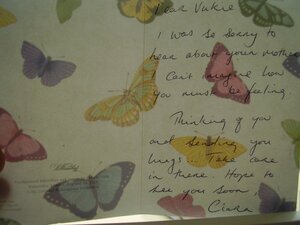
From top: A card artist and former asylum seeker Vukasin Nedeljkovic received while he was living in Ireland’s direct provision system, following the death of his mother in Belgrade; the word ‘Lonely’ which Vukasin wrote using blood from his finger in his room at the Old Convent Centre in Ballyhaunis, Co Mayo, in 2008; a basketball hoop at the centre; and the view from his room, also in 2008

Vukasin Nedeljkovic is a 40-year-old Serbian artist based in Dublin.

As a teenager, Vukasin protested against the policies of former Yugoslav president Slobodan Milošević, who died in 2006 in his prison cell while on trial for genocide in The Hague.

In 2007, Vukasin visited Ireland and – after he had criticised Serbia’s then information minister Alexsandar Vucic who is now the Prime Minister of Serbia – he was advised not to return home.

He sought refugee protection in Ireland and was eventually granted ‘leave to remain’.

Vukasin lived within the direct provision system for three years, living in centres in Dublin; New Ross, Co Wexford; Ballyhaunis, Co Mayo; and Ballaghaderreen, Co Roscommon.

His mother died back home in Belgrade, while he was in the Direct Provision system.

Vukasin is now married, has a family and is doing a PhD at the Dublin Institute of Technology.

He started Asylum Archive, about which, he explains:

Asylum Archive originally started as a coping mechanism while I was in the process of seeking an asylum in Ireland; it is directly concerned with the reality and trauma of life for asylum seekers. Asylum Archive’s objective is to collaborate with asylum seekers, artists, academics, civil society activists, amongst others, with a view to create an interactive documentary cross-platform online resource, which critically foregrounding accounts of exile, displacement, trauma and memory.”

Further to this, he draws from his time in direct provision and writes:

We were brought into a mini bus to one of the direct provision reception centres. The journey seemed long; we could see from the window the streets and people of Dublin.

The long motorway took us to one of the suburbs on the south side of the city. We didn’t talk on the bus; we looked at each other with agitation and worry.

We collect our weekly payments of 19.10 euros. That is our weekly allowance. We are prohibited from work or study.

The medical screening, for transmittable diseases, took place on the top floor of the centre in a room that looked on to the garden. We were tested for HIV and Hepatitis amongst others.

I am sitting under the huge pine tree. The tree is almost covering the outdoor part of the centre. The branches of the tree are moving gently with the wind. I can see some dead branches.

The centre is located on the top of the hill. The sun is coming through the branches of a pine tree. It is a spring in the centre.

The next morning a woman, followed by two security officers, arrives in Kilmacud Centre. She goes through her papers and calls out some reference numbers; each of us has a reference number that starts with number 69.

People start to congregate near the reception forming certain groups. We hear that we will be transferred. There is no explanation.

We take our belongings and enter the bus. We leave our friends behind, without even saying goodbye. We don’t know where we are going.

We look through the window. It’s a long journey. We see the rivers, the grass fields and the blue sky of Irish landscape.

‘Rhythm of the wheels, stronger than hunger or tiredness; until, at a certain moment, the train would stop and I would feel the warm air and the smell of hay and I would get out into the sun; then I would lie down on the ground to kiss the earth, as you read in books, with my face in the grass. And a woman would pass, and she would ask me “Who are you?” in Italian, and I would tell her my story in Italian, and she would understand, and she would give me food and shelter. She would not believe the things I tell her, and I would show her the number on my arm, and then she would believe.’ (If This Is A Man, Primo Levi, 1947: 47).

I see the main building of the new centre. The CCTV camera is attached to the main building; it looks towards the gate.

I receive a postcard covered with the butterflies; the yellow butterflies with the white dots, the purple butterflies with the white dots, the green butterflies with the green dots and the blue butterflies.

On the card it says:

‘Dear Vukie, I was so sorry to hear about your mother. I can’t imagine how you must be feeling. Thinking of you and sending you hugs. Take care in there. Hope to see you soon’.

I look at the postcard. I hold the postcard. The tears roll over my cheeks on to the postcard.

My window is divided in half. There are yellow marks at the both sides of the window.

The mark on the left side of the window is bigger and wider then the mark on the right side of the window. There are fields in a distance. They seem too far away. I can’t see the greenness of the fields.

It rains almost every day. The fields are becoming greener every minute. I want to see the fields with my tired, sleepless eyes.

I am afraid to leave the room 24.

I am not able to smell the fields. It is just round a corner.

There are walls and barriers on the way.

I bite my nails; the drops of blood roll over my finger. I look at my hand; in my room, on the piece of paper, I write down ‘lost’ using the same blood.

On a different piece of paper I also write ‘lonely’.

The sun is coming through the dirt of my window. I see the children playing outside.

I smell the chicken nuggets and chips.

It is dinner time soon.

Asylum Archive

Screen-Shot-2014-09-15-at-10.13.29-931x1024

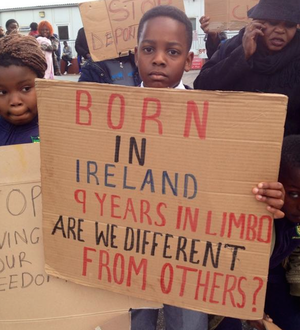
Children protesting at the Kinsale Road Direct Provision Centre in Cork in 2014

Further to the announcement that the weekly allowance to asylum seeker children is to be increased from €9.60 to €16.60…

The Irish Refugee Council writes:

[Junior Justice Minister Aodhán] Ó Ríordáin said yesterday the welfare of children was of paramount importance, and the obvious priority was on their wellbeing.

“Living a life in direct provision is no life for a child. Given our own history of child incarceration and institutions, this was an obvious focus,” he said.

So they double the allowance for children for the first time in 15 years and they continue to live their lives in institutions?

Asylum seeker child allowance to rise from €9.60 to €16.60 a week (Irish Times)

Previously: The Institutionalisation Of 1,818 Children In Ireland

Irish Refugee Council

Screen-Shot-2014-09-15-at-10.13.29

Children protest at the Kinsale Road Direct Provision Centre in Cork in September 2014

Journalist Brian O’Connell told RTÉ Radio One’s Today With Seán O’Rourke this morning that, following discussions he has had with asylum seekers, he believes fresh protests may be organised in direct provision centres across Ireland as the country starts to welcome 4,000 Syrian refugees.

It follows the publication of the Report of the Working Group on the Protection Process including Direct Provision in June – which contained 170 recommendations – many of which have yet to be implemented.

Mr O’Connell spoke with Fiona Finn, CEO of immigrant support centre NASC for the show.

During their discussion, Ms Finn agreed with Mr O’Connell’s assertion that as the 4,000 refugees arrive, tensions are likely to rise in the Direct Provision centres.

Ms Finn said:

“What we’ve actually found over the last number of weeks is that there’s an awful lot of anger and disquiet in the centres because the residents in the centres feel that nothing has been done since the publication of the [working group] report. And I think they feel very much kind of forgotten about and they feel very much left behind. And this is coming to kind of sharp focus now with the announcement that we’re going to bring 4,000 new refugees and asylum seekers in the State. And our fear is the fear that’s echoed by the residents in the centres is that a sort of two-tier system is going to emerge. So what you’re going to have is the deserving and the undeserving refugee.”

“We are getting a very clear sense of that [asylum seekers mobilising for protest]. I think the people in Direct Provision feel that they were given a glimmer of hope when the working group was established and when the recommendations came out. The hope that they had, that things would be changed, has now been extinguished.”

“We’re very disappointed that action hasn’t happened sooner [on foot of the working group report]. I think we trusted the process, as did everybody else around the table and it was our understanding that the implementation of the recommendations of the working group would happen in a very short period, post its publication, but that does not seem to be the case at the moment.”

“I think the people who are living in the centres do feel that they’ve been left behind, they’ve been forgotten about and I think whilst I think our commitment to bringing in 4,000 new refugees and asylum seekers is very, very positive and is a very good start, it can not be the reason for us not to discharge our human rights obligations and duties to those who are already waiting in our current system.”

Listen back in full here

asylumScreen Shot 2015-05-25 at 13.19.59Screen Shot 2015-05-25 at 13.20.51

Charts from the HIQA report into child protection and welfare services provided to children living in direct provision accommodation

The Health Information and Quality Authority (HIQA) examined the child protection and welfare services provided to children and families in direct provision centres in four areas across Ireland.

The four areas – the Midlands, Sligo/Leitrim/West Cavan, Louth/Meath and Dublin North city – had approximately 650 children living in seven centres.

The HIQA inspection team did not meet with children and their families with the report stating: ‘Inspectors did not wish to raise false hopes or expectations with families in relation to accommodation arrangements or asylum applications.’

In relation to the Reception and Integration Agency – which is responsible for accommodating asylum seekers and coordinating services for asylum seekers – the inspectors met with the manager of the Child and Family Services Unit of the RIA to find out how the unit interacts with the Child and Family Agency in relation to child protection and welfare referrals.

HIQA also sent six questionnaires to the RIA and to managers of the direct provision centres involved. Just three completed questionnaires were returned.

From the report:

Data from the Child and Family Agency showed that there were 209 referrals of child protection and welfare concerns about 229 children living in direct provision accommodation in the 12 months between August 2013 and 2014. This represented approximately 14% of the population of children living in direct provision. This is a significantly higher referral rate than for the general child population of 1.6%.

Of the 209 referrals, 178 (85%) reached the relevant threshold criteria for an initial assessment. This is considerably higher than the average threshold of 50% of all referrals in 2013 that required initial assessment and, as with the higher referral rate for children in direct provision, requires further analysis by key stakeholders to determine reasons for the disparity.

Following initial assessments, the breakdown of the primary report type was 91 (51%) referrals relating to welfare concerns and 87 (49%) relating to child protection concerns which reflects the national breakdown of all referrals to the Child and Family Agency in 2013.

During fieldwork in four areas, inspectors found common themes arising from welfare concerns including physical or mental illness of parents impacting on their capacity to care for their children, children’s mental health issues, and gaps in the provision of practical support.

The child protection concerns included exposure of children to domestic violence, physical abuse due to excessive physical chastisement, protection concerns about older children left caring for younger children, and children being left alone unsupervised.

For a small number of children, action was not taken to protect them. Cases were closed prematurely and in one area, Louth/Meath, there were significant delays in completing assessments and sharing information, which placed children at risk and some children were not interviewed as part of the assessment process. In this area children did not receive the services they needed, initial assessments were not completed and some risks were not addressed.

Inspectors found that on occasion the Reception and Integration Agency moved families for safety reasons but gaps in communication between the providers and the Child and Family Agency at local level meant that this information was not always passed on and, as a result, some social work interventions were delayed or did not happen and potentially placed children at risk.

Of the 87 child protection referrals nationally in 2013 about children in direct provision accommodation, the Child and Family Agency sought and obtained care orders for 13 children, made 18 notifications to An Garda Síochána about abuse, identified 11 children as being at risk of ongoing harm and five children were placed on the child protection and notification system.

In Louth/Meath, there were significant delays in social work interventions. Of particular concern was that in 27 out of the 38 cases reviewed, children were not met with or seen by social workers to inform their decision making about the referral even though records indicated concerns about their safety and welfare. For example, in one case there were significant concerns about an allegation of physical abuse of two children and the case was closed without children being visited.

One referral about a child threatening suicide was waiting three years for a response from the team in Laois/Offaly.

Read the report in full here

HIQA concerns over children in direct provision referred to Tusla (RTE)

Screen Shot 2015-05-07 at 11.38.16

Lissywollen Direct Provision centre for asylum seekers, Athlone, Co. Westmeath

You’ll recall how 4,360 people are living in the direct provision system in Ireland – a third of whom is children.

A new report by the Oireachtas Joint Committee for Public Service Oversight and Petitions will be published today.

RTE reports:

“The committee visited four centres in Dublin, Galway, Limerick and Meath. It described the living conditions as “intolerable” and “cramped”, with little private space for parents with children.

It said many of the children living in the centres were born in Ireland but do not enjoy the same rights as other Irish children.

According to the report, the person living in direct provision for the longest time has been there 11 years and the average stay is five years.”

Report finds direct provision system ‘not fit for purpose’ (RTÉ)

hqdefault

A screen grab from a video made by 27 young people seeking asylum alone in Ireland during a six-day Easter Camp on human rights organised by the Irish Refugee Council and UNICEF in 2013

You’ll recall how a working group set up by the Government last year is reviewing the direct provision system in Ireland which is 15 years old this week.

The group is expected to publish a report next month.

There are more than 4,000 asylum seekers in Ireland, and they’re living in 34 accommodation centres across the country. Asylees are not allowed to work. Instead, adults receive €19.10 a week, while children receive €9.60 per week.

As the direct provision system is 15 years old this week, the Human Rights In Ireland blog is publishing a series of contributions from asylum seekers, artists, social workers, and activists about the system.

Further to this.

Dr Liam Thornton writes, on the blog, writes:

I received documentation a number of weeks ago, in an envelope with no note or attachments and do not know who the sender is. I have confirmed though that this is information that the Working Group is working from (at least in February 2015). I had sat on this as I did not want to pre-empt any recommendations that were made. Given that the information on the Working Group is now being drip fed, I’ve decided to partly release this information.

This information comes from a Draft Report of Theme Two to the Working Group on Improvements to the Protection Process, including Direct Provision and Supports to Asylum Seekers. I understand that this is the proposal from the Department of Social Protection.

The Working Group has considered four proposals, proposed by the Department of Social Protection, in relation to the direct provision allowance payment:

Proposal One: To recommend an adult direct provision allowance of €38.74 per week, with €29.80 per week per child. On the basis of current persons (child and adults) in direct provision, this would cost an extra €4, 125,573 per year.

 Proposal Two: An adult direct provision allowance of €38.74 per week, with a child allowance of €19.20 per week. On the basis of current persons (child and adults) in direct provision, this would cost an extra €3, 266,864 per year.

 Proposal Three: An adult direct provision allowance of €25.59 per week, with a child allowance of €12.86. On the basis of current persons (child and adults) in direct provision, this would cost an extra €1, 109,807 per year.

 Proposal Four: An adult direct provision allowance of €22.35 per week, and a child rate of €11.23 per week. On the basis of current persons (child and adults) in direct provision, this would cost an extra €555,620 per year.

Whatever the working group ultimately recommends, and whatever the Minister for Justice and Minister for Equality decide to do with this recommendation, I would hope that at a minimum direct provision allowance would be increased in light of proposal one. While I fundamentally disagree with the system of direct provision, its controlling and demeaning nature, the total denial of self-sufficiency and indignity foisted upon residents within enclosed institutional settings, such an increase may go some way (and admittedly not as far as I would like) to enhancing respect and dignity for those in direct provision.

The Working Group & Proposals For Direct Provision Allowance (Human Rights In Ireland)

Previously: The Institutionalisation of 1,818 Children In Ireland

Screen Shot 2015-04-07 at 13.11.40

Jonathan Muhwezi speaking at a protest organised by Doras Luimní and the Foynes Asylum Seekers for Change in Limerick last August

Jonathan Muhwezi, a chemist from Uganda, spent nine months in the Mount Trenchard direct provision centre in Foynes, Co Limerick.

He claims he was moved to the Limerick centre to be punished – after he complained about the conditions of the direct provision centre he had been previously been living in, in Newbridge, Co. Kildare.

Colm Ward, from the Limerick Leader, writes:

“’The food was appalling. We had no heating – the place was cold. It is an old building and some of the windows were broken so it could freeze at night. People used to have problems with coughs and flu and all that. There were cameras in the toilets, it was terrible.’”

“He was finally transferred from Mount Trenchard last August following a series of protests in the centre by residents over the food and living conditions. He is now living in Westbourne, a centre for single men on the Dock Road.”

“Mr Muhwezi also spent time in the former Hanratty’s Hotel in Limerick city, now a direct provision centre. There, he claimed, he had to share a room with two men, one of whom was a heroin addict. ‘I was sharing a room with a fellow from West Africa, a Muslim, and another one who was a junkie – he had a heroin problem. He was shooting heroin and there were needles everywhere. The management knew about it but they couldn’t do anything about it.’”

Asylum seeker: ‘I was sent to Mount Trenchard as punishment’ (Limerick Leader)

Previously: Meanwhile, In Limerick

8eI3C-eAjVLOLVc7XWAmq2Kv_yu3rEnbXDvBrD0L1Go

hpUFZAcxOIk01NTLWvinenmG4_1WmxRX0IGKnZaci7U

card

There are over 4.309 people in direct provision.

Would you like to help clear the backlog?

Caroline Reid writes:

As you may know, the Irish Refugee Council and Doras Luimní are asking for people in the asylum backlog to have their cases resolved in a one-off scheme that will draw a line under a system that has left people languishing for years.

This proposed one off scheme sets out the different categories that people fall under, and how and why each of them should be included in a scheme to grant them some form of status in Ireland as soon as possible.

People in the system now need to know that the end of this prolonged nightmare is in sight. That can only be done by those still in the system being given decisions that allow them to remain in Ireland and to get on with their lives.

People are encouraged to take pen to paper to write their own letter of support to the Minister/ newspaper/ TDs outlining why they are supporting the scheme. Letter templates are available via the website here) Alternatively they can email caroline@irishrefugeecouncil.ie for some campaign postcards.

Clear The Asylum Backlog (irishRefugeeCouncil)