
Tag Archives: Direct Provision

csfmqa1waaazhd7

ciaran-624x599

From top: The outline of an average-sized Direct Provision room in Eyre Square, Galway on Culture Night last Friday; Ciaran Tierney

Last week, on Culture Night, passers-by in Eyre Square, Galway were invited to imagine living in the Direct Provision.

Ciaran Tierney writes:

It was a gorgeous evening in Galway.

The giddy excitement which usually greets the start of a weekend was magnified by the magnificent range of cultural events taking place for free all across the city centre and Salthill.

Down by the Claddagh, three musicians called Shiftwork were conjuring up beautiful songs from the deck of an historic boat.

A seal popped his head above the water to share in the general merriment. Later, traditional Galway hookers sailed around the perfectly still waters at the mouth of Galway Bay.

There were musicians, artists, and entertainers providing wonderful free entertainment throughout the city as Galway really got into the spirit of Culture Night.

Over in Eyre Square, however, passers-by were being reminded of an aspect of modern Irish “culture” which many of us would prefer to ignore.

The Direct Provision system is not something we celebrate, not something we would prefer to highlight in the European Capital of Culture 2020.

But the role of an artist should sometimes involve exposing uncomfortable truths, and there is no more uncomfortable truth in Ireland in 2016 than the way in which the country treats its refugees and asylum-seekers.

In Galway, we know that they are living in a former hotel facing the seafront in Salthill or a hostel just off Eyre Square in the heart of the city.

But how many of us have ever stopped to check out their living conditions or to ask how they are getting on in 21st century Ireland?

Do we really know about the months and years it takes to process their applications while entire families live in tiny hotel rooms?

To mark Culture Night, the Galway Anti-Racism Network (GARN) invited Galwegians to spend a little time in Direct Provision.

The exact dimensions of a “normal” direct provision room were marked out in the middle of the city and passers-by were asked to imagine what it was like to live in a tiny hotel room for months on end.

The space available for furniture, belongings, and beds was mapped out on the ground and the ‘live’ exhibition attracted hundreds of curious on-lookers.

Some children lay on the ground, imagining the reality of sharing a tiny room with siblings and parents for months or even years on end.

It was interesting to see so many people check out the dimensions of the tiny room, trying to envision what it’s like for a family to live in such a confined space.

A direct provision centre hardly features among the “normal” cultural heights of the city.

Residents were on hand to engage with curious on-lookers and to give us an insight into their normal lives in Galway and Salthill.

They cannot work, so they asked us to imagine what it was like to get by on €19.10 per week while sharing a hotel with dozens of others.

They told us that some of them had been living in this limbo, in the land of a thousand welcomes, for over ten years.

They asked whether we knew that 17 firms across the country were taking in about €50 million per year from the Irish Government to run 34 accommodation centres across the State.

Some of them have to survive the winter months in mobile homes.

They asked us to imagine what it was like for the children, who attend primary or secondary schools in Galway, when their curious friends asked them about their living conditions, the food they ate, or when they’d be able to invite them over for sleepovers.

They can’t cook or bring food to their rooms and they most certainly can’t invite their school friends over to stay the night in the centres. Keeping a pet is also out of the question.

It was news to me that they were given a rule book, containing 44 pages of rules, when they arrived.

Or that any complaints they may have had about the running of a centre could only be made to the manager of their own centres. Even if their complaints may have been related to the management of the centres.

During the week, residents of the centres had written testimonies about the reality of their lives. The testimonies were posted on a wall, next to the Browne Doorway, for revellers to read as they made their way around Eyre Square.

“At least as a prisoner you know when you are getting out – not when you are an asylum-seeker,” wrote one lady.

The asylum-seekers present were so welcoming, so happy to share their stories. They spoke of the depression they experienced, as they waited anxiously to discover if they would be allowed to stay in Ireland or deported back to their countries of origin.

Mental health problems in the direct provision system are estimated to be five times higher than in the wider Irish community.

It reminded me of a heart-breaking exhibition I attended in Galway last year, in which a South African asylum-seeker admitted that the system felt “familiar” – because it reminded her of the Apartheid system.

In terms of raising awareness, it was a hugely admirable three-hour event organised by the Galway Anti-Racism Network and the Movement of Asylum Seekers in Ireland.

It was not the most “enjoyable” event in the packed programme for Culture Night in Galway, but it served a hugely important purpose in reminding hundreds of people of one of the great scandals of our own era.

We can ask why Irish people turned a blind eye to clerical sex abuse or the scandal of the Magdalene Launderies in the past.

With Direct Provision, we have no excuse. Thanks to initiatives like last Friday night’s, nobody can claim that they don’t know about this system which condemns children to grow up in unsuitable accommodation for months or even years on end.

An uncomfortable truth for Culture Night (Ciaran Tierney)

Previously: Alternative Culture Night

Pic: Galway 2020

flotel

A ‘flotel’ in Norway

Further to reports this morning, that Labour Dublin City Councillor Mary Freehill has put forward a motion that the council look at the possibility of using “floating hotels” in Dublin to increase the availability of accommodation.

Readers may recall the same concept being mooted in response to the increase in asylum seekers arriving in Ireland in early 2000 – around the time the system of direct provision was established.

The then Waterford Minister of State for Public Works, Martin Cullen, even travelled to Norway  to inspect so-called flotels while the Department of Justice looked at leasing up to six flotels in the ports in Dublin, Waterford, Galway, Limerick and Cork.

At the time the idea was proposed, the then taoiseach Bertie Ahern, on a trip to Australia, had just visited the Migrant Resource Centre at Campsie, outside Sydney and had caused controversy over comments he had made.

At that point, it was reported that some 3,600 to 4,000 “illegal immigrants” were being held in six detention facilities throughout Australia.

On March 14, 2000, Nuala Haughey, in The Irish Times, reported:

The Taoiseach, Mr Ahern, was at the centre of a political row last night over comments he made in Sydney suggesting Ireland might learn from Australia’s stringent immigration rules, where illegal immigrants are held in detention centres.

There is mandatory detention for “unlawful non-citizens” under the Migration Act in Australia. Any such person found must go to a detention facility until granted a visa or removed from the country.

Refugee and human rights groups reacted with concern and anger to Mr Ahern’s suggestion.

…Speaking after his visit to the resource and language centre, Mr Ahern said he was anxious to see how the immigration policy was working there since it was said that “this is the best integrated system in the world.

On March 27, Miriam Donohoe and Nuala Haughey reported:

Tension has arisen within the Government over the controversial proposal to accommodate asylum-seekers in “flotels” in ports around the State.

The plan is due to come before the Cabinet tomorrow following intensive discussions in recent days involving the Taoiseach, ministers and officials. However, clear differences have emerged, with the Minister for Justice, Mr O’Donoghue, facing stiff opposition from the Minister of State with responsibility for the Office of Public Works, Mr Martin Cullen.

It is understood that Mr Cullen believes Irish ports – particularly his home port of Waterford – are not suitable for the berthing of “flotels”. He is seeking a meeting with Mr O’Donoghue.

The differences of opinion on “flotels” emerged after the Taoiseach intervened at the weekend to ensure that the radical set of measures to deal with asylum-seekers coming into the State would be ready to go before the Cabinet tomorrow.

The Department of Justice said on Friday that the asylum package, which includes proposals for dispersal of asylum-seekers as well as the “flotel” plan, would not go to Cabinet until Tuesday of next week. However, The Irish Times has learned that, on his return to Dublin from Lisbon on Friday evening, Mr Ahern let it be known that he wanted the plan ready for Cabinet tomorrow. Officials in the Department of Justice and the OPW have been working over the weekend preparing a Cabinet memorandum.

However, the idea never took off.

Meanwhile, up to 1,000 new bed spaces are due to become available for asylum-seekers in hostels, hotels and guest houses around the State next month. The OPW has been inspecting various accommodation sites on behalf of the Directorate for Asylum-Seeker Services set up by the Department of Justice, Equality and Law Reform.

The new accommodation stock includes the Parnell West Hotel in Parnell Square, Dublin, which was bought by the Department of Justice for €2.5 million. It is understood that the Department is completing deals to lease about 500 beds in two hotels in Co Cork, one in Rosslare, Co Wexford, and hostels in Tralee and in Co Carlow. The minimum lease on such properties is 12 months, but this is open to negotiation.

As part of the Government’s “direct provision” programme, asylum-seekers living in this type of accommodation will be on full board, which includes three daily meals. They will receive €15 per week per adult to purchase “extra comforts”.

Good times.

Floating hotels at docks could ease homeless crisis’ – councillor (Herald)

The Nauru files: cache of 2,000 leaked reports reveal scale of abuse of children in Australian offshore detention (The Guardian)

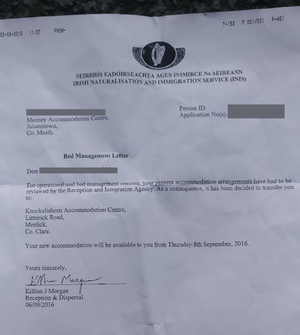
Further to the story of Direct Provision resident “Jane”, whose case was aired on RTÉ Radio One’s Liveline yesterday.

Jane who, after asking for more food while breastfeeding her three-month-old child,, was evicted from Mosney, given two days’ notice to move accommodation in a “bed management” letter (above)  that made no mention of her two children.

Mark Malone writes:

The Reception and Intergration Agency (RIA) does not outline any specific rationale, or detail any of the particulars why ‘accommodation arrangements’ needed to be reviewed in the first place. Nor does it outline what the process of review involved. Its a defacto decree with no means to official appeal.

It begs the question why was Jane was not given ANY information that might offer ANY grounds for understanding the basis of RIA intended eviction?

It might be dressed up in a sterile language less damaging to the sensitivities of Killian and other RIA bureaucrats. Who would lose sleep writing letters to evict people seeking refuge in Ireland were its just about “bed management”?

Yet it remains unmistakeable. What we are reading – and what this letter is – is the exercise of arbitrary power over a family without the slightest attempt of providing any meaningful justification. It is the text book definition of authoritarianism.

Meanwhile, this incident is merely the tip of the iceberg…

Former workers employed in direct provision centre spoke about persistent system degrading treatment on a daily basis. Of making people queue and beg for rationed toilet rolls. Of other employees refusing to give toiletries to individual adults, arguing one bottle of shower gel between three people in a room is sufficient.

Petty violence after petty violence, micro aggressions from management and employees as a tool of social control against people denied the basic anatomy to work for themselves and their families. Processes which cause genuine emotional tramas, depression and in some cases suicide.

RIA, Direct Provision and State Violence (Soundmigration)

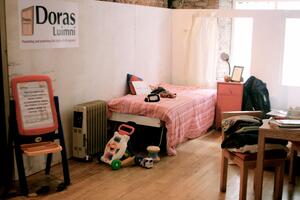
direct-provision

An installation of a typical family room in Direct Provision by Doras Luimní a number of years ago

Galway Anti Racism Network writes:

As a part of Culture Night [this Friday, from 6pm to 9pm], GARN and MASI (Movement of Asylum Seekers in Ireland) are asking people to experience the restricted space of a room in direct provision.

The dimensions of a room in a direct provision centre will be mapped out on the ground in Eyre Square to give some idea as to the space in which people are forced to live while awaiting their application to be decided.

There will be statements from people in direct provision available for people to read as well as pictures of other centres around Ireland. A stall will be close by for further information.

Previously: An Asylum Seeker Writes

No Place Like Home: An Asylum Seeker’s Room (Facebook)

Culture Night

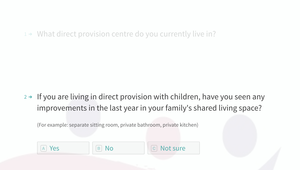
Screen Shot 2016-09-01 at 11.34.30

From an online survey by Nasc

The Irish Immigrant Support Centre NASC writes:

In June 2016, Minister for Justice Frances Fitzgerald stated that the Government had implemented 91 of the 173 recommendations of the Working Group on the Protection Process and Direct Provision (the ‘McMahon Report’), and has committed to implementing the remainder (bar the right to work) in the near future.

Nasc are conducting a brief survey to get feedback from direct provision residents on what, if anything, has changed in the last year.

Those who wish to take part in the survey can do so here

Previously: A Gesture To 1916

Screen Shot 2016-08-26 at 11.13.11KinsaleRoadDirectProvisionCentre240816_large

You Jung Han (top) and Kinsale Road Direct Provision Centre (above)

You Jung Han, 36, from South Korea, was found dead in the Kinsale Road direct provision centre on Tuesday night.

She was the mother of a six-year-old boy who is now in care.

Movement of Asylum Seekers in Ireland (Masi) write:

This is You Jung Han… the lady whose life was cut short by the shortfalls of the system of direct provision leaving behind a 6-year-old boy. How you may ask? The system pushed her to a depressed state and she took her own life by hanging herself.

She is not alone in that state, a lot of people are wallowing in depression in different centres. Do we sit down and continue to watch while more incidents like this reoccur? Or do we pick up our voice and raise awareness to what is really happening to people behind the scenes of DP.

Masi believes that what affects one affects all… asylum seekers voices needs to be heard. WE ARE HUMANS TOO. Our heart goes out to the little boy… what does the future hold for him now? May You rest in peace.

Movement of Asylum Seekers in Ireland (Facebook)

Meanwhile, following You’s death, RTÉ journalist Brian O’Connell spoke to residents of the Kinsale Road accommodation centre for an item on the Today with Sean O’Rourke show this morning.

One woman told Mr O’Connell:

“She lived in the same block as me, lovely lady, was very private and didn’t choose to mingle with people. It was obvious that she had issues and… chose to remain private about them.”

After she was asked if she felt You should have been in direct provision, she said:

“No, I don’t think she belonged in direct provision. Her circumstances should have been recognised and something should have been done for her as a matter of urgency.”

In a statement to Mr O’Connell, the Department of Justice said:

“Unfortunately this is the second time that such a tragic event has occurred since 2002.”

Samaritans: 116 123

Pieta House: 01 6010 000

Aware: 1890 303 302

Previously: Death Of A Mother

Listen back in full here

kinsaleaccomodation

Kinsale Road Accommodation Centre, Cork

Last night.

A woman, who has a six-year-old child, was found dead at the direct provision centre on the Kinsale Road in Cork.

Movement of Asylum Seekers in Ireland writes:

It is with sadness and regret that one of our own has lost her life earlier tonight (23/08/2016) at our Kinsale Road Accommodation Centre in Cork. The details are sketchy at the moment, but it is alleged that the Korean woman was found dead at her room by her 6-year-old boy who has been playing outside at the time. On her mother not responding to his knock, the child went to the security for them to access the room and, on opening the door, the lifeless body was discovered…

Movement of Asylum Seekers in Ireland (Facebook)

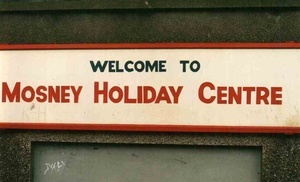
mosney2

Mosney

garygannon

From top: Mosney Direct Provision centre; Gary Gannon

it is time to open up Direct Provision institutions, give people facilities to cook their own meals and let the adults work.

We won’t be sorry.

In the first of a new Friday column, Gary Gannon writes:

February 19th 2013 was a unique day in my political lifetime. On this particular evening, Taoiseach Enda Kenny rose to his feet in Dail Eireann and spoke not only on my behalf, but on behalf of the entire nation.

His words were perfect and his passion in the delivery of each single syllable was matched only by the dignified courage that was emanating from the public gallery where twenty survivors of state sanctioned abuse sat gazing over that evenings proceedings.

It was two weeks on from the release of the McAleese report into the State’s involvement in the Magdelene Laundries and our Taoiseach was at long last, in the process of recognising the State’s role in that horror.

I felt personally that he was apologising for not only the State’s role in the institutionalising of women throughout our short history, but that he was apologising for us all through our societal complicity in what he rightfully described as ‘our nation’s shame.’

We will never truly understand the barbarity of these religious work-houses where women who had ‘fallen’ in the eyes of an ever moralising society where sent so that moral Ireland could maintain the veneer of purity.

The dark shadow of these laundries, mother & baby homes or the variety of other institutions where we banished the poor and the different should hang around our necks like an albatross but yet, does the existence of Ireland’s system of Direct Provision for asylum seekers show that old habits are indeed hard to kill?

The Taoiseach, in making that apology which I felt spoke for me and the society I wished to be part of said rightfully;

‘In a society guided by the principles of compassion and social justice there never would have been any need for institutions such as the Magdalene Laundries.’

I completely agree but I have to ask why then, in a society which claims now to be guided by those same values is there a need for 679 people* to kept in what are effectively privately run detention centres?

Why are adults who live in this country prohibited from cooking their own meals?

Why is Ireland, with our emphasis on compassion and social justice, one of only two European Union countries who restrict asylum applicants from the labour market for the entirety of their process?

A more important question, with our history of inhumane cruelty in regards the forced institutionalising of those we consider to be different to the mainstream, what arrogance is it that makes us think that this time it will be any different?

Many, giving the extreme depravity of the laundries or the mother and baby homes, will argue that there is no comparison between these institutions and the current Direct Provision centres.

Of course, there is no expectation on people in direct provision to clean laundry as a physical (profitable) embodiment of their sins being washed away, but rather, we expect children and adults to sit without opportunity for life progression for periods exceeding eight years in some cases while an unidentified official of the State makes a decision on their fate.

That is a cruel practice.

It is not to our credit either that we no longer charge religious institutions with the responsibility of caring (said very loosely) with the needs of those we consider unfit for inclusion in the agora of Irish society; instead we hand over that responsibility to our new gods, the private sector.

The post-apocalyptic Disneyland that is Mosney Irish Holidays plc, earned almost 9 million euros in 2009 after converting into a Direct Provision centre.

While we continue to prohibit many of our asylum seekers the facilities by which they can cook and prepare their food in accordance with their cultural preferences, East Coast Catering has received some 90 million euros from the State for services rendered in regards Direct Provision.

We have always been good at turning poverty into profit but at the same we ask adult asylum seekers to live off E19.10 a week!

This is not only State sanctioned poverty it is also a prime example of the State making millionaires out of those they consider worthy of catching the tears of the suffering.

Make no mistake about it, in these Direct Provision Centres there is an abundance of suffering that has been well documented and poorly acted upon.

The Irish TimesLives in Limbo’ series captured the voices and stories of those in Direct Provision in a manner that hadn’t emerged previously.

It was from that project that I first learned that an asylum seeker in Ireland was up to five times more likely to suffer from depression or mental health related illness than in the wider community.

It was here again that I got a snapshot into the conditions present inside where overcrowding, sub-standards of hygiene and families living in single-room accommodation that was infantilising adults while restricting the development of children were all described.

It was in this series too where I first read of the damning prediction that was made by Former Supreme Court Judge Catherine McGuinness who predicted that a future government will be publicly apologising for the damage done by the direct provision system.

That is terrifying and with our past transgressions in this regard so closely wrapped around us still, we, as in all of us must be quicker to respond.

The issue is of asylum is undoubtedly complex but our values, humanity and past experiences should always be to the fore-front of our considerations.

In that regard, open-up these institutions, give people the facilities and the means by which they can provide meals to their own families. Allow adults to work and the dignity that comes with this primal need.

Allow asylum seeks who have gone through the first two stages of our education system to compete for places in 3rd level universities on the same terms as their classmates.

As the children of Direct Provision become adults and more stories start to emerge, we may still have to apologise for this degrading system, but we can act now to prevent having to apologise for tomorrow.

Gary Gannon is a Social Democrats Councillor on Dublin City Counicil for Dublin’s North Inner City. Gar’s column will appear here every Friday before lunch. Follow Gary on Twitter: @1garygannon

* Number of people still in Direct Provision centres who have received citizenship here.

Screen-Shot-2015-05-07-at-11.38.16

Lissywollen Direct Provision centre for asylum seekers, Athlone, Co. Westmeath

Political expenses and FOI sleuth Ken Foxe obtained copies of letters of complaints made by asylum seekers living in direct provision centres across Ireland.

The mechanism to allow asylees make formal written complaints about the centres was introduced by the Department of Justice in 2011.

The number of complaints has fallen over the years, however rights groups say this is because the residents of the centres generally have little faith in the system.

In the current edition of Village magazine, Mr Foxe reports there have been complaints about the bullying of a child by a staff member; infestations of vermin; and rooms with no heating, among other complaints.

The centres are not identified in the article.

Mr Foxe reports:

In a centre in the Mid-West, a group of residents wrote about repeated gross invasions of their privacy.

“The manager get in any room and search our private bags and take our stuff”, they wrote.

They explained how CCTV was installed to watch the windows of their room, which were locked so that they would not open more than a centimetre.

The residents also described how they were made to sign in daily and, if they did not, a letter was sent to social welfare officers seeking cuts to the tiny weekly payment of €19 that they receive.

…At the same centre, a disabled asylum-seeker had pleaded to be allowed to share a room with his Afghan friends because he needed help in every “aspect of life”.

“They treat us the way like we are in prison”, he wrote: “They don’t care about your health, your condition, [and] depression and will make your head burst out and become crazy. Our condition is even worse than prisoners because they have some respect inside the jail but we don’t have that at all”.

The complaint was investigated and it was discovered that there were fourteen vacancies at the centre and the request to stay together could easily have been facilitated.

…[Jennifer DeWan of NASC Ireland said]: “The number of complaints has been falling yet we are still hearing about all the same issues. People just don’t see the benefit of complaining – because even when they do, nothing changes. The mechanisms need to be safe for asylum seekers to use and there must be a positive result when they use them.”

Refugee Reality: FOI complaints show lunatics taking over the asylum-seekers (Village)

Previously: Postcards From Direct Provision