Tag Archives: Tuam Babies

903449519034496790344959903449549034496290344943 90344946 9034495090344941 90344957 90344960  90344966 90344968 90344970

90344969This evening.

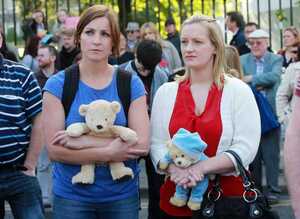
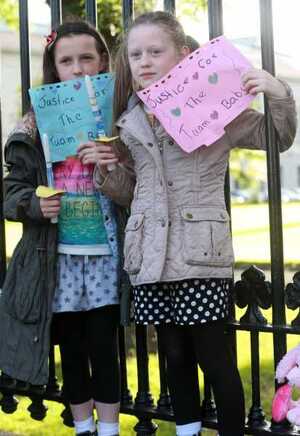
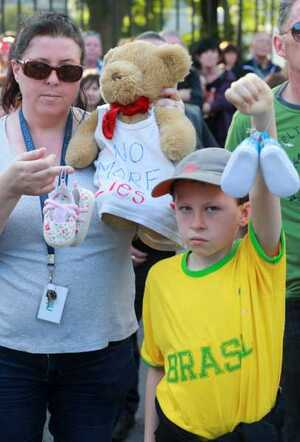
Scenes from a vigil at the back of Leinster House, Dublin  to pay tribute to and demand justice for the mothers and children who endured cruelty at the hands of the State and the Catholic Church. Testimonies from people who experienced life at the homes were heard, along with poems and songs.

(Laura Hutton/Photocall ireland)

tuam1

Ger writes:

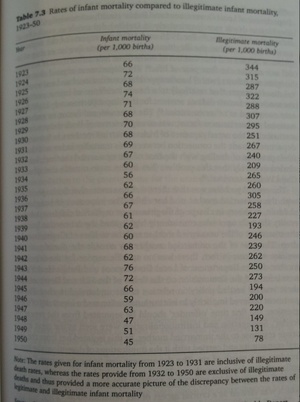
“Can anyone explain the thinking behind the way RTE and The Irish Times have (with honorable exceptions such as Philip Boucher Hayes) treated the mother and child story?  Last Thursday’s Prime Time and Saturday’s Irish Times (above) sought to dismantle ‘aspects’ of the original story and not address or investigate the outrage that children in these homes were FIVE times more likely to die than children outside these homes?”

Anyone?

Alex Woodcock Clark adds

“I am a little amazed that this article (Irish Times Saturday) which attempts, bravely, to whitewash this horrific story does not contain the words ‘Roman’, ‘Catholic’, ‘church’ or ‘nuns’ in any of its three pages…”

Previously: Troubling

90344553
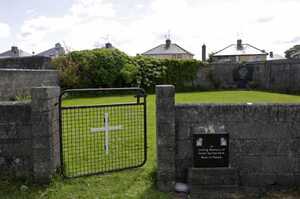
[The grounds where the unmarked mass grave apparently containing the remains of up to 800 infants who died at the Bon Secours mother-and-baby home in Tuam Co Galway from 1925-1961 rest].

“The treatment of these babies is in stark contrast to that of the deceased members of the Bon Secours order buried near this site. When the order moved away from Co. Galway, the nuns’ remains were moved to a well-tended and attractive plot in Knock, Co. Mayo.
The Tuam babies were left with no memorial…”

We need to dig ‘babies graves’: Ground Penetrating Radar reveals two ‘anomalies’ beneath Tuam Home site (Irish Mail On Sunday)

(Laura Hutton/Photocall Ireland)

pet
AB writes:

“The petition you featured a couple of days ago on your site has nearly reached 15,000 signatures. If there is anyone who missed it can you share it again so we can try and reach 50,000 signatures.. Thank you.”

UPDATE: Now at 20,500 signatures.

Sign here

90344293corlesstuam
The grounds of the former Bon Secours mother and baby home in Tuam, Co. Galway where it’s believed 796 infants may have been buried in a mass grave. Middle: Catherine Corless and, above, today’s coverage in the irish Times.

“Corless writes in her article about hearing of boys who “came upon a sort of crypt in the ground, and on peering in they saw several small skulls. I’m told they ran for their lives and relayed their find to their parents.”

From Rosita Boland’s Tuam mother and baby home: the trouble with the septic tank story piece in today’s Irish Times and  picked up by a number of Catholic websites today.

From the accompanying video Catherine Corless says:

So it was only in my research when I was talking to people in the area, they said ‘Do you know there’s a little graveyard at the back?’  The older residents in the area – now, before these new houses went up – they had the story that two little boys were playing in the area back in the early 70s/late 60s and they came across a huge hollow in the ground. Then they went further and saw there was a slab – a few slabs going across this hollow and so the lads tried to peer in to see what was in there, and they got some stones and broke open more. They said when they cracked open the slab – he said he was just doing this – it was full, full to the brim with skulls and bones. I said ‘Were they big or small?’ ‘Oh’, he said ‘they were little ones, all little ones’ he said.


The full transcript of the video via Paul Moloney:

Catherine Corless: “I started out to do the history of the nuns and the children who went there and I wasn’t expecting the stories that came up. Because we never really knew the home babies as we called them. I kind of remember them going to school in the lower classes. I do remember that they came down in rows, down a double-row down to school. Everybody remembers the sound of the boots because they made a rattle when they came down because the girls and boys wore these hob-nail boots, big black hob-nail boots, summer and winter, and I do remember they were treated that little bit different than the rest of us. We always knew not to play with them and to keep away. This whole area was enclosed with an eight-foot wall right around an acre perimeter, and very few people could see in or out. If you were in there you couldn’t see what was going on in the outside word. A car would come and drop off a mother I suppose and she would go in and once they went in there they just didn’t see outside again until they left.

So it was only in my research when I was talking to people in the area, they said ‘Do you know there’s a little graveyard at the back?’ The older residents in the area – now, before these new houses went up – they had the story that two little boys were playing in the area back in the early 70s/late 60s and they came across a huge hollow in the ground. Then they went further and saw there was a slab – a few slabs going across this hollow and so the lads tried to peer in to see what was in there, and they got some stones and broke open more. They said when they cracked open the slab – he said he was just doing this – it was full, full to the brim with skulls and bones. I said ‘Were they big or small?’ ‘Oh’, he said ‘they were little ones, all little ones’ he said.

Rosita Boland?: “And do you believe him?”

Corless: “Well, it’s not just the boys talking, it’s from other people around the area if you talk to them. They say that a few people came to see what the fuss was about. Someone called the parish priest to come up and to look at the area and to bless it. It’s only in the last month or so that I found out that these boys – now men – were still around. I didn’t have their names until about a month ago.

Boland: “Do you believe that there are all of the children in that grave, do you think that that is possible?”

Corless: “I think it’s quite possible going from the boys’ explanation that it was full to the brim of bones. But still how children at the time, does it matter if it’s 500, 600? If there isn’t a full 796? 10 children in a septic tank? 20? Isn’t that horrific? Is it the numbers that makes it horrific?

Boland: “Would you welcome excavation in that spot?”

Corless: “I would welcome the truth, always, always. The evidence strongly suggests excavation is the only way, if anyone wants to do that. That wasn’t our intention, our intention was to name the children, have them remembered, put up a plaque. I’m thinking of the other mother and baby homes in Ireland, I’m thinking of the groups that are out there, desperately trying as we were, struggling to have children remembered. And if this investigation helps and pushes it forward, I would welcome it. It’s justice, justice to children, justice to the people who gave birth there.”

(Photocall Ireland)

Update:

90344293 90344296 90344303 90344308 90344318

[Historian Catherine Corless (pic 4) and Tuam author JP Rodgers (above) who was a resident at the Bon Secours mother-and-baby home until he was fostered at the age of six]

Tuam Co Galway this afternoon.

Laura writes:

“The grounds where the unmarked mass grave apparently containing the remains of nearly 800 infants who died at the Bon Secours mother-and-baby home in Tuam Co Galway from 1925-1961 rests. The site is now part of the Dublin Road housing estate and records show that the former mother and baby home’s septic tank was in this location. The names of the children buried here have been confirmed by  Catherine’s’ research and she hopes to raise funds to erect a plaque as a memorial to them. JP has written two books on the subject detailing his mother’s life and his own.”

Earlier: What About Dublin

(Laura Hutton/Photocall Ireland)

medium_image-538de8664150502721240000-coalesced

[The mother and child home run by the Bon Secours nuns in Tuam, Co Galway]

RTE’s Drivetime reporter Philip Boucher Hayes writes:

“This figure of 800 dead babies (which incidentally excludes the stillborn) has been generated, and double checked, by an arm of government….
…This does not prove, as some have alleged, that the nuns negligently let children starve to death. But it does establish what some seek to deny – that there is every reason to believe up to 800 bodies were in the literal sense of the word unceremoniously discarded there.

That is not the view of the Gardaí though. They have set their faces against an investigation without apparently considering any of this evidence. They sent me the following statement this afternoon, even after the government had made its own announcement about a review of the evidence.

‘Hello Philip, The grounds in Tuam were being surveyed in 2012 and bones were found, they are historical burials going back to Famine times,there is no suggestion of any impropiety and there is no Garda investigation . Also there is no confirmation from any source that there are between 750 and 800 bodies present.’

There was a discovery of famine era bones in the vicinity in 2011 as “The Home” was a workhouse up until the turn of the century. The location of that site is about 100 yards away from the septic tank burial site. So the Gardaí are misinformed on this or have decided to find a reason not to investigate any closer. Because to claim that there is no source confirming the presence of any bodies there is to wilfully ignore myriad evidence in the public domain.

Tuam Babies: The Evidence (Philip Boucher Hayes)

babiesIllustration: Allan Cavanagh

You may have been struck by the ‘strangely muted’ reaction to the Tuam Babies story in the Irish media since new revelations emerged in the Connacht Tribune  the Irish Mail on Sunday.

Gwen Boyle writes:

796 tiny bodies, squashed into a septic tank. Bones upon bones; the bones of 1960s babies mingling with the bones of 1950s, 40s, 30s, 20s babies in untold layers of misery, layers of starvation, layers of neglect.

The horror of the discovery, or rather re-discovery, of the mass grave at the old site of the Bon Secours mother and baby home in Tuam, Co. Galway last week caused no more than a flinch for some, an involuntary turning away.

On the day that the tireless work of local historian Catherine Corless and her colleagues became known to the wider world, RTE News devoted their time to the story of Kim Kardashian and Kanye West’s honeymoon in Cork. In an age of instant information and desperate press oneupmanship, it is impossible that the revelations in Tuam escaped their notice. It is also unlikely that a conspiracy was afoot at the state broadcaster to keep this unfortunate story quiet.

The most likely reason for RTE’s inexplicable blindness, along with that of many other major news outlets, is much more prosaic and much more terrifying.

It was ignored because it wasn’t a story. It wasn’t news. It no longer surprises us that these things have happened.

Almost 800 babies shoved into a septic tank, uncared for, unmarked, unremembered? Of course they were. What else would you expect from the organisation that presided over the rape of thousands of children, the forced adoption of thousands more, untold years of slave labour, and the incarceration, brutalisation and shaming of women?

The story, which is gaining traction days later as news outlets recognise their terrible oversight, has garnered little more than a shrug from the established press, barely a mumble from the State, and a defensive, sidestepping statement from representatives of the Catholic church.

What can explain this reluctance to report, to engage, to imagine?

Certainly, no-one wants to imagine it.

We would prefer not to think about those women, removed from their homes and families, giving birth under the gaze of disapproving nuns, watching their babies starve, or die from a preventable disease, or disappear one day into a car to be sold to a new family. We would prefer not to think of disabled babies slowly dying in lonely, shabby rooms. We would prefer not to think about exactly how those babies’ bodies ended up in the septic tank. We would prefer not to think of the symbolism of that tank, of what those babies meant to the people who were meant to care for their tiny souls. We would prefer not to, but perhaps we should.

That said, Irish people now outstrip their official mouthpieces. Many of us don’t share this reluctance. Given the opportunity, we react. In floods of outrage on social media, in the comments section of online news, in conversations on the street, in letters to the paper, people freely speak of things that we would prefer not to think about, but that it would be worse to forget.

With anger and disgust, people condemn the actions of a church that claimed to love and a state that claimed to care. The story goes global, but at home, fringe media and even satirical news sites provide coverage more hard-hitting than anything in the Irish Times. The attitude of ordinary people on this island toward the Catholic church has changed swiftly in the wake of scandal after scandal, while traditional media and government spokespeople still struggle against decades of ingrained deference and outdated modes of public engagement.

This week, Pope Francis, seeming concerned about the world’s chronic underpopulation, lamented the fact that some married couples choose not to have children. He accused these couples of selfishly preferring their holidays and dogs to the propagation of loyal young Catholics.

These future children, we can be assured, would be cherished. The children of marriage. The children of devout followers. Not the children of unwed mothers, the children of other religions and none, the unbaptised, the unwanted. Times have changed since these children were left to die of neglect and disposed of in septic tanks, but they are still not the right kind of children for the church to cherish.

The church that still reaches deeply into Irish lives and psyches is not the church of Jesus Christ, a man who by all accounts simply wanted people to care for one another without reservation or prejudice. It is an organisation that thrives on power, that runs on secrecy, that entangles itself in the lives and deaths of its followers.

However, revelations about babies in septic tanks, now matter how slowly they filter into the mainstream, are unforgettable once lodged in the public imagination. Ireland has changed, and continues to change, while the press and government struggle to keep up with the outrage of the people.

Some members of government suggest a memorial might be in order. The Archbishop of Dublin thinks that the matter is possibly worthy of a social history project. What neither of them wants is an excavation.

Why? Because an excavation means bones. Bones that will be brought to light, touched, examined, photographed. Bones that will reach the front pages of papers and the corners of the internet. Thousands of tiny, fragile bones, permanently engraved in the minds of Irish people everywhere.

We couldn’t be having that.

Mass Grave of 800 Babies is Too Uncomfortable for Official Ireland (Gwen Boyle)

Earlier: Mortification Once Again