
Topaz, Dunmore Road, Waterford yesterday.
Noel writes:
Looks like someone just took delivery of a miracle cure…



Topaz, Dunmore Road, Waterford yesterday.
Noel writes:
Looks like someone just took delivery of a miracle cure…








MORE to folly

The balance of power shifts with the arrival of a new individual in a bizarre, yet strangely familiar society of quasi-human beasts.
A short by five students of the MOPA CG animation school in Arles.
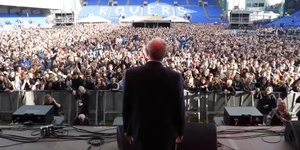
The irresistible spread of ‘Oh Jeremy Corbyn‘ to the chorus of Seven Nation Army by The White Stripes.
FIGHT!
How The Labour Chant Started (The Guardian)
Meanwhile…
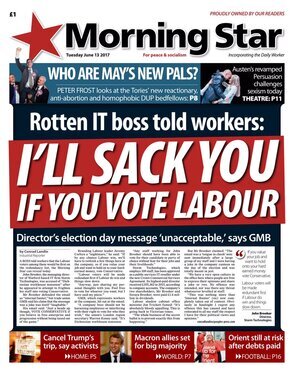
🎥 | The 'left liberal' Guardian's campaign against @JeremyCorbyn was as relentless as the right-wing Daily Mail & The Sun. Here's the proof: pic.twitter.com/HPOFNjjBgX
— @ROBN1980 (@robn1980) June 11, 2017
#jobstown: Ken Purcell walks free from CCJ where he had been on trial since April. @rtenews pic.twitter.com/nAbjgGqU10
— Vivienne Traynor (@viviennetraynor) June 12, 2017
RTE reports:
Charges against one of seven men accused of the false imprisonment of former tánaiste Joan Burton and her adviser during a water charges protest in 2014 have been dropped.
The decision followed legal argument by lawyers for 50-year-old Ken Purcell from Kiltalown Green in Tallaght.
Prosecuting Counsel Sean Gillane told Judge Melanie Greally the Director of Public Prosecutions was not proceeding with the prosecution of Mr Purcell.
Judge Greally told the jury there had been a development in the trial following a ruling earlier today.
Anyone?
Charges against Jobstown defendant Ken Purcell are dropped (RTE)
Video: Vivienne Traynor

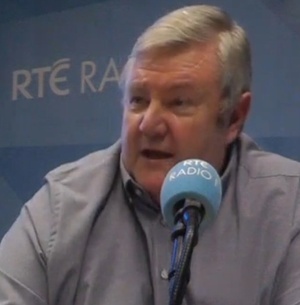
From top: Sinn Fein’s leader in Northern Ireland Michelle O’Neill, centre, celebrates last Thursday night after picking up two seats from the SDLP; Derek Mooney
While the outcome of the Westminster election was far from conclusive in England and Wales, the same cannot be said for Scotland and Northern Ireland.
Only for the resurgence of the Scottish Tories under Ruth Davidson, Theresa May would be moving furniture rather than clinging to office by her fingertips. While the same Scottish result has, sadly, delayed the prospect of an Indy2 referendum, as the SNP Westminster representation collapsed from 56 seats to just 35 thanks to a 13% drop in support.
While in Northern Ireland the two parties that were at the heart of the post Good Friday Agreement Executive the: the SDLP and the UUP have been wiped out in terms of Westminster representation with the spoils being shared out between the DUP and Sinn Féin.
The Westminster line-up going into last Thursdays election was DUP 8, SF 4, SDLP 3, UUP 1 and Ind 1. The line-up coming out of it looks far starker: DUP 10, Sinn Féin 7 and Ind Unionist 1.
In crude political terms the balance has not shifted, however. There were 11 broadly unionist MPs and seven broadly nationalist ones in the last House of Commons. This time around there will be: 11 broadly unionist MPs and seven broadly nationalist ones, only that none of the seven will attend.
Much has been made of Sinn Féin’s abstentionism over the past few days with most parties in the South using it as a stick to beat them with. I think the parties here have got it wrong on this one.
I would have happily voted for any of the SDLP candidates and I am deeply saddened not to see Mark Durkan, Margaret Ritchie or Dr Alasdair McDonnell in the House of Commons ensuring that the voice of nationalist and republican Ireland is heard.
That said, the reality is that nationalist and republican voters still opted for candidates they knew would not take their seats.
Why voters in the North decided to vote for candidates who are happy to take the wage and the perks without doing the job is the issue that our political leaders should be addressing. The issue was excellently summed up by Denis Bradley in his analysis piece in last Saturday’s Irish Times:
“Since the Good Friday Agreement, Irish nationalism, across the whole island, has allowed itself to be reduced to a critiquing and an opposing of Sinn Féin instead of better understanding and explaining to itself and to others the desirability and the possibility of Irish unity.”
Bradley then went further and made the case for not just slagging off Sinn Féin hollow and ultimately directionless narrative saying:
“There will always remain Irish nationalists who are unconvinced that Sinn Fein are the best proponents and providers of Irish unity but they continue to await a message and a messenger that is better.”
I believe this group is in the majority, North and South. As I have said here very many times, Brexit has completely changed the nature and scope of the debate in the North.
One of the fundamental principles of the Good Friday Agreement is consent. Consent means, in the context of the Good Friday Agreement, that the constitutional position of Northern Ireland will not change without the consent of the majority of the people there.
There was a vote on Brexit in the North and 56% of people there, across communities, said no to Brexit. Yet it was still pushed through Westminster – despite the impassioned pleas of people like Durkan, Ritchie and McDonnell – and will proceed, we presume, in some shape or other.
The EU citizenship of the people of Northern Ireland is not only being ignored, it is being annulled by the government at Westminster – small wonder that nationalists and republicans are angry.
Yes, it would be far better for this island North and South if Sinn Féin took their seats in this finely balanced parliament and used their numbers to raise the many legitimate and real concerns of Irish people on a hard Brexit and a hard border, but that is the type of analysis and criticism you apply to a political party, not Sinn Féin.
There are so many other areas on which to challenge Sinn Féin, top of that list is the perpetual sloganeering and game-playing that it engages in which helps it squeeze out an extra percentage point or two here and there but which also pushes the prospect of reunification further over the horizon.
As Cllr Mannix Flynn said in his podcast with the Irish Independent: “The Sinn Féin promise of liberation is nuts.”
Over the past few days we have seen successive SF talking heads on TV Radio and Social Media telling us what a brilliant election they have just had and how their mandate is even further strengthened.
In the most simplistic terms, they are right. Sinn Féin did have a good Westminster election, but the shift in votes needed under the archaic first-past-the-post system to deliver that result was not huge. They took two seats off the SDLP and took one off the UUP, but when you look at the movement of voters, it was not a seismic change.
While SF saw its vote share since the most recent assembly election increase by 1.5% and the SDLP saw its vote decrease by a mere 0.2%, the biggest swing was to the DUP which saw its vote surge by a stunning 7.9% to 36%.
That DUP swing was decisive, not just in terms of the North, but also in terms of its clout in Westminster.
So, the DUP now has the ear, if not the more tender regions, of a weakened UK Prime Minister, while Sinn Féin has seven MPs with no clout, no Executive, no Assembly and an NI MEP who will be redundant in less than two years.
The other thing that Sinn Féin may have achieved is to have opened up a political space that it cannot occupy, but which could be filled and expanded by a new, or even an old, pro-European, business friendly, republican political party.
Things in the North may be about to get a whole lot more interesting.
Derek Mooney is a communications and public affairs consultant. He previously served as a Ministerial Adviser to the Fianna Fáil-led government 2004 – 2010. Follow Derek on Twitter: @dsmooney
Meanwhile…
DUP will support the government "for as long as Corbyn leads Labour", a senior DUP source tells me https://t.co/285MKpCaNk
— Robert Peston (@Peston) June 12, 2017
There you go now.

They’re back.
With hooch.
Are Ya Havin’ That writes:
‘LeatherJacketGuy’ & ‘JohnnyBS’ Try ‘Four Loko‘ [containing four standard drinks] for the first time!
Hic.
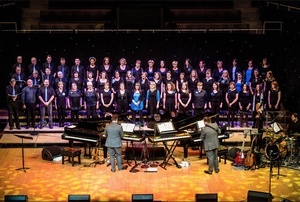
Songs in the Key of D are a 50-strong choir with a repertoire made up entirely of songs that are either about Dublin or that have a strong link with the capital, “everything from the Hallelujah Chorus to Bell X1”
Key of D writes:
We’re long time readers, first time…eh, contacters. We know you don’t usually do this type of thing but we’re playing a gig this Wednesday (14th) in Liberty Hall Theatre at 8pm.
Raised on Songs & Stories’, a night of Dublin song and story will include songs by acts like The Dubliners, The Fureys, Noel Purcell, Sinéad O’Connor,, Aslan, Mic Christopher, The Coronas, Glen Hansard, and many more.
The choir are delighted to be joined on the night by spoken word poet, Stephen James Smith. Stephen wrote the acclaimed poem, Dublin You Are.
Tickets are priced at €20 and are available at link below. A limited number of tickets will be available on the door.