



Yearly Archives: 2017

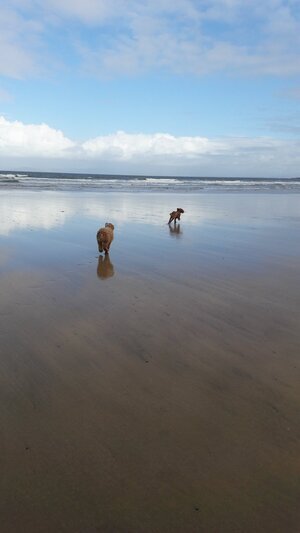
Yesterday.
Annie West writes:
Eddie and Joey at Streedagh Beach, County Sligo…gladden me heart so they do.
Meanwhile…
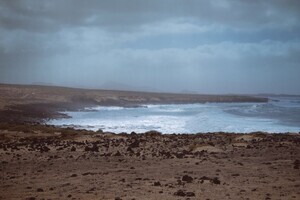
Lanzarote, yesterday.
(Thanks Paul Condron)






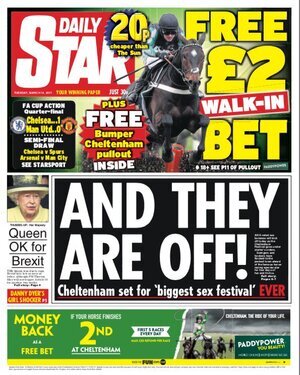
MORE to folly

RTÉ reports:
The death has occurred of Bishop Eamon Casey, the former Bishop of Galway. His passing was confirmed by a spokesperson for the Irish Catholic Bishops’ Conference.
He died early this afternoon in a nursing home in Newmarket-on-Fergus in Co Clare. He had been ill for some time.
Former Bishop of Galway Eamon Casey dies (RTE)
Pic: RTE
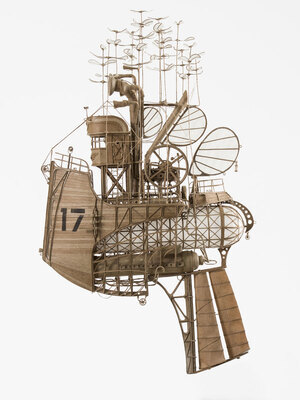

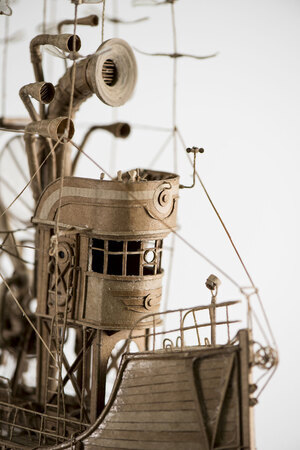


The fruit of a year’s work by Netherlands-based artist Jeroen van Kesteren part of series entitled Orphanage for Lost Adventures made from card, foil adhesive and a variety of papers. each 40 -50cm tall piece takes about a month to construct.
Yo Llama
at
‘sup?
Saturday.
Damien McCoy writes:
Someone in Shantalla, Galway has two llama in their back garden.

Reading From Book of Dark Blue
after Leo Varadkar, WB Yeats, and Enda Kenny
We are for the Ireland that rolls
laughing out of its bed every morning, those
whose national anthem is the alarm
clock exploding on the bedside locker and it still dark;
who, even August bank holidays, are
in the shed before five a.m.
fashioning origami former Garda
commissioners, or writing violin concertos in praise
of the Little Sisters of the Bon Viveur,
Blessed K.T. Whittaker and anyone else
who got up ridiculously early
to make this country what it
allegedly isn’t.
We represent those who know should they fall
up a ladder, or for some other reason –
be it insanity or baldness –
be unable to properly function,
we in government will do nothing
except, if they’re lucky, repeatedly
knee them in the nasty bits.
We whose ancestors have eaten
the still throbbing heart of General O’Duffy
(or at least what we thought was his heart)
now see leaflets tumbling through respectable letter boxes
in which cretin and comedian crow their gutless song,
their arguments a bladder bloated with animal blood.
We say, down the disposal pipe
with all these and their cries
of avarice and failure,
those who engage in wilful wastage of water
by sitting there all day – the jets
fizzing up their crevices –
in Jacuzzis given them
by the tax payer.
Drown them in the tank
and bill them for their own extinction,
for they are weasels who’d drink
of your chickens until they’re dry.
We are for people who look both ways twice
when crossing the road
and remember where they left their keys.
Kevin Higgins
Pic: General Eoin O’Higgins (Hulton/Getty)
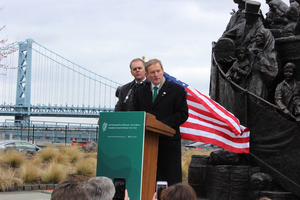
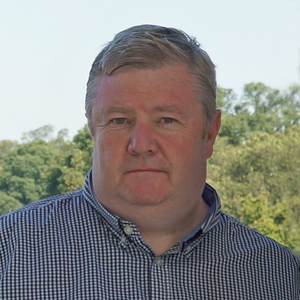
From top: Taoiseach Enda Kenny in Philadelphia, USA yesterday; Derek Mooney
The government’s proposed referendum, if not managed and led effectively, could perversely be turned into a reverse border pol.
Derek Mooney writes:
Enda Kenny’s fascination with his predecessor John A. Costello continues. Not only is Enda determined to beat Costello’s record for time served as Taoiseach, he now seems to want to eclipse Costello’s penchant from making major constitutional announcements outside the country.
Costello announced his intention for Ireland to abandon the External Relations Act (and effectively quit the British Commonwealth and declare itself Republic) during a visit to Canada in 1948, while Kenny announces in Philadelphia that he intends to hold a referendum to give the Irish diaspora votes in future Irish presidential elections – but only in elections after the next one.
There are many legends about Costello’s Ottawa announcement, including one version that claims he made it when was “tired and emotional” and another that asserts he did it after being offended by the placing of a replica of the Roaring Meg canon used in the Siege of Derry in front of him on the dining table at a formal dinner at the Governor General’s residence. But they are only legends.
Moves to repeal to External Relations Act, which gave the British Crown limited recognition around foreign relations, i.e. Irish diplomats were formally accredited by the King, were already afoot before Costello even came to office. In late 1947 Éamon de Valera’s Fianna Fáil government started preparing a repeal bill, but work on this was halted by the February 1948 election.
At least Costello was able to announce something which he could immediately legislate for and see carried into action within a reasonable space of time. Within eight months Ireland was out of the Commonwealth), in Enda’s case he has just announced plans which may not come to fruition for another 8 years (never mind 8 months) – and only then if they are passed in a Referendum, which is no absolute certainty.
We must wait a few weeks more to see the detail of the Governments proposals on extending voting rights in Presidential Elections from 2025 onwards to Irish citizens living outside of the Republic.
From what the Minister of State for the Diaspora said on Radio this morning it appears that the Government intends to publish a range of options rather than a specific plan, which suggests that this whole adventure may not even be as planned and prepared as Costello’s 1948 one.
According to Minister of State McHugh there are an estimated 1.8 million citizens outside the State and a potential electorate of 1.87 million in Northern Ireland. To put this in context the total electorate eligible to vote at the October 2011 Presidential Election was just 3.2 million (On the day just 1.8m (56%) of them chose to vote).
While it is likely, if not certain, that Enda Kenny will neither be Taoiseach nor leader of Fine Gael by the time the referendum comes around, his shadow will hang over this and let’s not forget that Enda has had a penchant for starting referendums that he cannot win.
Will this be another one? I personally hope not, but I must admit that I am far from thrilled or enthused by what I have heard from the Taoiseach and his Ministers over the past few hours.
Surely such a major constitutional change should be accompanied by detailed research and argument, not followed along by broad range of options for consideration to be published a month or so later.
While I can see some merit in Leo Varadkar’s description of the proposal allowing for the transformation of the Presidency into one for the whole Irish nation, highlighting the fact that Ireland has become a global nation via its diaspora, won’t we also be effectively limiting the Presidency to just a symbolic, ceremonial role?
Though they are not often exercised, the Irish President does have important constitutional functions, are we perhaps diluting those for what it effectively just a gesture?
I also worry about how the referendum campaign make shape up. As we have seen in past campaigns, indeed as Leo Varadkar has observed: referendums are “by and large” never what they are supposed to be about and they can often turn into a votes on “extraneous issues… or decisions being made by the Government, such as cutbacks.”
The government’s proposed referendum, if not managed and led effectively, could perversely be turned into a reverse border poll – with the focus falling not on the wider diaspora or on the positives of giving Irish citizens in the North a formal recognition in our political process – but on worse aspect of the North and the prospect of allowing a load of hard-line DUP voters (and others) have any kind of say in the South.
Public attitudes to the North down here as not always as positive and welcoming as we would have ourselves believe. A recent poll for RTE by Dr Kevin Cunningham’s Ireland Thinks found a very mixed appetite for a United Ireland among voters in the Republic, particularly when it comes to the costs of re-unification. It roughly found that that voters in the Republic split three ways with one third being in favour, one third against and one third undecided.
That said, Brexit has pushed Irish re-unification way up the political agenda for all parties North or South: not as an absolute inevitability, but as an increasingly likely consequence of the economic consequences of Brexit.
Re-unification needs to be seriously considered now, not as some rhetorical wrap the green flag around me slogan, but as a real and viable political option. This is something that needs to be thought through seriously, which is why Micheál Martin’s announcement today that Fianna Fáil will soon publish its 12-point plan to prepare the way for unification of the island is so welcome.
We need to start talking and preparing for unification by strengthening the economic, political and educational links between the Republic and Northern Ireland. While these could help re-unification, even if that were not to come about, they would still be mutually beneficial.
Hopefully Fianna Fáil’s proposals, due in the coming months, will help provide a sound and considered backdrop for the debate on giving votes for citizens North of the border.
For the record, when it comes to votes for Irish citizens outside the jurisdiction my own preference would be to look to Leinster House rather than Áras an Uachtaráin and follow the French model by having a constituency in parliament (either in the Dáil or Seanad) voted for exclusively by Irish citizens living outside the Republic,
in fact I would suggest two such constituencies: one for Irish citizens living in the North and one for Irish Citizens living elsewhere.
As it stands today, while I am inclined to vote what Enda Kenny announced in Philadelphia, I am not so enthused as to go out campaigning for it – on that score, I remain to be convinced.
Over to you Leo or Simon.
Derek Mooney is a communications and public affairs consultant. He previously served as a Ministerial Adviser to the Fianna Fáil-led government 2004 – 2010. His column appears here usually every Monday. Follow Derek on Twitter: @dsmooney

From left: Sinn Féin TD Peadar Tóibín, Communications Director at the IRFU Stephen McNamara, Minister for Social Protection Leo Varadkar, Barrister and Irish Times columnist Noel Whelan and specialist in cross-border co-operation Caitríona Mullan before going on RTE Radio One’s Marian Finucane show on Sunday, February 26
Yesterday.
In The Sunday Times.
Stephen O’Brien reported that Ed McCann, INM group managing editor, Fionnan Sheahan, editor of the Irish Independent, and Cormac Bourke, editor of the Sunday Independent, had met with RTE’s head of radio Jim Jennings on March 3 to raise concerns about what they perceived to be an anti-INM agenda in RTE.
The meeting followed a Marian Finucane Show on RTÉ Radio One on Sunday, February 26.
During that show, the panel was: Sinn Féin TD Peadar Tóibín, Communications Director at the Irish Rugby Football Union Stephen McNamara, Minister for Social Protection Leo Varadkar, Barrister and Irish Times columnist Noel Whelan and Caitríona Mullan, chair of the International Centre for Local and Regional Development.
Amongst other things, the panel talked about the recent newspaper coverage of Fine Gael TDs Leo Varadkar and Simon Coveney and the future leadership of Fine Gael.
In addition, Mr Tóibín alleged that Niall O’Connor, political correspondent of the Irish Independent, encouraged Fine Gael TD Alan Farrell to name Sinn Féin TDs Dessie Ellis and Martin Ferris in the Dáil while he made a statement about the 1983 murder of prison officer Brian Stack on December 7 last.
A spokesman for INM later contacted the show, and Ms Finucane read out a statement denying the claim.
In The Sunday Times article, Mr O’Brien reported:
A source familiar with the March 3 meeting said INM went in “with all guns blazing” and claimed RTE admitted “they got it wrong on the show that morning”.
A transcript of some of what was said during that particular show…
Stephen McNamara: “I suppose the coverage in relation to it is extensive and, you know, if you do love politics then, you’re going to feast on the newspapers for today and the next couple of weeks. I think, sort of, for the lay person, maybe, who’s looking at it and I think that is definitely what people want: is to know more about the policies than the personalities and I think, during the week, what struck me about it is that we were starting to go down maybe the wrong road in relation to, you know, the background of the people and their family make-up and things like that.”
“And that’s actually something that troubled me from early on this week where we had, where we had sort of partners being mentioned and words like ‘attractive wife’ and things like that were starting to come in. So I think that was one area that troubled me during the week.
“I think the Sundays, there’s a huge amount to read in relation to it, in relation to the policies, I think it would be great to get back to that because there’s actually an awful lot of really good stuff happening in this country at the moment. You know – the number of cranes around the skyline…”
Marian Finucane: “They’re growing…they’re having babies again.”
Later
Finucane: “Noel, you were very annoyed about that coverage in the [Irish] Independent during the week?”
Noel Whelan: “Well, I have a very simple view that who somebody is, married or in a relationship, or whether they’re in relationship or not, is entirely irrelevant to the question of their capacity to do their job. In all professions, occasionally, the partner will be more prominent in the office or more prominent at, you know, work-related events than others. But, frankly, I think it’s largely irrelevant. I did feel that there was a sense that it was bubbling, not…what struck me was there was no political reportage from political reporters that this was an issue within Fine Gael, you know, in a Fine Gael contest.”
“It was simply the media and opinion, photographic editing and otherwise, the Independent newspapers, in particular, speaking to troll it effectively as an issue. I think the fact that it has been called out will play some part in pushing it back against. I wouldn’t be surprised if it reemerges later in the campaign.”
Finucane: “Yeah, Michael McDowell is writing on the back page of the [Sunday] Business Post and he says ‘I would not be so cynical as to suggest…’ and he goes on to say ‘a linkage between the new coolness to Leo and his apparent support for the INM pensioners. Leo went public about his discussions with the AG and the Pensions Board chairman to see if he could intervene on the side of the pensioners in their High Court litigation with INM in early December’ and he had said beforehand that you were the darling of the media, kind of up to that, and you got very, very positive coverage. Two questions: How did you feel when you saw that coverage during the week? And what do you think of that suggestion?”
Leo Varadkar: “Well, I think what Michael McDowell’s suggestion there is that because I took a position, supporting the pensioners and staff in Independent News and Media that maybe people higher up in Independent News and Media, you know, took exception at that. And that that might be the source of some of the negative coverage. I’ve actually no reason to believe that. You know? So, I don’t believe that’s the case. But that’s certainly one of the ideas and stories being put around the bubble if you like at the moment.”
“On the more personal issue, I think if you’re in politics you have to have a thick skin. I put posters of my face on poles, I knock on people’s doors uninvited, so you do have to accept a certain degree of attention to your life that you wouldn’t have if you were a private citizen. But, for me, my plan and my view is that: my private life and my family life are not going to be an issue in this campaign or any political campaign I’m involved in. And I really hope nobody else makes an issue of it either.”
Finucane: “Peadar?”
Peadar Tóibín: “Yeah, we have an oligopoly in the media in this country. We have a newspaper group that owns nearly 50% of the print media in the State and owns two radio stations. I’ve spoken to journalists off the record and they have agreed with me in my analysis of that affect over the rest of the political debate but they won’t call them out because some day they will need Independent News and Media to pay their mortgages…”
Finucane: “Very likely…”
Tóibín: “Etc, so, that’s one thing. Secondly, politicians typically won’t call out Independent News and Media on these issues because they know that, well, they’ve, they worry, at least, that they will be dealt with in a more abrasive fashion in those newspapers in the future. I think what’s happened in the last number of weeks with regards the focus on the personal lives of the people running in the election is disgusting to be honest. I think it’s absolutely shocking that that would happen…”
Later
Whelan: “Irrespective of who the politicians or the parties were, I just felt the concept of a newspaper trying to set the agenda about what the issues would be in a leadership campaign, in the initially subtle and then unsubtle way, in which the Independent newspapers were doing… and I’m conscious. I mean, I write for The Irish Times, they don’t tell me what to write. And if they did, I wouldn’t write for The Irish Times. But I am conscious that if you begin to comment on what any other media organisation is doing: particularly by one which buys ink in barrels to the extent of the Independent newspapers does. Then you always run the risk of putting yourself in the firing line. And I appreciate that’s sometimes the difficulty Leo and other politicians involved in these kinds of contests may feel they are in, that they can’t actually necessarily throw light on these issues because it’ll only compound the extent to which they become the focus of negative publicity.”
Listen back in full here
INM chiefs in ‘showdown’ at Montrose (Sunday Times, March 12, 2017)
Previously: Nudge, Nudge, Wink, Wink