Author Archives: Admin

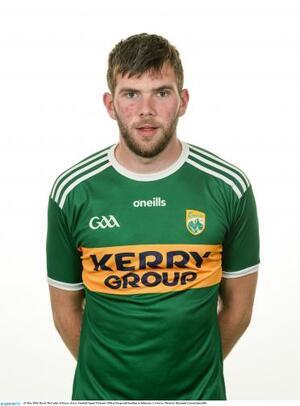
Kerry GAA footballer Kevin McCarthy


The court heard that McCarthy had not eaten on the day in question and that he had drank three or four cans of Carlsberg on the bus; five or six brandy and Baileys; and vodka and Red Bull.

Gulp.

The court heard that McCarthy headbutted and bit [security guard] Mr Zybura and also tried to kick him in the groin…

Ouch.

…he injured  garda, Garda Michael Dalton, who suffered a soft- tissue injury to his wrist and was unable to work for more than two months.

Christ.

  Gda Coleman was also injured by McCarthy, who “bit him on the right hand, and left teeth-marks

Cage him!

Defence solicitor Padraig O’Connell said his client had never been in trouble with the law and was known for his sporting prowess.

Oh.

Testimonials were handed in to court, including from Kilcummin GAA club, the Kerry County Board, and a former Killarney town councillor, Niall ‘Botty’ O’Callaghan…

Ah.

Judge Waters convicted Mr McCarthy for all three assaults and fined him a total of €1,400.

Good times.

Kerry football star avoids prison after biting garda in drunk spree (Independent.ie)

The following is an extract from ‘How Irish Propaganda Operates’ by Frank Armstrong reprinted with permission from the the website CassandraVoices. The original, much longer article can read in full here.

Frank Armstrong writes:

Ireland is neither a totalitarian state, nor even a dictatorship. Nonetheless, the propaganda of an economic elite has forged a dominant consensus, in which two centre-right parties compete for power.

Across a print media duopoly and national broadcaster well-honed techniques of social control divert attention and sow confusion, while subtly instilling dogmas. The education system also plays a vital role in propagating social norms and channelling aspirations.

The dominant consensus is not doctrinally extreme or even illiberal, at least by international comparisons, but it insulates embedded wealth in the form of land and property from taxation, stimulates demand for mortgages among the young, and protects the farming sector from environmental oversight….

…Foreign multinationals are a transient presences on the Irish scene. Their indigenous handlers, an aging cohort of predominantly male, property-owning, car-driving, privately schooled, health-insured professionals – lawyers, accountants, doctors, financial service providers and other high-earning business people – are the enduring economic elite of the state.

Its dominant consensus does not emerge from smoke-filled rooms any longer. Rather, it is an aggregate conception of what a ‘normal’, self-interested person of this class aspires to. Indeed, those upholding what is a neo-liberal orthodoxy may be unaware – like Ebenezer Scrooge – of its detrimental effect.

What is an often passive propaganda is expressed through a media dependent on advertising revenue, and in the policies of the two largest political parties.

A recent poll showed seventy percent of the highest (AB) social class support one or other of the two main centre-right political parties, in particular Fine Gael , now the ‘natural party of government’ for the dominant interest.

The ‘bricks and mortar’ of property remains, overwhelmingly, their preferred asset, with many acting as landlords.

Thus, according to economist David McWilliams the wealthiest top five-percent in the country own over forty percent of its wealth, with eighty-five per cent of that held in property and land.

The key objective of Irish propaganda, and we may call it that, is therefore to keep the economy on an even keel of steady growth, and rising rents, while ensuring that wealth, mostly property, is subjected to minimal taxation.

The result is that in the last financial year a mere €500 million out of total tax receipts of over €50 billion, derived from land or property.

The dominant consensus also insists that it is necessary to keep a lid on government expenditure on public services (most of which the elite does not use), so as to avoid the over-heating of Bertie Ahern’s ‘boomenomics’ before the crash of 2008.

Then low taxation on income and wealth went hand-in-hand with spending increases, and public sector salary ‘benchmarking’ with the private sector.

The ineptitude of these policies were partly to blame for a property bubble before the crash of 2008, and has consigned Fianna Fáil to its present subaltern role, in which it now flaunts a more centrist approach.

In a clear signal to the economic elite, Minister for Finance Michael Noonan launched his Budget 2016 claiming the days of ‘boom and bust’ would be consigned to the history books.Throughout his tenure (2011-2017) no serious public housing initiatives were embarked on.

In 2015, for example, by which time economic growth for the year was at 7.8%, a mere 334 social and affordable units were built. The ensuing scarcity ensured a dramatic recovery in property, including that held by the state bank NAMA.

Another salient feature of Irish propaganda is the essential delivery of buy-in from young adults, who continue to purchase property at inflated prices.

Prior to the crash Dublin prices soared to such an extent that a residence in the city became more expensive than New York or London. Dublin prices are set to reach boom-time levels this year according to Pat Davitt, head of the Institute of Professional Auctioneers and Valuers (IPAV), with an average family home costing over half a million euros.

Meanwhile average Dublin rents now exceed the heights of the Celtic Tiger by thirty percent. This means those landholders, and institutions, that weathered the recession have seen huge dividends.

Any new property purchaser instantly becomes a stakeholder in the dominant consensus. The buy-in of upwardly-mobile youth not only maintains market demand, but also brings political support for the dominant consensus.

Political parties threatening the ‘stability’ under the centre-right axis are subtly undermined as the ‘loony’ left and not given a platform in the mainstream media, or co-opted into governing coalitions and discredited, as was the case with Labour, the Greens and now the Independent Alliance

….The spiral of inequality, globally and nationally is, however, accelerating, and the coalition of interests maintaining the dominant consensus is unstable…

…The economic elite is intellectually rudderless, and only knows the way of economic growth-without-end…

…The centre-right cannot hold for long, but in the meantime, the wheels of Irish propaganda keep turning…..(more at link below)

How Irish Propaganda Works (Frank Armstrong, CassandraVoices)

CassandraVoices

Rollingnews

Broadsheet on the Telly: mixed eclectic voices with hostage video broadcast quality

Last week, Broadsheet on the Telly bowed out after 89 late night episodes.

Neil Curran, who produced the show, broadcast live on Thursdays, and served as its movie critic, writes:

Many moons ago, Broadsheet put out a call for punters who might be interested in joining a new initiative of the site, Broadsheet on the Telly. The requirements were in true Broadsheet fashion, vague; “if interested, email us”. So I did.

Soon after I got an email from a John ‘Preposterous’ Ryan asking about having a chat. Well this was exciting. Was I going to be auditioned and quizzed on my knowledge on the site? Would John ask tough questions on politics or economics to test my worth? Would John quiz me on my political loyalties to see if I was a spy?

My relationship with Broadsheet over the years has been one of a casual nature. I wasn’t familiar with the site during the time of Kate Fitzgerald but became aware of it not long after. I read many of the articles, light hearted and heavy hitting, but I rarely visited the comments section.

At the time, Broadsheet had a reputation of “anything goes” in the comments section so I never got acquainted with the regular posters nor the drama that sometimes raised its head.

Cut back to that video call with John and seeing him for the first time. I expected a skinhead wearing a faded Pink Floyd t-shit with a Sex Pistols poster in the background on my screen. Instead I got a man with, let’s be honest, fantastic hair and a well ironed shirt, soft spoken with humility.

There was no audition, no quiz. Just a chat. I got the impression he wasn’t overrun with emails from people desiring to be part of the Telly slot. I guess people were just appreciative the anonymity the site offers.

Those early broadcasts saw a mix of panellists while the show found its footing. Johnny Keenan was there like myself from the start. Similar to me, Johnny didn’t have a background in media or politics and took party in the show for nothing else other than to be part of an alternative panel show.

Things plodded along until the tragic story about the late Ms. Dara Quigley broke. Broadsheet posted a link to the video of Ms. Quigley captured a few days before her death and all hell broke loose on the site. Regular commentators and panellists jumped ship and the comments section of the post was being hit over and over with anger from readers. Eventually Broadsheet took down the video link, but the anger continued and the damage had been done.

Of course, I missed all this on the site. Due to work commitments I hadn’t visited the site in two days. John sent the regular email about the show and I sent a reply committing to the show as normal.

I became aware of what had happened on the site from the string of upset and angry emails from some of the panellists afterward. As I caught up on what I missed and it made for very unpleasant reading and it was clear there would be only one thing talked about on the show that night.

I faced a choice. Do I also bail on the show? Do I add my anger to the comments? No, instead I chose to go ahead with the show. I was a panellist not a staff member and I believed that the site, via John, should be given the chance to explain themselves. I also found it difficult to believe that a site like Broadsheet, posted the video to draw attention to themselves or drive traffic too. I wanted to hear the Broadsheet perspective.

Episode 14 is a show that I will never forget. There were tumbleweeds in the pre-show online lobby. The only non-staff panellists who turned up was the ever-reliable Johnny and myself.

Even Johnny, an always upbeat gentleman, was sombre. John briefed us on his intention for the show; he would explain why he posted the video link. While at first, I didn’t agree with his views on it, I respected the integrity he showed in his explanation. He took the feedback from people on the chin but believed he was serving a greater purpose. It can be watched here . Right or wrong, I believed his intention was good.
It was somewhat of a turning point for me and how I viewed John and the site. That’s the thing with John Ryan. He always has a higher vision. His vision for the show has always been pure. He wanted to give a voice to regular folk and threw out open invites for guests all the time.

And It really was an open platform.

If someone didn’t come on or bailed, it was their choice, never the site. If you didn’t like a view on the show or indeed a person on the panel, you were welcome to take part of at least submit a view to the site (which in the latter life of the show could be done via the Live Chat on YouTube). There was no silencing of a voice if someone wanted to be part of it. (Unless you posted obnoxious comments in the Live Cha)

Broadsheet on the Telly did truly offer an alternate panel show that just couldn’t be matched by mainstream media. And while it was a low budget operation by volunteers, both staff and panellists, there were a number of stories that you wouldn’t necessarily get elsewhere particular as in-depth as covered by Broadsheet; Olga’s coverage of the Disclosures Tribunal, Lucky offering insight into the Direct Provision system, Vanessa’s financial review of RTÉ and the elements of the housing crisis, the candid in-depth interview with Tuam Home survivor Peter Mulryan with updates from lawyer, Kevin Higgins, both Stephen Garland and Kenny Tynan offering insight into the challenges they face getting the medical support and care they need in Ireland (for separate conditions). The list goes on.

I’m grateful for the opportunity to have been part of such as interesting show through the ups and downs over the 89 episodes. John, Olga and the Broadsheet team are doing great things with the site and long may it continue. Hopefully the show will return at some stage, after all, how are you going to know what movies to catch in the cinema at the weekend?

Previously: The Last Chatter

Did you stay up?

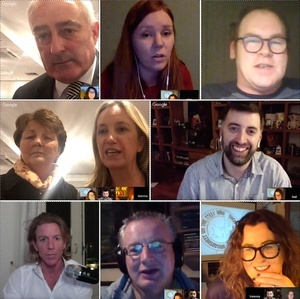
A big thank you to clockwise from top left: Seamus Maye, Olga Cronin, Johnny Keenan, Neil Curran, Vanessa Foran, Ciaran Tierney, Neil Curran, ‘Preposterous’ and Gemma O’Doherty (right) & Julie Grace, our panel on last night’s Broadsheet on the Telly.

The show, produced by Neil, can be viewed in its entirety above.

Gemma, Seamus and Julie joined us live from the Change Makers anti-corruption public meeting in Galway where talks about a new political movement were developed.

Ciaran brought the EU Army into our Brexit debate (expanding on his blog post here) and with Vanessa, Johnny and Olga shared views on the Maurice McCabe documentary.

A little light swearing

Sadly, this will be the last Broadsheet on the Telly.

We would like thank all our panellists for giving their time and sharing their thoughts about Ireland over the past 18 months or so.

And thank you to everyone who watched the show. We could probably thank you all individually, such were our figures, and we may do so now we’ve ‘freed up’ Thursday nights.

But we hope our experience has not dented the idea of this format as a viable platform for different voices. It’s very simple and you could do a much smoother job than we have preposterously attempted. Should you wish to make your own show we will happily talk you through the process.

Thank you all very much.

Previously: Broadsheet on the Telly