



Author Archives: Admin
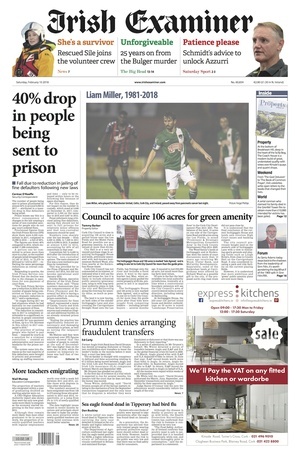
You gave us 100 hours.
We gave you 50 shows and some change.
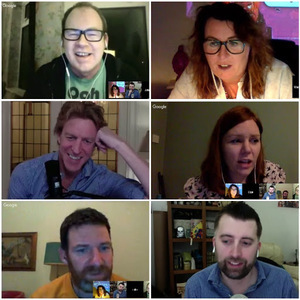
A big thank you to, clockwise from top left: Johnny Keenan, Vanessa Foran, Olga Cronin, Neil Curran, Luke Brennan and ‘Preposterous;, our panel on last night’s Broadsheet on the Telly.
It was night of contrasting moods as Broadsheet on the Telly marked its 50th and saw the return of Luke Brennan (via Porto) but also witnessed tension among the panel and not in a good way.
The show, produced by Neil Curran, can be viewed in its entirety above.
Our ‘at a glance’ guide:
2:00 – “Cheddar Man”
8:12 – “Richy Sheehy – Legend”
16:00 – ‘That foreign game”
27:50 – De Entertainment slot
41:28 – Enter Luke!
47:10 – Irexit -a thing?
56.000 – Handbags
1:23:09 – Disclosures Update with Olga
1:46:49 – De papers
Mature language.
Sorry.
Previously: Broadsheet on the Telly
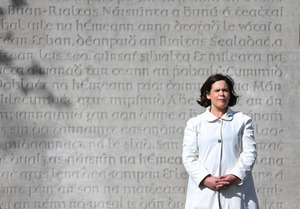

From top: Mary Lou McDonald; Dr Rory Hearne
Tomorrow you continue the journey of history-making.
The decisions you, and your party, make in the coming months and years will determine if your Presidency of Sinn Fêin marks an important step towards an Ireland of social justice and an end to this failed Republic of corruption, inequality and continual crises – or if it marks a continuation of the status quo and another step on the road towards Sinn Féin becoming part of the Irish establishment.
I am writing this to you in an air of hope.
Myself and yourself have been part of many of the same campaigns over the last two decades – from protests in the 2000s against the Dublin Incinerator, for a Europe of social rights at the EU summit in Dublin in 2004, Shell to Sea, marches against the visit of war mongerer George Bush, and the campaign to Save St Luke’s Hospital in Rathgar.
To the 2010s when we marched against austerity, cuts to community and youth services, of course the historic water charges movement, and more recent housing crisis protests.
These were, and remain, movements of ordinary citizens – concerned with the state of their communities, their country and even the planet. Some ‘won’, some ‘lost’ – but I know that you are proud of your involvement in these, as I am.
I know you understand that these are the seeds of change – the grassroots so-called ordinary citizens in society. Many of your supporters were part of them and they were (and are) inspired by your involvement and championing of these issues. That is where your heart is.
But to the thorny difficult issues that I don’t think should be ignored on this historic day for you. Most importantly, the question of government and, coalition government specifically.
Before the last election you and your party signed up to, and advocated, the Right2Change policy principles that include the right to water, decent work, housing, health, debt justice, education, democratic reform, equality, a sustainable environment and national resources, that would form the basis for ‘a progressive Irish government.’
Your position at that point was to only go into government as a majority party. Your position has changed and you are now open to go in as a minority party. There are clearly different views within your party about whether to go into coalition or not with Fianna Fáil or Fine Gael.
But on the eve of this historic day for you, I would like to make the case to you that supporting a Fine Gael or Fianna Fáil lead government would be a major mistake, not just for Sinn Féin as a party, but also for the wider movement working towards progressive substantive change on this Island.
Of course you will ask, well what is the alternative to a coalition government with either FF or FG? Gerry Adams has asked where and who is the left alternative that could go with Sinn Féin?
Firstly, there are others, although currently small in number, like the Social Democrats, and independents. But we are in a period of political earthquakes and instability. New political forces can emerge quickly. Ireland is not immune from international political trends.
After the next election the broad left is likely to increase its numbers, not to be in a position to form a government, but parties like the Social Democrats and Sinn Féin will increase their seat representation. That means a larger opposition after the next election. A larger grouping to put forward alternative policies. That is, if you or the Soc Dems do not go into government.
There is little point Sinn Féin going into government as a minority party because that means – quite obviously – you have not received a public mandate for your policies. There is no point in the progressive Left being in government if it does not have popular support for its policies.
Otherwise they will just be continuously opposed by the media, the establishment, IBEC etc and undermined without the broad public backing necessary to respond to such attacks. All of us on the progressive broad ‘centre’ and ‘genuine’ Left have a job to do before we should countenance entering government.
And that is to convince a majority of the Irish people that our policies are the best ones that can guarantee them improved living standards and a decent quality of life – from affordable housing, to access to quality healthcare, secure and well-paid jobs, women’s rights, community services, well-funded infrastructure for a sustainable steady economy, reforming the EU etc.
Importantly also the social forces that can do play a big role in society – the social movements, the civil society NGOs, the trade unions, the community groups – they need to be supported to enable that process of citizen education and mobilisation for alternative policies.
The lessons of the Labour party, the Greens and every small left party that has entered coalition with Fine Gael and Fianna Fáil should surely warn you away from such a coalition move. What real fundamental change did any of those parties achieve? Very little I would argue.
They would have been better to stay in opposition, build that popular support for their policies, become the main opposition and then, when they have the public majority support, enter government and deliver real change.
And so I would argue you should take the path Labour have never been brave enough or willing to take – stay in opposition.
Being in opposition is not an irrelevant political place to be. Your decision after the 2016 election not to go into government resulted in the current historic situation whereby Fianna Fáil are supporting a minority Fine Gael government.
This has meant the government is weak and open to legislation being proposed from the opposition, the citizen’s assembly, and even civil society. It has made the Oireachtas committees, and therefore our democracy, stronger. Imagine what you could do as the main opposition party?
But importantly, to go back to those grassroots campaigns I started with. They, and the communities they come from, many of the most deprived in this country, but also many middle class people, and increasingly the younger precarious and excluded generations –many of them are your supporters. What do they want you, and Sinn Fein, to do?
Their response to Labour in the last election shows what they do not want you to do. They want real genuine change.
They want politicians and political parties like Sinn Féin to stand up for them, for the excluded, for the voiceless, and not to prop up another conservative government and implement policies you previously opposed. Citizen trust in politics is at a low ebb. We have a fragile democracy.
Will your decisions result in further disenchantment and disillusionment or in an empowered and hopeful citizenry? Where will these people go if they no longer feel represented by a Sinn Fein that ends up defending the establishment?
Will your name sit along-side those like Joan Burton, Brendan Howlin, Alan Kelly, Pat Rabbitte and others who promised in 2011 to stand up for working people but after the election ended up hammering those they were supposed to represent?
Pat Rabittee’s words should haunt you – you will rememberwhat he said when challenged on reneging on pre-election promises – that they were just pre-election promises after all – made to be broken.
Or will you, Mary Lou McDonald, President of Sinn Féin, stand for something fundamentally different? Will you be the first female Taoiseach of a first broad progressive centre Left government in Ireland? Will you transform and grow your party and the wider Left and progressive civil society to become a real new politics in Ireland?
This is a time of possibilities. It is possible.
Are we at the dawn of a new Republic of Equality for all, or are we at the point of witnessing it being confined to the history book recordings of the 1916 Proclamation? You have a central role in determining the answer to this question – in determining this country’s path and its future.
You can shine the light on injustice –wherever it hides and crouches, carry the torch of hope, shake this tired corrupt establishment, and chart a road toward a real Republic of Equality, social justice and democracy. Dear Mary Lou, congratulations and good luck, but just please, don’t become them.
Dr Rory Hearne is a policy analyst, academic, social justice campaigner. He writes here in a personal capacity. Follow Rory on Twitter: @roryhearne
Top pic: Rollingnews

Tonight.
At 10pm.
Broadsheet on the Telly celebrates 50 viewers! shows.
Streaming LIVE at 10pm above and on our YouTube channel.
Huzzah!
Join old friends, surprise guests and at least two domestic pets for 120 minutes of warm, incisive chat about the issues of the day from home and ‘abroad’.
There will be cake.
Previously: Broadsheet on the Telly





MORE to folly
Super, Power
at

OK, which one of you did this?
Nat writes:
When you’re the movie critic whose one bad review prevents the new Marvel movie from hitting 100%, you need to be ready for the onslaught of endless hordes of butthurt fanboys.
Today, that’s Ed Power of the Irish Indo….
FIGHT!


Cork-based Journalist and human rights activist Bairbre Flood (above) has completed an hour-long radio documentary on Islam In Ireland (available to listen above or at link below).
Bairbre writes:
The radio documentary wasn’t broadcast yet I was getting messages that I shouldn’t be even discussing the subject as a white westerner.
Islam is often seen as a racial construct – and both the xenophobes and the social justice warriors buy into the orientalist view of Islam as a racial identity, not an idea (or set of ideas).
It’s very difficult to have a conversation about the doctrine of Islam within these parameters – everyone tiptoeing around the core tenets, either afraid they’ll inflame the bigots or of being labelled ‘Islamophobic’.
But surely we can hold Islam to the same standards we would fundamentalist Christianity for example – or Catholicism, or Scientology? It’s not a criticism of Muslim people themselves to examine the religion of Islam.
Perhaps the most well known mosque in Ireland, the Irish Islamic Cultural Centre (Clonskeagh Mosque) houses the headquarters of the European Council for Fatwa and Research which issued two particularly worrying fatwas – in 2003, a fatwa stating the punishment for apostasy is death, and one in 2004 stating that all gays should be killed.
The Dublin and Cork Islamic Cultural Centres have been given hundreds of thousands of euros from the al Maktoub Foundation in the UAE, and their particular kind of Wahhabi Islam has a political aim, not just a religious or spiritual one (the ‘Vatican of Islam in Ireland’ as one commentator dubbed them).
Ali Selim, who was secretary to the Imam at the Clonskeagh Mosque is an active supporter of sharia law (see his talk, ‘The Concept of Shari’ah, Islamic Law’ from 2013).
The day after the Charlie Hebdo attck in 2015, Selim was on national radio urging people not to link the attacks with Islam and threatening legal action on any Irish journalist or media outlet which printed the cartoon cover of the magazine published in honour of the people who’d just been killed.
Of course, the IICC doesn’t represent all muslims in Ireland (or even all Sunni Muslims) – there’s a large Ahmadiyya mosque in Galway and also a substantial Sufi community in Dublin. There’s over fifty mosques or prayer rooms throughout the country, most of these funded by the congregation themselves.
There’s over fifty different nationalities within the Muslim community and within that huge differences in how strict individuals are, and variations in how they practice their faith.
Some don’t pray at all, but still identify strongly as Muslim – like many people in Ireland who still identify as Catholic, but rarely go to mass andonly nominally believe in its doctrine. But even with all that in mind, there has been very little research into what Irish Muslims believe and how strongly they believe it.
The only opinion poll on Muslim attitudes was carried out for the Irish Independent and RTÉ’s Prime Time in 2006 and it found that more than a third (36%) would prefer Ireland to be ruled under Sharia law and more than half of young Muslims (57%) believe Ireland should become an Islamic State.
Then there’s the kinds of speakers that are being invited over here.
In May, 2017 the Cork Islamic Information Centre with Discover Islam put on a talk, ‘How To Live With Your Neighbour in Western Countries’ by Uthman Lateef who in 2007 told students at Queen Mary University in the UK: “We don’t accept homosexuality. We hate it because Allah hates it”.
In March 2016 this mosque on Shandon Street invited a speaker called Shady Al-Suleiman, who once ended a talk in Birmingham in 2014 with ‘“Give victory to all the Mujahideen all over the world. Oh Allah, prepare us for the jihad” and who 2010 organised a conference which featured a talk via phone by Anwar Al-Awlaki (of Al-Qaeda).
In May 2015, Abdurraheem Green gave a talk ‘The Prophet and his Message’ at this same Cork mosque. Green was cancelled from an event at a Montreal university in 2011 after concerns were raised over statements he made about how men may treat their wives: he said, “The husband is allowed – to prevent her from evil – to provide some type of physical force”.
When I emailed the Cork Dawah Centre about these speakers, this was their response:
‘Let me reassure you, we would not have allowed anyone to speak if we had known of any extremist views that they may have had in the past. When I looked into it in the past, as
you’re not the first to question us, many of the individuals and the organisations as a whole have come out and opposed previously held ideas. Which unsurprisingly hasn’t been widely publicised.Members of the local community including the Gardai and various Lord Mayors have attended these events. Speakers when coming to the centre submit an outline of what they are planning to speak on so that it can be reviewed.
Most of the speakers we have invited in the past have been requested to speak on the importance of manners, not harming others, helping and caring for others in society, etc, as this is considered to be half the faith and the heaviest thing on the last day. This does not fit with the opinions you’ve expressed below. I hope I’ve allayed any fears you may have.’
The kinds of speakers being invited to mosques here and the influence of Wahhabi Islam is only one part of the problem – but at least they are in the public eye and open to scrutiny.
The even deeper problem is the more than forty Irish muslims who’ve gone to fight with ISIS since 2014, some of whom have started returning to Ireland. There’s also over 70 on a watch list, suspected of providing logistical support to terrorist groups in Europe and no anti-radicalisation programme in place here.
Yahya Cholil Staquf, general secretary of the Nahdlatul Ulama, Indonesia’s biggest Muslim organization, said:
‘Western politicians should stop pretending that extremism and terrorism have nothing to do with Islam. There is a clear relationship between fundamentalism, terrorism, and the basic assumptions of Islamic orthodoxy…The West must stop ascribing any and all discussion of these issues to “Islamophobia.” Or do people want to accuse me — an Islamic scholar — of being an Islamophobe too?’ –
This isn’t to demonise in any way the thousands of Muslims living here – or to diminish the very real effect anti-Muslim bias can have on their lives, but at the same time we can start holding Islam to the same standards as we’ve done in recent years here in Ireland with Catholicism, and strive for a similar insistence on the primacy of secular values.
It’s also important for us to provide a safe environment for Muslims to critique their religion (unlike in many parts of the world where it can mean dishonour, arrest, beatings and even death).
Ireland has an opportunity to be a safe house for Muslims to publish their ideas – for ex-Muslims to feel free to tell their experiences – and for moderate, liberal Muslims to find support and solidarity here.






MORE to follow.


Or so ‘they’ say.
Every week, we give away a voucher to the amount of twenty five euros to splash out wherever you see the Golden Discs sign
All we ask from you is a tune we can play next Wednesday, February 14.
This week’s theme: My Bloody Valentine
What dissonance-drenched banger from the Cabinteely, County Dublin quartet’s canon would YOU like us to crank up on Valentine’s Day?
And, critically, your reasons musical or otherwise.
To enter, please complete this sentence:
‘Just play My Bloody Valentine’s ___________________________on February 14 for the following reason(s)______________________’
Lines MUST close at 2am 3am