Category Archives: Misc

gettyimages-511701136

Screen Shot 2016-06-23 at 14.03.48

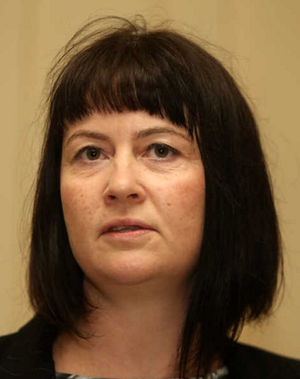
From top: Turkish soldiers patrolling in Hatay province along Turkey’s border wall with Syria in Feburary; and Edel McGinley, director of the Migrant Rights Centre Ireland 

The development of EU border security is not only costing lives, it’s also serving to deepen the demographic dilemma facing Europe.

Edel McGinley writes:

Last Saturday, at the start of World Refugee Week, Turkey’s border guards shot dead 8 Syrian refugees – four women, one man, and three children – fleeing a war-torn country. This is truly appalling, but it received very little media attention. Is this our new normal?

There is no good reason to deny people seeking protection access to a country, though people with vested political and economic interests will try to say otherwise.

Let’s take a step back and look at what is often missing from the debate surrounding such terrible tragedies.

Border security creates violence, dehumanises and increasingly facilitates the indiscriminate killing of innocent people. This is not just on the Turkey-Syria border, but at borders across the world and at our EU borders, in our name and paid for with public funds.

The EU Turkey deal – an external border agreement to readmit refugees and migrants from Greece to Turkey – reinforces the EU policy approach of externalising our borders. This was the case with Libya, whose agreement with the EU blocked the movement of people from Africa to the EU until the fall of Gadhafi.

A lucrative industry has grown up around border security. The excellent Migrants’ Files follows funds that flow through public and private hands to expose corporate interests and arms dealers at the heart of EU border security and policy development.

But the shoring up of EU borders is not a new phenomenon and has been in progress for a long time. Between 2007 and 2013, EU funds favoured border investment over investment in people seeking protection. In Spain, the EU gave 30 times more to border controls than it spent on refugee supports. In the same period, Greece was allocated 10 times its refugee budget to ‘control’ its borders.

So no veiled approach there – clearly, EU policy favours exclusion and coercion over rights integration and inclusion. This is not surprising, given the EU’s response to people seeking protection at our borders. However, the crisis facing the EU’s migration system is not limited to its borders and the large-scale movement of people.

Missing from political debate are the facts that the EU needs labour; there are limited channels to allow that labour to come; and our policies deny rights and protections to those who do come.

Europe faces demographic challenges: there is a declining population of working age and the number of dependent older people is increasing. The fact is that the EU’s workforce will decline by approximately 50 million by 2060.

In tandem, long-term care is the fastest-growing area in the health and social care sector within the OECD. The number of people aged 65 and over is projected to almost double over the next 50 years to reach approximately 152 million in 2060. People living with long-term illness and disability are also projected to increase.

In Ireland, someone turns 80 every 30 minutes.

The lack of joined-up thinking in response to the humanitarian crisis of our times is astonishing. Connecting the large-scale movement of people and the need for up to 50 million workers would seem like a no-brainer. A small child could join these dots better than the EU Commission and our political leaders.

As of May 30th 2016 (last available stats) out of the 4,000 people Ireland has agreed to accept under relocation and resettlement fewer than 300 people have been resettled and only one family of 10 relocated from Greece.

I am not saying that everyone who comes to Ireland will have the qualities, skills and desire to provide care services, but that we are in a pivotal moment: a moment where we have to pay attention to demographic change and how to address it.

Unemployment is falling and our economy is growing. We need more people to support our aging populations, through tax revenue and to bolster our social welfare system. As a society we have a duty to care for those who are vulnerable, including older people, children and people seeking refuge. Unfortunately we have never been great at forward planning, despite repeated warnings issued to the Government.

It seems like we want it every way. We need a strong social welfare system to provide a social safety net for our aging population but don’t want to open up channels for migration outside of the EU which will alleviate this. We want cheap flexible labour with limited rights so people find it so unbearable that they don’t put down roots, and we think this is how to extract the best labour from them.

The irony is we could have it all. We could have more secure pensions and a greater tax take; we could have stronger links with countries all over the world; we could have a care system that works for carers and those in need of care; and we could reach out to people fleeing war, conflict and destitution and give them a safe place to live and work. These possibilities are not mutually exclusive – in fact, they’re deeply intertwined.

If Ireland is to be attractive to people to come here, to live and work and raise families, we need a system that is responsive, that strengthens rights and protections for families and workers. Ireland and the EU must adapt to our new reality.

The inescapable fact is that we need more migration not less; that we can’t survive on our own and that we live in an inter-reliant world.

Edel McGinley is the director of the Migrant Rights Centre Ireland (MRCI) and Chair of PICUM, the Platform for International Co-operation on Undocumented Migrants.

Pic: Human Rights Watch/Anadolu Agency
Screen Shot 2016-06-23 at 13.45.26

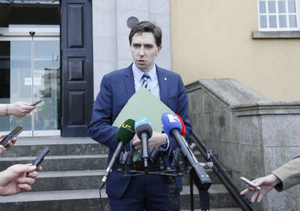
Fine Gael TD and Minister for Health Simon Harris

You may recall how last year Independents 4 Change TD Clare Daly proposed a bill which would have allowed abortions in cases of fatal foetal abnormalities.

It was voted down 104 to 20 with Government TDs at the time claiming it was unconstitutional, following advice from Attorney General Máire Whelan.

You may also recall Legal Coffee Drinker’s take on the matter.

At the time, LCD said:

“…it is not possible to say with certainty, or even as a matter of probability, that the Bill is unconstitutional. Many Bills, including those put forward by governments, have constitutional question marks hanging over them. That this will happen is expressly recognised by the Constitution itself, Article 26 of which provides that the President, before signing a Bill, may refer it to the Supreme Court to have a decision taken as to its constitutionality.”

To regard possible unconstitutionality, falling short of certainty, or even probability, as a ground for not voting for legislation would have ruled out much of the most important legislation passed in this jurisdiction. Constitutional rights – even the right to life of the unborn – are not absolute; nor, in this case, is the question of unconstitutionality. Indeed, it could be argued that, if anything, it is in the public interest that we get the opportunity to hear more, from the Supreme Court, on the meaning and scope of Article 40.3.3.”

Further to this, fellow Independents 4 Change TD Mick Wallace is planning to propose an identical bill in the Dáil next Thursday, June 30.

There have been reports that three Independent Alliance ministers – Shane Ross, Finian McGrath and John Halligan – have been planning to support Mr Wallace.

But today, on RTÉ’s News At One, Health Minister Simon Harris told presenter Richard Crowley that Mr Wallace’s bill is… unconstitutional.

Richard Crowley: “The 8th amendment. What’s happening with the Mick Wallace bill which was to come into the Dáil next Thursday?”

Simon Harris: “Well I fully understand what Deputy Wallace is trying to do and I’ve said very clearly, on the record, that I find the current situation facing parents experiencing fatal foetal abnormalities in this country to be utterly unacceptable. But I am duty-bound, as Minister for Health, to make sure that any actions we take are constitutional, that they’re legal and that they’ll actually have an impact.”

“I’ve been consulting the Attorney General, in relation to Deputy Wallace’s bill. This bill is pretty identical to a previous bill tabled in the Oireachtas last year and the advice available to me, and the advice available I will be making available to Government colleagues is that the bill is not constitutional and that arises from the fact that there is a very explicit protection of the right to life of the unborn in our constitution.”

“So, really, these issues need to be addressed through a Citizens’ Assembly whereby they can be discussed,  a proper debate can take place, expert views can be heard and ultimately that is the right forum. So as I very much respect what Deputy Wallace is trying to do, I won’t be in a position to accept the bill because, quite frankly, it won’t make the meaningful impact that he thinks it will because it’s not constitutional.”

Listen back here

Screen Shot 2016-06-23 at 12.12.04

Sinn Féin TD Mary Lou McDonald

I want to raise the issue of homelessness with you, Tánaiste, and I want to do so in telling you about Áine. She’s an 18-year-old young woman and on Tuesday of this week, she presented as homeless to her local council, along with her partner and their four-month infant daughter.”

The council refused to accept that she was genuinely in need of emergency accommodation and she was turned away. At 4.30pm that afternoon she rang the freephone number but no emergency accommodation was available. At 9pm that night she again to be told that there was still no emergency accommodation.”

“Eventually, at 12.30am, standing outside Heuston Station, shivering and holding her infant child, she was collected by the Rough Sleepers Team and brought to a hostel.”

“Now Áine, Tanaiste, is just one of 10 families turned away from local authorities on that day, on Tuesday, only later to be accommodated throughout the Rough Sleepers Team. The last of the families wasn’t accommodate until 1.30am in the morning.”

“Yesterday, Áine returned to her local council only to be turned away again. She was eventually accommodated by the freephone at 8pm in the night and, as we speak Tanaiste, this young woman is yet again on her way back to her local authority not knowing where she and her family will sleep tonight.”

“And the reason why families are being turned away from the local authorities is because there isn’t enough emergency accommodation and staff in local authorities are being asked to make really an impossible choice between families – between those who will have a bed and those who are sent back out onto the street.”

“Tanaiste, I could read out the statistics and you will know homelessness is out of control, you will know that on the watch of your Government, homelessness has increased by 86% in one single year…”

Sinn Féin TD Mary Lou McDonald speaking during Leaders’ Questions, recieved by Tánaiste Frances Fitzgerald this afternoon.

Meanwhile….

12278983_1072764386069318_8354732594761274221_n

Brú Aimsir Hostel

You may recall how Brú Aimsir Hostel opened at the Digital Hub on Thomas Street, Dublin 8 last year – as part of Dublin City Council’s Cold Weather Initiative.

Last month, the 100-bed facility was to close down – prompting residents of Brú to hold protests against the closure.

Further to this…

Dublin City Council writes:

[Brú] was due to close at the end of March but its closure was deferred until May 31, due to cold weather in March and April. In anticipation of a closure by May 31, an orderly wind down of the facility was commenced and the number using the facility on a nightly basis was reduced to around 40.

However, in light of the continuing increase in the numbers sleeping rough in the Dublin region and following the intervention of the Lord Mayor Críona Ní Dhálaigh, agreement has now been reached to extend the use of Brú Aimsir and to operate it at full capacity.

Previously: Meanwhile, At Brú

Nama Wine Lake Writes

RTÉ reports:

A report by RTÉ Investigates to be broadcast on Prime Time tonight reveals serious mismanagement and deception by Paul Kelly, the founder of Console Suicide Bereavement Counselling Limited.

RTÉ Investigates – Broken Trust – will reveal concerns surrounding the charity’s finances with regards to cash receipting, expense claims and financial accounts.

The report also shows that, when applying for State grants, the charity on several occasions altered accounts to omit the reference to directors’ pay and other benefits.

These amounts totalled over €215,000, according to accounts filed by Console with the Companies Registration Office for the three years 2010 to 2012.

…In documents submitted to funders, the charity also incorrectly claimed that certain people were board members.

One of these was former senator Jillian van Turnhout who told the programme that she was “stunned” that her name had been used and that it is “hugely alarming that any charity would purport that anyone is on the board who is not on their board.”

Serious ‘concerns’ about governance of charity Console (RTE)

Coombe_Interior_B-2738f9536141a4a4dd662bf1021b37d7

Coombe Women’s and Infants University Hospital

Jacky Jones writes that “A misogynistic culture pervades Ireland’s maternity services. A highly interventionist, disempowering model of maternity care still operates in all hospitals”.

I have tried to pass over these recurring slurs on our maternity services but the time has come to respond. I am an obstetrician in the Irish maternity service and am proud to provide skilled, compassionate, woman-centred care on a daily basis, day and night, Monday to Sunday.

I am joined by a workforce of dedicated midwives, obstetricians, anaesthetists, neonatologists, healthcare assistants, porters, receptionists, domestic staff, administrative staff, and others.

The staff I work with are vocationally driven and do everything in their power to ensure that birth is a safe and joyful experience and that when adverse events occur women and their families are treated with respect and dignity.

My experience of other maternity services within the country suggests that this approach is widespread.

Sometimes things go wrong in pregnancy and birth, and we grieve for the loss with our patients. Sometimes we get things wrong and we try to learn from these regretted outcomes, as individuals and as organisations.

We are human and flawed – we do not always deal with things as well as we could or should, but to shame our entire service on a regular basis within the media serves no one.

The response to media outrage is to increase the very intervention rates that Jacky Jones is so ready to criticise us for.

Take a look at the hospitals that have been publicly shamed for adverse outcomes and see what has happened to their Caesarean section rates – fear, criticism, and punitive actions result in unnecessary interventions provided under the guise of safety.

I would like Jacky Jones to offer a public apology to all the women and men like myself who provide safe, effective, women-centred maternity care to the people of Ireland.

By all means pursue the cause of safe termination care for distressed women, but to lay the blame at the door of “misogynistic maternity services” is a step too far.

Deirdre J Murphy, MD
Professor of Obstetrics,
Trinity College Dublin,
Coombe Women and
Infants University Hospital,
Dublin 8.

In defence of maternity services (Irish Times)