Category Archives: Misc

Cb7YeHlW4AA-cY1martinburtonCb7axRYW0AAxfEC

Switch over to the new X-Files

Tonight.

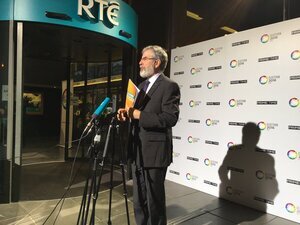
RTÉ, Montrose, Donnybrook, Dublin 4.

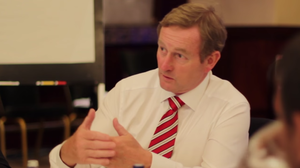
From top: Taoiseach Enda Kenny, Fianna Fáil leader Michaél Martin,  Labour leader and Tanaiste Joan Burton and Sinn Féin President Gerry Adams arrive for the Leaders’ Debate on RTÉ 1 at 9.35pm.

Out of picture: AAA/PBP/, Greens, Soc Dems, Independent Alliance.

Decent whistle on MM, in fairness.

More as we get it.

Irish General Election 2016: RTÉ leaders’ debate line-up sparks allegations of censorship (RT)

Pics via Petula Martyn

11227034_979893542044507_8957860200831991085_n

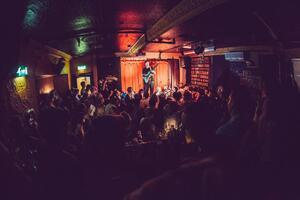
TONIGHT (Tuesday) Ruby Sessions: w/ Gabrielle Aplin, Róisín O, Basciville, Bairbre Anne @ Doyle’s, College Street, Dublin 2 (€6, 9pm)

Nialler9 writes:

16 years in, Ruby Sessions is still packing them in on a Tuesday night. Tonight’s show features a pop-leaning lineup of new Irish music including Wexford’s Basciville and Mary Black’s daughter Róisín O and a set from English singer-songwriter Gabrielle Aplin. As ever all proceeds go to the Simon Community.

Nialler9’s Gig Guide February 23-29 (Nialler9)

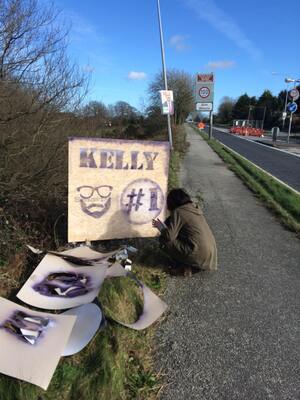
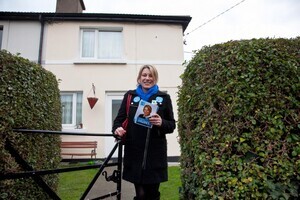
Independent Alliance candidate Carol Hunt canvassing in Dun Laoghaire

The threats of chaos from Fine Gal and Labour are too late.

What people are saying on the doorstep would make you weep.

Carol Hunt writes:

You’re not supposed to cry when you go canvassing. It doesn’t look good. Particularly if you’re the candidate. You’re meant to have a bright, open smile, a warm demeanor and a cheerful manner when you present yourself at a person’s doorstep.

Which is all very well, but what happens when you hear, not one, two or three, but a veritable avalanche of tragic stories from the people who open their doors to you?

What do you do when a woman tells you about her son who died by suicide, because there was no care available for him when he presented in distress?

How do you react when a couple shake their heads and ask what was it all for? Their children and grandchildren forced to emigrate, themselves struggling to remain in the family home that was once their pride and joy, now just a reminder to them of all they have lost.

What does one say when tired, frustrated mothers tell you they have no hope that their disabled child will ever get the help they so need and deserve; when elderly retired people, who worked all their lives and paid exhorbitant tax rates, reveal that they can pay their electricity or their property bill but not both, and that they’re living in fear of Revenue taking every penny from their pensions.

How do you react when you hear, over and over again, stories from people – ordinary people, of all ages and classes – who are truly suffering, who have been, not just let down but ravaged, destroyed, chewed up and spat out by the system, tell you the most personal stories about their lives?

What you don’t do is cry. And so last weekend I found myself walking away from a door and unable to knock on the next one. At least not until I could compose myself. Not until I could ensure that I wasn’t going to erupt into a volcano of emotion at the whole bloody injustice of it all.

A woman had told me her own story, that of her son and her family and their awful tragedy – which could have been averted if only our public services were fit for purpose. This was not a story in isolation. The morning had been dominated by tales of tragedy, and by angry, frustrated people explaining to us why they had no belief, no trust and no faith in the current political system.

Our public services are in chaos. Mental health services, in particular are not fit for purpose. The squeezed middle – those hundreds of thousands of families, couples and individuals who seem to pay for everything but qualify for nothing – are raw from the scalping they have received.

Elderly people wonder how a government can get away with taking their pensions and leave them terrified about the future. Parents pray that their disabled child is deemed bad enough to qualify for some level of treatment and care. So many homes, so many hurt people with different stories to tell us. And boy, do they want someone to listen to them.

Initially we wonder why? Why are these people – who have never met us before in their lives – opening up to us, showing us their wounds? Eventually we understand. Because no one else is listening. Because they know what the government will say to them – they’ll list off all the reasons they have to be thankful for the wonderful work FG and Labour are doing on their behalf, and then they’ll tell them to stop whinging.

“Keep the recovery going”? Vast swathes of middle Ireland have seen no recovery, thank you very much, just more bills, fewer services and a disenchantment with Irish democracy that has never been so articulately or so passionately expressed before.

Some people tell us that will never vote again, that there is no point, they are just too sick of the whole charade of lies and broken promises. Most people tell us that they are voting independent and yes, I admit, initially I was surprised at the number of people who told me this.

But hell hath no fury and all that. The sense of betrayal is enormous. Fianna Fail, Fine Gael, Labour; voters count them off their fingers and spit out insults. Fool me once, they say, but not again. And yet the mainstream media and politicians seem surprised at the trend toward Independents.

Enda Kenny is complaining that “sometimes I find that people find it difficult to see any good anywhere anytime”.

I dare him to come and say that to the faces of the distraught victims of his austerity programme I’m meeting every day. I dare him come and tell mothers of children with disabilities or elderly people who cannot get a hospital appointment, that they should stop whinging and count their blessings. Fine Gael and Labour are now trying to terrify people with threats of chaos if they aren’t voted back in.

What they don’t understand is that so many people are already living with the chaos meted out to them by previous governments.

What they do not understand is that even those who have not suffered so much – who perhaps have felt some of this infamous recovery – are shocked at the treatment of other Irish citizens; of the sick, the disabled, the homeless, of vulnerable children. Ultimately, what they don’t seem to understand is that most Irish people are not complete self-serving bas***ds.

Who knows, this time we actually get our democratic revolution. Until then, I’ll keep listening – and try not to cry.

Carol Hunt is an Independent Alliance candidate for the Dun Laoghaire constituency. Following Carol on Twitter: @carolmhunt

Pic: Paul Sherwood

img-thing

We’ll keep this brief.

Kevin Breen writes:

I live in Wexford and I’m one half of The Breathers, a seasoned transatlantic musical partnership with my friend Rob Womack in Kentucky. We just made a short video for our song “Rattlesnakin'”. It’s pretty hilarious and we hoped you’d like it… Maybe some of your readers would like it too?

Tighty whi- Fight!

Kevin Breen

90286108

Michael Taft


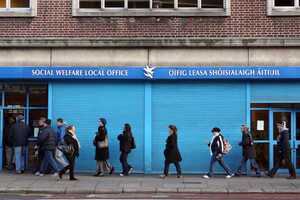
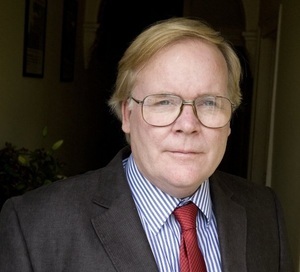
From top: Unemployment line in Thomas Street, Dublin; Michael Taft


Political parties are promising all sorts of tax cuts. What if parties contested with each over the best in-work benefit policies?

Michael Taft writes:

The election enters the last few days. So many issues that were barely mentioned. How much time was given over to the fact that over one million suffer multiple deprivation experiences?

How much debate was devoted to the 100,000 households in arrears and the many more in negative equity? Remember that bank debt that we absorbed? But no mention of a Financial Transaction Tax to start clawing back a little of that socialised private debt.

And there was absolutely no time devoted to benefits for people in work (apart from tax cuts which workers will end up subsidising through reduced public services and income supports).

There was no mention even after a report published last week from Glassdoor, an international recruitment, company. The Journal ran the headline: ‘Ireland is bottom of the EU pile for social benefits’ This accurately described the report. Still no debate.

Glassdoor compared a range of social benefits for people in work and Ireland did not fare well.

Take for instance what happens if you become sick at work. In Ireland you have to wait six working days before you can draw down the benefit and you get a flat rate of €188 from the Department of Social Protection.

That’s about 27 percent of your wage.

What do workers get in other countries?

In the Netherlands, employers are required to pay 70 percent of pay for up to two years

In Germany, employers are required to pay 100 percent of the wage for the first six weeks. After that, the state pays 70 percent of the salary for up to 78 weeks.

In Austria, workers receive up to 50 percent of wage for up to a year.

The main benefit other European workers get (apart from the UK and ourselves) is sick-pay that is income linked (though in most there is an income ceiling; these ceilings are above the average wage).This cushions the fall in living standards for those who fall ill and maintains consumer spending in the economy.

What about family benefits for those in work?

Ireland has a very high level of maternity leave at 42 weeks, considerably more than most other countries. However, only 26 of those weeks are paid at a maximum flat-rate of €230 per week.

This is 33 percent of the average wage. What about other countries?

In Austria, Denmark, France, Germany, the Netherlands, and Spain new mothers get 100 percent of previous earnings for the whole period of leave.

Italy pays 80 percent of earnings while Belgium starts out at 82 percent, falling to 75 percent over time. Again, there are income ceilings above the average wage which, therefore, progressively benefits those on low-average pay.

In addition, many countries have paid paternity leave; not Ireland (though this has been promised in the general election campaign).

Another category where Ireland features at the bottom is unemployment benefit

It should be remembered that benefit is time limited in EU countries and is intended to bridge the gap between employment (what’s called frictional unemployment).

In Ireland, you get €188 per week (27 percent of average wage) for 26 to 39 weeks.

Other countries are much more generous:

Austria provides 55 percent of wage for up to 52 weeks.

In Germany you get 60 percent of wage for up to two years.

In Denmark, if you pay into an unemployment insurance fund (most do) you get 90 percent for up two years.

The rules in many of these countries can be quite complicated but Ireland has the weakest set of benefits for people between jobs, apart from the UK.

And what about holiday time?

Statutory holiday time (public holidays and paid annual leave) in Spain, Sweden, Austria, Finland and France is 35 to 35 days. In Ireland we get 29 days. We have to work a week more than workers in other countries.

We are towards the bottom of the table with the Netherlands and the UK on 28 days.

Political parties are promising all sorts of tax cuts. What kind of debate would we have if it focused on social security? What if parties contested with each over the best in-work benefit policies?

Wouldn’t we better off knowing that if we get sick our incomes wouldn’t collapse; that pregnancies will be supported by a generous support scheme; that transition between jobs doesn’t entail a collapse in income?

In Ireland, we assume that tax levels are the best indicator of living standards but this is incorrect. The best indicators are the benefits paid to workers when the face situations when they need the most help. A

And for all the billions being promised in tax cuts we could finance one of the best support programmes for workers in the EU.

And who wouldn’t mind a couple of extra holidays?

Michael Taft is Research Officer with Unite the Union. His column appears here every Tuesday. He is author of the political economy blog, Unite’s Notes on the Front. Follow Michael on Twitter: @notesonthefront