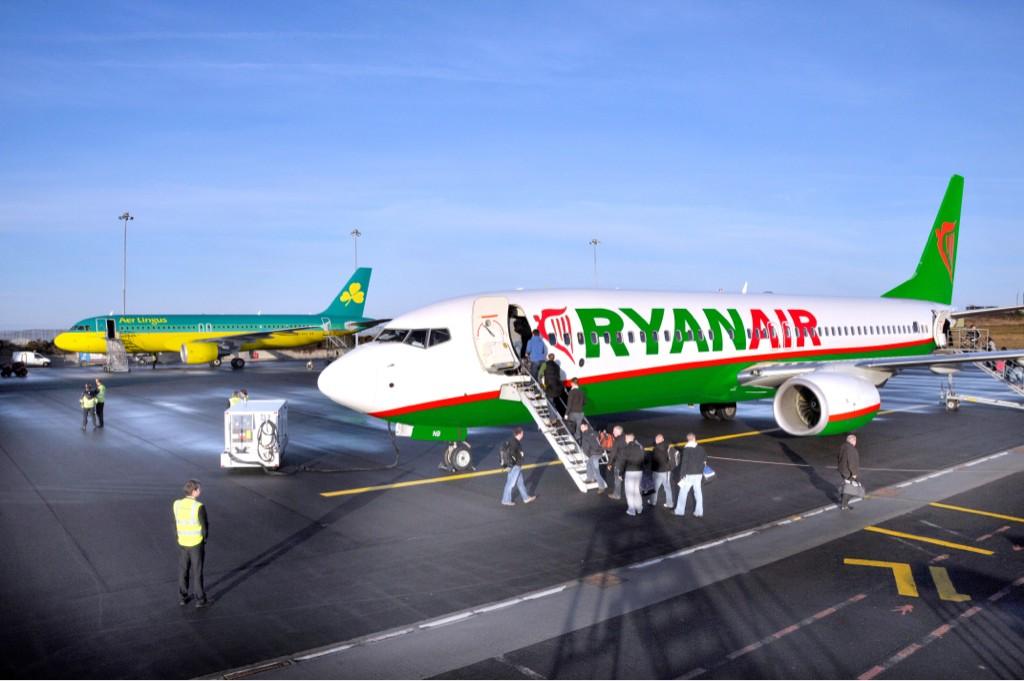
Since when did @dublinzoo move to temple bar? #googlemaps twitter.com/fit_gurl/statu…
— Olga NíGíorra (@fit_gurl) September 20, 2012



Since when did @dublinzoo move to temple bar? #googlemaps twitter.com/fit_gurl/statu…
— Olga NíGíorra (@fit_gurl) September 20, 2012
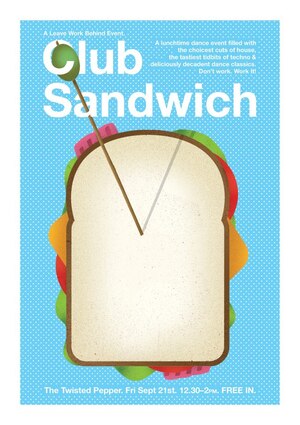
Oh go on then.
The Twisted Pepper on Middle Abbey Street, Dublin.
Where you’ll find Ewok tomorrow.
 By graphic designer Tom Bourke, who sez:
I found loads of old photographs of Dublin on the National Library of Ireland’s Flickr account. It’s interesting to see what has/hasn’t changed in Dublin from the past and what we’ve lost – especially the signage and hand rendered typography. The artwork over the photos echoes this vintage signage.

Referendums can be a delight,
When we hear from the far Christian right,
As they vomit out lies,
And half-baked porky pies,
And untruths in each twisted sound-bite.
John Moynes
(Graham Hughes/Photocall Ireland)

Irish Times women, 1970s: from left; Maeve Donelan; Nell McCafferty; Mary Maher; Geraldine Kennedy; Renagh Holohan; Gabrielle Williams; Christina Murphy; Mary Cummins and Caroline Walsh.
Of course, The Irish Times would never knowingly objectify women just for larks. That doesn’t make it any less unnerving to me that at evening news conferences, a typical ratio of men to women is 15 to one. When there are two women present, I count it as a good day for the sisters.
I have no idea how to fix a situation that has its origins in the fact that global wealth is the domain of white men. All I can do is consume the few examples of women-controlled media that do exist – strictly non-commercial projects, such as the Women’s Views on News site or the Antiroom podcasts.
The sheer relief that comes with listening to the latter and knowing that its panel discussions were at no time mediated by a man is quite unique. But it’s bittersweet too. Women are not a special interest group. We are not a minority. And yet in terms of media power, we are such small fry, buried beneath a cascade of fried eggs.
As for the blossoming No More Page 3 campaign, I wish them luck in trying to change attitudes to nudity in the news, though doubtlessly “the market” will continue to dictate that breast is best. Nipple counts, like hypocrisy levels, will remain perkily high. It’s not fair, but it is a game.
Previously: How Women Came First (Mary Maher, Irish Times archive)
From bad to worse: just got letter from Ulster Bank informing me that the compo payment for IT debacle “may be taxable”.
— Sinead Ryan (@sinead_ryan) September 20, 2012

Yesterday morning.
But where?
Lines close at 11am
UPDATE: Yes the answer is Tramore, Co Waterford, as advertised on this 1945 postcard:
 The New York Post reports:
The ad is a riff on Jackson’s viral video “Go the F–k to Sleep,” where he narrates a children’s book written by Adam Mansbach.
“It’s definitely going to get attention,” said Mansbach, who is writing the script for Jackson’s ad and said it would appear on YouTube on Sept. 24.
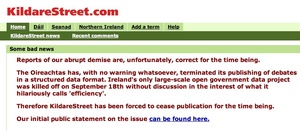
On September 18th, 2012, with no warning or published statement of intent, a significant change to the Houses of Oireachtas website housing the public record of Dail and Sinead debates was made, effectively killing KildareStreet.com for the foreseeable future.
The public data that was previously published at debates.oireachtas.ie has been mothballed, and all new publication there has ceased. Without the publication of these XML-formatted transcripts from the Oireachtas and the Seanad, KildareStreet.com, Ireland’s largest open data project to date, has been summarily terminated by the Houses of the Oireachtas.
Thanks Lars Biscuits