Thanks Stevie G



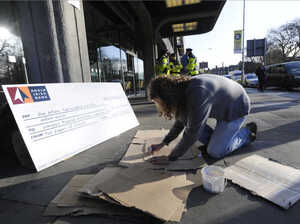


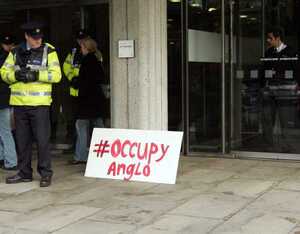

Members of Occupy Dame Street setting up camp outside the old Anglo HQ on Stephen’s Green, Dublin, literally a little earlier. They plan to stay until Wednesday when unsecured Anglo bondholders will be paid €1.25 billion euro out of exchequer funds.
httpv://www.youtube.com/watch?v=kyiHS555A5Y
Marie Moran writes:
Debt Justice Action, which is a new coalition of social justice
organisations, launched a new campaign yesterday called ‘Anglo: Not Our Debt’. The Vincent Browne show ran a programme on the campaign last night, and we featured on the RTE news, Drivetime, the Late Debate and other channels AND Mamon Poulet. One of the campaigners put together this video, which is funny and clever and also motivational! We are really trying to get the message out there that Anglo is not our debt, and that there is a feasible way out of paying it, and trying also to appeal to a very broad base of people (who will inevitably suffer horrendously as a consequence of us bailing out this dead bank). Any chance you could post the video to Broadsheet?
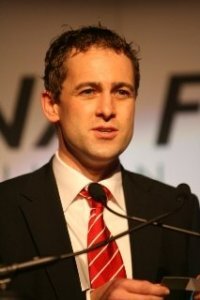

An extract from Fianna Fail senator Mark Daly’s bill aimed at improving the transparency of sales of property by both NAMA and Anglo/IBRC (the Irish Bank Resolution Corporation).
Two chances.
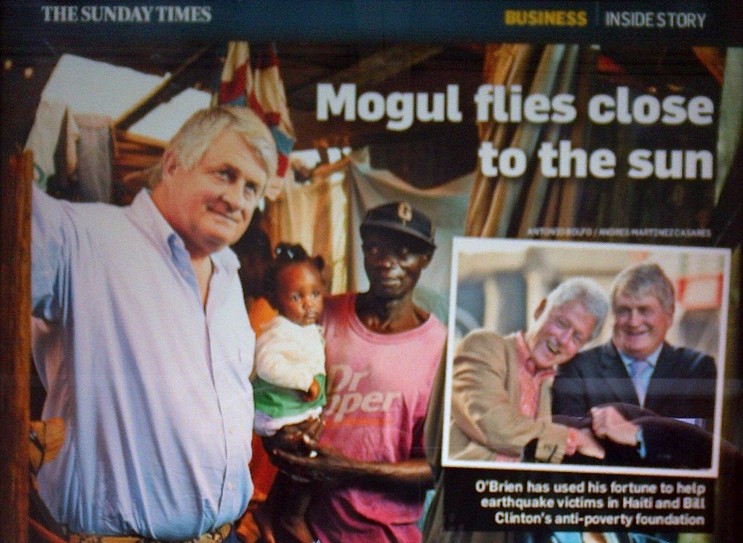 The one about him owing hundreds of millions to Anglo?
To purchase shares in Independent News and Media that are now worth a fraction of the price paid? That appeared in the UK version of The Sunday Times and not the Irish one?
The one that also raised questions about Denis’s ability to repay those debts?
YES.
That one.
@turkeys4xmas been reported previously that DOB is a big customer. Check the cuts. Also well known one of FitzPatrick’s best friends
— Frank Fitzgibbon (@FrankSunTimes) January 16, 2012
So we checked the “cuts” We could find nothing about these loans.
@sheepdip1 it’s in FitzPatrick tapes, the divvy and losses were reported in Irish edit of ST@technopolitics @mediabite @turkeys4xmas
— Frank Fitzgibbon (@FrankSunTimes) January 16, 2012
So Bodger spent the night going through The Fitzpatrick Tapes (having previously trawled through Anglo Republic by Simon Carswell). As there is no index he literally had to read it.
 And yet he could find no reference to loans from Anglo to Denis worth hundreds of millions to purchase the shares.
Ewok failed to find anything online either. It was like it was never reported.

Quite.
And yet, as Ewok says, this is no ordinary bank, this is no ordinary punter and hundreds of millions is no ordinary borrowing.
And if the Emperor is only partially clothed…
@turkeys4xmas It was Denis 101 for Irish readers. Written for UK readers who know nothing about him. That’s why we have separate editons
— Frank Fitzgibbon (@FrankSunTimes) January 16, 2012
Did you? We literally didn’t.
Are we the last ones to know?
Seriously.
Again?
PS Perhaps some civic-minded reader could show us where this has previously been reported? Bodger has gone through Simon Carswell’s book Anglo Republic and the only mention of Denis and Anglo loans was this on page 83:
Anglo’s biggest coporate loans outstanding in November 2005 [included] Denis O’Brien and executives at the private equite firm Ion Equity, which had purchased the petrol station network and distribution business using an Anglo loan facility of €212 million.”
But no reference to loans (with Barclays) that funded more than €500 million worth of share purchase mentioned in the Sunday Times yesterday.
 This is an extract from an article by Danny Fortson in yesterday’s Sunday Times (behind paywall) which never made it into the Irish edition, revealing (for the first time) that Denis O’Brien owes hundreds of millions to Anglo.
International Finance Corporation, the private finance arm of the World Bank and an evangelist for corporate governance, has been a key Digicel backer since the beginning. It has provided hundreds of millions in cheap finance, bankrolling the company’s expansion across more than 30 countries.
The Moriarty findings have led some to question whether IFC will rethink its relationship with O’Brien, who is valued at £2.5 billion in The Sunday Times Rich List. “Regarding the Moriarty report, we are aware of it and are monitoring the situation,” said the IFC.
Digicel, meanwhile, has lurched into the red. According to its most recent accounts, filed last month, it plunged to a $25m (£16m) loss for the six months to the end of September. Its debts: $4.6 billion.
The profit fall was not strictly down to business reasons. By nearly every metric, in fact, the company did well. Subscribers. Revenues. Earnings. They were all up.
Its dip into the red was caused by a $95m lump sum that O’Brien took out of the company through a dividend.
During the same period he took a €25m dividend out of Aergo Capital, his aircraft leasing business.
Since the Irish property bubble burst, taking the banking system and economy down with it, several of the country’s most successful businessmen have been reduced to relative penury. The most high profile was Sean Quinn, known as Ireland’s richest man before he went bust.
O’Brien has managed to survive, though not without bruises. His most painful investment has been Independent News & Media, whose stable includes the Irish Independent. Between 2006 and 2009 he built a 26% stake at a cost of more than €510m. During that period the group’s newspapers ran articles critical of him.
He engaged in a bitter wrangle over the company’s direction with Sir Tony O’Reilly, the long-time chief executive. O’Brien eventually won his campaign to force out O’Reilly, who retired in 2009.
Financially, however, the business was a disaster for him. The publisher was hit hard by the economic slowdown and in 2009 it was forced into a debt-for-equity swap that virtually wiped out investors.
O’Brien, still the biggest single investor, was left nursing a €500m paper loss. Worse, he would have to look elsewhere to repay Barclays Bank and Anglo Irish Bank, which funded the share spree.
According to publicly available information, he may struggle to fill the gap.
Communicorp, his holding company, which owns several top Irish radio stations, is saddled with €123m of debt and notched up a €2m loss in 2010, the last available figures.
In Jamaica, the Fair Trading Commission is taking legal action to reverse Digicel’s takeover of a rival, Claro, which gives O’Brien’s company a more than 80% share of its biggest market.
David Miller, executive director of the FTC, said the case is “one of the biggest of its kind with respect to the breach of the [competition] act”. Digicel could be hit with millions in fines or be forced to break itself up if a judge finds for the FTC. A court date has been set for January 31.
There have also been ructions in Europe. The Irish Bank Resolution Corporation (IBRC), which includes the rump of the failed Anglo Irish Bank, last year tightened its grip on the PGA Golf Catalunya, one of the courses owned by O’Brien’s golf holding company, Murrayhill.
The deal gave the IBRC a claim over shares in the club as part of a refinancing. The loss-making resort has struggled to shift high-priced villas in recession-hit Spain.
O’Brien’s spokesman denied that the tycoon was feeling the pressure. “Any suggestion that Mr O’Brien’s finances are under strain is laughable,” he said.
The Moriarty Tribunal rumbled to its conclusion last year — 14 years after it started.
During that time, O’Brien grew increasingly prickly about speculation surrounding his business and his alleged role in swaying the outcome of the mobile licence auction. He sued one of his group’s journalists, Sam Smyth, over comments on the mobile auction. Smyth was fired last year from the Today FM radio station, though he still writes for the Irish Independent. Willie O’Reilly, Today FM’s chief executive, quit soon after the dismissal.
O’Brien has, of course, collected a bevy of high-profile supporters along the way, who celebrate him as a hard-charging entrepreneur and a genuine philanthropist.
He has undeniably done well by daring to go where others won’t, such as Haiti, the poorest country in the western hemisphere. In Jamaica, he built up a dominant position from a standing start by doing what the incumbent, Cable & Wireless, did but much better.
Bill Clinton speaks warmly of his work on behalf of the Clinton Global Initiative, the organisation he founded to fight global poverty.
The Irishman’s exploits aren’t limited to such humane endeavours. Last November he agreed to pay half the £1.25m salary of the Republic of Ireland football coach, Giovanni Trapattoni. The contract was a renewal of one first agreed two years ago.
There is, however, another side to O’Brien according to those who know him. An associate said: “Compared with the man I once knew, it’s chalk and cheese. He has become media-obsessed. Very controlling.”
He can be supremely charming and also aggressive, according to those who have done business with him. There is no shortage of people who are willing to dish the dirt.
Barry Maloney, once a close friend, met him when they were teenagers and served as chief executive of Esat for five years. Now a venture capitalist at Balderton Capital, he gave evidence to the Moriarty Tribunal.
He told the inquiry that O’Brien had referred in a private conversation to political payoffs related to the mobile auction. O’Brien has said he was kidding.
The picture that emerges of the tycoon is a confusing one.
Is he an ambitious entrepreneur who has sailed too close to the wind? Is he one of the world’s great philanthropists, subjected to potshots from bitter rivals? Is his debt-fuelled empire in trouble, or is he simply taking money out of the business because it’s there?
O’Brien was unavailable to comment for this article.
What is certain is that he divides opinion. When the Irish government convened a forum in October of the country’s top businessmen and foreign dignitaries — including Clinton — O’Brien was front and centre, despite the publication of the Moriarty report just seven months previously. For some, it was too much, including Maloney, who pulled out of the event in protest.
In a letter to Enda Kenny, the taoiseach, Maloney wrote: “What does it say about this government’s attitude to the unacceptable business practices exposed in that report at a huge cost to the taxpayer? Is this reflective of the new Ireland you have promised the public you want to create? I think not.”

On January 12, applications close for IBRC’s [Anglo’s] severance programme. Departing workers will receive four weeks’ pay per year of service including statutory pay. Though the offer is a substantial drop from the six weeks package on offer in 2009, interest is expected to be high. IBRC is targeting 350 redundancies. The package was rubberstamped by the Department of Finance, and it is pretty clear that it will be a benchmark for future redundancy packages.
Brian Carey, Sunday Times (behind paywall)

TheStory.ie has obtained a confidential plan submitted by Anglo Irish Bank/Irish Nationwide to the European Commission, which was put together by a working group from the Department of Finance, the NTMA, the Central Bank, Anglo and INBS.
The plan, dated January 31, 2011 was submitted to the European Commission for approval and was guided by the agreement reached between the Irish authorities, the EU, the IMF and ECB in November 2010. It outlines in detail the workout plan for the IBRC entity from now until 2020, under two headline scenarios – a base and stress scenario.
- Under the the base scenario, IBRC says it could lose €3.5bn between 2011 and 2020, while under the stress scenario it could lose €8.1 billion. The bulk of these losses would be incurred in 2011/2012. It projects a loss of at least €400m between 2016 and 2020.
- IBRC’s residential loan book will be prepared for eventual sale, probably in 2015. A 30% haircut is expected in the stress scenario leading to a loss to the taxpayer of €300 million.
- Under a stress scenario outlined by the bank, IBRC will need an additional €3.2bn of equity capital which will be ‘drip fed’ across the plan period. The injections are required to keep an 8% total capital ratio. This drip feeding will be done in tranches of €1.7bn, €1.3bn, €0.01bn, €0.04bn and €0.2bn.
- IBRC will be reliant on the Central Bank/ELA funding for the duration of the plan, right up to 2020. IBRC will need €36.7bn funding from the CBI/ELA by 2015 and €15.9bn by 2019 under the base case.