



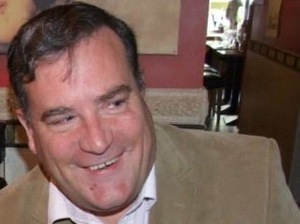
From top: Barry Cowen (left) in Dublin Castle last Tuesday; Dan Boyle
A dismissal rather than a resignation is rare in Irish political life. After Barry Cowen’s brief ministerial sojourn, we need to go back thirty years to have had a similar instance.
Hugh Coveney (father of our Minister for Foreign Affairs, Simon) could be said to have been constructively dismissed in 1995 when he was thought to have had inappropriate contact with a businessman.
It was thought a red card offence, although he was part compensated by being offered a Minister of State position.
Jim McDaid could have pursued a breach of promise action when he was offered a cabinet appointment in 1991, but was never appointed.
Being seen outside the Four Courts in the aftermath of an extradition hearing of a constituent, Fianna Fáil’s then partners in government, the Progressive Democrats, did not want him sitting at the cabinet table.
The last direct dismissal from an Irish cabinet was that of Brian Lenihan Senior in 1990. In the midst of a presidential campaign Lenihan was shown to have difficulties with his ‘mature recollection’.
The notoriously difficult to please PDs told then Taoiseach, Charlie Haughey, that this was something with which they would not put up with.
Lenihan also held the office of Tánaiste at the time. It created the surreal situation that the Fianna Fáil candidate to be the nation’s first citizen, was simultaneously thought unsuitable to be a member of government.
The most famous cabinet dismissals occurred in 1970 on foot of the Arms Crisis. Then Taoiseach, Jack Lynch, sought but did not receive the resignations of Charlie Haughey and Neil Blaney. They were told to leave cabinet.
Otherwise, outside of cabinet reshuffles, ministerial resignations have been the order of the day. Often such resignations have been encouraged.
More often than not the reasons behind enforced cabinet changes have been about character issues rather than issues of governance.
These reasons have tended be placed on failed attempts to cover up what, otherwise, may have been more explainable indiscretions.
We have been fortunate that foibles of a personal nature have not played so largely in our politics, nor have we had a media who have seen fit to delve in such areas.
Unfortunately there never seems to have been an occasion that someone has lost ministerial office solely on the basis that they weren’t very good at their job.
Effective accountability should be the ability of measuring the competence of any office holder. There has been too little of that in the Irish political system.
Geography should never be a factor in making up a cabinet. Gender has to be. A century into independence it is a balance we are continuing not to get right.
Experience has a role but not an overriding one. It constantly needs to be blended with new thinking and approaches.
Everything else is a lottery. Any government is amalgam. Coalition government particularly is so. What coalition governments are not is a marriage.
The three does not become one. A programme for government is the basis for a government to act as a single entity. Otherwise it is the sum of its component parts.
At times those component parts will act independently of each other, often returning to type. Otherwise known as politics.
Dan Boyle is a former Green Party TD and Senator and serves as a Green Party councillor on Cork City Council. His column appears here every Thursday. Follow Dan on Twitter: @sendboyle
Yesterday: Heber Rowan: A Turning Point


