
Tag Archives: Dan on Thursday

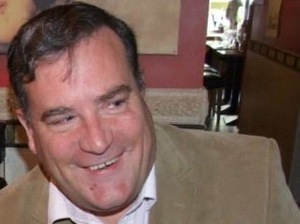
From top: Evening Herald, July 16, 1990; Dan Boyle

My friend and colleague, John Gormley, posted an image on social media recently. It was of an interview he had given in 1990. The tone of the article was downright condescending.

Within seven years of this article John would have become a city councillor, Lord Mayor of Dublin and eventually a Teachta Dála.

The interviewer and author of this article wrote with the intent that neither John Gormley, nor anyone like him, should ever be elected to anything.

The questioning was never meant to be anything but rhetorical. Any alternative vision which challenged the status quo could only be treated with derision.

The Real World has been the callow phrase used by commentators, now as much as then, to denote that those who saw change as being necessary as being fools.

Over the years I have been subject to many of these interviews myself, as have dozens of other Green public representatives. The initial reaction to these constantly hostile interrogations would be to become angry. Eventually we could settle at laughing internally at our interrogators.

We can’t afford to do that, was another predictable phrase we would hear. Much of the time it was worthless to make arguments, knowing they weren’t being listened to.

Still it has been depressing to realise that the Irish media continues to be permeated with journalists who make no attempt at all to understand, choosing instead to undermine from the onset.

This is different from the necessity to criticise and to be criticised. There are many criticisms of The Greens that are justified and necessary.

Often naive sometimes impatient. Much of the time less sure of foot of the means to define our messages or communicate the same.

One thing I believe The Greens are not is impractical.

The now near forty years of being treated as a sub species by the Irish political establishment has hardened the Green Party, but sadly little realism seems to have seeped into the thinking (such as it ever was) of other political parties.

Now, once again, the Green Party is seen as needed if not necessary. It is our numbers that are required, not our policies and certainly not our values.

There have been several commentators who, since the general election, have been berating The Greens for not fulfilling our bestowed duty to serve willingly and unquestionably in the next government.

Once The Greens made known what our priorities would be were we to be part of a government, it seemed something of a revelation to some of these commentators.

The idea that having The Greens in government meant implementing different policies, doesn’t seem to have been part of their equations.

One columnist (part of the same newspaper group that conducted the 1990 interview with John Gormley) took to social media. She asked, without any sense of irony, whether the 7% (average annual reduction of carbon emissions) was “doable?”.

This was an interesting approach to the information cycle. Demand a party be in government. Express surprise at what their policy priorities are. Realise that their presence would produce a different kind of government altogether.

Whether The Greens become part of the next government or not, will depend on whether talks take place that produce a draft programme of government, which gets approved by the Green Party’s membership.

The logic of that sequencing still seems beyond some of our political commentators. They probably can’t afford to understand.

Dan Boyle is a former Green Party TD and Senator and serves as a Green Party councillor on Cork City Council. His column appears here every Thursday. Follow Dan on Twitter: @sendboyle
Rollingnews

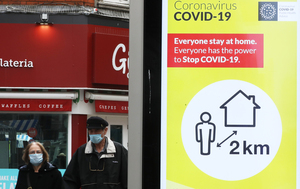
From top: Dublin city centre yesterday; Dan Boyle

I’m writing this on Earth Day. It’s the fiftieth anniversary of the first holding of the event. It is a wistful anniversary. The past five decades, despite increased awareness, has seen rapid denigration of the global environment.

The coming fifty years offer what may be our final opportunities to stop this rot. To stem the poisoning. To halt the madness.

At this mid point between awareness and action we find ourselves living in the most surreal of circumstances. The cacophony of what we have been encouraged to believe was normal life, has been silenced.

That silence, laced though it is with fear, provides pause for thought. For some there will be comfort in going back to what was. But we can’t.

Going back to what we had been doing is a return to insanity. That type of madness that Einstein described, in doing the same thing again and again while expecting a different result.

We need to better define what it is we mean by necessity. What is it that we need?

We are learning, in the most contrived of the situations, that there is much that we can do without.

In the near future advertising agencies will use all their sophisticated tools to convince us otherwise. When they do we should remind ourselves of the words Mick Jagger has been singing for the past fifty five years, that its all about “some useless information supposed to fire my imagination”.

And he went to the London School of Economics.

Of most need of reinvention is the science of economics itself. An entire new set of questions need to be asked. What is value? What are its inputs? How do we recognise such inputs? How do we ensure such inputs are used proportionately?

The old ways are gone, or at least they need to be banished. Our current indicators of success are flawed. In truth they are dishonest. They come nowhere near measuring our individual or collective well being.

As economics is currently structured it cannot put prices on many things of real value, and thus does not want to believe such things have value.

A child’s smile, a parent’s anecdote, a friend’s concern, can never be placed into any equation determining Gross National Product. And yet each contribute significantly to any sense of well being.

Over the past two centuries of economic prosperity, what we have defined as progress has come at a price. We have largely ignored this price because we have chosen not to define it.

The price has been mostly borne by the making available of environmental inputs as being cost free. To put this in more familiar financial terms, we have accumulated an environmental debt more acute and more deep than any monetary debt we have obsessed over.

Unlike the repayment of monetary debt, in meeting our environmental debt we benefit from doing things differently, which are better for being different.

A popular meme on the internet is a cartoon of a climate change conference, where a presentation is being made listing the changes needed to bring about a greener World. One delegate turns to another and asks “What if it’s a big hoax and we create a better World for nothing?”.

This is where we are at now.

Dan Boyle is a former Green Party TD and Senator and serves as a Green Party councillor on Cork City Council. His column appears here every Thursday. Follow Dan on Twitter: @sendboyle

Rollingnews

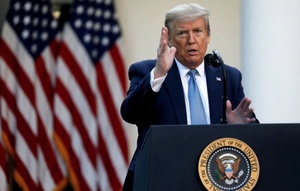
From top US President Donald Trump at a Covid-19 press briefing in the White House yesterday; Dan Boyle

At times of deep national crisis a natural instinct is to rally around the flag. To put aside usual critical tendencies. To seek not to distract. To support those in decision making positions.

Not only is this natural, it is necessary.

Diminishing criticism is not eliminating the need for evaluation. It gets put aside to reemerge when the crisis has passed.

This crisis, hopefully, will soon pass. When it does questions that have been building up will need to be answered.

Most obvious will be questions on whether interventions were effective and timely. Was preparedness appropriate? Were resources sufficient?

The spirit of this evaluation needs to be generous. It must be about whether lessons have been learned, whether those lessons can be applied if and when future crises emerge.

It can’t be about political point scoring.

Nor should it be about avoiding accountability. If poor decisions get made, and such decisions result in terrible consequences, that has to be made known. The who, the what and the why.

The default position should be is that any crisis is being dealt with by people who are acting to the best of their abilities with the best of intentions.

When this principle gets compromised, there is a need to critically intervene. It might be when a political party seeks to breach the social contract by seeking to make capital out of a crisis.

It could be when an individual within a decision making structure, overstates their importance making themselves the crisis.

Into this scenario comes the ultimate curve bender – Donald J Trump.

While in Ireland our response to the coronavirus will eventually be seen as being less than perfect, the international dimension to the crisis is being cruelly undermined by the presence of Trump in the White House at this juncture in time.

With the world dealing with one of the worst crises in history, the actions of this man child throwing his toys out of the pram, is not only negligent, it is criminal.

If the United States recognised the International Criminal Court in The Hague, Trump’s indictment there would be a slam dunk.

Something has to be done about the United States. Its empire has been more cultural and economic than it has been territorial. It is an empire that is unravelling and never more so than it has been in the person of Trump.

A latter day Nero, without even the musical ability, he has already proven himself to be a malignant, narcissistic oaf, the last person who should be in control of anything.

To be in this position now, when the planet is most in need of real leadership, is the ultimate in cruel irony.

His previous behaviour has been met with a collective global shrug of the shoulders. Sometimes we have laughed at his ignorance. We can no longer laugh or shrug.

Despite the millions of Americans who are imprisoned in their own nightmare because of him, there has to be a change in how the rest of the World interacts with the United States. However badly Trump has been treating his own citizens, his behaviour is now affecting the rest of us far worse.

We need to call out this poster boy for malevolence. We need to isolate those who enable him. Mostly we need to remind MAGA heads that USA number 1 now only applies to negative indicators.

Trump is not a virus. He’s more like bacteria. Definitely not the good kind either.

Dan Boyle is a former Green Party TD and Senator and serves as a Green Party councillor on Cork City Council. His column appears here every Thursday. Follow Dan on Twitter: @sendboyle

AP

From top: Lockdown measures in O’Connell Street, Dublin 1 yesterday; Dan Boyle

This week my daughter gave birth to a son. What a world he is being born into. A world whose future is more uncertain than perhaps it has ever been.

He has the advantage of coming into loving family. His two bigger sisters will certainly help. Even at their still young ages, they’ve already experienced much in their short lives.

As a family, like thousands of other families these days, they have been bobbing and weaving especially when trying find long term accommodation for themselves.

This is a generation that will struggle more with less than their parents have had. I worry, three days into his life, that my grandson’s generation will find itself another generation that is part of this ongoing trend.

This would be a worry if we end up going back to way we used to do things. I would be hoping my daughter’s generation, on behalf of their children, that will hit the reset button on this badly misshapened world of ours.

We badly need a better set of values. We need a more profound sense of worth.

In worrying about future generations having less, we should be asking if our generation in having more have had too much of what we may never have needed.

And we will have start doing things differently. Probably everything differently.

We need to critically evaluate how we have done things before now. We need to question the very basis of the society we have created.

I’m not talking about indulging in utopian fantasies. This isn’t about imagining a better future. It should be about challenging those shibboleths of how we have been living our lives, recognising what we thought to be rewards have been anything but.

We should be living our lives more in the local. Meeting most of our needs within the shortest possible radius from where we live. This should include where and how we work.

We need to do more for ourselves, by ourselves, within ourselves.

Given this period of other worldliness we should be able to more easily identify that which has been superfluous.

This isn’t about appealing to our inner hippy. What we leave behind will be difficult to agree and even harder to let go of. We need a better definition of creature comforts.

Nor is this about some retreat from technology back to some romanticised rustic idyll. We will need new and better technology to help us to get to where we need to get to.

We may still become more urbanised. That’s not necessarily a bad thing. What we will need to do is to target our urban growth. In Ireland that should require restricting growth of Dublin, helping to grow other Irish cities and large towns.

To bring these changes about we will need greater democracy with more decentralised, local decision making. These may be the hardest changes to bring about.

These are changes that have long been required in any case. Crisis may be helping to concentrate our minds, but the change has always been necessary.

Mammon has never been the hero we have latterly portrayed him to be. It is time to put him out of existence.

By the way the child’s name is Jack. I think he’ll be all right.

Dan Boyle is a former Green Party TD and Senator and serves as a Green Party councillor on Cork City Council. His column appears here every Thursday. Follow Dan on Twitter: @sendboyle

Rollingnews


From top: Cork County Council meeting on March 23 with representatives practising social distancing; Dan Boyle

There should not be a pecking order in these things. Most of us are in awe of the work being done, and the risks being faced, by our healthcare workers.

Similarly those workers in food retail, often the lowest paid of workers, have exhibited how essential they are to us in a time of crisis.

I would like to give a particular shout out to public sector workers. The latest phase of the shutdown has seen the suspension of over the counter services at City and County councils.

The public still can, and will, be met through appointment. Services are being prioritised but with the intent to see them being delivered to meet the growing need.

Many public sector workers are not particularly well paid either. They may possess a greater job security than other workers, but at times like these their importance to the social contract comes to the fore.

Local authority workers sometimes suffer from poor perception from the public. The individual at the counter is seen as the bureaucracy. An impediment to prevent progress, indifferent to all things human or humane.

As an elected councillor I have long known this to be a lazy stereotype, but stereotypes have been known to stick.

What has surprised me has been to see elected representatives being listed as essential workers.

When I think of the three categories of workers I’ve listed here I’m glad that there isn’t a pecking order, because none of us public representatives would come anywhere close to what these workers are doing and achieving.

If there was a category of being of potential use then we might sit more comfortably there. Those of us who meet, sit and talk, occasionally to think, can feel especially useless at times of crisis.

By necessity decision making channels become more narrow, responsibility become better focused on those with specified expertise.

There is a role in ensuring that resources are made available and seeing they are being fairly distributed.

The actual role is to act as a conduit to connect those who wish to help with those who have a need.

This week I had the opportunity of linking of someone providing quantities of a much needed product, for free, with a group providing a service to those most in need.

My role was peripheral, the least important part of a chain that included two hugely important social actors – the generous provider of the product, and the service provider giving service to those in our society who are excluded far too often. It was good to be able to make a contribution, however small.

We seem to be rediscovering things that have been hidden deep within ourselves. A sense of us. A willingness to abandon much of what we had treasured but have since found to be useless in a crisis.

There will be conversations after this. These will be critical in tone and raised in expectation. There will be much to repair, socially as well as economically. But there is also much that we can leave behind.

Like those false of Gods of consumerism who have let us down badly when our need has been greatest. We have learned that the simplest of pleasures can represent the greatest of wealth.

I don’t want to be a hero. I don’t ever expect to be one. We are well served with the heroes we have.

Dan Boyle is a former Green Party TD and Senator and serves as a Green Party councillor on Cork City Council. His column appears here every Thursday. Follow Dan on Twitter: @sendboyle

Piv via Cork County Council

From top: The Botanic Gardens, Glasnevin, Dublin on Tuesday; Dan Boyle

Among the many jobs that my Dad had,  possibly the one he enjoyed the most, was when he was a merchant seaman. For a number of years he worked on the Great Lakes between the US and Canada.

The rest of the family had moved from Chicago to Cork. We got to spend Christmases together. For the rest of the year we would make and send cassette tapes for each other to remind ourselves that we were a family.

My Dad was a gregarious man. I’m sure he would have had many friends on board the ships he worked. Nor would he have lacked for company. Despite knowing that I always imagined him being mainly alone in his berth.

One Christmas, and possibly by way of compensation, he brought me home a ship’s radio. It had five short wave bands. It was to become my window to the World.

Sometimes that World could be quite narrow. Police and ambulance communications could elicit a certain thrill, but that novelty would soon pass.

It was the global battle of the airwaves that fascinated me. Competing doctrines that would demand my attention – Voice of America, Radio Moscow, Radio Prague, Vatican Radio.

Like I imagined my Dad to be, I too was alone in my room. With my radio though. It allowed me to feel a citizen of the World.

Another present I got from my Dad seemed a lot more prosaic. It was a book, more of an instruction manual, called ‘Know Your Flags’. The book outlined the use of flags and their importance in seafaring.

It hardly thrilled me. My Dad did try to impress on me why he thought it important. He would explain the pennants that would be hoisted when a ship had docked, highlighting the status of the ship.

He tried to sell me on the value of semaphore, the visual Morse Code of the high seas. My short attention span and low boredom threshold would never have had the patience of reading messages made up of words where each letter had to be spelled out.

It took me many years later to realise that my Dad was trying to impart a life lesson to me. As I have come to understand it was never to be short of ways to communicate, especially if you find yourself alone and isolated.

There will be others on your wavelength waiting to connect.

I will always be grateful for that homespun wisdom of his. I miss him. This summer it will twenty years since he passed away.

With our current predicament I suspect he would be in his element. He might even be building a nuclear bunker. Partly because of his need to keep himself constantly busy, but also as an exaggerated response to the problems we are facing.

Besides a bunker mentality would have come from those many years he spent alone in his berth.

He was loud in voice. That sometimes had others ascribe an overconfidence in him. He spoke loudly because of hearing loss. I suspect this began from a time when he worked as a dynamiter at an uranium mine in Canada.

Loud of voice. Hard of hearing. Fond of flags. That was my Dad. It took me so long to get him.

Could do with him now to learn from what he might tell me of how we should survive this time of being apart from each other. How to let each other know how we feel. How to use whatever means we have to convey that and other messages.

Maybe I should start learning semaphore?

Dan Boyle is a former Green Party TD and Senator and serves as a Green Party councillor on Cork City Council. His column appears here every Thursday. Follow Dan on Twitter: @sendboyle

Rollingnews

From top: Dublin city centre yesterday; Dan Boyle

Two distinct political approaches have accompanied the international reactions to the novel coronavirus crisis.

The political philosophy holding most influence in how responses are being determined can be identified by which of these two questions are being asked, in what intensity, and to what degree of prioritisation.

The questions are ‘How does this crisis affect our people?’ or alternately “How does this crisis affect our economy?’.

It is fairly obvious that the administrations in the US and in the UK, have been asking themselves the second question first, most loudly and most regularly.

Any policy response to a pandemic will bring about huge societal adjustments. To anticipate such responses in purely financial terms is particularly misanthropic.

The follow through questions asked by these administrations seem to have been solely based on economic impact.

In the circumstances we all find ourselves now, no approach is going to be without difficulty. To make achieving success that more difficult because of ingrained philosophical hang ups, will rightly be seen as especially wrong.

The first response to this public health crisis in the US and UK has been to seek to limit the role government can and should play.

The underlying ‘values’ behind this belief is a perverse understanding that the more government/public agencies become involved, the greater the damage they are likely to cause.

The definition of this damage is informed by a secondary principle – the business of business should be largely unaffected.

While they will proclaim otherwise, these theories are callously indifferent to human health and life.

Few would argue that we be indifferent to the economics of any health crisis. But to give potential economic consequences such a priority is unfair to most people in those societies.

In Ireland we have had a government, now in a caretaker capacity, that has been similarly wedded to market principles. This adherence has seen housing provision become further and further detached from public need.

It has also made the achieveing of a health service, which was truly public and which the public has confidence, much more difficult to attain.

However in its approach to how this virus is impacting Ireland, the government is operating a far more people centred approach.

It is an approach that hasn’t been without flaws and won’t be without difficulties, but it is an approach that it is founded on better principles.

It would be better if our new government could be formalised. Like Eamon Ryan I believe that a national government would be best placed to deal with the scale of the predicament we face.

Even if not possible, the default setting should be to continue to support the government as it is constituted on the course it is currently following.

To seek to create a new government, formed on a crude majoritarian basis, that would divide rather than continue to involve the Dáil, would be precisely the wrong action to take as we seek to collectively tackle this crisis.

The approach to date has been, thankfully, politics free. The support our public services and agencies need has to engage our entire political system acting unambiguously towards a single focused goal.

Forming a new government in Ireland, especially a government that could be tempted to reassert market principles to social policy areas, is something that shouldn’t be encouraged until we can get this virus under control.

Dan Boyle is a former Green Party TD and Senator and serves as a Green Party councillor on Cork City Council. His column appears here every Thursday. Follow Dan on Twitter: @sendboyle

Rollingnews

From top: Light rail on Washington Street, Cork; Dan Boyle

It was a press conference not a launch. Hosted by the National Transport Authority (working in ‘conjunction’ with Cork City and County Councils) it was to announce the final version of the Cork Metropolitan Area Transportation Study (CMATS)

This was following a period of public consultation, which in the typical style of Irish consultation, saw little change from the original draft despite considerable new input.

The document was prepared on behalf of the board of the NTA. Input was sought and given from officials working with the two Cork councils.

At stake is a twenty to thirty year transportation strategy for Cork. A strategy meant to have sustainability at it heart.

On the surface the presentation of the strategy, graphically and in its use of language, seems to tick all the right boxes.

However after a cursory reading it becomes obvious that no amount of right on terminology can hide such a lack of desire to achieve any real change.

CMATS is the third generation of similar studies designed to bring Cork’s transport infrastructure into a modern era.

I am old enough to know of each of the previous incarnations – the Land Use and Transportation Study (LUTS) from the 1970s and the Cork Area Strategic Plan (CASP) from the 1990s.

Each was structured along similar lines. Radical thoughts were written about trying to achieve a less car dependent society. The implementation of each plan was accompanied by a plethora of new road projects, with practically zero sustainable transport infrastructure being put in place.

So it is with CMATS. Some teases are placed to tantalise and suggest what could be done differently.

Light Rail is spoken about favourably. The caveat is that is to undergo a feasibility study (several have already been done) and would depend on ‘densification’.

Densification is the chicken and egg of urban planning. According to our stolid decision makers, infrastructure cannot be provided without a critical mass of population existing to justifying its use.

More likely is that proper sustainable development cannot occur without infrastructure being provided first, of a type that can help encourage such development.

Seeking prior development prior to providing infrastructure is always a formula for never providing such infrastructure.

Similar warm noises are being made about extending the suburban rail network in Cork. Being talked about are new rail stations for Blarney, Kilbarry and Tivoli.

This is something of a reheated proposal. All were suggested in the LUTS plan in 1975.

Most of what’s new in this plan centres around a Cork Bus Connects. There is something of a logic in this. Bus investment is more cost effective and easier to deliver. However in the context of this plan it is being overemphasised at the cost of a more balanced approach.

The most depressing aspect of this plan is an appalling lack of ambition.

The present travel mode split sees about two thirds of all journeys are made by private motor vehicles. One in ten journeys are by public transport. One in a hundred are bike journeys. The rest are walking journeys.

By 2040 this plan see about 10% less car journeys occurring mainly being transferred to greater levels of public transport, with a miniscule increase in cycling.

This would see Cork having a higher level of car usage than Dublin has now, whilst continuing to have a lower rate of cycling.

It takes a particular type of genius to suggest slowing down the speed of necessary change.

And don’t tell me it must be a Cork thing.

Dan Boyle is a former Green Party TD and Senator and serves as a Green Party councillor on Cork City Council. His column appears here every Thursday. Follow Dan on Twitter: @sendboyle

CMATS 2040 document.

From top: Fine Gael’s Director of Elections for the 2013 Seanad Abolition Referendum Richard Bruton  (right) with Regina Doherty and Simon Harris on September 9, 2013; Dan Boyle

The constitutional referendum held in 2013 on the government’s proposal to abolish The Seanad was lost through indifference.

Certainly it wasn’t defeated by any overwhelming affection in which our second chamber of parliament was held. Less than 40% of voters participated in the referendum dividing on a 52% No 48% Yes vote (sound familiar?).

I took an active role in that campaign. As a former member of the Seanad I could see it had value, even if it has never operated to anything like its potential throughout its existence.

To be honest I much preferred my time as a Senator to that I had spent as a TD. I found the debates more engaging. I found the scrutiny of legislation to be more thorough. The pity is that too few Senators allow the Seanad to be the powerful parliamentary tool it can be.

The Seanad has been allowed to develop into a filter for the wider political system. A crèche for those not yet fully immersed in the ‘real’ World politics of the Dáil, a place of sanctuary for those left homeless by the Dáil electorate, or a rest home for those left battered by a system depriving them of being where they want to be.

I would say that about a fifth of the membership of The Seanad works to make the House a living, active parliamentary chamber it should be. For most of the others it is somewhere where prestige does not require responsibility.

This disconnect is something I sadly see being maintained through many of the candidates being presented to us, a privileged and select electorate, for the election to the next Seanad.

Since 1992 I have participated in every Seanad election (with the exception of 2007, my fallow period between being a TD and a Senator). Disappointingly, for the most part, there has been no great improvement in the calibre of many coming into the Seanad. That said after the 2016 election there have been a few flickers of light that this is beginning to change.

Due to changes we have seen in the composition of the Dáil itself, and before that as a result of the local elections in 2019, we are now likely see in the next Seanad a more diverse chamber than has ever existed to date.

However a more qualified membership of the Seanad will mean nothing unless it is accompanied by long avoided reform to The Seanad itself. The template for that change already exists. It is easily implementable. The coming government, however it is composed, should make it its priority.

A reformed Seanad should be mostly elected by the general public. The Taoiseach’s nominees (of which I was once one) should be maintained but on a smaller scale.

I would suggest no more than five nominees, whose purpose should not be to contrive a Seanad majority for the government of the day, but to help ensure that those elements of society not represented in the political system, begin to be so recognised.

We should place the election of the Seanad on a different electoral cycle to that of The Dáil, impeding the ability of those who seek to jump from one house with the expectation of being able to jump back to the other at the soonest possible opportunity.

When this happens, if this happens, I might be tempted to go back.

Dan Boyle is a former Green Party TD and Senator and serves as a Green Party councillor on Cork City Council. His column appears here every Thursday. Follow Dan on Twitter: @sendboyle

Rollingnews

From top: Sinn Féin President Mary Lou McDonald  (right) with TDs David Cullinane (left) and Pearse Doherty at a rally in the Rochestown Park Hotel, Cork on Monday

A number of people I know attended the first of the Sinn Féin’s ‘I can’t believe it’s not an election’ rallies.

Some went out of curiosity. Others were converts to the idea that Sinn Féin, of itself represents the change that is needed in Irish society.

For the most part the overwhelming number, among a very impressiave audience, there were those already part of Sinn Féin family. A cursory look at registration plates in the hotel car park showed many had travelled considerable distances to be there.

It was a rallying of the troops (if you excuse the military analogy) meant to celebrate what had been achieved and tantalise about what could be.

Nuremberg it wasn’t. Nor was it anything new or novel in Irish politics.

On losing power in 1948 De Valera engaged in a nationwide (and international) tour to solidify and strengthen his party’s support. The chimera was that the meetings were tagged as being anti partition events.

The coming into being of Fine Gael in 1932 was pressaged by a series of open air rallies held under the auspices of the Army Comrades Association/National Guard (The Blueshirts) led by the infamous Eoin O’Duffy (first leader of Fine Gael, since written out of the party’s history).

New parties established between elections, like the Progressive Democrats and more recently Aontú, have engaged in nationwide tours, attracting significant attendances, when trying to establish themselves.

Large gatherings didn’t always ensue, but seeds were sown in ways that showed that another Ireland was possible.

Before I began thinking of becoming politically involved, I was impressed when two friends of mine joined the Democratic Socialist Party, developed by the much missed Jim Kemmy TD, after a low key not very well attended meeting in Cork.

A more justified criticism of the current Sinn Féin exercise is its implied theme of victors as victims.

The only clear result from the 2020 election is that there has been no winner. There are parties that have been more successful than others, but no party has been given the ability, of itself and by itself, to determine what happens next.

What has happened in this election is a rejection of traditional ways of practicing and expressing our politics. The difficulty that has arisen, and it should just as well be seen as an opportunity, is that the direction of change while significant has not been sufficient not to have government that also doesn’t include one or other (and maybe both) of our civil war parties.

The contrived angst of castigating other political parties for having the audacity of engaging with the public, is an example of the many ways we have practiced politics in the past having failed.

The same is true is about the somewhat empty concerns of shadowy figures indirectly influencing the process of government. As far as I am concerned this is a critique that could be applied as much to the Construction Industry Federation as it would to any self styled Army Council.

We are a representative democracy with many participatory elements. Our undervalued Constitution obliges us to politically behave like this.

The problem has been that our representative system has behaved for too long on the basis that elections are the consultation. Further consulations, by this logic, would be further elections.

This why the much vaunted talk about change has to be about more than a change of personnel. It has to be more than a change of practice.

Ultimately it has to be about a change of culture.

Dan Boyle is a former Green Party TD and Senator and serves as a Green Party councillor on Cork City Council. His column appears here every Thursday. Follow Dan on Twitter: @sendboyle

Pic: Twitter/SF