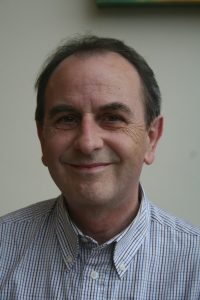
 From top: Tanaiste Leo Varadkar leaked confidential documents to his friend and political supporter Dr Maitiú Ó Tuathail (right), a president of the now defunct National Association of General Practitioners (NAGP); Eamonn Kelly
The Village article saga will likely dominate the news this week. Following the article and the statement by the Tánaiste in which he acknowledged that he “had provided a government document to a medical organisation through informal channels,” as reported in The Journal, the next question is, Is that illegal?
Village contends that it is illegal, while the Tánaiste rejects this and admits that it was “not best practise”. This line “not best practise” has been taken up by the taoiseach and others like a shield to deflect the awkward legality angle.
The ins and outs of whether or not this practise is or isn’t illegal is way beyond the scope of my abilities to discern or decide and will be thrashed out over the next week by better informed heads. But the story is fascinating on a number of levels, not least the level of unprofessionalism involved.
It would appear that the recipient of the confidential document is a social friend of Leo Varadkar and was the beneficiary of a favour. It is almost as if one of the perks of being a friend of a politician is that you may have access from time to time to confidential documents which might normally only be available to certain people in government.
The gesture of sharing the document might also be a form of showing off to a friend the reach of your powers. Whatever the motive, the act itself, the sharing of the document, is basically unprofessional, whatever about its legality or otherwise.
Unprofessional Standards
This kind of unprofessionalism is not uncommon in Ireland. People often appear to break from their roles for the sake of interpersonal showing off or advantage.
The point though is not so much the legality or illegality of such actions, as it is the casual abandonment of the person’s role, position, duties and obligations by the standards of professionalism, which you would imagine are held in high esteem by those in high positions.
But as was demonstrated by the church scandals, that may not necessarily be the case, while the current mother and baby controversy seems to amount to a form of human trafficking in which the state is implicated.
And it is here that the Varadkar story is both very Irish and very average. Because here is a former taoiseach who apparently, while taoiseach, by his own admission, abdicated on basic professional standards in order to facilitate a friend.
A friend who was engaged in establishing a rival union to an already existing union representing people in the same sector. The fact that unions are involved, coupled with Varadkar’s neo-liberal ideology, makes the whole affair seem even more intriguing.
The careful repetition by other politicians of the phrase the Tánaiste used in his defence, “not best practise”, while being politically wily, manages only to project a suspicion of complicity in the practise, suggesting perhaps that the practise is fairly common in day-to-day political activity.
Certainly, the general view of politics in Ireland is that it is rife with cronyism. But what hasn’t been made so abundantly clear until now is the likelihood that one of the perks of governing is that you may share inside information with friends and acquaintances, presumably for any number of reasons: from a desire to impress with your power, to even perhaps issuing subtle business tip-offs. Who knows?
The point is, the impression given is that there doesn’t seem to be any moral reason why you wouldn’t engage in such practises. On the contrary, by Irish standards, it seems almost expected of you. You might even argue that the only reason for acquiring political power in the first place is that it gives you access to the inner sanctums of government from whose secrets you and your immediate circle of friends may derive benefit.
Again, such an attitude, which might be framed as “clever” by a certain type of person, is actually a lack not only of professionalism, but also of even the belief that professional standards matter. It’s an acknowledgment that cute hooerism is the accepted Irish professional standard.
Whose Government?
There was an article recently published in the Irish Times by the American writer Richard Ford which oddly sheds some light on this. Ford described Americans as being affected by “a deep, colonial-inherited suspicion of government.”
A similar suspicion due to colonialism perhaps exists in Ireland too, where the acquisition of political office often appears to be seen more like a hi-jacking of the levers of power than an acquisition of power to benefit the wider community.
This sense of an Irish politician using their position to facilitate a crony is what makes the Varadkar story so tawdry, so familiar and so disappointing.
Prior to this there were many who believed that Varadkar was a break with the kind of brown envelope past which, despite Michael Lowry and his supporters, was a culture (or lack of) that was always most strongly associated with Fianna Fáil.
Now it appears that this parish pump form of cronyism is not confined to one party, or even to the occasional cross-party bad apple, but actually appears to be a standard of unprofessionalism that informs much of Irish political life.
Rogue Element
The next week may be less about interrogating a system that encourages clientelism, less about finding out whether or not the Tánaiste’s actions were legal or otherwise, and more about a display of political manoeuvres designed to extricate Varadkar from this awkward tangle, without him having to resign, and without inadvertently implicating the entire system in the lack of professional standards that gave rise to the situation in the first place.
This kind of game has its place in our dysfunctional system, and a ready audience eager to admire the escapology of the rogue, which is how we, as post-colonials possibly understand the true meaning of politics.
Was it illegal? is not the question. Will he manage to get away with it? That’s where the sport is to be found.
Eamonn Kelly is a freelance Writer and Playwright.
Previously: Eamonn Kelly on Broadsheet