
Tag Archives: George Gibney

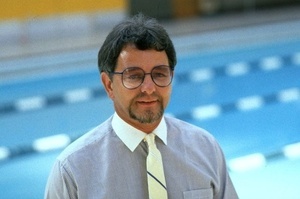
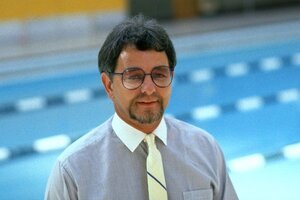
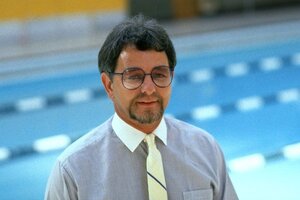
George Gibney

George Gibney was charged with 27 counts of indecency against young swimmers and of carnal knowledge of girls under the age of 15 in April, 1993 but the charges were dropped because of the length of time which had passed since the abuse took place.

The former Irish swimming coach was granted a visa during a visit to the United States in 1992 – seemingly aided by a Garda character reference – a year after people who had been abused by him started to speak up and organise themselves.

In addition, a 2010 application by Gibney to obtain US citizenship – some months after Evin Daly, of the Florida-based advocacy group One Child International alerted the US government of Gibney’s past in Ireland – was rejected.

It’s also understood Gibney may have lied in this application.

And yet.

Gibney remains in the United States.

The revelations about his 1992 visa and 2010 citizenship bid have been revealed by US journalist Irvin Muchnick who has been trying to get Gibney’s immigration file from the Department of Homeland Security, under the Freedom of Information Act.

He has received partial documents, most of them redacted, over the past number of years.

But a senior federal judge for the Northern District of California, Judge Charles Breyer, revealed the details of the 1992 visa and the rejected 2010 citizenship application during a court hearing of the FOI bid last year.

Mr Muchnick was only able to publish details of this hearing last weekend.

A transcript of that court hearing on October 28, 2016, in San Francisco can be read here

The federal government is appealing a previous ruling by Judge Breyer in Mr Muchnick’s favour and the matter is now at the Ninth Circuit Court of Appeals Mediation Service so discussions are ongoing.

However, during the court hearing on October 28, 2016, Judge Breyer questioned why Gibney suffered no consequences from the US authorities.

He said the following:

“How is a person permitted to remain in the United States when, in fact, the circumstances of the Ireland experience or what occurred in Ireland are publically known, that’s number one.

And number two, if, and I would use the word ‘if,’ he gave false answers in connection with an application, how is it that that somehow doesn’t bring into question the term of his initial visa permit or his initial visa.”

Let’s say I, as an example, am granted a visa to come to the United States. And subsequent — and I answer all the questions and I don’t answer falsely. Okay. So I mean, I have that visa application.

And then a series of events occur which would normally disqualify a person from getting a visa, which maybe is an assumption that I don’t know, that I can’t figure out, but I have to assume that if somebody has been charged with the types of offenses that Mr. Gibney has been charged with, the United States, absent other circumstances, would not grant a visa.

We’re not a refuge for pedophiles. And there’s no issue here of which I’m aware of, which is the asylum issue. Okay.

“So I apply — it’s unfortunate I’m using me as an example — but I apply, and then some things surface and I go back to Ireland and then I come back to the United States.

Now, if we froze events at that point, of course, my question would be, does the visa in the United States, one, expire? And two, if it doesn’t expire, is there a process where Department of Homeland Security reviews visa applications in light of undiscovered information and then takes some conduct, or takes some action.

I have no idea whether that’s the case or not.

“But that’s not necessarily the case I wanted to posit because the case I wanted to posit goes on from there. And it involves, at that point, me. Because I’m the applicant, I filled out a form, and perhaps, theoretically, I’m not honest in the form that I fill out for further relief; that is, to be a citizen. And so it’s denied.

But my question would be, by virtue of that activity, does that then go — didn’t — did somebody in the Department of Homeland Security say, Well, you know this person lied to us today, or whenever that application, I think we have to go back and question the legitimacy of allowing that person to remain in the United States.

“There may be reasons to allow him to remain in the United States. There’s nothing that you have submitted to me that indicates any reasons why he’s allowed in the United States, nor any investigation, that I can see, of going back and looking at the original application or the continuation of the visa.”

The revelations mean that Gibney got a US visa a year before he was charged in Ireland.

He went on to seek and win a High Court judicial review in 1994 that quashed all the charges against him.

The judicial review was secured after a Supreme Court decision, during which Gibney’s senior counsel Patrick Gageby argued that the delay in initiating the prosecution against Gibney infringed his right to a fair trial.

Mr Gageby’s sister, future Chief Justice Susan Denham was on the bench of the Supreme Court that day.

Gibney subsequently left Ireland, first for Scotland and then America.

Justine McCarthy in The Sunday Times, reported that other documents released to Mr Muchnick showed Gardaí gave Gibney a certificate of character – issued on January 20, 1992 – to support his application for an American visa.

The certificate given to Mr Muchnick was reported to be partially redacted with the name of the issuing officer and its contents obscured.

The issue of the Garda character reference came despite claims that gardai were notified of allegations against Gibney prior to January 1992.

According to the Murphy Inquiry – which was set up to look at abuse in swimming in 1998 – a parent from a club other than Trojan Swimming Club, where Gibney coached, was told by an assistant coach of Trojan in November 1991 that the gardai and the ISPCC were informed of the allegations in relation to Gibney.

However, later, the ISPCC said it had no record of any such complaint in 1991 or in 1992. The Murphy Inquiry states the first record on the Garda file is dated December 15, 1992.

Further to this…

Readers may wish to recall the following timeline of events leading up to 1992…

In December 1990, swimmer Chalkie White told European silver medalist Gary O’Toole that Gibney abused him from the age of 11 in 1967, prompting O’Toole to find out who else had been abused by whom in the Irish swimming world.

In January, 1991, while in Australia, swimmer Mr White told the honorary medical officer of both the Irish Amateur Swimming Association and the Leinster Branch of the IASA, Moira O’Brien, that he had been abused by Gibney.

White would later tell the Murphy Inquiry – set up to look at abuse in swimming – that Ms O’Brien told him it would be his word against Gibney and that he should ‘get on with it’.

Ms O’Brien would later tell the Murphy Inquiry, Chalkie was ‘confused’ and ’emotionally unstable as a result of a head injury’ and that Chalkie didn’t want her to report the matter. She would also later say a ‘doctor-patient relationship’ existed and that Chalkie didn’t want his complaint to be reported.

In 1991, GIbney allegedly raped a female swimmer, aged 17, in a hotel room while they were on a swimming trip with the Trojan Swimming Club in Tampa, Florida. He previously attacked the same girl in Holland in 1990.

The rape resulted in the girl becoming pregnant and a high-ranking official in swimming taking her to England for an abortion. It’s also alleged that the official warned the girl not to tell anyone about the termination.

In February 1991, Mr White told the then President of the Leinster Branch of the IASA, Frank McCann about Gibney’s abuse and McCann says he’ll deal with the matter. (McCann, who also abused child swimmers, is later found guilty of murdering his wife and niece, in an attempt to cover up for his abuse in 1996)

Also around this time in February 1991, assistant female coach Carol Walsh, to whom Mr White also confided, also tells McCann about the abuse. She claims McCann replied that, “he hoped to fuck it wouldn’t break while he was president”.

He also tells her there was nothing he could do about the allegations and advised her “to back off and not get involved”.

Later, in an interview with RTÉ in 1998, Ms Walsh says that, after approaching the IASA about the matter, she received threats and anonymous phone calls.

On February 8, 1991, Gibney announced he was stepping down from his position as Irish swimming coach, after 11 years, “to devote more time to the Trojan Club and the sports centre he manages in Dublin”. Another abusive coach Derry O’Rourke succeeds him.

Mr White tells the National Development Officer of the IASA, in March 1991, about the abuse he suffered at the hands of Gibney. The officer later tells the Murphy Inquiry nothing specific was told to him and that he didn’t know of any abuse until November 1992.

In June of that year, Mr White told the secretary of the IASA, Hillary Hughes, about the abuse he suffered. The secretary later tells the Murphy Inquiry that she did not remember his allegations.

In November of 1991, according to the Murphy Inquiry, a parent from a club other than Trojan Swimming Club was told by an assistant coach of Trojan that the gardai and the ISPCC were informed of the allegations in relation to Gibney.

But later the ISPCC said it had no record of any such complaint in 1991 or in 1992. According to the Murphy Inquiry, the first record on the Garda file was dated December 15, 1992.

In addition, the Murphy Inquiry states: “The President of the IASA in 1992, had been told at the end of 1991 by a senior swimmer of complaints that [Gibney] was in serious trouble for molesting young children. The senior swimmer requested that the President organise a meeting at which Gardai would be present. The President took legal advice. No meeting was held.”

Irish Times journalist Johnny Watterson later reported that, after Mr O’Toole wrote to the IASA seeking a meeting, he received a reply on January 15, 1992 which said: “The IASA cannot act on mere rumour and innuendo and the person concerned has a basic right to his good name and reputation unless and until first hand complaint is made.”

Previously: Unreasonable Delay

The Chief Justice, Her Brother, And How George Gibney Got Away

How George Gibney Lied on His 2010 Application For American Citizenship (Concussion, Irvin Muchnick)

George Gibney’s 2010 Application For American Citizenship Was Rejected, With No Other Consequences, Federal Judge Said (Concussion, Irvin Muchnick)

From top: Karen Leach, Derry O’Rourke and George Gibney

This afternoon.

On RTÉ’s Liveline.

Karen Leach spoke to Joe Duffy about the abuse she suffered at the hands of former Irish swimming coach Derry O’Rourke.

She also spoke about fellow former Irish swimming coach George Gibney.

Readers will recall how, in November 1997, at Dublin Circuit Criminal Court, O’Rourke, who was represented by Patrick Gageby SC, pleaded guilty to 29 sample charges of sexual abuse against 11 young swimmers, on numerous occasions between 1976 and 1992.

Judge Kieran O’Connor was told O’Rourke originally faced 90 charges.

The court also heard O’Rourke tried to hypnotise some of his victims.

In January 1998, O’Rourke was given a 12-year sentence.

Karen told Liveline that she didn’t tell anyone about how O’Rourke abused her until after he was jailed.

She said the abuse destroyed everything in her life and that her heartbroken mother later took her life.

She also mentioned another Irish swimming coach George Gibney who had sex abuse charges against him quashed after a 1994 High Court judicial review.

Karen said:

“Derry O’Rourke was my swimming coach, the Irish Olympic coach at the time also and I swam from the age of about 10 to 17. I had a dream as a little girl and my dream was to swim for Ireland at the Olympics, that’s all.

“I believed I could do it. My mam and dad believed that I could do that and he knew what my dream was. He took full advantage of that from me and many other swimmers in our swimming club.

“He’s not the only swimming coach that  has abused swimmers in Ireland. It started with my training. Everything he said, everything that he wanted, he got. No one answered back Derry O’Rourke. He was god.

“He was given the power by people and adults, the Irish sports organisations, the government, everybody. He was given the power and in that power, he took it to abuse me and many other children.

“It destroyed my life and I lost everything, absolutely everything. It’s only this year, 2017, that I’m talking to you as Karen Leach, 100 per cent, back in my mind, heart, soul and body.

“I spent 37 years in prison because of what that man did to me. He got 12 years concurrent for 18 girls and many more that have contacted me since I went public, have never, weren’t able to come forward and speak. He was out after nine years.

“George Gibney did the same to his swimmers in Trojan [swimming club]. He, someone helped him, he’s living free in America. He never faced anything.”

“It started when I was 10. I’m 48, it’s only this year that I’m free of it. That’s what I mean: 37 years of prison.

“Not only for me but my dad died five years ago, a devastated and heartbroken man.”

“When he was sick in hospital and dying, I knew he was dying, I told him that I loved him, he was the best dad ever and he looked at me and said ‘I don’t know about that, Karen’.

“Sixteen years ago, after the court case, my mam told me on the Thursday that she loved me and that she was sorry she didn’t look after me as a little girl. I got a phone call from the guards on the Bank Holiday Monday saying my mam was taken out of the canal by a farmer.

“She was heartbroken. My dad was heartbroken. My family is broken.”

“I spent many years in hospital, I had to be locked up and put away in order to be kept alive because of the many suicide attempts that I had because, as a result, I couldn’t live with what he did to me. It destroys, it takes everything from you when you’re child.

“It’s the same, to me, it’s the same as murder.

“Derry O’Rourke murdered my heart, my soul, my mind, my body as a little girl, he took my childhood away. There are many children living in this country that have been murdered as children from child abuse and didn’t make it to be an adult because they couldn’t live with it.

“I’ve survived the suicide attempts, I’m here, I have my voice, I now am going to speak for every child in this country to ensure that they do not live or end up with a life like mine.

“I also speak for anybody that’s been abused. Some people that have not been able to come forward and speak because they’re still too scared. They think they might not be listened to, might not be believed, I speak for those people too.

“I will not, now that I have my voice back, ever allow anyone to forget about what happened to us.”

Karen Leach

Previously: Two And A Half Years

From top: The Burlington Hotel, Dublin 4; George Gibney

You may recall the ongoing efforts of US journalist Irvin Muchnick to obtain former Irish swimming coach George Gibney’s immigration and visa file through the US courts.

Gibney was charged with 27 counts of indecency against young swimmers and of carnal knowledge of girls under the age of 15 in April, 1993 – but sought and won a High Court judicial review in 1994 which quashed all the charges against him.

The judicial review was secured following a controversial landmark Supreme Court decision – during which Gibney’s counsel Patrick Gageby argued that the delay in initiating the prosecution against Gibney infringed his right to a fair trial.

Mr Gageby won this decision. His sister Chief Justice Susan Denham was on the bench that day.

Following this Supreme Court decision, Justice Declan Costello conducted a judicial review and held that Mr Gibney’s right to a fair trial would be infringed if the prosecution were to be proceeded with.

After this, Gibney left Ireland for Edinburgh, Scotland and then Florida.

Further to this…

Mr Muchnick, of Concussion Inc, reports that an Irish woman has claimed she was sexually molested by Gibney when she was 11, in 1982, in the pool of the Burlington Hotel in Dublin 4.

Mr Muchnick reports:

For the purposes of this article, we are calling the victim in the 1982 incident “Julia.”…  I have no independent verification of Julia’s allegation. But I believe her. And the full context of the Irish swimming scandals and of Gibney’s checkered two-continent history supports publishing her account.

Julia told me that she was abused by both Gibney and Ger Doyle (she remembers the former calling the latter “Jerry”). The delay in Julia’s coming forward has many familiar elements — shame, possible collateral damage to loved ones, fear that she would not be believed nor her information acted upon — and some unique ones. The latter include her absence from Ireland during the period when the swimming scandals first broke in the news media there.

“I never came forward about Gibney because I didn’t see the point after the injustice the others were dealt out. I didn’t want the upheaval in my life,” Julia told me.

“I had a hard childhood and just wanted to forget about everything I went through and get on with my life. What Gibney did to me was minor in comparison to other things that were done to me so I didn’t see the big deal about it when I was young. I sometimes thought about it but never saw myself coming forward until two years ago I saw a picture of Gibney and Ger Doyle in their younger days on the Internet and recognized them.”

Julia said that on an evening in 1982 her father brought herself and her brother, who is three years older, to the pool of the Burlington, in Dublin’s affluent Ballsbridge neighborhood. The brother asked how they would get admitted to the pool of a hotel where they were not staying. The father said he would arrange it through a lifeguard he knew. Julia believes the “lifeguard” was Doyle.

“My father talked to the lifeguard for a few minutes. He then told us it was OK and waved us in and said he would come back for us in two hours. When we got to the pool there was a man and a woman there. The man started talking to my older sibling, telling him that he was an Olympic swimming coach. My brother was really excited about this and came over to tell me. The man approached us and started splashing me with water so I splashed back. I asked him was he really an Olympic coach and he said yes. We thought it was amazing that we had met somebody like this.

“The man said he lived in a luxury apartment and would bring us there to show it to us if we came back the next night. He told us that he came here every night to swim.

“He said he wanted to see me swim, so I swam up and down the pool. He said I was a good swimmer but needed some lessons to be better. He made my sibling and me have swimming races. The girl he was with sat at the edge of the pool smiling as she watched the fun.

“The lifeguard blew the whistle after an hour was up. Gibney told me to stay — that he would give me a free swimming lesson. His girlfriend and my brother left, leaving me alone with Gibney and Ger Doyle.

“Gibney became angry and bossy. He brought me to a corner of the pool where the lifeguard was sitting and put his hand inside my bathing suit. He probed me everywhere and then put his finger inside me. While he was probing inside me, the lifeguard was watching and said, ‘Enough.’ Gibney said, ‘Just give me a few more minutes, Jerry.’

“The lifeguard was getting annoyed with Gibney and said to Gibney every few minutes, ‘Time is up, enough.’ Gibney would keep answering, ‘Just give me another minute, Jerry, I’m nearly finished.’

“There was something violent about him and I was afraid so didn’t protest. He was ordering me around. I froze while he abused me.

“When he was finished he told me to come back tomorrow night and he would bring us to his apartment. He told me to get out and get dressed. I was frightened and dressed as fast as I could.

“I just wanted to get out of there. I was afraid. I met my sibling in the front hall of the hotel waiting. He asked me why I took so long to get ready. We waited for my father to pick us up. I watched Gibney from the hall, he seemed to know a few people at the hotel, the workers from the bar and the receptionist knew his name, he talked to them. He left the hotel with two other men. My brother tried to wave to him but Gibney ignored him and walked on. My father came shortly after that to pick us up.

“My father said he would bring us back there the next night. The next day I pretended to be sick and have an earache. I knew he would do something worse to me the next time and dreaded it. After protesting, I got my way. My mother was there when I was pretending to be sick and said not to bring me swimming if I had an earache.

“I was 11. I didn’t fully understand what had happened to me and just thought every man did this to girls and that it was normal. I didn’t know any different because I had been sexually abused throughout my childhood; my first memory was when I was four “

Julia ran away from home in 1987, at age 16.

“The last two years of my life have been spent putting the pieces of the puzzle together to try and make sense of everything that happened to me as a child. Gibney is just one little piece of the big puzzle.”

New 1982 Sexual Molestation Allegation Surfaces Against George Gibney — Former Irish Olympic Swim Coach and Subject of Concussion Inc.’s FOIA Suit (Concussion Inc)

gibneygareth

From top: George Gibney; Broadcaster Gareth O’Callaghan

George Gibney is either innocent, very lucky or extremely well connected.

In a new Facebook post, broadcaster and abuse victim activist Gareth O’Callaghan addresses the swimming coach’s long, baffling escape from justice.

Mr O’Callaghan writes:

For those of you who might not be familiar with him, George Gibney was an Irish swimming coach of universal repute who was charged with 27 counts of indecency against young swimmers under the age of 15.

That was back in April 1993. The following year he won a High Court Judicial review in which all the charges against him were quashed. His victims were and remain devastated.

The judicial review was secured following a highly controversial landmark Supreme Court decision during which Gibney’s barrister Patrick Gageby argued that the delay in bringing the prosecution against Gibney infringed his right to a fair hearing. Gageby’s sister Susan Denham was on the bench of the Supreme Court that day as one of the senior presiding judges.

This was despite the Code of Conduct of the Irish Bar which provides that:

“Barristers shall not habitually practice in a case in which their parent, spouse or near blood relative is a presiding judge.”

Meanwhile Gibney fled the country, eventually ending up in the States. Despite all the questions raised about the emotional and physical carnage this alleged rapist and abuser left in his wake and how he could just vanish unchallenged, questions continue to be asked to this day as to how he ended up getting an official US visa and green card and working since then in America.

Gardaí here in Ireland even gave Gibney a certificate of character – issued on January 20, 1992 – to support his application for a US visa.

This certificate which is now part of an official US investigation shows that the name and signature of the garda who issued it to Gibney at Dun Laoighaire garda station was redacted and its contents have been obscured.

By November 1991, less than two months earlier, allegations of abuse were already mounting against Gibney. The gardai, and the ISPCC, according to one parent in 1992, were aware of what Gibney was doing to young swimmers in his care but yet gave him a character reference to support his US visa application.

The Murphy Inquiry (set up in 1998 to look into abuse in swimming here in Ireland) states that the first recorded statement on the Garda file about Gibney is dated 15th December 1992.

Jumping forward to present day events – February 2017, 25 years almost since Gibney was cleared of all charges of rape and abuse. I

f you read my posts on Facebook late last year, you will know that an American friend of mine, journalist Irvin Munchnik, has been working for many years to obtain the US Department of Homeland Security’s (DHS) immigration file on Gibney – in an attempt to understand how Gibney was able to get a visa and a green card, and then to live and work in the States without any questioning, despite the previous charges against him.

Thanks to Irv’s relentless work, on the  December 6 last, the US District Court Judge Charles Breyer issued an order forcing the US government to release Gibney’s immigration and visa file to the renowned investigative journalist. Judge Breyer gave the government a 60-day window in which to either comply or appeal the ruling.

Irvin is looking for the court’s permission through his attorney Roy Gordet to see 20 documents (43 pages) of the Gibney immigration and visa file.

Judge Breyer has seen these documents in private (in camera) and has made it clear that he has serious reservations regarding some of the privacy exemptions. On November 2nd last, the Judge said he was “prepared to rule (largely) in Munchnik’s favour”.

Original material already released shows there was a letter which appeared to offer Gibney a job in swimming in the US.

Although the name and organisation of the sender and almost all of the letter’s main details are obscured, what remains is “Dear George,” followed below by “…would be very interested in your services as coach to their [sic] team”. It’s not known if the letter is from an American club, or from an Irish person trying to set up a job for him in the States.

Gibney was living mostly unnoticed for many years in Orange City, Florida, until Sligo born Evin Daly waged a four year campaign against Gibney mainly through his ChildAbuseWatch website.

Through his published alerts about Gibney’s underground movements throughout the US, Evin Daly’s tireless efforts eventually ran him out of Orange City in 2013 after parent groups locally discovered who he was. It’s understood he may currently be working and living in Orlando.

Sadly Judge Charles Breyer’s 60-day window expired on Saturday and the US government are appealing the December summary judgement and order.

The case now heads to what’s known in the States as the Ninth Circuit Court of Appeals.

Irvin Munchnik’s request to all of us this week both here in Ireland and in the United States is that we start speaking out again loudly and publicly about this evil predator, so that he won’t get another 20 years to hide.

Enda Kenny needs now, to take a hardline on George Gibney.

When he meets US President  Trump on March 17, the taoiseach needs to address the ‘Number One At-Large Paedophile in Global Sports’, who continues to live freely in the United States thanks to successive governments on both sides of the Atlantic ignoring his evil status as a clear and present danger to children and teenagers everywhere.

Gareth O’Callaghan (Facebook)

Previously: George Gibney on Broadsaheet

0000bbae-531

irvin

From top: George Gibney and journalist Irvin Muchnick

You may recall how, on December 6 last, the US District Court Judge Charles Breyer issued an order compelling the US government to release former Irish swimming coach George Gibney’s immigration and visa file to US journalist Irvin Muchnick.

The US government was given a 60-day window in which to either comply or appeal the ruling.

Today is day 42 of that window.

Gibney was charged with 27 counts of indecency against young swimmers and of carnal knowledge of girls under the age of 15 in April, 1993 – but sought and won a High Court judicial review in 1994 which quashed all the charges against him.

The judicial review was secured following a controversial landmark Supreme Court decision – during which Gibney’s counsel Patrick Gageby argued that the delay in initiating the prosecution against Gibney infringed his right to a fair trial.

After this, Gibney left Ireland for Edinburgh, Scotland and then Florida.

Previously: No Hiding Place

The Chief Justice, Her Brother And How George Gibney Got Away

gibneyirvin

Former Irish swimming coach George Gibney; Investigative journalist Irvin Muchnick

In December, San Francisco district court judge, Judge Charles Breyer, ordered the US government to release documents pertaining to the US immigration file on former Irish swimming coach George Gibney to US journalist Irvin Muchnick.

Gibney was charged with 27 counts of indecency against young swimmers and of carnal knowledge of girls under the age of 15 in April, 1993 – but sought and won a High Court judicial review in 1994 which quashed all the charges against him.

The judicial review was secured following a controversial landmark Supreme Court decision – during which Gibney’s counsel Patrick Gageby argued that the delay in initiating the prosecution against Gibney infringed his right to a fair trial.

After this, Gibney left Ireland for Edinburgh, Scotland and then Florida.

Further to this…

Investigative journalist Irv Muchnick, writes:

Federal judge Charles. Breyer struck a blow for the long, slow bend of justice when he ruled in our  favor last month in our Freedom of Information Act lawsuit against the Department of Homeland Security for additional public release of material from George Gibney’s American immigratiion records.

Perhaps we soon will have black-and-white documents shedding light on what the judge termed my suspicion “that the American Swimming Coaches Association greased the wheels for Gibney’s relocation” from Ireland to the United States.

Or perhaps not.

During the waiting game of the government’s 60-day appeal window, which expires a month from now, supporters of Gibney’s many sexual abuse victims, as well as general advocates on two continents, need to keep pushing public understanding of the story’s intertwining threads.

How the American swimming establishment enabled the harboring of Gibney — USA Swimming along with ASCA — is the most resonant thread for me; it ties together amateur sports abuse on a global scale.

But don’t try selling that to the youth athletes and their families who seek basic closure.

Like everything else about Gibney, even his crimes are a multinational affair, with at least one of them, his 1991 rape of a 17-year-old swimmer on a training trip, occurring in Tampa, Florida.

I have no information on whether a government appeal of the FOIA ruling is likely. If there is an appeal, our victory in the Northern District of California will be delayed, at least, while the fight heads to the Ninth Circuit Court of Appeals.

But even if we win outright, a lot of work is in  front of us. We don’t yet know the extent of the mix of the court’s final unredactions and retained redactions.

Judge Breyer said he was ruling “(largely) in Muchnick’s favor,” but he also made it clear that blacking out the names of third parties, for example, was still appropriate.

If I had to guess, I would say there is likely substantial new information in the additional documents, but I also caution against expectations of a proverbial smoking gun. Challenges of interpolation and interpretation remain.

In the meantime, all other legal gears must continue to turn.

At the behest of Irish legislator Maureen O’Sullivan, the country’s director of public prosecutions (DPP) has been reviewing, since 2015, information on the abruptly terminated criminal counts of Gibney’s indecent carnal knowledge of 27 underage victims (allegations on which the Irish government’s Murphy Commission would find that the accusers “were vindicated”).

Reportedly, there is also other information on never-prosecuted incidents.

A time to wait — yes. But not a time to rest.

In Long and Winding George Gibney Saga, Month of January Is No Time For a Lull (Concussion Inc)

Previously: The Chief Justice, Her Brother And How George Gibney Got Away

0000bbae-531irvin

From top: George Gibney and journalist Irvin Muchnick

Readers may recall how a San Francisco district court judge, Judge Charles Breyer, last week ordered the US government to release documents pertaining to the US immigration file on former Irish swimming coach George Gibney to US journalist Irvin Muchnick.

Mr Muchnick, in Judge Breyer’s words, “hopes to uncover how American authorities allowed an alleged sexual predator to enter and reside in the United States despite the scandal swirling around him in his native Ireland. He also suspects that the American Swimming Coaches Association greased the wheels for Gibney’s relocation.”

It remains to be seen whether the US government will agree to Judge Breyer’s order or if it will appeal the decision to a higher court.

Until then…

A timeline:

1960s: George Gibney begins his career as a swimming coach in Dublin’s Guinness Swimming Pool. He worked as a fitter at Guinness. He also worked in the Marian College pool in Ballsbridge and the Waterford Crystal Swimming Club.

1967: Gibney allegedly sexually assaulted an 11-year-old boy, Francis ‘Chalkie’ White.

1968: Gibney allegedly sexually assaulted an 11-year-old girl.

1972: Gibney starts to coach swimming at Glenalbyn pool in Stillorgan.

1975: Gibney leaves Glenalbyn for the new 25-metre pool and sports complex at Newpark Comprehensive School.

The Murphy Inquiry later noted that it was alleged he seriously abused a young swimmer at Glenalbyn club [although the club wasn’t named in the report]. A woman told the Murphy Inquiry that in 1975, when she was 13, Gibney abused her as she stayed with him for a month while her parents were on holiday.

She said she confided in a priest who told her to confront Gibney and tell him to stop. She claims that after confronting Gibney about the abuse, he slapped her across the face and called her a ‘whore’. He continued to abuse her until she was 15, she said.

1976: Gibney establishes Trojan Swimming Club at Newpark Comprehensive School.

1977: A woman later tells the Murphy Inquiry that in 1977, when she was 12, she was advised by another person who abused her to accept a lift from Gibney, who then subsequently abused her when he drove her home.

1988: George Gibney is appointed coach of the Irish swimming squad for the Seoul Olympics.

1989: Gibney is given honorary life membership of Irish Amateur Swimming Association.

May 1990: Gibney resigns as Director of Swimming at the IASA, claiming he cannot do the job on a part-time basis.Continue reading →

george-gibney

Former Irish swimming coach George Gibney

Further to yesterday’s post about how the US attorney’s office and American journalist Irvin Muchnick’s attorney Roy Gordet both asked US District Judge Charles Breyer to issue his final and binding order – in relation to Mr Muchnick’s efforts to obtain 20 documents, or 43 pages, of former Irish swimming coach George Gibney’s US immigration file…

Readers will recall how all previous requests by Mr Muchnick yielded only parts of this file with some pages redacted.

Gibney was charged with 27 counts of indecency against young swimmers and of carnal knowledge of girls under the age of 15 in April, 1993 – but sought and won a High Court judicial review in 1994 that quashed all the charges against him.

The judicial review was secured following a landmark Supreme Court decision – after which Gibney left Ireland for Scotland and then Florida.

Further to this…

This morning, Irvin Muchnick writes:

US District Court Judge Charles Breyer has issued a final order in Concussion Inc.’s favour in Muchnick v. Department of Homeland Security – our Freedom of Information Act lawsuit for hitherto redacted United States Citizenship and Immigration Services files on the visa history of former Irish Olympic swimming head coach George Gibney.

The court’s action came a mere 24 hours after the federal government informed Judge Breyer that it had decided not to take up his suggestion, in a tentative order on November 2, to release certain portions of the remaining disputed 20 documents covering 43 pages.

As noted here yesterday, the next legal step is the government’s decision on whether to comply with the order or appeal it to the Ninth Circuit Court of Appeals.

Breyer’s new 10-page order is virtually identical to the 11-page one last month, which can be viewed here. The only difference is in the conclusion language, which reflects the shift from “tentative” to “final.” Here is the language:

“DHS is ORDERED to disclose substantive information contained in the A-File about Gibney’s alleged crimes, decisions about immigration benefits he sought, and the dates any documents containing such information were created.

“DHS may continue to withhold identifying information about third parties other than Gibney, as well as Gibney’s past addresses, salary history, A-number, and the like. It may also continue to withhold portions of documents revealing the investigative procedures used to obtain information about Gibney, but not the information itself.

“Based on the foregoing, DHS has properly redacted or withheld some documents but not others. The Court has separated those two categories and highlighted what DHS must disclose to comply with this order.”

Judge Breyer issues order compelling federal government to release George Gibney immigration records to Concussion Inc (Irvin Muchnick, Concussion Inc)

Previously: Bringing The Truth Home

The Chief Justice, Her Brother And How George Gibney Got Away

gibney-1

irvin

From top: Former Irish swimming coach George Gibney; US journalist Irvin Muchnick

You may recall how American journalist Irvin Muchnick has been trying, via Freedom of Information requests, to obtain 20 documents, or 43 pages, of former Irish swimming coach George Gibney’s US immigration file.

All previous requests yielded only parts of this file with some pages redacted.

Gibney was charged with 27 counts of indecency against young swimmers and of carnal knowledge of girls under the age of 15 in April, 1993 – but sought and won a High Court judicial review in 1994 that quashed all the charges against him.

The judicial review was secured following a landmark Supreme Court decision – after which Gibney left Ireland for Scotland and then Florida.

On November 2, after US District Court Judge Charles Breyer reviewed the 20 documents in camera, he said he was “prepared to rule (largely) in Muchnick’s favour”.

At that time, he forwarded to the US federal government, suggestions on redactions that should be reversed – and set a 30-deadilne for Mr Muchnick and the federal government to work out an agreement around the court’s tentative order.

That deadline was yesterday.

Further to this…

Mr Muchnick writes:

The federal government has told US District Court Judge Charles Breyer that it decided not to take up his recommendation, in a November 2 “tentative order,” to release particular portions of the 43 pages of George Gibney’s immigration records that remain in dispute in Concussion Inc.’s Freedom of Information Act lawsuit against the Department of Homeland Security.

In a joint response filed today by the US attorney’s office and my attorney Roy Gordet, the judge was asked for the final and binding order that he had said he was prepared to issue if the tentative order did not succeed in resolving the case. The government said it “will decide how to proceed after reviewing the final order.”

If Judge Breyer proceeds as expected with the final ruling, which the opinion accompanying the tentative order had said would be “(largely) in Muchnick’s favour,” then there are two possible outcomes.

One possibility is that US Citizenship and Immigration Services, the agency under Homeland Security, will release the records as advised by the court.

The other possibility is that the government will decide to appeal the ruling against it to the Ninth Circuit Court of Appeals.

Read the joint response in full here

Government Declines Judge Breyer’s Suggestion to Release George Gibney Immigration Documents; Requests ‘Final Order’ From Court (Concussion.net)

Previously: George Gibney on Broadsheet


gibney-1

Former Irish swimming coach George Gibney

You may recall US journalist Irvin Muchnick’s ongoing efforts to obtain former Irish swimming coach George Gibney’s full US immigration file – parts of which have already shown he received a certificate of character from the Gardaí to support his application for an American visa.

Gibney was charged with 27 counts of indecency against young swimmers and of carnal knowledge of girls under the age of 15 in April, 1993 – but sought and won a High Court judicial review in 1994 that quashed all the charges against him. The judicial review was secured after a landmark Supreme Court decision.

Readers will recall how the aforementioned Garda certificate was issued on January 20, 1992.

The Murphy Report – which was set up to look at abuse in swimming in 1998 – states a parent from a swimming club other than Trojan Swimming Club, where Gibney coached, was told by an assistant coach of Trojan in November 1991 that the gardai and the ISPCC were informed of the allegations in relation to Gibney.

Further to this…

Journalist Irvin Muchnick writes:

[Today] is the deadline on the 30-day window US District Court Judge Charles Breyer gave the federal government and this reporter to try to work out an agreement around the court’s tentative order for release of additional materials from George Gibney’s immigration records in my Freedom of Information Act lawsuit against the Department of Homeland Security.

In his November 2 opinion, Judge Breyer said he was “prepared to rule (largely) in Muchnick’s favor” over the remaining 20 disputed documents, covering 43 pages, that he had reviewed in camera. At that time, the court forwarded, only to the government, suggestions on redactions that should be reversed.

More as he gets it.

Government’s Response to Court’s Order on George Gibney FOIA Documents Is Due Monday (Concussion Inc)

Previously: A Tentative Order

George Gibney’s Green Card

The Chief Justice, Her Brother And How George Gibney Got Away