

Tag Archives: George Gibney

gibney-1

irvin

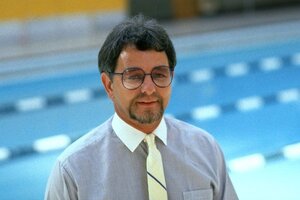
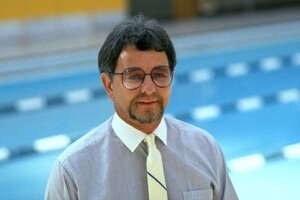
Former Irish swimming coach George Gibney; and journalist Irvin Muchnik

Readers may recall American journalist Irvin Muchnick’s efforts to obtain the US Department of Homeland Security’s immigration file on former Irish swimming coach George Gibney.

Gibney was charged with 27 counts of indecency against young swimmers and of carnal knowledge of girls under the age of 15 in April, 1993 – but sought and won a High Court judicial review in 1994 that quashed all the charges against him.

Mr Muchnick hopes the immigration file will shed light on how Gibney was able to get a visa, and then a green card, to live in the States, given the previous charges against him.

Readers will also recall how some partially redacted documents from the immigration file, previously released to Mr Muchnick, have already showed that Gardaí gave Gibney a certificate of character – issued on January 20, 1992 – to support his application for an American visa.

According to the Murphy Inquiry – which was set up to look at abuse in swimming in 1998 – a parent from a club other than Trojan Swimming Club, where Gibney coached, was told by an assistant coach of Trojan in November 1991 that the gardai and the ISPCC were informed of the allegations in relation to Gibney.

But, later, the ISPCC said it had no record of any such complaint in 1991 or in 1992. And, the Murphy Inquiry states the first record on the Garda file is dated December 15, 1992.

On Friday, Mr Muchnick argued for the release of the documents before Judge Charles Breyer, a Senior United States District Judge of the United States District Court for the Northern District of California.

The hearing followed a May hearing, during which Judge Breyer said he would review in camera (privately) disputed documents from George Gibney’s US Citizenship and Immigration Services file, and render a decision.

Further to this…

Mr Muchnick writes:

At the conclusion of a hearing lasting nearly an hour, United States District Court Senior Judge Charles Breyer said he would shortly issue a “tentative” order in which he will likely require the Department of Homeland Security to release publicly additional portions, at least, of the 20 documents from George Gibney’s immigration records that remain under dispute.

During a spirited discussion with my attorney Roy Gordet and the assistant U.S. attorney James Scharf, Judge Breyer made it clear, without tipping his conclusions, that he has serious reservations regarding some of the privacy exemptions that continue to be claimed in this Freedom of Information Act case.

The judge said he will forward to the government highlighted sections or entire documents that he believes should be disclosed, and will harden his tentative order into a fully enforceable one only if the two sides remain at an impasse over particular details. Counsel agreed that this will be a good penultimate step.

I hesitate to report on or characterize the court’s remarks throughout the hearing, for I do not want to compromise the order that is forthcoming and I do not want to substitute my interpretation of them for the simple and full-context publication of the transcript (which I hope to do shortly).

However, it was clear that Breyer understood the pertinent history and controversy over the sex crime allegations against Gibney. And it was especially clear that the circumstances and disposition of Gibney’s 2010 U.S. citizenship application could have considerable impact on the judge’s upcoming decision with respect to exactly what will be revealed.

Four law student observers — three from the University of California-Berkeley and one from Hastings College of Law in San Francisco — were in attendance.

Early in the hearing, Judge Breyer invited me up to sit at the counsel table with Gordet, and later thanked me for my role in bringing legitimate public curiosity over the Gibney matter to this head. I greatly appreciated both gestures as we await what the court now will order the government to produce.

Federal Judge to Issue ‘Tentative’ Order Signaling Partial Disclosure of George Gibney Immigration Files, As Both Sides Agree to Bring FOIA Case to Resolution (Irvin Muchnick, Concussionnet.inc)

Previously: George Gibney’s Green Card
gibney

irvin

screen-shot-2016-09-23-at-15-51-22

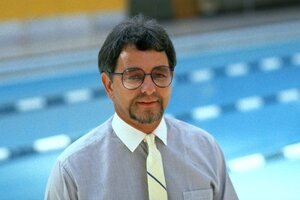
From top: George Gibney; irvin Muchnik and the opening of his memorandum of points and authorities in opposition to the US Department of Homeland Security’s “supplemental” motion for summary judgement, submitted to Senior U.S. District Court Judge Charles Breyer on September 15 by Mr Muchnick’s attorney Roy Gordet

Former Irish swimming coach George Gibney. was charged with 27 counts of indecency against young swimmers and of carnal knowledge of girls under the age of 15 in April, 1993 – but sought and won a High Court judicial review in 1994 that quashed all the charges against him.

The judicial review was secured after a landmark Supreme Court decision, during which Gibney’s senior counsel Patrick Gageby argued that the delay in initiating the prosecution against Gibney infringed his right to a fair trial. Mr Gageby’s sister Susan Denham was on the bench of the Supreme Court that day.

Gibney  subsequently left Ireland, first for Scotland and then America.

You may also recall the efforts by American journalist Irvin Muchnick who has been attempting to obtain the US Department of Homeland Security’s immigration file on Gibney – in an effort to understand how Gibney was able to get a visa, and then a green card, to live in the States, given the previous charges against him.

In July 2015, following his FOI request to the US authorities for the file, Mr Muchnick received just four pages of Gibney’s file.

On April 17, 2016, Justine McCarthy in the Sunday Times, reported that further documents released to Mr Muchnick showed Gardaí gave Gibney a certificate of character – issued on January 20, 1992 – to support his application for an American visa.

The certificate given to Mr Muchnick was reported to be partially redacted with the name of the issuing officer and its contents obscured.

According to the Murphy Inquiry – which was set up to look at abuse in swimming in 1998 – a parent from a club other than Trojan Swimming Club, where Gibney coached, was told by an assistant coach of Trojan in November 1991 that the gardai and the ISPCC were informed of the allegations in relation to Gibney.

However, later the ISPCC said it had no record of any such complaint in 1991 or in 1992. And, the Murphy Inquiry states the first record on the Garda file is dated December 15, 1992.

Mr Muchnick is still trying to obtain Gibney’s full immigration file and, in May, he appeared before Judge Charles Breyer, a Senior United States District Judge of the United States District Court for the Northern District of California, about the matter.

Mr Muchnik wants to know who assisted or sponsored Mr Gibney in successfully attaining a Green Card. More than 100 American swimming coaches have been jailed and/or banned for life from the sport in the past few years for offences against boys and girls.

At that May hearing, Judge Breyer said he would review in camera (privately) disputed documents from George Gibney’s US Citizenship and Immigration Services file, and render a decision.

On September 16, Mr Muchnick’s attorney Roy Gordet submitted a memorandum of points and authorities in opposition to the defendant’s “supplemental” motion for summary judgement to  Judge Breyer.

Essentially, Mr Muchnick is trying to get 20 documents, which amount to 43 pages, of Mr Gibney’s immigration file.

In his submission, Mr Muchnick’s attorney Roy Gordet argues…

“…the Court is justified, based on in camera review, to order release of the now only 20 withheld documents in dispute, or of appropriately segregable content therefrom. Such an outcome would meet the immense and justified public curiosity, on two continents, of the American government’s role in enabling the movements of former Irish Olympic swimming coach George Gibney, one of the most notorious and disgraced figures in all global sports. In no way would such disclosure abrogate legitimate privacy exemptions under the Freedom of Information Act.”

…at its core this FOIA [Freedom of Information Act] case presents the Court with the need to balance the classic countervailing policies concerning how much secrecy a government agency requires to perform its function properly and the privacy interests of an individual who is the subject of an agency inquiry, on the one hand, versus on the other hand a legitimate journalistic investigation into the operations of that agency…

…one of Plaintiff’s [Muchnick’s] various goals in obtaining the documents and information that is the subject of his FOIA request, as stated in his Complaint and in his earlier Memorandum at page 17, is to shed light on how the US Immigration Service permitted a person with a known criminal history to enter the United States.

Should it have been prevented, and could it have been prevented? So, on one side there is this significant inquiry concerning the public interest of an isolated case as well as the implications about who generally is allowed into our country today and in the future, and on the other side, we have the purported privacy rights of a non-citizen whose sordid history has already been exposed in international media so who clearly has diminished privacy rights in these documents and in this information.

…Document 37 is a “Police Certificate” related to Gibney. How could there be a need to protect the privacy of an Irish police person or bureaucrat that plausibly might have written about criminal files of an Irish national and sent the report based on a mere request from the subject individual?

Document 40 is an “Offer of Employment”. What privacy interest, and of whom, is being protected by this refusal to disclose the details of this employment offer? Moreover, the existence of an employment offer as part of an immigrant file or application is a strong clue that Gibney was admitted to this country under a special visa category, and examination of the USCIS standards in this connection fit precisely the definition of “pierc[ing] the veil of administrative secrecy” and “open[ing] agency action to the light of public scrutiny.”

Document 32 is an “administrative decision” related to a “third party” but inexplicably refuses to disclose which administrative agency and who is the mysterious “third party”? It is the government’s burden to “disclose as much information as possible without thwarting the purpose of the exemption claimed.”

…For Documents 24, 25 and 26 Defendant makes the ridiculous claim that they contain information that will enable others to circumvent the immigration laws. If the information is so general that it would have such widespread applicability to so many potential immigrants, it defies logic that the information is so private and confidential, as also claimed by Defendant.

Or that there is so much gold in those hills for potential malfeasors to use to their advantage from documents generated around the time that Gibney was granted entry into the United States, something on the order of twenty years ago. Clearly laws, practices and technologies have significantly changed since that time.

Indeed, this gets to the crux of Plaintiff’s inquiry: what practices and procedures were in place at that time that Gibney was able to gain entry?

Johnny Watterson, in The Irish Times, reports:

An oral hearing into the release of documents regarding how Irish swimming coach George Gibney was able to acquire a green card for the USA will be heard next month.

…Original material released indicated there was a letter appearing to offer Gibney a job in swimming in the US.

Although the name and organisation of the sender and almost all of the letter’s content is redacted, what remains is “Dear George,” followed below by “… would be very interested in your services as coach to there [sic] team”.

It is not known if the letter is from an American team or club, or from an Irish citizen who was trying to broker the deal.

Oral arguments are expected to be heard by Senior US District Court Judge Charles Breyer in San Francisco on October 22nd. Judge Breyer had originally rejected the government’s motion to withhold almost all of the Gibney file from public scrutiny.

US court to hear case on Olympic coach George Gibney (Irish Times)

Read Mr Muchnick’s submission in full here

Federal Court Hearing Set Next Month on Possible Release of Immigration Documents on Rapist Former Irish Olympic Swim Coach George Gibney (Irv Muchnick, Concussion Inc)

Previously: The Chief Justice, her Brother And How George Gibney Got Away


paul-kimmage-appimagegibneyjustine

From top: Paul Kimmage; Pat Hickey; and George Gibney and Justine McCarthy

You may have read an opinion piece in yesterday’s Sunday Independent by Paul Kimmage, headlined, ‘How did Pat Hickey become the most hated man in Irish sport?’

In it, Mr Kimmage recalled the case of a woman who was raped by swimming coach George Gibney while on a training camp in Florida in 1991 – a year before the Barcelona Olympics in 1992.

The woman attempted to sue Gibney, the then Irish Amateur Swimming Association, now Swim Ireland, and the Olympic Council of Ireland.

Her story was reported on extensively by journalist Justine McCarthy.

Yesterday, Mr Kimmage wrote:

In July 2009, the proceedings against the IASA and the OCI – dormant for more than a decade – were revived by a High Court order. A request was made to have the case struck out. The High Court acquiesced – the delay was “inexcusable and inordinate” – and the OCI and IASA were awarded costs.

In December 2011, the girl reached a settlement with Ryan’s insurers but was still being chased by the two sporting bodies for costs. They wanted €95,000.

Justine [McCarthy] was outraged and decided to email the OCI. She had a question for Pat Hickey: “How could he consider this pursuit to be morally justified?” He did not reply but set his solicitor loose.

Further to this…

Ms McCarthy, author of Deep Deception (O’Brien Press) about the various abuse scandals in Irish swimming, detailed the woman’s case in The Sunday Times on February 26, 2012:

I first met the girl nearly 15 years ago. She sat between her mother and her father in their living room. Her eyes were empty, her speech mechanical.

“She’s like the living dead,” her mother said.

The girl told me her story. When she was five, an elderly neighbour began sexually assaulting her. He was the grandfather of children who lived nearby.

When her mother was hospitalised for six months, the girl was looked after by the grandfather. He warned her that if she told anyone, her mother would die. She told nobody. The abuse stopped when she was 11, when the grandfather’s family left the neighbourhood.

She struggled in school and became withdrawn at home. Her parents brought her to a doctor who said she was reacting to her mother’s prolonged absence from home. Her parents hired a tutor to help her catch up at school.

After the abuse ended, a local swimming pool opened. When she swam, she felt happy. “I felt like I was flying,” she said.

She streaked through the water. Bystanders asked who she was. A swim coach advised her parents to take her to George Gibney, the national and Olympic coach.

Gibney took the girl under his wing. He told her he would make her a star. Soon she was breaking records. Gibney gave her gifts of togs and tracksuits and hugged her every time she climbed out of the pool to accept another medal.

He said she would swim in the 1992 Olympics in Barcelona.

“That was my dream,” she said. She woke at 4am each day to train. Her father slept outside in his car while, inside, she swam.

Unknown to them, Gibney’s secret criminal life was starting to crumble.

Chalkie White, another coach, alleged to Gary O’Toole, a world silver medallist, that Gibney had abused him from the age of 11.

As he listened, O’Toole recalled warding off an attempted assault by Gibney when he too was 11.

White and O’Toole eventually unmasked Gibney as a rampant child sex abuser, but not in time to save the girl.

In Holland for a competition, Gibney came to her hotel room, jumped on her and pushed her onto the bed. He left as abruptly.

Back in Dublin, he shunned her. The harder she trained, the more he ignored her.

At a training camp in Tampa, Florida in 1991, he drove her to a hotel and, she claims, raped her. He said if she told anyone, he would sue and impoverish her parents. She told nobody.

The girl made her first suicide attempt while Gibney was fighting 27 counts of sexually abusing seven other swimmers.

She was referred to Dr Moira O’Brien, the honorary medical adviser to the Irish Amateur Swimming Association (Iasa – now Swim Ireland) and Ireland’s doctor at the three preceding Olympic Games. The girl’s secrets erupted.

Gardai began to investigate the first man who abused her. Two other girls came forward. He was convicted on seven charges and jailed for five years.

Sentencing him, the judge commented it probably was no coincidence that one of the girls was subsequently abused by her swim coach.

Buoyed, the girl made a statement to gardai that Gibney raped her in Florida.

By then, Gibney had eluded the first charges when the High Court ruled the delay since the alleged incidents disadvantaged his defence. He fled to Florida.

In 1997, the girl instructed a solicitor, Timothy Ryan, then with Hughes, Murphy & Co in Dublin, to sue both her abusers, along with the Iasa and the Olympic Council of Ireland (OCI). She underwent counselling to prepare herself to testify at Gibney’s criminal trial.

In 2004, two gardai visited and informed her that the Director of Public Prosecutions had decided not to apply for Gibney’s extradition from America.

That night she hanged herself from a tree in the grounds of a priests’ order house. One of the priests found her in time.

By this time, the girl was anorexic and frequently self-harming. She could no longer hold down a job. She gradually became dependent on her ageing parents.

She has developed an addiction to cough medicine, drinking two bottles a day. She is often put on suicide watch in hospital.

With her permission, I used to phone her solicitor (who had by then moved to a different firm) to check how the civil case was progressing.

When he did not return calls I became suspicious and checked the Courts Service records. They showed that, though he had issued proceedings as instructed, he had never served them.

The case had been dormant for nearly a decade.

I told the girl’s mother. She feared the news could kill her daughter so we agreed not to tell her. The mother knew my husband was a solicitor.

She asked me to request him to take on the case.

I protested that it would be a conflict of interest for me, but she said that she did not know another solicitor. I asked my husband. He took on the case and issued proceedings against Ryan.

In January 2009, my husband retired and another solicitor took over the case.

That July, the 1997 proceedings against Iasa and the OCI were revived by a High Court order. Both bodies applied to have them struck out. In December 2010, the High Court acquiesced, saying the delay was “inexcusable and inordinate”.

IOC and Iasa were granted costs.

Last December, the girl reached an out-of-court settlement with Ryan’s insurers, having rejected an earlier offer of €100,000.

The two sports organisations have pursued her for €95,000 costs.

After I emailed the OCI asking Pat Hickey, its president, whether he considered this pursuit morally justified, I received a phone call from the organisation’s solicitor.

He asked if I thought it appropriate, in light of my husband’s involvement in the case, that I write about it.

He advised me to be very careful, “from your personal point of view”.

One day last November, the girl phoned me from a psychiatric hospital. She was harrowingly distressed. While she was on the phone, she left the hospital, bought a bottle of vodka and boarded a bus.

She said she could no longer bear being alive. She said goodbye. Hours later, a stranger found her in a shopping-centre toilet with her wrists slashed.

As I write, she is back in hospital.

Mr Gibney – who was charged with 27 counts of indecency against young swimmers and of carnal knowledge of girls under the age of 15 in April, 1993 – sought and won a High Court judicial review in 1994 that quashed all the charges against him.

The judicial review was secured after a landmark Supreme Court decision, during which Gibney’s senior counsel Patrick Gageby argued that the delay in initiating the prosecution against Gibney infringed his right to a fair trial. Mr Gageby’s sister Susan Denham was on the bench of the Supreme Court that day.

Readers may also recall how, earlier this year, it emerged that gardaí gave a certificate of character, date stamped January 20, 1991, to George Gibney to support his application for an American visa.

Paul Kimmage: How did Pat Hickey become the most hated man in Irish sport? (Sunday Independent)

Previously: Unreasonable Delay

The Chief Justice, Her Brother And How George Gibney Got Away

gibneyirvin

From top George Gibney, Irvin Muchnick

You may recall two previous posts about former Irish swimming coach George Gibney.

One post detailed how Gibney – who was charged with 27 counts of indecency against young swimmers and of carnal knowledge of girls under the age of 15 in April, 1993 – sought and won a High Court judicial review in 1994 that quashed all the charges against him.

The judicial review was secured after a landmark Supreme Court decision, during which Gibney’s senior counsel Patrick Gageby argued that the delay in initiating the prosecution against Gibney infringed his right to a fair trial.

Mr Gageby’s sister Susan Denham was on the bench of the Supreme Court that day.

The second post was a timeline of events concerning Gibney, the allegations made against him and how he eventually went to live in America after the charges against him were dropped.

The timeline explained how American journalist Irvin Muchnick has been attempting to obtain the US Department of Homeland Security’s immigration file on Gibney – in an effort to understand how Gibney was able to get a visa and then a green card to live in the States, given the previous charges against him.

In July 2015, following his FOI request to the US authorities for the file, Mr Muchnick received just four pages of Gibney’s file.

On April 17, 2016, the Sunday Times, reported that further documents released to Mr Muchnick show that Gardaí gave Gibney a certificate of character – issued on January 20, 1992 – to support his application for an American visa.

The certificate given to Mr Muchnick was reported to be partially redacted with the name of the issuing officer and its contents obscured.

According to the Murphy Inquiry – which was set up to look at abuse in swimming in 1998 –  a parent from a club other than Trojan Swimming Club, where Gibney coached,  was told by an assistant coach of Trojan in November 1991 that the gardai and the ISPCC were informed of the allegations in relation to Gibney.

However, later the ISPCC said it had no record of any such complaint in 1991 or in 1992. And, the Murphy Inquiry states the first record on the Garda file is dated December 15, 1992.

Mr Muchnick is still trying to obtain Gibney’s full immigration file and, last Friday, he appeared before Judge Charles Breyer, a Senior United States District Judge of the United States District Court for the Northern District of California, about the matter.

Mr Muchnik wants to know who assisted or sponsored Mr Gibney in successfully attaining a Green Card. More than 100 American swimming coaches have been jailed and/or banned for life from the sport in the past few years for offences against boys and girls.

Mr Muchnick reports:

At last Friday’s case management conference for Muchnick v. Department of Homeland Security, in his San Francisco federal courtroom, Judge Charles Breyer stated that he would review in camera 19 disputed documents from George Gibney’s U.S. Citizenship and Immigration Services file, and render a decision. (In camera review, which our side had requested, means the judge will inspect the records privately in his chambers. The assistant U.S. attorney handed over to the court unredacted copies of the documents.) Judge Breyer did not say when he would rule.

 More as we get it.

Judge Breyer Brings George Gibney FOIA Dispute Close to Resolution (Irvin Muchnick, Concussion Inc)

Previously: Unreasonable Delay

The Chief Justice, Her Brother And How George Gibney Got Away

9041156290337650gibneylawreport

From top: Susan Denham, Patrick Gageby and George Gibney; Law report on the Supreme Court hearing

The High Court judicial review in 1994 that quashed all sex abuse charges against swim coach George Gibney did not just set free a suspected paedophile.

It was a landmark decision which paved the way for similar successful actions over the next 20 years.

But it was only made possible by a judgment reached in the Supreme Court just before Christmas, 1993.

Six months earlier, Mr Gibney had been charged with 27 counts of indecency against young swimmers and of carnal knowledge of girls under the age of 15.

Seven swimmers had come forward and sworn statements to the Gardaí that Mr Gibney had assaulted them at various times between 1967 and 1981.

On July 12, 1993 Mr Gibney’s legal team, including barrister Patrick Gageby, applied in the High Court for a judicial review restraining the Director of Public Prosecutions (DPP) from proceeding with the prosecution.

A judicial review allows orders to be made against State decision-makers (including the DPP) if there is a a breach of fair procedures in the decision making process.

Mr Gibney’s legal team argued that the delay in initiating the prosecution infringed their client’s right to a fair trial.

On July 19, Justice Vivian Lavan in the High Court refused to stop the DPP from proceeding with the charges. He said that the delay did not infringe Mr Gibney’s right to a fair trial.

Mr Gibney appealed this decision to the Supreme Court.

On December 14, 1993, the Supreme Court granted Mr Gibney leave to apply for judicial review on the basis that his right to a fair trial might possibly have been infringed.

This was the first case in Ireland to recognise that delay in making a complaint of sexual abuse could preclude a subsequent prosecution.

Justice Declan Costello conducted the judicial review and held that Mr Gibney’s right to a fair trial would be infringed if the prosecution were to be proceeded with.

He granted an order precluding the DPP from proceeding with the charges.

An opportunity to appeal the decision was declined by Eamonn Barnes, then Director of Public Prosecutions.

George Gibney left Ireland – travelling first to Scotland, where he coached young swimmers, and then to America.

What went unreported at the time of the Supreme Court decision and what few outside the legal fraternity knew, least of all Mr Gibney’s alleged victims, was that Susan Denham, sister of Patrick Gageby, was on the bench that day.

Ms Denham was in ‘complete agreement’ with the majority judgement and placed her feelings on the record.

She said,

‘all persons charged or convicted of an offence are entitled to the rule of law and have constitutional rights. Such persons are also entitled to due process of law. A trial, in a court of law is not an exercise in vengeance but is a trial in due course of law in the pursuit of justice on behalf of the community.

The rule of law was the essence of a civilised society. In so far as there were, developments and knowledge in society a about issues relating to this case, these must be dealt with in a fair and just way by the courts.’

Ms Denham added that on ‘the affidavit and statement filed [in this case] it was clear that such a case had been established to meet this initial burden of proof.’

There was no objection to Ms Denham hearing her brother’s case from the Director of Public Prosecutions, represented in court by the late Eamon Leahy.

The Code of Conduct of the Irish Bar provides that:

“Barristers shall not habitually practice in a court in which their parent, spouse or near blood relative is a presiding judge.”

In O’Reilly v Cassidy, a decision of a Circuit Court judge in favour of a client represented by his daughter was set aside by a superior court.

In the United States, Australia and the United Kingdom, rules specifically provide that a judge shall not hear a case in which a family member appears for a party – a principle which is also contained in the Code of Judicial Conduct laid down by the United Nations.

Irish law is also subject to general rules of fair procedure, including the principle ‘nemo iudex in causa sua‘ (no man shall be a judge in his own cause), which provides for the quashing of judicial decisions made in ‘circumstances which would lead a fair-minded and informed observer to conclude that there was a real possibility … that the tribunal was biased’.

Last year, the Supreme Court quashed a decision of a High Court judge who had held shares in one of the companies party to the litigation in circumstances where he had mistakenly failed to disclose the full extent of that shareholding.

In this instance Susan Denham, now Chief Justice, gave the majority verdict.

She said objective bias was a matter not just for the parties, or the trial judge, but brought in issues regarding

“the fundamental concern for the manifest impartial administration of justice and the confidence which the people rest in the judiciary.”

Following the Gibney judgment, a significant number of applications to stop prosecutions for sexual offences on the basis of delayed complaint were made through the courts.

Patrick Gageby made 16 of these applications, most of which were heard in the period 2004-2007.

Seven of his applicants were successful including a psychiatric nurse facing 32 counts of indecent assault against a patient between 1975 and 1979, a man charged with 63 sexual offences against his sister from the 1960s and 1970s, and two priests accused of sexual offences in the late 1980s.

One unsuccessful applicant was Dublin swimming coach Derry O’Rourke who was convicted in 1998 for 12 years on 59 sample charges of assaulting and raping 12 girls. In 2001, he was convicted of child rape and sentenced to seven years and, in 2005, he received another 10 years for a third set of convictions.

In 2003, the Irish Times reported Mr Gageby telling a conference that there was a ‘subversion of the presumption of innocence’ with historic sexual abuse cases.

“People asked why a person would “say such a thing” if the offence had not happened,” he is reported as saying.

The paper reported:

‘[Mr Gageby] warned that cases up to 40 or 50 years old might be given a credence they did not deserve. Judges should give carefully worded warnings to juries when they were summing up old cases. Proper and full disclosure was vital, he said. The gardai were not there primarily to help the victim, but to assist in the administration of justice.’

In 2005, Mr Gageby told a prosecutors’ conference that there should be a limit on the time allowed to elapse between an alleged sex crime and the prosecution of a suspect.

in 2007, Mr Gageby was appointed by the then Justice Minister Michael McDowell to review the Garda investigation of the 1973 death of then 11-year-old abuse victim Cynthia Owen‘s daughter Noleen Murphy and concluded no public inquiry should be carried out into the death.

A year after the sex abuse charges against George Gibney were dropped, police in Colorado investigated a complaint of sexual assault made by a young swimmer against Mr Gibney, who had been working as a coach in the North Jeffco Parks and Recreation District.

Pics: Rollingnews

Earlier: Unreasonable Delay