Tag Archives: Irvin Muchnick

Former Irish swimming coach George Gibney; journalist Irvin Muchnick 

In July.

American sportswriter and journalist Irvin Muchnick gave an interview to Seán O’Rourke on RTÉ Radio One, following the publication of the second eBook edition of his book about former Irish swimming coach George Gibney.

Gibney was charged with 27 counts of indecency against young swimmers and of carnal knowledge of girls under the age of 15 in Ireland in April, 1993.

However, he moved to the United States in 1995, the year after an unusual and controversial decision by the Supreme Court led to the quashing of these charges.

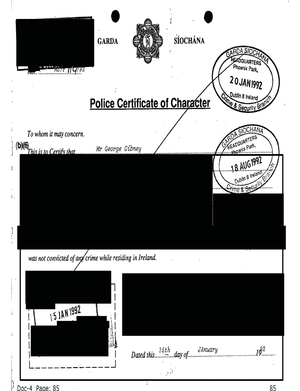
He was also granted a visa during a visit to the United States in 1992 – seemingly aided by a Garda character reference – a year after people who had been abused by him started to speak up and organise themselves.

During his radio interview, Mr Muchnick told Mr O’Rourke that there were federal investigations of racketeering and insurance fraud involving USA Swimming taking place.

Asked how such investigations may “turn up the heat” on Gibney, Mr Muchnick said:

“I know that there are federal agents who are involved in these swimming investigations who are taking a specific look at George Gibney right now.”

Further to this…

Last week.

Journalist Rebecca Davis-O’Brien, in The Wall Street Journal, reported:

“Federal prosecutors in New York are investigating USA Swimming, including allegations that the organization stifled athlete sexual-abuse claims, concealed its assets and improperly reaped hundreds of thousands of dollars in rebates from its in-house insurance company, people familiar with the matter said.

“Over the past year, a federal grand jury in Manhattan has heard evidence in the investigation, which is being led by the Manhattan US Attorney’s office and the Federal Bureau of Investigation.”

It followed an article last month concerning the same investigation by Scott Reid in the Orange County Register.

Federal grand juries are used in some US states to decide whether probable cause exists to support criminal charges against a suspect.

Grand jury deliberations are carried out in secret.

USA Swimming Faces Probe Into Sex-Abuse Claims, Business Practices (The Wall Street Journal, October 2, 2019)

Related: Gymnastics Federation’s Payments to a Linked Foundation Is Under Scrutiny (The Wall Street Journal, October 7, 2019) 

Wall Street Journal Bombshell: Federal Grand Jury and FBI Are Investigating USA Swimming Sexual Abuse — Including Concealed Assets and Irregularities With In-House Insurance Company (Irvin Muchnick, Concussion.net)

Previously: On Gibney’s Trail

From top: Irvin Muchnik with Independent TD Maureen O’uullivan; Croke Park; Spice Bag. All pics: Irvin Muchnick

On the trail of George Gibney, American sportswriter and investigative journalist Irvin Muchnick visited Dublin recently.

Irvin writes:

The ostensible purpose of my visit to Dublin was promotion of the second edition of my ebook The George Gibney Chronicles: What the Hunt For the Most Notorious At-Large Sex Criminal in the History of Global Sports Has Told Us About the Sports Establishments and Governments on Two Continents.

Two Broadsheet worthies share my belief that this is a story worth continuing to tell, more and better: Olga Cronin (who has been vetting new Gibney factoids for a number of years) and John Ryan (this quirky website’s somewhat Oz-like majordomo but in a good way!).

This is an account of how things turned out for me in Ireland on the extradition campaign front — and several others. Obviously, I didn’t accomplish the immediate transport of Gibney in handcuffs.

But I was able to experience one of the world’s great cities and meet the coolest people.

For those of you just tuning in, Gibney is merely the former two-time Irish Olympic swimming head coach who fled here in the mid-1990s after a dodgy technical Supreme Court decision quashed what were then the 27 most rigorous charges assembled against him, out of a body of more instances of child molestation and rape than we’ll ever know.

Agreeing in 2016, in my Freedom of Information Act case against the Department of Homeland Security, to open up at least some of the Gibney immigration files I was seeking to daylight, a distinguished senior federal judge, Charles R. Breyer, reviewed the dual paradoxical upshot of Gibney’s 2010 application for naturalized citizenship.

Number one, that application failed because he lied on it in response to the material question of whether he had ever been criminally indicted in his native country.

Number two, the federal immigration bureaucracy decided, nonetheless, that he was not a candidate for removal from the country.

In his published opinion, which remains in the law books in the wake of my 2017 settlement at the Ninth Circuit Court of Appeals, Judge Breyer asked why? “We’re not a haven for pedophiles,” he observed.

Maureen O’Sullivan, the Dublin Central district’s independent representative in the Dáil, promptly pressed Simon Coveney, tánaiste and foreign minister.

The government “will act” on the new Gibney information “if we can,” Coveney said on the floor of the Dáil.

More than a year and a half later, these Socratic maieutics remain aspirational during the pendency of what I am reliably told is yet another run at examining Gibney’s p’s and q’s — an exercise that also resumes the on-again, off-again exploration of whether Ireland’s director of public prosecutions has any game left.

Some of us insist that where there’s a way, there should be a will. The scholarship of the 1994 Irish Supreme Court statute of limitations ruling in the Gibney matter — partially determined, with classic cronyism, by a justice whose brother argued the case before the judicial panel — has frayed.

And new information has emerged on the old cases. And new cases have emerged.

And lest we forget, one of the most heinous allegations against Gibney, his rape and impregnation of one of his teen swimmers, occurred in 1991 in Tampa, pointing to the direct jurisdictional interest of not only the U.S. Department of Justice, but the state attorney of Hillsborough County, Florida, as well.

(Citing the Irish government’s too-little-too-late 1998 Murphy Commission report, which passively voiced the finding that Gibney’s accusers “were vindicated” by the evidence accumulated against Gibney by An Garda Síochána, the national police, I decline the conventional and cant adverb “allegedly.”)

Continue reading →


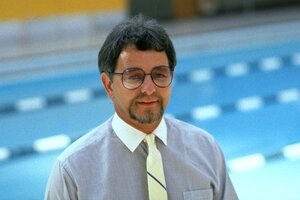
From top: a certificate of character signed by An Garda Síochána for George Gibney’s US visa application in 1992; former Irish swimming coach George Gibney; journalist Irvin Muchnick (right)

This morning.

American sportswriter and journalist Irvin Muchnick spoke to Seán O’Rourke on RTÉ Radio One about former Irish swimming coach George Gibney.

Mr Muchnik is visiting Ireland this week as he launches the second eBook edition of his book about Gibney.

Gibney was charged with 27 counts of indecency against young swimmers and of carnal knowledge of girls under the age of 15 in Ireland in April, 1993.

However, he moved to the United States in 1995, the year after an unusual and controversial decision by the Supreme Court led to the quashing of these charges.

He was also granted a visa during a visit to the United States in 1992 – seemingly aided by a Garda character reference – a year after people who had been abused by him started to speak up and organise themselves.

Justice Roderick Murphy’s later Government-commissioned report into sex abuse and Irish swimming in 1998 concluded that Gibney’s accusers “were vindicated” by the accumulation of Garda evidence.

These accusers included a woman who alleged she was indecently assaulted by Gibney on a swimming trip to Holland in 1990 and, the following year, raped by him in Florida in June 1991.

From this morning’s interview…

Sean O’Rourke: “I gather that you believe that this year, 2019, might signal some changes in this case. Tell me why.”

Irvin Muchnick: “Well, the reason is that widespread scandals in the Olympic sport programmes in the United States have come to light through the USA Gymnastics scandal and there are federal investigations of racketeering and insurance fraud involving USA Swimming , USA Taekwando and other groups and those are the real reasons why 2019 I think is going to be the year of reckoning for George Gibney.”

“We’ve learned from a Freedom of Information Act case that Gibney unsuccessfully applied for American citizenship in 2010, I believe, hoping to inoculate himself from these ongoing serial efforts to get him extradited and brought back for justice in Ireland.

“And in a quirk, he was denied citizenship because he lied on his application about his Irish past but, strangely, nothing happened in terms of his Green Card and his permanent resident/alien status in the United States.

“So, what my new reporting has uncovered is that there’s not just paperwork issues with George Gibney but perhaps other acts he committed while he was in America.

“He was the leader of a church group, medical mission, to Peru that involved a strange Catholic sect called the Sodalitium Christianae Vitae and those are some of the things that are coming to the fore for federal investigators right now.”

O’Rourke: “Coming back, you say he tried in 2010 to get American citizenship but he was declined it or denied it on the basis that he had filed false information?”

Muchnick: “Right. What the Freedom of Information case documents revealed is that US Citizenship and Immigration Services kicked his application back to him and said ‘you want to give this another go?’ because you have to disclose not just whether you have ever been convicted of a crime but whether you’ve ever been arrested, charged, indicted.

“And evidently he didn’t comply because his citizenship application was denied.

“But the weird Catch-22 is that, at the same time, another federal agency in the Department of Homeland Security, Immigration and Customs Enforcement put out a letter that said he could not be removed from the country because he had never been convicted.

“So this is the conundrum that we face this year.”

O’Rourke: “And how is he getting on, living in the United States? I mean you and other people have shone a lot of light on his background here in Ireland and on the questions that have been asked. So how has he been doing? He’s there now over quarter of a century?”

Muchnick: “Right it’s a front-page story in Ireland, it’s kind of crickets in major media. I have a small outlet trying to shine light on this and he’s basically hiding in plain sight. He coached briefly, we think, because of a recommendation from the American Swimming Coaches Association – which should be accountable, as should be USA Swimming.

“But after his Irish past was exposed locally, in Colorado, in 1995, he backed away from his swimming career but he’s had various jobs. He’s now living in Altamonte Springs, Florida, we believe, just north of Orlando.

“And I call it hiding in plain sight.”

O’Rourke: “But is there any reason to believe, I mean, you say, you talk about this background of scandals in gymnastics and taekwondo and US Olympic circles, but why should that, or how might that be brought to bear and turn up the heat on George Gibney?”

Muchnick: “Well the reason is that there are federal investigations looking into all these things. I think the FBI and other federal agencies are a little bit embarrassed that they were asleep at the switch on the gymnastics scandal. So they’re looking to, to make good on that, and clean up the Olympic programmes in some way.

“So I think, paradoxically, by not having this intense focus just on Gibney, he’s marginally out there and I do know that investigators have been reading my reporting and have determined to act on it.”

O’Rourke: “And is there a sense that what he might face would be deportation or would it be extradition?”

Muchnick: “Well it would be extradition. It’s kind of thing where the Americans are saying ‘after you, first’. And the Irish are saying ‘we want you to do something’. The Garda and American law enforcement have to start talking to each other under EU protocols and share information.

“We know that Gibney had one known crime on American soil in 1991 in Tampa, Florida, and so that could be a basis for…”

O’Rourke: “Is that a conviction now?”

Muchnick: “No, it’s not.”

O’Rourke: “Strictly speaking, you cannot say someone has a known crime unless they’re convicted of it.”

Muchnick: “That’s correct and that’s always been the difficulty at getting at this. But my understanding is that in Ireland there’s been a revisiting of that controversial 1994 Supreme Court ruling that effectively quashed his indictment and that could be looked at again. There could be new victims…”

O’Rourke: “There could be new victims coming forward or new claims that will have to be investigated.

“Do you know, as of now, whether there is a request for George Gibney, submitted to the US authorities by the gardai here or by the Director of Public Prosecutions, for his extradition to this country?”

Muchnick: “I think we know pretty clearly there is not one as yet. However, in 2015, TD Maureen O’Sullivan did ask the Director of Public Prosecutions to look at this again. And I understand that that matter is ongoing.”

O’Rourke: “I know that every time this case is discussed, it causes distress to the victims. They must feel disheartened that it drags on. I think some of them have found a way of just putting it behind them in so far as is possible. And accepting that they’re not going to see justice. But, you know, with no apparent resolution, I’m wondering why you continue to pursue it, Irv. Do you actually think you’re getting somewhere?”

Muchnick: “I do and I’ll tell you why in a moment. But I am looking forward to meeting a victim while I’m on my Dublin visit tomorrow. I do understand the pain that they’ve endured for many years and I do understand that many of them are ambivalent at this point, having had their hopes dashed so many times in the past, as to whether this is even good for them to do this.

“But my message to the Irish is that this is not just about the victims, this is about a system of institutions in global sport that enable bad actors, like George Gibney, to do what they do. And so it’s so important to hold accountable Swim Ireland, USA Swimming, most especially the American Swimming Coaches Association and so I hope that we can work together on that, moving forward to clean up sports.”

O’Rourke: “And what about the current climate in which, for instance, you have President Trump speaking out strongly against, I suppose what he would describe, generally, as undesirables. I mean might that somehow contribute to increasing the pressure on George Gibney?”

Muchnick: “That’s a great point and a great question and I think that it’s the real reason there’s hope right now. That even though Donald Trump has weaponised the immigration question and he’s demonised Central Americans and Muslims, not so much white Europeans, there’s still a movement there is some indication that bad guys from Ireland have been sent back, other than George Gibney.”

O’Rourke: “But do you know, or do you know of particular individuals in the United States’ system of immigration and law enforcement, whatever you want to call it, who are on this case?”

Muchnick: “Yes. I know that there are federal agents who are involved in these swimming investigations who are taking a specific look at George Gibney right now.”

O’Rourke: “OK, well no doubt you and we will continue to keep an eye on this situation and bring any developments to our audience. Journalist, investigative journalist, Irvin Muchnick, thank you very much for coming in.”

Muchnick: “Thank you for having me.”

Listen back in full here.

Previously: ‘There Is No Excuse’

Unreasonable Delay

Second edition of US journalist Irvin Muchnick’s book about George Gibney; Mr Muchnick

American sportswriter and investigative journalist Irvin Muchnik is visiting Ireland this week to launch the second eBook edition of his book about Ireland’s former Olympic swimming coach George Gibney

The book is available here while a print-on-demand paperback edition is also planned.

Gibney was charged with 27 counts of indecency against young swimmers and of carnal knowledge of girls under the age of 15 in Ireland in April, 1993.

However, he moved to the United States in 1995, the year after an unusual and controversial decision by the Supreme Court led to the quashing of these charges.

He was also granted a visa during a visit to the United States in 1992 – seemingly aided by a Garda character reference – a year after people who had been abused by him started to speak up and organise themselves.

Justice Roderick Murphy’s later Government-commissioned report into sex abuse and Irish swimming in 1998 concluded that Gibney’s accusers “were vindicated” by the accumulation of Garda evidence.

Mr Muchnick’supdated book includes a chapter on Gibney’s role as chairman of the Catholic church   mission called the International Peru Eye Clinic Foundation while he was living in Colorado in the late 1990s.

Mr Muchnick writes:

“The ebook explains how this project coincided with the establishment of a new presence in the United States, starting in Colorado, of a Catholic sect based in Peru, Sodalitium Christianae Vitae.

In recent years this group has been exposed for rampant violence and sexual abuse under its Peruvian founder, Luis Fernando Figari, who today lives in seclusion in Rome.”

Ahead of his visit, Mr Muchnick adds:

My message to Irish friends and American friends alike is: If the goal is to nail George Gibney at last and put an end to his lucky three-decade run of evading justice, then all the tools are now out there.

Previously we’ve noted that politicians on both sides of the Atlantic must push for direct and formal information-sharing between the Garda and US law enforcement — both the federal Justice Department and the office of the state attorney of Hillsborough County, Florida.

(Tampa, Florida, is where Gibney’s known sex crime on American soil occurred, during an Irish swim team training trip in 1991.)

TD Maureen O’Sullivan has already met with Congresswoman Jackie Speier to discuss this. In these evidently culminating circumstances of a wider investigation of abuses throughout Olympic sports programmes, there needs to be a renewed push, and Speier and other sympathetic legislators need to hear it and act on it.

Though not directly related, some wind behind the sails of the Gibney extradition campaign has emerged in the form of breaking news of the arrest of another accused serial sex abuser, Jeffrey Epstein.

The fresh reporting in my new edition of the George Gibney Chronicles ebook adds a road map for federal investigators of the last furlong of the marathon that is the Gibney hunt: important questions surrounding his role in a Colorado church group’s children’s eye clinic mission in Peru around 20 years ago.

The timeline, the participants, and the nature of these activities stand a good chance of getting pinned down via (a) Gibney’s movements as revealed by his Irish passport; (b) rosters of volunteers and other archival material likely in the hands of hitherto withholding local and regional Catholic Church officials; and (c) reaching out to Peru’s Ministry of Women and Vulnerable Populations.

The last chapter of the George Gibney story is at hand; it is not too late to summon the persistence and will to make it happen.

Meanwhile…

Mr Muchnick spoke to Danny Murray and Graham Merrigan of the podcast What’s The Story? this week about why he believes this year might be the year of reckoning for Gibney.

Concussion.Inc

From top: Former Irish swimming coach George Gibney; US journalist Irvin Muchnick

Former Irish swimming coach George Gibney was charged with 27 counts of indecency against young swimmers and of carnal knowledge of girls under the age of 15 in April, 1993.

He sought and won a controversial High Court judicial review in 1994 which quashed all the charges against him.

After this, he left Ireland for Edinburgh, Scotland and then the US.

Gibney was granted a visa during a visit to the United States in 1992 – seemingly aided by a Garda character reference – a year after people who had been abused by him started to speak up and organise themselves.

A 2010 application by Gibney to obtain US citizenship – some months after Evin Daly, of the Florida-based advocacy group One Child International alerted the US government of Gibney’s past in Ireland – was rejected.

It’s understood Gibney may have lied in this application – as was revealed by the exhaustive efforts to obtain information on his visa application by US journalist and author of The George Gibney Chronicles Irvin Muchnick.

Readers may also recall how, in March 2015, it emerged that police in Colorado, America, investigated a complaint of sexual assault made by a young swimmer against Gibney in October 1995 – a year after the sexual abuse and rape charges against him were dropped in Ireland.

At the time of the complaint, Gibney was working as a coach in the North Jeffco Parks & Recreation District.

The Arvada Police Department in Colorado couldn’t establish if any crime had been committed.

Last year, US journalist Ivin Muchnick, on his website Concussion Inc, reported that the police officer who investigated the complaint made in North Jeffco was the mother of a swimmer at North Jeffco.

Further to this…

In 2000, a separate investigation into Gibney was carried out by then Detective Lila Cohen, of Wheat Ridge police, also in Colorado.

[Ms Cohen is now a therapist in Denver, Colorado, by the name of Lila Adams].

Ms Adams’ police report was obtained by Mr Muchnick and is available to read in full here.

In it, she describes taking a call from a woman on September 20, 2000, who had just fired Gibney the day previous after coming across “concerning” information about him on the internet.

She said she fired him because he had “lied” to her.

The woman, who used to be a swim coach, told the then detective that Gibney was an Olympic swim coach in Ireland, had been arrested and charged with sexually assaulting children and then moved to the US.

From the then Detective Cohen’s police report:

“[Redacted] advised that she knew that Gibney went to Peru on behalf of an eye clinic for children. She said Gibney works with children in his parish and is a volunteer in Golden at a Youth Detention Center.

“[Redacted] further advised that the internet articles she read said he also coached the North Jeffco Swim Club in Colorado.

“[Redacted] said the articles she found on the internet were on Google under Gibney. She said she found further information in Irish Times.com and Ireland.com. She said she thought Gibney was the director of an Advisory Board for the Youth Department of Corrections. She said he is also the Chairman of the International Peru Eye Clinic Foundation.”

“I told [redacted] that I had been sent articles last year concerning Gibney and concerns that he lived in our city at that time.

“I told her that he did not have to register as a sex offender and that he had not committed any crimes here that I knew of.

“I did tell her that I was very concerned that Gibney was working with children, especially children with issues such as being in detention or having eye problems. I further advised her that I was concerned that Gibney may travel with children in his parish to Peru.

“[Redacted] did not know the church Gibney belonged to. She agreed to send me the information she located on the internet.

“I attempted to find an advisory board through the Youth Department of Corrections but it is a State-run agency and therefore does not have one. I called Lookout Mountain and was told the same. I know the members on the board for the Jefferson County Juvenile Assessment Center and Gibney is not on that.

“I called Arvada Police Department concerning the North Jeffco Swim Club and received a call back from Sergeant Jo Ann Rzeppa advising that she had investigated those allegations in 1995 and did not learn of any victims.

“[Redacted] advised that Gibney had access to a computer at work and when he was fired he was escorted to the door and did not have access to the computer. She asked if I wanted to come out and have someone look at it. I told her that I would have to send it to CBI [Colorado Bureau of Investigation] and she would be without it for several months as it would take low priority because a crime did not exist at this time.

“[Redacted] said she could be cooperative but she could not be without a computer for that long. She said she would have her computer expert check it and get back to me.

“[Redacted] told me that the place Gibney volunteers with young people is at the Lab School at Lookout Mountain. She said Bill Weiner is in charge of that and gave me his phone number, [….] She said Gibney is on the board for the Metropolitan State College Lab School at Lookout Mountain. On October 5, 2000, I called and spoke with Bill Weiner who advised that George Gibney is in fact on that board.

“I told him that Gibney had not committed a crime here that I knew of but had some information he should be aware of if Gibney was having contact with kids. He provided me his address and I mailed him a copy of the information given to me by [redacted].

“Nothing further to report at this time.”

Mr Muchnick has made several unsuccessful attempts to interview Ms Adams about her investigation into Gibney – and has been told by the Wheat Ridge police chief that the police department had “no intention or authority” to block such an interview – but it hasn’t come to fruition.

This is despite Mr Muchnick learning last month that she was about to be interviewed by an “Irish-Anglo broadcast team”.

In his own words, Mr Muchnick has said:

“What’s in the foreground is an understanding of what unfolded in Arvada and Wheat Ridge, the first stops of Gibney’s American odyssey: why he roamed free in Greater Denver while law enforcement there knew full well that he was a creep and a half, and worse, had gotten into the U.S. on false pretenses; and why the cops have provided no evidence that they utilized any creative tools while simply waiting for him to become the problem of his next community and his next state.”

He has also said:

“For the two suburban Denver police agencies, the key open questions are clearly, first, did they even communicate about Gibney with their own regional FBI field offices or other federal authorities?; and second, what was the nature of those communications and what was their upshot?

“Did they do anything to try to get Gibney sent back to Ireland? Or did they just “keep an eye on” him? If they indeed tried to make a case for deportation but failed, who in the bureaucratic chain blocked such a basic initiative of public safety and immigration rules enforcement?

“What happened?”

Former Colorado Cop Who Investigated George Gibney in 2000 Surfaces … Promises Interview … Ducks Out. Why Was Nothing Done About Gibney’s Green Card? (Irvin Muchnick, Concussion.Inc)

Wheat Ridge (Colorado) Police Refuse to Say If They Did Anything With the Information They Got in 2000 on George Gibney (Irvin Muchnick, Concussion.Inc)

Previously: George Gibney on Broadsheet

Former Irish swimming coach George Gibney; and US journalist Irvin Muchnik

Over the Christmas break, American journalist Irvin Muchnick published a series of articles in which he reviewed his coverage of former Irish swimming coach George Gibney.

Gibney was charged with 27 counts of indecency against young swimmers and of carnal knowledge of girls under the age of 15 in April, 1993 – but sought and won a High Court judicial review in 1994 which quashed all the charges against him.

Gibney subsequently left Ireland, first for Scotland, and then America where he remains today.

During the Christmas break, Mr Muchnick posted four articles on December 27, December 29, December 30 and December 31.

At the outset of this series, Mr Muchnick explained the timing of the articles, saying:

Well-placed sources on both sides of the Atlantic are telling me that there is, at long last, real behind-the-scenes movement.

Whatever might be happening in Ireland is important enough; I’m told I’ll have reportable details soon. But what would be the real game-changer is happening in the US, where there is a quiet and overdue revisit of Gibney’s permanent alien residency privileges.

Mysteriously, the smooth sailing of Gibney’s green card has persisted since the mid-1990s. Most perversely, his status has remained undisturbed even since 2010, the year his application for naturalized citizenship got rejected on the grounds of his concealment of his 1993 indictment in Ireland on 27 counts of indecent carnal knowledge of minors.”

Further to this…

Last night, Mr Muchnick reported:

“I have learned that the Department of Homeland Security under President Donald Trump is poised make some kind of move that the US authorities have ducked for decades.”

Mr Muchnick has not specifically reported what this “move” may be.

But he has recalled a number of matters which may be considered, namely:

Gibney lying in his 2010 US citizen application by not disclosing he had been previously charged in Ireland but this having no evident consequences for his green card residence status.

Gibney’s alleged rape and, as a consequence, impregnation of a then 17-year-old Irish girl in Tampa, Florida, during a training trip, and how the office of the state attorney of Hillsborough County, Florida Andrew H Warren told Mr Muchnick a prosecution of a rape committed in 1991 would not necessarily be barred by the statute of limitations.

Independent TD Maureen O’Sullivan’s work with US Congresswoman Jackie Speier and Ms Speier telling Ms O’Sullivan that she would raise the citizen application issue with the House Judiciary Committee.

And the US Center for SafeSport’s investigation of Gibney – after a complaint was made to the entity by Ms O’Sullivan in relation to the Tampa rape allegation and Gibney’s time as a coach at USA Swimming-sanctioned North Jeffco swim club in the Denver suburb of Arvada, Colorado, after he arrived in the US.

Read in full here: George Gibney 2019: Identifying Where Irish and Americans — Law Enforcement Agencies, Government and Other Officials — Need to Interact (ConcussionInc.net)

Previously: George Gibney on Broadsheet

Independent TD Maureen O’Sullivan; George Gibney; and journalist Irvin Muchnick

This week.

Further to Independent TD Maureen O’Sullivan writing to Shellie Pfohl – head of the new US Center for SafeSport – to formally request an investigation into former Irish swimming coach George Gibney….

US journalist Irvin Muchnick, of Concussion Inc., reports that the US Center for SafeSport has opened an investigation into Gibney.

Mr Muchnick writes:

The SafeSport Center’s investigation begins as O’Sullivan engages with American politicians closely identified with the youth sports coach abuse issue in this country — principally Congresswoman Jackie Speier of California.

This development also coincides with Congressional hearings this week in which Tim Hinchey, CEO of USA Swimming, and other national sport governing body heads and Olympic officials are being called on the carpet after the scandal of Larry Nassar, the prolific molester doctor of USA Gymnastics, raised the problem to its highest profile yet.

In a May 7 letter to O’Sullivan, the SafeSport Center’s Jocelyn Shafer confirmed that it was undertaking the investigation that had been requested …Shafer said the investigation was being overseen Malia Arrington, the center’s chief operating officer under CEO Shellie Pfohl.

Former Irish swimming coach George Gibney was charged with 27 counts of indecency against young swimmers and of carnal knowledge of girls under the age of 15 in April, 1993.

He sought and won a controversial High Court judicial review in 1994 which quashed all the charges against him.

After this, he left Ireland for Edinburgh, Scotland and then the US.

Gibney was granted a visa during a visit to the United States in 1992 – seemingly aided by a Garda character reference – a year after people who had been abused by him started to speak up and organise themselves.

In March 2015, it was reported that police in Colorado, America, investigated a complaint of sexual assault made by a young swimmer against Gibney in October 1995 – a year after the sexual abuse and rape charges against him were dropped in Ireland.

At the time of the complaint, Gibney was working as a coach in the North Jeffco Parks and Recreation District.

The Arvada Police Department in Colorado couldn’t establish if any crime had been committed.

US journalist Irvin Muchnick, of Concussion Inc, has previously reported that the police officer who investigated the complaint made in North Jeffco was the mother of a swimmer at North Jeffco.

Attempts by Mr Muchnick to obtain the 1995 Arvada police report have been unsuccessful as the local government has refused to release it.

Meanwhile…

Mr Muchnick further reports that this week, in an email answering some of the first questions posed by US Center for SafeSport, Ms O’Sullivan has written:

“He [Gibney] has been in the US since the mid to late 90’s; we know he coached in Arvada, Colorado. We know he was a board member of a programme for youth at risk and was chair of a church’s eye clinic mission in Peru.

“We know our police expressed concerns to US authorities in ’95, ’98 and 2001.

“We also know that he applied for US citizenship in 2010 but this was rejected because he had lied on his application [as shown by investigative journalist Irvin Muchnick’s FOIA case with Judge Charles R. Breyer in U.S. District Court in California].

“While my country has a lot of questions to answer we believe so has the US.

“Who facilitated him into the US in the first place; what type of visa did he have; how was he offered employment in the US; why is he allowed continued residency in the US particularly as his application for citizenship was denied. Did the American Swimming Coaches Association assist him in re-locating to the US?”

US Center for Safesport opens investigation of rapist Irish Olympic swim coach George Gibney – has lived in the US since the mid-1990s (Irvin Muchnick, Concussion Inc)

Previously: ‘Gibney’s Victims Have Been Waiting A Very Long Time’

From top (left to right): Head of the new US Center for SafeSport Shellie Pfohl; Independent TD Maureen O’Sullivan; George Gibney; and journalist Irvin Muchnick

Former Irish swimming coach George Gibney was charged with 27 counts of indecency against young swimmers and of carnal knowledge of girls under the age of 15 in April, 1993.

He sought and won a controversial High Court judicial review in 1994 which quashed all the charges against him.

After this, he left Ireland for Edinburgh, Scotland and then the US.

Gibney was granted a visa during a visit to the United States in 1992 – seemingly aided by a Garda character reference – a year after people who had been abused by him started to speak up and organise themselves.

Readers may also recall how, in March 2015, it was reported that police in Colorado, America, investigated a complaint of sexual assault made by a young swimmer against Gibney in October 1995 – a year after the sexual abuse and rape charges against him were dropped in Ireland.

At the time of the complaint, Gibney was working as a coach in the North Jeffco Parks and Recreation District.

The Arvada Police Department in Colorado couldn’t establish if any crime had been committed.

Last month, US journalist Irvin Muchnick, of Concussion Inc, reported that the police officer who investigated the complaint made in North Jeffco was the mother of a swimmer at North Jeffco.

Further to this…

Independent TD Maureen O’Sullivan has written to Shellie Pfohl, head of the new US Center for SafeSport, formally requesting an investigation of George Gibney.

Mr Muchnick reports:

“The center had told this reporter that it would undertake, at minimum, a preliminary investigation on the basis of third-party reports. Lawyers who work in the abuse field had advised that O’Sullivan was best situated to initiate the process.

“In her letter request to Pfohl, O’Sullivan cited two known incidents on American soil involving Gibney, the former Irish Olympic swimming head coach who fled to this country after being charged with 27 counts of indecent carnal knowledge of youth athletes in his charge.

“The first incident was his alleged rape and impregnation of a 17-year-old Irish swimmer during a training trip in Tampa, Florida, in 1991, when he still resided in Ireland.

“The second incident is a somewhat less clearly understood act of alleged sexual misconduct in 1995, when Gibney was a coach for the USA Swimming member team North Jeffco in Arvada, Colorado, and presumably was himself a USA Swimming member.

“In the course of an Arvada police investigation of that incident, which might have been spurred at least in part by a complaint about the incident itself as well as information about his Irish past, Gibney was separated from the North Jeffco club and, apparently, did not coach again.

“However, he remains a resident alien in the US to this day, even though his 2010 application for citizenship appears to have been rejected on the grounds that he lied on it about past criminal charges in Ireland.

“Concussion Inc. has sought unsuccessfully for access to the 1995 Arvada police report from the department and the city manager.

“On April 12, a prominent First Amendment attorney in San Francisco, Karl Olson, of Cannata O’Toole Fickes Almazan, sent on our behalf a request for reconsideration of their denial to Mayor Marc Williams.

“Olson argued that the city has the discretion to release the material under the Colorado Criminal Justice Records Act, and urged it to do so in light of the passage of time, the fact that there was no criminal complaint or charge against Gibney and the matter is closed, and the narrative is of great public interest in the current Irish-American campaign on behalf of Gibney’s numerous victims.

“Arvada has acknowledged receiving the Olson letter and promised a response.

“In Irish legislator O’Sullivan’s other new move, she has confirmed that she also wrote on April 12 for the assistance of Congresswoman Diana DeGette of Colorado’s First District.

“DeGette, the Democrats’ chief deputy whip, is ranking minority member of the subcommittee of the House Energy and Commerce Committee, which is investigating the handling of the abuse issue by USA Swimming and other US Olympic Committee national sport governing bodies.

“O’Sullivan had appealed previously to Senator Dianne Feinstein of California, chief sponsor of the Safe Sport Act of 2018, and Congresswoman Jackie Speier of California, a leading voice of the “#MeToo movement” and the Democrats’ unofficial House of Representatives watchdog on the youth sports abuse problem. Speier referred the Gibney matter to the House Judiciary Committee.

“O’Sullivan’s letter to DeGette states in part: “I know there is tremendous work going on in the US in relation to uncovering the abuse of young people by their sports’ coaches and it is in that light that I am contacting you, hoping that this case of George Gibney be examined, especially due to your work with the House Energy and Commerce Committee investigating USA swimming.” Gibney’s victims, O’Sullivan added, “have been waiting a very long time.”

Irish Politician Maureen O’Sullivan Files For U.S. Center For SafeSport Investigation of George Gibney and Seeks Support of Congresswoman Diana DeGette of Colorado

Previously: George Gibney on Broadsheet

Former Irish swimming coach George Gibney; Arvada police badge, Colorado


Former Irish swimming coach George Gibney was charged with 27 counts of indecency against young swimmers and of carnal knowledge of girls under the age of 15 in April, 1993.

He sought and won a controversial High Court judicial review in 1994 which quashed all the charges against him.

After this, he left Ireland for Edinburgh, Scotland and then the US.

Gibney was granted a visa during a visit to the United States in 1992 – seemingly aided by a Garda character reference – a year after people who had been abused by him started to speak up and organise themselves.

Readers may also recall how, in March 2015, it was reported that police in Colorado, America, investigated a complaint of sexual assault made by a young swimmer against Gibney in October 1995 – a year after the sexual abuse and rape charges against him were dropped in Ireland.

At the time of the complaint, Gibney was working as a coach in the North Jeffco Parks & Recreation District.

The Arvada Police Department in Colorado couldn’t establish if any crime had been committed.

However…

Further to this…

Irvin Muchnick, on his website Concussion Inc, reports that the police officer who investigated the complaint made in North Jeffco was the mother of a swimmer at North Jeffco.

Mr Muchnick writes:

Sources in both Ireland and the United States have told Concussion Inc. that the Arvada (Colorado) police sergeant who investigated George Gibney in 1995 — after the police learned of Gibney’s allegations of sexual abuse in Ireland and of a possible incident of Gibney’s sexual misconduct at the North Jeffco swim club in this Denver suburb — herself was the mother of a swimmer at USA Swimming’s North Jeffco program.

The news that Sergeant Jo Ann Rzeppa either didn’t disclose this seeming conflict, or was assigned to carry out her assignment to conduct an investigation at North Jeffco in full knowledge by the department of her connection to it, casts in a new light an ultimate police report that was already shrouded in mystery and apparent shortcomings.

Questions surrounding the actions or inactions of the Arvada police add to the body of information of how Gibney, whom we’ve described as the most notorious at-large sex criminal in the history of global sports, not only managed to gain entry to the US via a 1992 visa, but also has remained in this country ever since — thanks in large part to curious official decisions that have had the clear effect of protecting him from on ongoing campaign to seek his extradition and trial on dozens of both old and newly emerging allegations of molestation and rape.

Asked for comment on the information about now-retired Sergeant Rzeppa, a spokesperson for Arvada acting police chief Edward Brady told Concussion Inc. late Monday that the department will respond “once we have completed our research…. We will get back to you as soon as we are able.”

In 2015, before I knew that Rzeppa was possibly conflicted in investigating a complaint at North Jeffco and shortly after she retired from the police force, I had attempted unsuccessfully to contact her via Facebook. Today I could not get through to Rzeppa via what I believe is a good phone number for her in the greater Denver area.

Three years ago the Arvada police refused our request to release Rzeppa’s report on Gibney, with the claim that reports of child sexual abuse are exempt from Colorado’s public records law.

The summary provided by the police said Gibney “was suspected of possibly pinching (or snapping the swimsuit of) a North Jeffco swimmer. The APD investigated this allegation, but was unable to establish that a crime had occurred. Shortly thereafter, the APD learned that Mr. Gibney was no longer employed by North Jeffco. The APD had no other involvement in this matter.”

In light of the new information, and because the bulk of the report actually seemed to be an investigation of a tip about Gibney’s Irish past, and because references to any specific alleged victim could be readily redacted, I have asked Chief Brady to reconsider the records office’s 2015 decision not to release the full report.

Even without questions of a conflict of interest on the part of the investigating officer, the outcome of the 1995 Arvada investigation was alone enough to cast doubt on whether the local police and the swimming community leadership had taken any public safety initiative beyond simply reinforcing Gibney’s separation from the North Jeffco team.

Gibney would remain in the Denver area for an additional five years; his activities through that period included ones granting him close access to children. They included serving on the board of directors of a state government-subsidized program for at-risk youth, and chairing a local Catholic church’s eye clinic mission to Peru.

The only reason Sergeant Rzeppa’s name even surfaced in connection with the 1995 Arvada investigation is that she was named — as a fellow officer who was consulted for background — in a second police report on Gibney, in 2000, in the neighboring suburb of Wheat Ridge.

Perhaps the most emphatic indictment of the Arvada police’s passivity and the possible motivations behind it, however, would come six years later, after an investigative team for Prime Time, a program on the Irish television network RTÉ, tracked Gibney to Calistoga, California, and interviewed John R. Robertson, operations chief for the Napa County sheriff’s office.

Robertson (who is now the county sheriff) told Prime Time’s Clare Murphy that Gibney’s presence in the community “isn’t something we take lightly in the state of California or especially in the county of Napa.” Robertson added that the sheriff was adamant about “wanting to track these people” and share “information with the surrounding agencies.”

The conclusion of the Arvada report summary, “No further action was taken,” leaves open whether even perfunctory tracking of Gibney and sharing of information with local Federal Bureau of Investigation field offices ever happened in Colorado.

The findings in the settlement last December of my Freedom of Information Act (FOIA) lawsuit against the Department of Homeland Security for Gibney’s immigration records included multiple references in the government’s production to the existence of law enforcement records in a U.S. Citizenship and Immigration Services file of more than 100 pages.

This entire sequence of events was set up by Gibney’s original 1994 hire at North Jeffco — two years after Gibney submitted an American coaching job offer letter with his successful application under a diversity lottery visa program of the period known as the “Donnelly visa.” The program had large set-asides for applications from Ireland.

Though the details of the job offer remained redacted under my FOIA settlement, U.S. District Court Judge Charles R. Breyer’s 2016 decision “(mostly) in Muchnick’s favor” fueled what the judge called my suspicion that “the American Swimming Coaches Association greased the wheels for Gibney’s relocation.”

…In the wake of the FOIA disclosures, Irish legislator [Independent TD] Maureen O’Sullivan has redoubled a campaign to get the cooperation of American politicians in seeking the sharing of information between Irish and American law enforcement agencies, and reconsideration of Gibney’s resident alien status in the U.S. Last week O’Sullivan told Concussion Inc. that she would be announcing new moves in the near future.

Colorado Cop Who Investigated George Gibney in 1995 Was the Mother of a Swimmer in His North Jeffco Program: Sources (Irvin Muchnick, Concussion. Inc)

Previously: George Gibney On Broadsheet

From top: Frank McCann walking outside Arbour Hill Prison, Dublin 7 last July (via Independent.ie) and George Gibney

Today.

Further to a report in the Irish Independent last Friday that former Irish swimming coach Frank McCann – who murdered his wife Esther and McCann’s sister Jeanette’s baby Jessica by setting fire to their family home in Rathfarnham in 1992 – is due for release…

US journalist Irvin Muchnick writes…

In 1992 Irish swimming coach Frank McCann burned down his house. It was his fourth, and this time successful, attempt to kill his wife Esther and their 18-month-old daughter Jessica. McCann chose multiple murder over disclosing that he had fathered a child by one of his swimmers, who was 17.

McCann is back in the news because, after two decades of incarceration for his crime, he has begun pre-release vocational training and supervised time out from Arbour Hill Prison. The Irish Independent reports that Esther McCann’s sister is fearful for the safety of the rest of the family. See here

In his 2016 decision in my Freedom of Information Act lawsuit for George Gibney’s American immigration records, U.S. District Court Judge Charles Breyer recounts the sordid history of sexual abuse in Irish swimming. This includes the stories of McCann and Derry O’Rourke; the latter pleaded guilty to 29 criminal counts of abuse in 1998.

“George Gibney,” Breyer wrote, “got away.” In my recent settlement of the FOIA case at the Ninth Circuit Court of Appeals, the American government conceded that Immigration and Customs Enforcement supplied a memorandum in 2010 stating that Gibney could not be removed from the country even though he had lied in his citizenship application that year about his own 27-count indictment in Ireland in 1993 for illicit sexual relations with minors.

The Gibney-McCann connection gets worse.

As president of the Leinster Branch of the Irish Amateur Swimming Association, McCann was told of Gibney’s abuse of Chalkie White, by White. Later another coach, Carol Walsh, brought the same information to McCann.

According to the news site Broadsheet.ie, Walsh said McCann told Walsh to back off.

McCann also said “he hoped to fuck [the Gibney story] wouldn’t break while he was president.”

Family in Ireland Fears Prison Release of Swim Coach Frank McCann — Who Murdered His Wife and Daughter and Is Also a Figure in the George Gibney Cover-Up (Irvin Muchnick)

‘If my sister’s killer is released, I’ll have to look over my shoulder’ – Man who murdered wife and child due for release (Irish Independent)

Pictured: Double murderer serving life for killing wife and daughter gets a taste of freedom with new prison job (Irish Independent)

Previously: Unreasonable Delay

Irvin Muchnick on Broadsheet