
Tag Archives: Irvin Muchnick

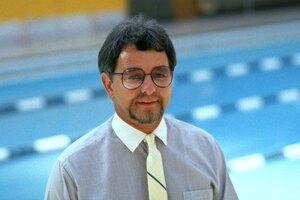
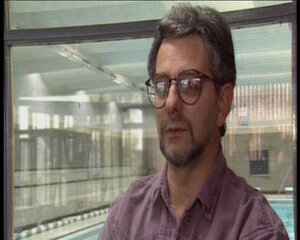
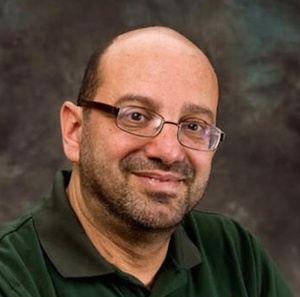
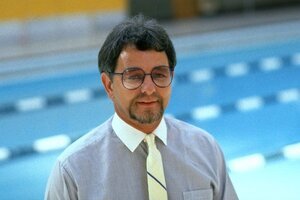
From top: A woman who alleges she was raped by former Irish swimming coach George Gibney in Florida in 1991 when she was 17; Gibney; a certificate of character signed by An Garda Siochana for Gibney’s US visa application in 1992; and documents from his visa file

Readers will recall the former Irish swimming coach George Gibney who is currently living in the US – despite him failing to secure US citizenship in 2010 after his application seemingly concealed how he had been previously charged in 1993 in Ireland.

Gibney was charged with 27 counts of indecency against young swimmers and of carnal knowledge of girls under the age of 15 in April, 1993, in Ireland.

But he sought and won a High Court judicial review in 1994 which quashed all the charges against him.

The judicial review was secured after a Supreme Court decision, during which Gibney’s senior counsel Patrick Gageby argued that the delay in initiating the prosecution against Gibney infringed his right to a fair trial.

Mr Gageby’s sister, future Chief Justice Susan Denham, was on the bench of the Supreme Court that day.

Gibney subsequently left Ireland, first for Scotland and then America.

Readers will recall the exhaustive efforts of US journalist Irvin Muchnick to obtain documents pertaining to Gibney’s US visa file.

After a settlement, heavily redacted documents pertaining to this file were released to US journalist Irvin Muchnick just before Christmas and show Gibney was granted a four-month visa during a visit to the United States in 1992.

This visa application was supported by a Garda character reference issued in January 1992 (see above) – a year after people who had been abused by him started to speak up and organise themselves.

On foot of these documents, on December 17 last, Sunday Times journalist Justine McCarthy reported how, in February 1991, European silver medallist swimmer Gary O’Toole – who was told in December 1990 by fellow swimmer Chalkie White that Gibney abused him in – told Gibney he was quitting Gibney’s elite team and when Gibney asked why, Mr O’Toole said: “I think you know why.”

Others had also spoken up before his Garda character reference was issued.

In January, 1991, while in Australia, Mr White told the honorary medical officer of both the Irish Amateur Swimming Association and the Leinster Branch of the IASA, Moira O’Brien, that he had been abused by Gibney.

White would later tell the Murphy Inquiry – set up to look at abuse in swimming (more below) – that Ms O’Brien told him it would be his word against Gibney and that he should ‘get on with it’.

Ms O’Brien would later tell the inquiry that Mr White was ‘confused’ and ’emotionally unstable as a result of a head injury’ and that he didn’t want her to report the matter. She would also later say a ‘doctor-patient relationship’ existed and that Mr White didn’t want his complaint to be reported.

In addition, in February 1991, Mr White told the then President of the Leinster Branch of the IASA, Frank McCann about Gibney’s abuse and McCann said he’d deal with it.

McCann, who also abused child swimmers, was later found guilty of murdering his wife and niece, in an attempt to cover up for his abuse in 1996.

According to the Murphy Inquiry a parent from a club other than Trojan Swimming Club, where Gibney coached, was told by an assistant coach of Trojan in November 1991 that the gardai and the ISPCC were informed of the allegations in relation to Gibney.

However, later, the ISPCC said it had no record of any such complaint in 1991 or in 1992. The Murphy Report states the first record on the Garda file is dated December 15, 1992.

In addition to Garda character reference and the 1992 US visa, the documents obtained by Mr Muchnick also show that Gibney’s application for US citizenship in 2010 was denied.

During the process of obtaining the documents under the Freedom of Information Act, during a court hearing about the matter, senior federal judge for the Northern District of California, Judge Charles Breyer pondered:

“How is a person permitted to remain in the United States when, in fact, the circumstances of the Ireland experience or what occurred in Ireland are publicly known? That’s number one.

And number two, if, and I would use the word ‘if,’ he gave false answers in connection with an application, how is it that that somehow doesn’t bring into question the term of his initial visa permit or his initial visa?”

In February 1998, Justice Roderick Murphy was appointed by the then Sports Minister Jim McDaid to investigate abuse in swimming.

At the time, Dr Murphy was deeply involved in swimming as he was a member of Glenalbyn Swimming Club, an affiliate of the then IASA (Irish Amateur Swimming Association) – and a part of the Leinster Branch of the IASA.

The Murphy Report, readers will recall, also recounted the experience of a 17-year-old girl who was raped in Tampa, Florida by Gibney.

The report said:

Another witness alleged that she was indecently assaulted on a club trip to Holland in 1990 and raped in Florida in June 1991 by the first named coach [Gibney].

The woman who was raped would later feature in an RTE Prime Time investigation into Gibney in 2006, and recount what happened in Florida.

Footage of this has since been obtained by Mr Muchnick and posted on YouTube.

Readers may also wish to recall that, in 2015, Ms McCarthy, in the Sunday Times, reported:

“A former swimmer has told gardai that a high-ranking official in the sport took her to England for an abortion after George Gibney, the national coach, raped her in 1991.

The woman has told officers conducting a review of the Gibney case that the official warned her not to tell anybody about the abortion.

She said Gibney raped her in a Florida hotel room during a training camp when she was 17. She discovered three months later that she was pregnant and she told the official, who is a professional person and knew Gibney.

She said the official obtained air travel tickets and accompanied her to England. She believes she was taken to an abortion clinic in London and remembers the official giving her pills that made her groggy during the trip.”

Further to the documents obtained by Mr Muchnick, and Ms McCarthy’s 2015 report, the US journalist reported on his  website Concussion Inc on December 22:

“In the case of the 1991 Tampa rape, the evidence reportedly includes the victim’s affidavit to Irish police… The 2006 television interview, in which the victim, who is not identified and whose face is obscured, also includes details of the alleged attack.”

“The next question — one that needs to be addressed by public officials in both countries — is how to make sure the Florida prosecutor acquires the affidavit. The state attorney’s Frazier said, “Receiving documents or evidence from another country would likely involve procedures set forth in applicable contracts or treaties between the nations at issue. Those documents would need to be analyzed to determine the specific procedure.”

The United States has a Mutual Legal Assistance agreement with the European Union, of which Ireland is a part. These protocols enable the establishment of “joint investigative teams.”

Yesterday, Mr Muchnick repeated this call, writing:

“There is no excuse for continued failure by governments and journalists to examine the curious circumstances of Gibney’s 1994 diversity lottery visa and his continued resident alien status here even after a 2010 citizenship application — which seems to have failed precisely because he lied on it by withholding information about his 27-count indictment in Ireland for illicit carnal knowledge of minors.

“There is, especially, no excuse for the Garda not to be directed to share with the state attorney of Hillsborough County, Florida, an affidavit that is known to exist by the victim of Gibney’s 1991 rape of a 17-year-old swimmer on a training trip to Tampa.”

The documents obtained by Mr Muchnick can be viewed in full here

Previously: George Gibney on Broadsheet

 A woman tells how she was raped by former Irish swimming coach George Gibney during a swimming trip to Florida in 1991 (top) in a video by US journalist Irvin Muchnick which contains footage from a Prime Time episode on Gibney in 2006 (above)

Last night.

At 8pm Irish time.

US journalist Irvin Muchnick posted a video containing footage from an RTE Prime Time episode – originally broadcast on January 12, 2006 – in which then reporter Clare Murphy tracked down former Irish Olympic swim coach George Gibney in Calistoga, California and confronted him.

It also includes testimonies of some of Gibney’s victims.

Readers will recall Mr Muchnick’s ongoing efforts to secure Gibney’s immigration file from the Department of Homeland Security, under the Freedom of Information Act, in the US.

Gibney was charged with 27 counts of indecency against young swimmers and of carnal knowledge of girls under the age of 15 in April, 1993.

But he sought and won a High Court judicial review in 1994 which quashed all the charges against him.

The review was made possible after a Supreme Court decision that initiating the prosecution against Gibney infringed his right to a fair trial.

After this, Gibney left Ireland for Edinburgh, Scotland and then the US.

The swimming coach was granted a visa during a visit to the United States in 1992 – seemingly aided by a Garda character reference – a year after people who had been abused by him started to speak up and organise themselves.

In addition, a 2010 application by Gibney to obtain US citizenship – some months after Evin Daly, of the Florida-based advocacy group One Child International alerted the US government of Gibney’s past in Ireland – was rejected.

But he remains in the States.

The revelations about his 1992 visa and 2010 citizenship bid have previously been revealed by Mr Irvin.

In the Prime Time footage above, Ms Murphy stated:

“While George Gibney may be notorious at home, his US record is squeaky clean, however local police take his presence so seriously that the area’s FBI field office has been informed.”

Further to this…

Mr Irvin reports:

“Prime Time’s throwaway line that Gibney had a “squeaky clean” record in America is debatable.

In 2015 Commander Dave Pickett of the investigations bureau of the police department in Wheat Ridge, Colorado, gave us the following statement:

‘On September 20th, 2000, the Wheat Ridge Police Department was notified that an alleged sex offender named George Gibney was living within our jurisdiction.  Detective Lila Cohen investigated the situation.  Detective Cohen contacted the reporting party (RP) who was the president of an accounting company that employed Gibney.  Detective Cohen was told that:

* The RP had fired Gibney the day prior

* The RP had discovered concerning information regarding Gibney on the Internet

* Gibney had gone to Peru on behalf of a children’s eye clinic

* Gibney was on an advisory board for the Department of Youth Corrections

* Gibney may be a coach for the North Jeffco Swim Club

Detective Cohen notified the Arvada Police Department where the North Jeffco Swim Club is located.  Sergeant Rzappa advised Detective Cohen that she had already received information concerning Gibney.  Detective Cohen found that Gibney was on the advisory board of the Metropolitan State College Lab School at Lookout Mountain.  Detective Cohen advised the person in charge of the Lab School regarding the allegations that Gibney was a sex offender.  

She also advised that the Wheat Ridge Police Department had no indications of specific allegations in Colorado.

Because there were no allegations regarding any crime in this jurisdiction, no investigation outside of notification was done.’

“Jill McGranahan of the Arvada police then told us of an incident from five years before Gibney’s employer reported him to the Wheat Ridge police:

‘In late October, 1995, the APD was notified by a citizen that Mr. Gibney was employed by the North Jeffco Parks and Recreation District, and that he had previously been accused of child abuse in Ireland. The APD confirmed that Mr. Gibney had been charged with child sexual abuse in Ireland, but that he was not convicted on any of the charges.  During its investigation, the APD learned that Mr. Gibney was suspected of possibly pinching (or snapping the swimsuit of) a North Jeffco swimmer.  

‘The APD investigated this allegation, but was unable to establish that a crime had occurred.  Shortly thereafter, the APD learned that Mr. Gibney was no longer employed by North Jeffco.  The APD had no other involvement in this matter.’

Mr Muchnick concludes:

“Many people, in and out of law enforcement, in Ireland and the U.S. alike, have had Gibney on watch lists, formal or otherwise, for a long time. The missing piece remains the revival of the 1990s prosecution of him in Ireland.

“The original prosecution collapsed thanks to a Supreme Court statute-of-limitations ruling that is not, to put it mildly, destined to go down in the annals of thoughtful jurisprudence: one of the sitting justices, Susan Denham (later the chief justice), did not recuse herself even though she was the sister of Gibney’s lawyer, Patrick Gageby.

“Nearly a quarter of a century later, it is time to bring the Gibney nightmare to a close. It is time for the Irish Garda’s Director of Public Prosecutions to move purposefully on the call of Maureen O’Sullivan, a Teachta Dála (member of Parliament), to reconsider both the old criminal charges against Gibney and the many new ones on which information has emerged since he first got off the hook.

“It is time for the American legislators most closely associated with awareness of sexual assault in general, and statutory solutions for the widespread problem of amateur sports coach sex abuse in particular, to step up to the plate and assist TD O’Sullivan in these efforts.

“The legislators I have in mind include Senator Dianne Feinstein and Congresswoman Jackie Speier.

“Finally, it is time to hold accountable whoever in the American swimming establishment might have been responsible for enabling Gibney’s long safe harbor here.

“The ugly truth is that George Gibney is no longer just another name in the half-buried history of the dark side of youth sports. He is, officially, a two-nation affair of state.”

In 2006 Investigation on Ireland’s RTÉ TV, See George Gibney, Man Without a Country — Watched by Many But Prosecuted by None. Can That End Now? (Irvin Muchnick, Concussion Inc)

Previously:  The Chief Justice, Her Brother And How George Gibney Got Away

George Gibney (top) and US journalist Irvin Muchnick

Readers may recall the exhaustive efforts of American journalist Irvin Muchnick to obtain former Irish swimming coach George Gibney’s immigration file from the Department of Homeland Security, under the Freedom of Information Act, in the US.

Gibney was charged with 27 counts of indecency against young swimmers and of carnal knowledge of girls under the age of 15 in April, 1993.

But he sought and won a High Court judicial review in 1994 which quashed all the charges against him.

The review was made possible after a baffling Supreme Court decision that initiating the prosecution against Gibney infringed his right to a fair trial.

After this, Gibney left Ireland for Edinburgh, Scotland and then Florida where he went on to abuse.

The swimming coach was granted a visa during a visit to the United States in 1992 – seemingly aided by a Garda character reference – a year after people who had been abused by him started to speak up and organise themselves.

In addition, a 2010 application by Gibney to obtain US citizenship – some months after Evin Daly, of the Florida-based advocacy group One Child International alerted the US government of Gibney’s past in Ireland – was rejected.

But he remains in the States.

The revelations about his 1992 visa and 2010 citizenship bid have previously been revealed by Mr Irvin.

Further to this..

Mr Irvin, who writes on Concussion Inc, reports:

“Concussion Inc. has acquired explosive archival video, which shows that George Gibney has been under watch by American law enforcement agencies since at least 2006. The video will go live at  noon PST [8pm Irish time]

“The link is here

“The video has surpassing significance during the pendency of my Freedom of Information Act case seeking additional material on the U.S. immigration files of the former Irish Olympic swimming head coach who is arguably the most notorious child sex abuser in a sports world with too many of them.

“I prevailed last year in Muchnick v. Department of Homeland Security; the government’s appeal of Judge Charles Breyer’s decision is at the Ninth Circuit Court of Appeals.

“After the video begins streaming online, I’ll be publishing additional interpretation and pointers.”

See It Soon: Video Showing George Gibney Under American Law Enforcement Watch Goes Live Today (Concussion Inc)

Previously: Irvin Muchnick on Broadsheet

George Gibney

George Gibney was charged with 27 counts of indecency against young swimmers and of carnal knowledge of girls under the age of 15 in April, 1993 but the charges were dropped because of the length of time which had passed since the abuse took place.

The former Irish swimming coach was granted a visa during a visit to the United States in 1992 – seemingly aided by a Garda character reference – a year after people who had been abused by him started to speak up and organise themselves.

In addition, a 2010 application by Gibney to obtain US citizenship – some months after Evin Daly, of the Florida-based advocacy group One Child International alerted the US government of Gibney’s past in Ireland – was rejected.

It’s also understood Gibney may have lied in this application.

And yet.

Gibney remains in the United States.

The revelations about his 1992 visa and 2010 citizenship bid have been revealed by US journalist Irvin Muchnick who has been trying to get Gibney’s immigration file from the Department of Homeland Security, under the Freedom of Information Act.

He has received partial documents, most of them redacted, over the past number of years.

But a senior federal judge for the Northern District of California, Judge Charles Breyer, revealed the details of the 1992 visa and the rejected 2010 citizenship application during a court hearing of the FOI bid last year.

Mr Muchnick was only able to publish details of this hearing last weekend.

A transcript of that court hearing on October 28, 2016, in San Francisco can be read here

The federal government is appealing a previous ruling by Judge Breyer in Mr Muchnick’s favour and the matter is now at the Ninth Circuit Court of Appeals Mediation Service so discussions are ongoing.

However, during the court hearing on October 28, 2016, Judge Breyer questioned why Gibney suffered no consequences from the US authorities.

He said the following:

“How is a person permitted to remain in the United States when, in fact, the circumstances of the Ireland experience or what occurred in Ireland are publically known, that’s number one.

And number two, if, and I would use the word ‘if,’ he gave false answers in connection with an application, how is it that that somehow doesn’t bring into question the term of his initial visa permit or his initial visa.”

Let’s say I, as an example, am granted a visa to come to the United States. And subsequent — and I answer all the questions and I don’t answer falsely. Okay. So I mean, I have that visa application.

And then a series of events occur which would normally disqualify a person from getting a visa, which maybe is an assumption that I don’t know, that I can’t figure out, but I have to assume that if somebody has been charged with the types of offenses that Mr. Gibney has been charged with, the United States, absent other circumstances, would not grant a visa.

We’re not a refuge for pedophiles. And there’s no issue here of which I’m aware of, which is the asylum issue. Okay.

“So I apply — it’s unfortunate I’m using me as an example — but I apply, and then some things surface and I go back to Ireland and then I come back to the United States.

Now, if we froze events at that point, of course, my question would be, does the visa in the United States, one, expire? And two, if it doesn’t expire, is there a process where Department of Homeland Security reviews visa applications in light of undiscovered information and then takes some conduct, or takes some action.

I have no idea whether that’s the case or not.

“But that’s not necessarily the case I wanted to posit because the case I wanted to posit goes on from there. And it involves, at that point, me. Because I’m the applicant, I filled out a form, and perhaps, theoretically, I’m not honest in the form that I fill out for further relief; that is, to be a citizen. And so it’s denied.

But my question would be, by virtue of that activity, does that then go — didn’t — did somebody in the Department of Homeland Security say, Well, you know this person lied to us today, or whenever that application, I think we have to go back and question the legitimacy of allowing that person to remain in the United States.

“There may be reasons to allow him to remain in the United States. There’s nothing that you have submitted to me that indicates any reasons why he’s allowed in the United States, nor any investigation, that I can see, of going back and looking at the original application or the continuation of the visa.”

The revelations mean that Gibney got a US visa a year before he was charged in Ireland.

He went on to seek and win a High Court judicial review in 1994 that quashed all the charges against him.

The judicial review was secured after a Supreme Court decision, during which Gibney’s senior counsel Patrick Gageby argued that the delay in initiating the prosecution against Gibney infringed his right to a fair trial.

Mr Gageby’s sister, future Chief Justice Susan Denham was on the bench of the Supreme Court that day.

Gibney subsequently left Ireland, first for Scotland and then America.

Justine McCarthy in The Sunday Times, reported that other documents released to Mr Muchnick showed Gardaí gave Gibney a certificate of character – issued on January 20, 1992 – to support his application for an American visa.

The certificate given to Mr Muchnick was reported to be partially redacted with the name of the issuing officer and its contents obscured.

The issue of the Garda character reference came despite claims that gardai were notified of allegations against Gibney prior to January 1992.

According to the Murphy Inquiry – which was set up to look at abuse in swimming in 1998 – a parent from a club other than Trojan Swimming Club, where Gibney coached, was told by an assistant coach of Trojan in November 1991 that the gardai and the ISPCC were informed of the allegations in relation to Gibney.

However, later, the ISPCC said it had no record of any such complaint in 1991 or in 1992. The Murphy Inquiry states the first record on the Garda file is dated December 15, 1992.

Further to this…

Readers may wish to recall the following timeline of events leading up to 1992…

In December 1990, swimmer Chalkie White told European silver medalist Gary O’Toole that Gibney abused him from the age of 11 in 1967, prompting O’Toole to find out who else had been abused by whom in the Irish swimming world.

In January, 1991, while in Australia, swimmer Mr White told the honorary medical officer of both the Irish Amateur Swimming Association and the Leinster Branch of the IASA, Moira O’Brien, that he had been abused by Gibney.

White would later tell the Murphy Inquiry – set up to look at abuse in swimming – that Ms O’Brien told him it would be his word against Gibney and that he should ‘get on with it’.

Ms O’Brien would later tell the Murphy Inquiry, Chalkie was ‘confused’ and ’emotionally unstable as a result of a head injury’ and that Chalkie didn’t want her to report the matter. She would also later say a ‘doctor-patient relationship’ existed and that Chalkie didn’t want his complaint to be reported.

In 1991, GIbney allegedly raped a female swimmer, aged 17, in a hotel room while they were on a swimming trip with the Trojan Swimming Club in Tampa, Florida. He previously attacked the same girl in Holland in 1990.

The rape resulted in the girl becoming pregnant and a high-ranking official in swimming taking her to England for an abortion. It’s also alleged that the official warned the girl not to tell anyone about the termination.

In February 1991, Mr White told the then President of the Leinster Branch of the IASA, Frank McCann about Gibney’s abuse and McCann says he’ll deal with the matter. (McCann, who also abused child swimmers, is later found guilty of murdering his wife and niece, in an attempt to cover up for his abuse in 1996)

Also around this time in February 1991, assistant female coach Carol Walsh, to whom Mr White also confided, also tells McCann about the abuse. She claims McCann replied that, “he hoped to fuck it wouldn’t break while he was president”.

He also tells her there was nothing he could do about the allegations and advised her “to back off and not get involved”.

Later, in an interview with RTÉ in 1998, Ms Walsh says that, after approaching the IASA about the matter, she received threats and anonymous phone calls.

On February 8, 1991, Gibney announced he was stepping down from his position as Irish swimming coach, after 11 years, “to devote more time to the Trojan Club and the sports centre he manages in Dublin”. Another abusive coach Derry O’Rourke succeeds him.

Mr White tells the National Development Officer of the IASA, in March 1991, about the abuse he suffered at the hands of Gibney. The officer later tells the Murphy Inquiry nothing specific was told to him and that he didn’t know of any abuse until November 1992.

In June of that year, Mr White told the secretary of the IASA, Hillary Hughes, about the abuse he suffered. The secretary later tells the Murphy Inquiry that she did not remember his allegations.

In November of 1991, according to the Murphy Inquiry, a parent from a club other than Trojan Swimming Club was told by an assistant coach of Trojan that the gardai and the ISPCC were informed of the allegations in relation to Gibney.

But later the ISPCC said it had no record of any such complaint in 1991 or in 1992. According to the Murphy Inquiry, the first record on the Garda file was dated December 15, 1992.

In addition, the Murphy Inquiry states: “The President of the IASA in 1992, had been told at the end of 1991 by a senior swimmer of complaints that [Gibney] was in serious trouble for molesting young children. The senior swimmer requested that the President organise a meeting at which Gardai would be present. The President took legal advice. No meeting was held.”

Irish Times journalist Johnny Watterson later reported that, after Mr O’Toole wrote to the IASA seeking a meeting, he received a reply on January 15, 1992 which said: “The IASA cannot act on mere rumour and innuendo and the person concerned has a basic right to his good name and reputation unless and until first hand complaint is made.”

Previously: Unreasonable Delay

The Chief Justice, Her Brother, And How George Gibney Got Away

How George Gibney Lied on His 2010 Application For American Citizenship (Concussion, Irvin Muchnick)

George Gibney’s 2010 Application For American Citizenship Was Rejected, With No Other Consequences, Federal Judge Said (Concussion, Irvin Muchnick)

0000bbae-531

irvin

From top: George Gibney and journalist Irvin Muchnick

You may recall how, on December 6 last, the US District Court Judge Charles Breyer issued an order compelling the US government to release former Irish swimming coach George Gibney’s immigration and visa file to US journalist Irvin Muchnick.

The US government was given a 60-day window in which to either comply or appeal the ruling.

Today is day 42 of that window.

Gibney was charged with 27 counts of indecency against young swimmers and of carnal knowledge of girls under the age of 15 in April, 1993 – but sought and won a High Court judicial review in 1994 which quashed all the charges against him.

The judicial review was secured following a controversial landmark Supreme Court decision – during which Gibney’s counsel Patrick Gageby argued that the delay in initiating the prosecution against Gibney infringed his right to a fair trial.

After this, Gibney left Ireland for Edinburgh, Scotland and then Florida.

Previously: No Hiding Place

The Chief Justice, Her Brother And How George Gibney Got Away

0000bbae-531irvin

From top: George Gibney and journalist Irvin Muchnick

Readers may recall how a San Francisco district court judge, Judge Charles Breyer, last week ordered the US government to release documents pertaining to the US immigration file on former Irish swimming coach George Gibney to US journalist Irvin Muchnick.

Mr Muchnick, in Judge Breyer’s words, “hopes to uncover how American authorities allowed an alleged sexual predator to enter and reside in the United States despite the scandal swirling around him in his native Ireland. He also suspects that the American Swimming Coaches Association greased the wheels for Gibney’s relocation.”

It remains to be seen whether the US government will agree to Judge Breyer’s order or if it will appeal the decision to a higher court.

Until then…

A timeline:

1960s: George Gibney begins his career as a swimming coach in Dublin’s Guinness Swimming Pool. He worked as a fitter at Guinness. He also worked in the Marian College pool in Ballsbridge and the Waterford Crystal Swimming Club.

1967: Gibney allegedly sexually assaulted an 11-year-old boy, Francis ‘Chalkie’ White.

1968: Gibney allegedly sexually assaulted an 11-year-old girl.

1972: Gibney starts to coach swimming at Glenalbyn pool in Stillorgan.

1975: Gibney leaves Glenalbyn for the new 25-metre pool and sports complex at Newpark Comprehensive School.

The Murphy Inquiry later noted that it was alleged he seriously abused a young swimmer at Glenalbyn club [although the club wasn’t named in the report]. A woman told the Murphy Inquiry that in 1975, when she was 13, Gibney abused her as she stayed with him for a month while her parents were on holiday.

She said she confided in a priest who told her to confront Gibney and tell him to stop. She claims that after confronting Gibney about the abuse, he slapped her across the face and called her a ‘whore’. He continued to abuse her until she was 15, she said.

1976: Gibney establishes Trojan Swimming Club at Newpark Comprehensive School.

1977: A woman later tells the Murphy Inquiry that in 1977, when she was 12, she was advised by another person who abused her to accept a lift from Gibney, who then subsequently abused her when he drove her home.

1988: George Gibney is appointed coach of the Irish swimming squad for the Seoul Olympics.

1989: Gibney is given honorary life membership of Irish Amateur Swimming Association.

May 1990: Gibney resigns as Director of Swimming at the IASA, claiming he cannot do the job on a part-time basis.Continue reading →

george-gibney

Former Irish swimming coach George Gibney

Further to yesterday’s post about how the US attorney’s office and American journalist Irvin Muchnick’s attorney Roy Gordet both asked US District Judge Charles Breyer to issue his final and binding order – in relation to Mr Muchnick’s efforts to obtain 20 documents, or 43 pages, of former Irish swimming coach George Gibney’s US immigration file…

Readers will recall how all previous requests by Mr Muchnick yielded only parts of this file with some pages redacted.

Gibney was charged with 27 counts of indecency against young swimmers and of carnal knowledge of girls under the age of 15 in April, 1993 – but sought and won a High Court judicial review in 1994 that quashed all the charges against him.

The judicial review was secured following a landmark Supreme Court decision – after which Gibney left Ireland for Scotland and then Florida.

Further to this…

This morning, Irvin Muchnick writes:

US District Court Judge Charles Breyer has issued a final order in Concussion Inc.’s favour in Muchnick v. Department of Homeland Security – our Freedom of Information Act lawsuit for hitherto redacted United States Citizenship and Immigration Services files on the visa history of former Irish Olympic swimming head coach George Gibney.

The court’s action came a mere 24 hours after the federal government informed Judge Breyer that it had decided not to take up his suggestion, in a tentative order on November 2, to release certain portions of the remaining disputed 20 documents covering 43 pages.

As noted here yesterday, the next legal step is the government’s decision on whether to comply with the order or appeal it to the Ninth Circuit Court of Appeals.

Breyer’s new 10-page order is virtually identical to the 11-page one last month, which can be viewed here. The only difference is in the conclusion language, which reflects the shift from “tentative” to “final.” Here is the language:

“DHS is ORDERED to disclose substantive information contained in the A-File about Gibney’s alleged crimes, decisions about immigration benefits he sought, and the dates any documents containing such information were created.

“DHS may continue to withhold identifying information about third parties other than Gibney, as well as Gibney’s past addresses, salary history, A-number, and the like. It may also continue to withhold portions of documents revealing the investigative procedures used to obtain information about Gibney, but not the information itself.

“Based on the foregoing, DHS has properly redacted or withheld some documents but not others. The Court has separated those two categories and highlighted what DHS must disclose to comply with this order.”

Judge Breyer issues order compelling federal government to release George Gibney immigration records to Concussion Inc (Irvin Muchnick, Concussion Inc)

Previously: Bringing The Truth Home

The Chief Justice, Her Brother And How George Gibney Got Away

gibney-1

irvin

From top: Former Irish swimming coach George Gibney; US journalist Irvin Muchnick

You may recall how American journalist Irvin Muchnick has been trying, via Freedom of Information requests, to obtain 20 documents, or 43 pages, of former Irish swimming coach George Gibney’s US immigration file.

All previous requests yielded only parts of this file with some pages redacted.

Gibney was charged with 27 counts of indecency against young swimmers and of carnal knowledge of girls under the age of 15 in April, 1993 – but sought and won a High Court judicial review in 1994 that quashed all the charges against him.

The judicial review was secured following a landmark Supreme Court decision – after which Gibney left Ireland for Scotland and then Florida.

On November 2, after US District Court Judge Charles Breyer reviewed the 20 documents in camera, he said he was “prepared to rule (largely) in Muchnick’s favour”.

At that time, he forwarded to the US federal government, suggestions on redactions that should be reversed – and set a 30-deadilne for Mr Muchnick and the federal government to work out an agreement around the court’s tentative order.

That deadline was yesterday.

Further to this…

Mr Muchnick writes:

The federal government has told US District Court Judge Charles Breyer that it decided not to take up his recommendation, in a November 2 “tentative order,” to release particular portions of the 43 pages of George Gibney’s immigration records that remain in dispute in Concussion Inc.’s Freedom of Information Act lawsuit against the Department of Homeland Security.

In a joint response filed today by the US attorney’s office and my attorney Roy Gordet, the judge was asked for the final and binding order that he had said he was prepared to issue if the tentative order did not succeed in resolving the case. The government said it “will decide how to proceed after reviewing the final order.”

If Judge Breyer proceeds as expected with the final ruling, which the opinion accompanying the tentative order had said would be “(largely) in Muchnick’s favour,” then there are two possible outcomes.

One possibility is that US Citizenship and Immigration Services, the agency under Homeland Security, will release the records as advised by the court.

The other possibility is that the government will decide to appeal the ruling against it to the Ninth Circuit Court of Appeals.

Read the joint response in full here

Government Declines Judge Breyer’s Suggestion to Release George Gibney Immigration Documents; Requests ‘Final Order’ From Court (Concussion.net)

Previously: George Gibney on Broadsheet


gibney-1

Former Irish swimming coach George Gibney

You may recall US journalist Irvin Muchnick’s ongoing efforts to obtain former Irish swimming coach George Gibney’s full US immigration file – parts of which have already shown he received a certificate of character from the Gardaí to support his application for an American visa.

Gibney was charged with 27 counts of indecency against young swimmers and of carnal knowledge of girls under the age of 15 in April, 1993 – but sought and won a High Court judicial review in 1994 that quashed all the charges against him. The judicial review was secured after a landmark Supreme Court decision.

Readers will recall how the aforementioned Garda certificate was issued on January 20, 1992.

The Murphy Report – which was set up to look at abuse in swimming in 1998 – states a parent from a swimming club other than Trojan Swimming Club, where Gibney coached, was told by an assistant coach of Trojan in November 1991 that the gardai and the ISPCC were informed of the allegations in relation to Gibney.

Further to this…

Journalist Irvin Muchnick writes:

[Today] is the deadline on the 30-day window US District Court Judge Charles Breyer gave the federal government and this reporter to try to work out an agreement around the court’s tentative order for release of additional materials from George Gibney’s immigration records in my Freedom of Information Act lawsuit against the Department of Homeland Security.

In his November 2 opinion, Judge Breyer said he was “prepared to rule (largely) in Muchnick’s favor” over the remaining 20 disputed documents, covering 43 pages, that he had reviewed in camera. At that time, the court forwarded, only to the government, suggestions on redactions that should be reversed.

More as he gets it.

Government’s Response to Court’s Order on George Gibney FOIA Documents Is Due Monday (Concussion Inc)

Previously: A Tentative Order

George Gibney’s Green Card

The Chief Justice, Her Brother And How George Gibney Got Away

gibney-1

irvin

Former Irish swimming coach George Gibney; and journalist Irvin Muchnik

Readers may recall American journalist Irvin Muchnick’s efforts to obtain the US Department of Homeland Security’s immigration file on former Irish swimming coach George Gibney.

Gibney was charged with 27 counts of indecency against young swimmers and of carnal knowledge of girls under the age of 15 in April, 1993 – but sought and won a High Court judicial review in 1994 that quashed all the charges against him.

Mr Muchnick hopes the immigration file will shed light on how Gibney was able to get a visa, and then a green card, to live in the States, given the previous charges against him.

Readers will also recall how some partially redacted documents from the immigration file, previously released to Mr Muchnick, have already showed that Gardaí gave Gibney a certificate of character – issued on January 20, 1992 – to support his application for an American visa.

According to the Murphy Inquiry – which was set up to look at abuse in swimming in 1998 – a parent from a club other than Trojan Swimming Club, where Gibney coached, was told by an assistant coach of Trojan in November 1991 that the gardai and the ISPCC were informed of the allegations in relation to Gibney.

But, later, the ISPCC said it had no record of any such complaint in 1991 or in 1992. And, the Murphy Inquiry states the first record on the Garda file is dated December 15, 1992.

On Friday, Mr Muchnick argued for the release of the documents before Judge Charles Breyer, a Senior United States District Judge of the United States District Court for the Northern District of California.

The hearing followed a May hearing, during which Judge Breyer said he would review in camera (privately) disputed documents from George Gibney’s US Citizenship and Immigration Services file, and render a decision.

Further to this…

Mr Muchnick writes:

At the conclusion of a hearing lasting nearly an hour, United States District Court Senior Judge Charles Breyer said he would shortly issue a “tentative” order in which he will likely require the Department of Homeland Security to release publicly additional portions, at least, of the 20 documents from George Gibney’s immigration records that remain under dispute.

During a spirited discussion with my attorney Roy Gordet and the assistant U.S. attorney James Scharf, Judge Breyer made it clear, without tipping his conclusions, that he has serious reservations regarding some of the privacy exemptions that continue to be claimed in this Freedom of Information Act case.

The judge said he will forward to the government highlighted sections or entire documents that he believes should be disclosed, and will harden his tentative order into a fully enforceable one only if the two sides remain at an impasse over particular details. Counsel agreed that this will be a good penultimate step.

I hesitate to report on or characterize the court’s remarks throughout the hearing, for I do not want to compromise the order that is forthcoming and I do not want to substitute my interpretation of them for the simple and full-context publication of the transcript (which I hope to do shortly).

However, it was clear that Breyer understood the pertinent history and controversy over the sex crime allegations against Gibney. And it was especially clear that the circumstances and disposition of Gibney’s 2010 U.S. citizenship application could have considerable impact on the judge’s upcoming decision with respect to exactly what will be revealed.

Four law student observers — three from the University of California-Berkeley and one from Hastings College of Law in San Francisco — were in attendance.

Early in the hearing, Judge Breyer invited me up to sit at the counsel table with Gordet, and later thanked me for my role in bringing legitimate public curiosity over the Gibney matter to this head. I greatly appreciated both gestures as we await what the court now will order the government to produce.

Federal Judge to Issue ‘Tentative’ Order Signaling Partial Disclosure of George Gibney Immigration Files, As Both Sides Agree to Bring FOIA Case to Resolution (Irvin Muchnick, Concussionnet.inc)

Previously: George Gibney’s Green Card