
Tag Archives: John McGuinness

hotel-car-park

screen-shot-2016-10-14-at-11-53-24

screen-shot-2016-10-14-at-14-52-26

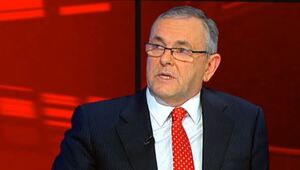
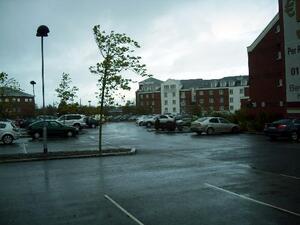
From top: Car park of The Maldron Hotel, formerly Bewley’s Hotel, Newlands Cross, Dublin 22; the panel on last night’s Tonight with Vincent Browne and Vincent Browne

Last night.

On Tonight with Vincent Browne.

The panel included Independents 4 Change TD Clare Daly; Irish Examiner journalist Michael Clifford; director of communications at Social Democrats Anne Marie McNally; and Gavan Reilly, of Today FM.

The show followed Noirin O’Sullivan’s appearance before the Joint Oireachtas Committee on Justice and Equality on Wednesday, of which Clare Daly is a member.

They discussed the ongoing Garda whistleblower controversies and, in particular, the meeting that took place between Fianna Fail TD John McGuinness and former Garda Commissioner Martin Callinan in a car park on the Naas Road on January 24, 2014.

Mr McGuinness has told the Dail that, at that meeting, Mr Callinan told him Sgt Maurice McCabe could not be trusted.

The panel talked about what else Mr McGuinness claims Mr Callinan said to him, without detailing what was supposedly said.

Readers may wish to note that, on RTÉ’s Six One on Wednesday, Fianna Fáil’s justice spokesman Jim O’Callaghan – who is also a member of the Oireachtas justice committee – told presenter Brian Dobson:

I have confidence in here [Noirin O’Sullivan] and it’s not my part to be an investigator on this committee, this isn’t an investigative committee, there’s a judge who’s been put in place, Judge O’Neill, to inquire into the protected disclosures that were recently made, that is an investigative process and there will be a report produced at the end of that process and if that report is critical of individuals in high places whoever they are, I won’t be shy, nor will other members of Fianna Fail be shy about calling on those individuals to take responsibility. But what I’m not prepared to do, is just to call for somebody to resign in circumstances where allegations have been made against them but there’s no findings. In those circumstances, I do retain confidence in the commissioner.”

Further to this, from last night’s Tonight With Vincent Browne…

Vincent Browne: “Among the rumours that I’ve been hearing over the last while is that a senior Garda directed by an even more senior Garda sent text messages to other senior gardai and to members of the media, making horrendous allegations about a whistleblower and that a lot of these top echelons of An Garda Siochana were aware of this and may even have encouraged this. Now, it seems to me, if this is true and it isn’t the resignation of the Garda Commissioner that would be required but the resignation of an awful lot of people at a senior level. Have you heard this?

Michael Clifford: “It’s more than a rumour. I mean, a lot of what you said is in one of the protected disclosures but, as you said, Vincent, if it’s true, the issue is can it be proven? Can it be proven to a degree that it would for example, an official legal figure, whomever would be willing, would be satisfied enough…”

Browne: “It could be proved to be true or not to be true because the gardai have capacities to examine text messages, as we found out in the Elaine O’Hara murder trial, for instance, and they’d be able to look back at the text messages and see…”

Clifford: “If they wanted to…”

Browne: “But, sorry, there is available, the expertise, to look back at text messages…”

Gavan Reilly:If the handset or SIM can be recovered which isn’t always necessarily a given.

Browne: “What’s that?”

Reilly: “If the physical phone or the SIM card from which the text messages were sent is available to you – which may or may not be the case.”

Anne Marie McNally:My understanding is that Keith Harrison is saying that he’s got evidence on his phone that will prove the allegations. But, if I’m reading it correct this evening, the judge that’s been appointed, according to the Commissioner’s testimony, he won’t actually have the power to examine phone records so I’m not sure if that extends to text messages but it would seem to be…”

Clifford:He’ll be able to request it…”

Clare Daly: “Yeah.”

McNally: “He should be, yeah.”

Reilly: “That’s part of the problem of the inquiry that’s been asked of Iarlaith O’Neill, that because he’s existing in a very legal grey area, where it’s all very ill-defined where he’s not acting in a judicial capacity, he’s effectively acting as a kind of wise alderman but he has no powers of compellability or inquiry, as such, so all he can really do is ask people to cooperate and if they do, then he’s entitled to come up with an opinion, as eminent as it might be but that he’s ultimately flying blind. He doesn’t have the powers to demand anything of anybody. So, realistically, the scoping exercise…”

Browne: “So what’s the point?”

Daly: “Well that’s the question, isn’t it. And I mean obviously points have been made by the two…”

Browne: “You’re aware of what I’m talking about…”

Daly: “I’m absolutely aware of what you’re talking about…”

Browne: “My understanding is that when a senior garda person got a, got this text message, the reply was ‘perfect’ which would seem to imply that that person, that senior garda officer was aware of the plan to smear the reputation of the whistleblower in the most odious possible way that you could think of.”

Daly: “At the heart of the protected disclosures is precisely that, that there was an organised and orchestrated deliberate campaign, authorised at the top, including the current and the former commissioner to effectively do exactly what you’ve said – to demonise, to ostracize and put everybody off this whistleblower so that he would be a person that nobody would want to touch or listen to and I mean media people would have got that information, obviously a lot of guards, but politicians did aswell. And, you know, whatever about maybe…”

Browne: “Did politicians get them?

Daly: “Texts, part of the allegations that selected politicians were sent these messages also..”

Browne: “Really?”

Daly: “And given that message which…”

Browne:Who were they?

Daly: “Well, I don’t know, I know I definitely wasn’t one but it begs the question that even if, initially, some people believed it to be true, as I’m sure some people would, when it emerged around the O’Higgins Commission and the evidence that emerged in that, whereby the commissioner’s legal team had been instructed to undermine the credibility of Maurice McCabe and question his motivation and all of that came into the public domain, why wasn’t that the trigger for people to come forward? And say, ‘hang on a minute here, there’s a lot more to this than meets the eye. A huge problem now with the inquiry is that the present whistleblowers, the serving guards, who were live, who made protected disclosures, under Noirin O’Sullivan’s watch, they’re allegations of mistreatment and bullying are not being included in Iarlaith O’Neill’s terms of reference…”

Later

Clifford: “What would be very interesting in that inquiry is whether the chairman or the judge asks in somebody, for example, [Fianna Fail TD] John McGuinness, who may have something to say. And he’s nothing to hide himself whatsoever but he may have something to say in relation to his meeting with former [Garda] commissioner Martin Callinan and did anything transpire there that may be of any use to Mr O’Neill trying to get to the bottom of this issue.”

Browne:I think many of us know what John McGuinness says he was told by Martin Callinan.”

Clifford: “He hasn’t publicly stated it himself, I suppose for good reason, but he hasn’t. But I’m sure…”

Browne:It is truly shocking. It would really..absolutely shocking. I think if viewers knew what was said, what John McGuinness says was said, I think they would be appalled…”

Reilly: “To go back to the very last point though, what John McGuinness and his meeting with Martin Callinan in a car park somewhere on the Naas Road. John McGuinness revealed that, on the Dail record, he was in the chamber, when he was speaking under privilege but I think he’s repeated it outside the chamber since, that Martin Callinan told him Maurice McCabe was, quote, not to be trusted. Now if that, that in most people’s eyes I think would qualify as an attempt by the most senior garda in force…”

Browne: “Yeah, but if that’s all that was said, you might think, well, yeah, yeah, yeah, but if that was all that was said…”

Reilly: “Well is it tenable for the commissioner at the time to be intervening as he did to cast those kinds of aspirations on the character of Maurice McCabe as he was…”

Browne: “OK but if…”

Reilly: “And for his assistant deputy commissioner not to know?”

Browne: “If that was all was said, that Maurice McCabe wasn’t to be trusted, if that was all was said, you’d say, well, all right, it was, shouldn’t have done it and all that,  but my understanding is that very much more was said and of much more damning significance than that Maurice McCabe wasn’t to be trusted…”

Later

Browne:If what we’ve heard is true, the damage that’s been done will be nothing to the damage that will be done.

Watch back in full here

john-mcguinness-public-accounts-committee-4-752x501

Fianna Fáil TD John McGuinness

Mr McGuinness continues to claim he did no wrong in secretly meeting Callinan and not telling anybody about it until now. Yet the Fianna Fáil TD accepts his information may have helped the O’Higgins Commission of Investigation into whistleblower allegations. His excuses for not coming forward before are less than convincing.

Is his decision to divulge the information now related to him not being reappointed as chairman of the Dáil Public Accounts Committee and being notably left off Fianna Fáil leader Micheál Martin’s frontbench?

Whatever about his role as a TD – only the voters of Carlow-Kilkenny can pass judgment on that – Mr McGuinness was negligent in his duty as chairman of the Dáil’s most powerful committee, which is supposed to be the taxpayers’ watchdog.

The public deserved better from the holder of that role. And these matters are more important than John McGuinness’s ego and attention-seeking antics.

Right so.

From an editorial in today’s Irish Independent.

McGuinness negligent as chairman of Dáil PAC (Irish Independent)

Previously: Better Late Than Never

‘We Are Part Of The Cover-Up’

Did The Editor Have His Points Quashed?

Screen Shot 2016-05-30 at 19.31.15
Former Garda Commissioner Martin Callinan and Garda Commissioner Nóirín O’Sullivan

Commissioner O’Sullivan was not aware of any private meeting between former Commissioner Callinan and Deputy McGuinness as outlined by Deputy McGuinness in the Dáil.

In relation to whistleblowers, Commissioner O’Sullivan has consistently stated that dissent is not disloyalty and as a service we are determined to learn from our experiences. An Garda Síochána agrees that whistleblowers are part of the solution to the problems facing the service.

The Commissioner has recently appointed a Protected Disclosures Manager and an appropriately trained dedicated team will be established to oversee all matters related to whistleblowers.

Transparency Ireland has agreed to work with An Garda Síochána to help ensure protected disclosures and people making them are welcomed and protected in An Garda Síochána.

Garda Commissioner Nóirín O’Sullivan in a statement released this evening.

Meanwhile…

56df37279f83c1af81fa6c9177fad079_400x400

Lorcan Roche Kelly

You may recall the murder of Sylvia Roche Kelly.

The mother of two, from Sixmilebridge, Co Clare, was murdered by Gerry McGrath, from Knockavilla, Co. Tipperary, at The Clarion Hotel in Limerick on December 8, 2007.

McGrath was out on bail –  for attempting to abduct a child, on October 9, 2007 – when he killed Sylvia.

He was also out on bail for assaulting taxi driver Mary Lynch in Virginia, Cavan on April 30, 2007.

Further to this…

Sylvia’s husband and journalist Lorcan Roche Kelly spoke to Seán O’Rourke this morning about An Garda Síochána and his trust in the same.

Lorcan Roche Kelly: “I think the problem with Noirin O’Sullivan – this is nothing personal against Noirin at all, I’m sure she’s a perfectly good Garda – is that she is a commissioner that was appointed internally. She came up through the system that exists within the gardaí for the last however many years and it’s that system that has been the problem. So, to get that system reformed, I don’t think Noirin O’Sullivan should have the public’s confidence in being able to reform it because she is of that system. Like I think if you look over the border, what we saw in 2001 with the Royal Ulster Constabulary being completely transformed into the Police Service of Northern Ireland, it’s, I’m not saying we need to change the name of the Gardaí but it’s that level of reform that the Gardaí now need because they have resisted reform for so long that the reform, I suppose, the actions needed have built up to such an extent that we’re nearly at a root and branch level of reform.”

Seán O’Rourke: “Yeah but again that is very central to her whole approach and that’s what’s being seen now by the new Policing Authority. Was it not a good starting point in itself? I suppose it’s precious little consolation to people like yourself and the [Shane] O’Farrell family, for instance. The Commissioner did say, ‘we are sorry the victims did not get the service they were entitled to’.”

Roche Kelly: “Isn’t that the most mealy-mouthed apology. It’s like: I’m sorry your coffee wasn’t as hot as you wanted it to be. Like this is much more serious..”

O’Rourke: “Ah is it not a bit, and I accept now that nobody knows apart from you and your family the grief that you’ve had to endure but would you not give her a bit more credit it than that?”

Roche Kelly: “To be honest, after nine years and after the, I suppose, the stonewalling we’ve received over the years, it’s very hard for me to look at a guard and say, ‘ok, I trust your bona fides in this’. Like this apology came after the O’Higgins Commission, the apology, when the writing was so clearly on the wall that then, ok, now, an apology was necessary. So rather than making a fulsome apology, the apology was made as a press release, that I didn’t receive, I’d to go on Twitter and ask, ‘does any journalist have this press release so at least I can see it’.”

O’Rourke: “Have you had any direct personal apology yourself, from the gardaí?”

Roche Kelly: “Last week I had a meeting with some gardaí in Dublin with the idea of them outlining the reforms they’re bringing in. So it was, the idea of the meeting was to show what reforms they’re bringing in to show this won’t happen again, I think is where we are.”

O’Rourke:“And they clearly would have been senior. How senior gardaí were they? Was there an assistant commissioner or deputy commissioner among them?”

Roche Kelly: “No.”

O’Rourke: “And were you persuaded by what you heard?”

Roche Kelly: “Again, I’m probably the least persuadable person when it comes to Gardaií reform but no it was..no, I think it’s as simple as that, to be fair.”

O’Rourke: “And what would persuade you, Lorcan?”

Roche Kelly: “I think, in order for a reformed process to have credibility, the first thing you need to say is, ‘ok, the people that need to be reformed shouldn’t be the people that do the reforming’. Like, again, nothing personal against Noirin O’Sullivan, I’m sure she’s a fantastic person and she’s a very good guard, but in order to reform an organisation, you need to bring in an outsider. Like, say, in the corporate world, if you want to change a company, you appoint a new CEO from outside because you can’t appoint an internal appointment because, you’ll say, well that’s just going to be more of the same in the Gardaí. So the Gardaí, as an organisation, have to be beyond reproach and we have spent, I have spent nine years, the Irish media have spent the last month and a half reproaching the Gardaí, saying, ‘look this is where the problems are, what are you going to do to address these problems?’, ‘how are you going to address these problems?’. It’s a constant drumbeat of a question that is landing at the Gardaí’s desk and, in order to address those problems, they need to have an outsider come in. And again, to look at what we saw what was done over the border 15 years ago, so it is not an impossible task but there has to be willingness to do it.”

O’Rourke:To what extant, Lorcan, are your views informed by that experience, that nine years as you say, in the course of which you took a legal action which, I think, you knew would fail, seeking to get fuller information. And then you had the dealings with GSOC and you’re still not satisfied that there is sufficient accountability there clearly.”

Roche Kelly: “When I was doing the research, one of the interesting statistics from GSOC that I found out and you mentioned this yourself with the exoneration of the gardaí in Cavan-Monaghan at a previous report in 2011 was that the way GSOC works is that they can make recommendations for disciplinary action against a guard but they have no power themselves to implement disciplinary commission, that goes to a senior guard. And in 2012, the year my complaint came up, there was 5,600 complaints against gardaí. Over 1,000, I think it was 1,017 of them were put forward for disciplinary action. Of those 1,017, 69 resulted in some disciplinary action. So, if you’re a garda and a complaint is made against you there is a less than 1% chance of you facing any disciplinary action at all. Which, some people could say a lot of the complaints against gardaí may be spurious but I doubt 99% of them are. It’s the culture, and that needs to be highlighted, because it’s a cultural problem, rather than admit there are problems, let’s ignore the problem and move on as an organisation and to move on within the gardaí seems to me to mean, ‘let’s pretend none of this happened’.”

Later

Roche Kelly: “When my wife was murdered, our daughter was in junior infants in primary school, she’s now in first year in secondary school. So her entire primary school life has been based on: where is the answer to these questions? And I haven’t found them. And the only reason that I haven’t found the answers to these questions is because I have been stonewalled by the gardaí. This entire, my entire thing could have been sorted out with two phone calls and a letter eight years ago.”

O’Rourke: “Did you get the answers in the O’Higgins report?”

Roche Kelly: “I got the answers, the factual play that I had known all along. It was, why had the gardaí not admitted that they had made a mistake here; why have they not come out and said, ‘ok, if we had done our job right, Sylvia would still be alive’ and here’s what we’ve done to address it. And like the O’Higgins report, again, ended with a kind of a thing that happens a lot in Ireland where there are systematic problems where many things failed, therefore no one should be individually held responsible. And if that’s the response of the O’Higgins commission, then the book for that has to go to the top of the organisation. And again, I’m not saying Noirin O’Sullivan is anyway incompetent or had any hand, act or part in this but if the organisation is fundamentally rotten or, I won’t say corrupt, but is damaged then it needs to be changed from the top down.”

O’Rourke: “And what about the fact that there was an open, international competition for the Commissioner appointment, after Martin Callinan resigned or was retired, whatever way you want to phrase it, and she came through that competition?”

Roche Kelly: “Again, I don’t think it’s the fact that the competition existed, I would understand that wanted a challenging position would look at the garda, the job of the head of the garda, and say that might be a bridge too far for me, to reform an organisation like that. But if there is an open competition then have an external candidate so internal candidates cannot apply for it because it is a situation where you need an external candidate.”

Listen back in full here

Commissioner ‘not aware’ of Callinan’s car park meeting (Today FM)

Previously: Better Late Than Never

904201169021431500157454

From top: Former Garda Commissioner Martin Callinan; Fianna Fáil TD John McGuinness; Sean O’Rourke

You may recall Fianna Fáil TD John McGuinness’ speech in the Dáil last week in which he stated:

Every effort was made by those within the Garda Síochána at senior level to discredit Garda Maurice McCabe.

The Garda Commissioner confided in me in a car park on the Naas Road that Garda McCabe was not to be trusted and there were serious issues about him.

The meeting between Mr McGuinness and former Garda Commissioner Martin Callinan took place in the car park of the Bewley’s Hotel on the Naas Road in Dublin on January 24, 2014.

This was six days before Sgt McCabe finally appeared in private before the Public Accounts Committee, of which Mr McGuinness was chairman.

The Irish Examiner has reported that it was Mr Callinan who sought the meeting with Mr McGuinness.

Further to this, Mr McGuinness spoke to an indignant Seán O’Rourke on RTÉ Radio One this morning.

Grab a tay…

Sean O’Rourke: “The question is being asked again. I know you spoke on This Week with Richard Crowley about this yesterday. Just to quote to you, the heading on the Irish Independent’s editorial this morning: ‘It’s a bit late telling us this now, Mr McGuinness’.

John McGuinness: “But it isn’t, Sean. The fact of the matter is and I explained this before. That the reason why this is being put it into the public domain now by way of the Dáil debate last week is because Maurice McCabe continues to be questioned. His integrity was questioned by the Garda Commissioner, the context of O’Higgins, and arising from the O’Higgins report, I felt that it was absolutely necessary to make clear that there was and is an ongoing effort being made to undermine individuals like Maurice McCabe and they are fearful of coming forward to give their story. I had to make a decision back then when I met the Garda Commissioner and in my opinion, to put it simply, it was a decision, the lesser evil, for the greater good, because Maurice McCabe then did come forward in full uniform and gave us the evidence that was required to deal with the penalty points issue.”

O’Rourke: “Yes and some…”

McGuinness: “And everybody in the political system, and elsewhere, were against him coming forward.”

O’Rourke: “There was subsequently then a Commission of Inquiry, presided over by Mr Justice O’Higgins, into not just the penalty point issue but other matters. There were 97 witnesses at that commission, were you one of them?”

McGuinness: “No I wasn’t one of them, no.”

O’Rourke: “Did you not think though that you had this vital insight into the thinking, at senior level of Garda management, assuming that your story is accurate, that this should have been brought forward to the Commission.”

McGuinness: “Well that vital insight, as you describe it, Sean, was known across the system within Leinster House…”

O’Rourke: “Oh, what you talked about last week was a very, very specific intervention by the then Garda Commissioner..”

McGuinness: “Oh yes, the intervention was…”

O’Rourke: “And why didn’t you go to Judge O’HIggins and tell him?”

McGuinness: “Because, at that time, the decision had to be made, whether or not we could get Maurice McCabe before the [Public] accounts committee. Efforts were made to stop Maurice McCabe from coming forward and when he did, he did great service and…”

O’Rourke: “But…”

McGuinness: “The evidence was brought before us and we made our conclusions..”

O’Rourke: “But what about the sequence here though. Did, was the Commission not sitting after that appearance at the PAC, by Maurice McCabe?

McGuinness: “Yes but the point I’m making is that efforts were made prior to him appearing before the Public Accounts Committee to stop that appearance. In fact, when we had the evidence it was demanded of us that we would return the evidence to the Garda Commissioner at that time and we decided not to and we then went through a legal process whereby we would examine the evidence and then listen to Garda McCabe in private session. That session was the only session in the five years where evidence of that kind was taken from an individual and the rest came from there. Now at that point…”

O’Rourke: “That’s all, that’s all perfectly logical and people will not have any difficulty in understanding that, John McGuinness, but what they will perhaps have difficulty understanding is why you sat on your hands with this information about a secret meeting in a hotel car park with the then Garda Commissioner which, you say, was set out, was designed on the Commissioner’s part to undermine the credibility of Maurice McCabe. And you say you didn’t go to the, to the O’Higgins Commission with that?”

McGuinness: “It’s necessary, Seán to say this now because of the fact…”

O’Rourke: “But there was a judge of the High Court sitting on all this?”

McGuinness: “The O’Higgins…”

O’Rourke: “You didn’t go there?”

McGuinness: “Yes. otheThe O’Higgins commission has made their report and I allowed that process to go through, believing that Maurice McCabe would be exonerated. Now, what has transpired after that, in leaked documents and so on, is the fact that the Garda Commissioner set out to, it is reported, set out to destroy the credibility of Maurice McCabe and his integrity. And because that happened, I felt that it had to be put on record that this meeting happened and that, during all of this time, there was an effort made, at senior level, within the force, to undermine not only Maurice McCabe but many others who have brought forward vital information into how the whole, sorry, as to how their work is being done. And I point to the Lucia O’Farrell case. You have another case there this morning. But there is the Lucia O’Farrell which, if it was examined, would tell us everything that is wrong with the Garda investigation and that resulted in the death of Shane O’Farrell.”

O’Rourke: “But are you, are you saying in all of this, you don’t accept, for instance, there have been not just one but two statements by Garda Commissioner Noirin O’Sullivan, the most recent of which was issued on the 25th of May in which she states very clearly that they must radically and permanently change the pattern of their dealings with whistleblowers and they realise that there are shortcomings and she’s adamant that she did not set out to attack the integrity of Maurice McCabe.”

McGuinness: “Well, Seán, let me take you back to 2011, following the results of a report, sorry, an investigation into that district where a chief superintendent exonerated everybody. Everybody. And that particular report now stands in stark contrast with the findings of O’Higgins. And because of that we need to understand O’Higgins through that particular investigation in 2011. And serious questions remain unanswered and the questions are: is there a continuous culture to cover up, within the Garda force, the whistleblowers that are under siege in that…”

O’Rourke: “Yeah but you covered up your own meeting, your own secret meeting with the Garda Commissioner?

McGuinness: “No I didn’t. Had I brought that forward, at that time, Seán, it might very well have scuppered the whole Public Accounts Committee…”

O’Rourke: “No but long after, long after the successful appearance by Garda McCabe, which clearly, you know, had the desired result on your part, you go to hear him, and members had a chance to make their own minds up, but long after that, the O’Higgins Commission was still in session. You could have gone there with information about this meeting which would have helped Judge O’Higgins in his deliberations. Do you accept that?”

McGuinness: “I accept that that may be the case…I made…”

O’Rourke: “May be the case. Do you regret not going to him?”

McGuinness:I made the call, Seán that, having heard the O’Higgins report and having listened to the debate that it was time to put on record a piece of proof that showed that the culture within the force continued in a vein that militated against Sgt Maurice McCabe…”

O’Rourke: “Was it, was it remiss of you not to go to the O’Higgins Commission?”

McGuinness: “It was my judgement, it was my judgement that I would do it in this way and I believe that having the O’Higgins report come out and been accepted and Maurice McCabe be exonerated, that was fine. But now we have another controversy and it is because of that controversy, and in the intervention of a Dáil debate last week, that I raised this matter and I believe I was correct to do it in that way…”

O’Rourke: “You see nothing wrong…”

McGuinness: “For the better or the greater good, we have got the evidence out, we’ve had a public hearing in relation to Maurice McCabe, none of that would have been able to happen if a different course of action was taken prior to that. And I believe that my actions have been vindicated by virtue of the fact [inaudible] full disclosure.”

O’Rourke:Is it possible that you felt, in hindsight, at the time that it really wasn’t good form on your part, as chair of the PAC, to hold a meeting with the Garda Commissioner, not to tell your fellow committee members that you had done so and then you sat on that information because you didn’t want to be embarrassed by it becoming publicly and then very, very late in the day, you decided to come clean about it?”

McGuinness: “None of that is correct, Seán. The fact of the matter is…”

O’Rourke: “But it is correct to say that you didn’t go to the O’Higgins…”

Talk over each other

McGuinness: “The vile stories that were being circulated in relation to Maurice McCabe were known to most people that were interested in the plight of that individual, we knew about those stories and I believed in Maurice McCabe and I’m glad that I’ve now been vindicated in that position. Because Maurice McCabe’s character and his integrity has come out intact, although it’s still being questioned within the force, during the course of the O’Higgins inquiry and that is the fact.”

O’Rourke: “And what about the last line in that aforementioned editorial in the [Irish] Independent: ‘Mr McGuinness let down the whistleblowers, the Dáil and the public by keeping his secret to himself for so long.”

McGuinness: “No I actually think it was possible for the whistleblowers to come forward in the full, with the full protection of the Public Accounts Committee.”

O’Rourke: “Yes you did.”

McGuinness: “And indeed, the Public Accounts Committee itself, because it’s not about me, dealt with it in a very honourable and straight forward way and resisted the attempt by the authorities to take back the evidence and to not have it dealt with and had I done anything else, other than what I did, then we would not have heard from Maurice McCabe..”

Talk over each other

O’Rourke: “Yeah, there’s no disputing any of that but…you’re not answering the question we’re asking. That’s fine, nobody is criticising you for that but people are criticising you for is what you did after, or didn’t do after, Maurice McCabe had been to and from the PAC.”

McGuinness: “No you asked me about the last line in an editorial..”

O’Rourke: “Yeah and it’s about what you did or didn’t do when the Commission was sitting…”

McGuinness: “No, the last line in the editorial…”

O’Rourke: “…give O’Higgins vital information..”

McGuinness: “That last line in the editorial, which you speak about, suggests that I let down the whistleblowers, I would ask the whistleblowers…”

O’Rourke: “By keeping the secret to yourself for so long?”

McGuinness: “No, they would speak for themselves and, in fact, by dealing with the matter in the way that I did, I have supported the whistleblowers and I have up until now…”

O’Rourke: “Up to a point, up until the Commission was sitting…”

McGuinness: “When Maurice McCabe’s character and credibility is now even being questioned, is now even being questioned, you have to ask yourself, forget all the noise about who did what and when, what’s happening now in relation to the whistleblowers, it’s the same thing, over and over again, they’re having to defend themselves for a second and third time. What about the death of Shane O’Farrell and what happened in all of that, that was reported. How did the Chief Superintendent exonerate everyone in 2011? When in fact the O’Higgins report says that it’s quite the opposite. This whole debate is a nonsense and the use of unnamed sources is just another attempt to undermine not just me but others that are involved in this. And it would be far better for them if they put their names to their statements and they stood over what they are saying, similar to what I did. And I believe in Maurice McCabe and I still do. And people who are within the force, who have an issue with Maurice McCabe, who have an issue with dealing with the truth, should come forward and deal with the culture that is allowing this to happen. Many people may resign but that culture needs to be broken and people within the force need to be supported…”

O’Rourke: “Are you saying in that, though, are you not overlooking not just the new  Commissioner, the present Commissioner Noirin O’Sullivan’s statement and her assurances but also the very hard-hitting approach taken  by the new Policing Authority. They have clearly called sernior Garda management from the commissioner down to account for the changes that are needed.”

McGuinness: “But isn’t that a wonderful fresh voice that’s in there in the Policing Authority in terms of Josephine Feehily. Isn’t it wonderful that she was able to come out and stand up and question what was happening and doesn’t that vindicate all of the actions that were taken by the Public Accounts Committee, by me, and by many other people who were highlighting this to their detriment and yet they came forward and they battled to the very end. And now they have someone in the Policing Authority that is willing to take on the force, is willing to take on the establishment and bring about the cultural change that is absolutely necessary in this so that cases, such as Shane O’Farrell, and others, can be investigated and the truth be told at last.”

Listen back in full here

Saturday: Disgusting

Previously: ‘We Are Part Of A Cover-Up’

Rollingnews

Screen Shot 2016-05-27 at 13.23.50noirinnoel

82829932_036-1

From top: Fianna Fáil’s John McGuinness in the Dáil yesterday; Garda Commissioner Nóirín O’Sullivan and Superintendant Noel Cunningham at the Association of Garda Superintendents conference last month; and the late Shane O’Farrell

Yesterday evening.

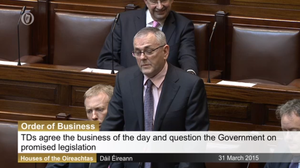
TDs continued to make statements on the report of the Justice O’Higgins Commission of Investigation into allegations of malpractice made by Sgt Maurice McCabe.

This is what Fianna Fáil TD John McGuinness said…

In the workings of the Committee of Public Accounts over the past five years, one of the most impressive witnesses who came before us and the only witness who came before us in private session was Sergeant Maurice McCabe.

Everything he said was supported by documentary evidence. Those who were concerned about how he might behave or what he might say during the course of that meeting of the Committee of Public Accounts were impressed afterwards by the fact that he presented well and proved anything he spoke and that the documents he presented to the committee showed us that there was, in my opinion, a lot of corruption within the force at that time.

A circular dated 4 July 2011 signed by the chief superintendent, C. M. Rooney, that went out to the Assistant Commissioners and district officers in the Cavan-Monaghan division, stated clearly that on 24 June 2011, Mr. Rooney had a meeting with Assistant Commissioner for national support services, Derek Byrne, at Monaghan Garda station.

It stated that the Assistant Commissioner informed Mr. Rooney that he had completed his investigation into complaints made by Sergeant Maurice McCabe and that the findings of the investigation were approved by the Garda Commissioner.

It stated that the investigation concluded that there was no systemic failure identified in the management and administration of Bailieborough Garda district.

It stated that a number of minor procedural issues were identified and that on further investigation at local level, no evidence was found to substantiate the alleged breach of procedure.

It stated that the assistant commissioner further concluded that there was no criminal conduct identified on the part of any member of the district force.

He stated that he would like to congratulate all members who served in Bailieborough district during the period in question and, in particular, Sergeant Gavigan, who provided leadership, enthusiasm and commitment and who partly steered the station through the crisis that had occurred.

It stated that the findings of the assistant commissioner vindicate the high standard and professionalism of the district force in Bailieborough and that he appreciated the manner in which the members of the district participating in the investigation were open and truthful in their account of the events surrounding the allegations.

It said he hoped all members and their families could put this difficult period behind them and continue to serve the public and their colleagues in an efficient and professional manner.

One has to take that letter into consideration when one reads the O’Higgins report because all of the cases mentioned by Garda McCabe, and which are mentioned in the O’Higgins report clearly contradict everything in that letter.

There is a serious conflict here; somebody is wrong. This letter was given to the assistant commissioner and each district officer in the Cavan-Monaghan division.

I gave an account of when Garda McCabe came before the Committee of Public Accounts. Every effort was made by those within the Garda Síochána at senior level to discredit Garda Maurice McCabe.

The Garda Commissioner confided in me in a car park on the Naas Road that Garda McCabe was not to be trusted and there were serious issues about him.

The vile stories that circulated about Garda McCabe, which were promoted by senior officers in the Garda, were absolutely appalling. Because they attempted to discredit him, he had to bring forward various pieces of strong evidence to protect his integrity.

During the course of that time, we have to recognise that the political establishment was of absolutely no help to him.

Every effort was made to ensure he would not appear before the Committee of Public Accounts. Every effort was made to dampen down the strong evidence he put into the public domain, which he had to do to protect himself, to inform us about what was going on with penalty points and other issues.

On 17 May, the Minister for Justice and Equality answered a parliamentary question on the death of Shane O’Farrell.

His mother, Lucia O’Farrell, has been campaigning since that time to have an investigation into it. The Minister relies on the review mechanism and the findings of that mechanism which she put in place.

At that time, the result of that review mechanism was that nothing further was to be done in Lucia O’Farrell’s case. Deputy Mick Wallace and others have already mentioned the name of officer Cunningham. In view of the findings and what is going on, will the Minister now reopen the case of the death of Shane O’Farrell?

Will she find out why a garda had stopped that car one hour before and asked the driver to change with the passenger because there was no tax or insurance?

The passenger then drove the car that later killed – murdered – Shane O’Farrell.

We have to reopen that case because everything in it tells us what is wrong with the Garda and the Department of Justice and Equality. We are part of a cover-up in this House if we do not clearly demand that the case be reinvestigated.

There are similar cases, such as the Fr. Molloy case and the Mary Boyle case. Why is it that the State has to stonewall each and every one of these cases?

Why is it we have to protect those who should not be protected? In whose interest is it or what is it in the interest of?

In the interests of justice, these cases have to be examined. The Minister cannot ignore this debate. She cannot ignore the facts around the officers involved in that station relative to the Shane O’Farrell case in particular.

We cannot ignore the activities of those officers who deliberately went about to set up and discredit Sergeant Maurice McCabe. They have to be independently investigated.

It has been said they are being referred to GSOC. I heard former Chief Superintendent John O’Brien this morning on the radio, who likened an investigation by GSOC to being mauled by a dead sheep. That is what he said and that is the view of the public.

For far too long in this House and in politics we have stuck to the same old politics.

In our actions, we have protected the system when that system was delivering an injustice to individuals and families throughout the country. There have been demands for the Minister and Commissioner to resign but the culture has to be changed.

That is essentially where the problem lies. We are afraid to attempt to change that culture because of the vested interests that exist. We say that we passed the legislation on protected disclosures and that now, at this late stage, the Commissioner will do something about it.

There are individuals across every Department who are affected by bullying and harassment. Their stories are being dampened down and they are being discriminated against and sanctioned for telling the truth.

The one thing this House seems to be afraid of is the truth. We are hearing the truth from Maurice McCabe. We have heard it from the whistleblowers in the Department of Finance and AIB and from the other whistleblowers in the Garda Síochána. We have done nothing about it.

I have heard at first hand a recent case which has been sorted by the Garda where a young garda was put into a situation and had to pee in a bottle rather than leave his station because he knew he was being set up.

Is that what we stand for in this House? Is that the injustice we will allow to happen?

Kicking this can down the road will not solve this problem. It will not give us the strength of the Garda that is needed to deal with the issues of crime on Dublin streets that we see at the moment.

I agree with Paul Williams who said gardaí were lions led by donkeys. He gave descriptions of all sorts of things that are happening in Dublin about which nothing is being done. The gardaí on the beat need to be supported.

Whatever it costs the State, we need to put money and resources behind them. We need to stop bluffing and stop the politically correct contributions we are making on all these issues and start to take real, imaginative and radical steps to ensure we have an independent authority that will protect the likes of Maurice McCabe.

I received an anonymous letter from an individual asking what was written on the note that was passed on the day of the Committee of Public Accounts from the current Commissioner to the former Commissioner, Martin Callinan, before he uttered the word “disgusting”.

The writer wonders if he was prompted or encouraged to do it. It has to be asked how much does the current Commissioner know and how far did the outgoing Commissioner go to discredit Maurice McCabe? It is an appalling vista as one looks at this issue.

The Minister and Members of the House have to give leadership. There must be political leadership.

My demand is that we reopen the cases before the commission, like that of Shane O’Farrell, Mary Boyle and the others, and face the truth.

We need to protect the whistleblowers that are currently being sanctioned and treated badly. It continued after the penalty points issue. Maurice McCabe highlighted that and we did nothing about it.

Transcript via Oireachtas.ie

Previously: Unsolved Ireland

Maurice McCabe And The Plastic Rat

Shoulder To Shoulder

Screen Shot 2015-03-31 at 17.15.10

Screen Shot 2015-03-31 at 16.09.33

And earlier…

Previously: Delay, Deny Then Cover-up

McGuinnesss Vincennt

Fianna Fáil TD and chair of the Public Accounts Committee John McGuinness was on Tonight With Vincent Browne, following members of Irish Water and the Department of the Environment appearing before the committee last night. They talked after they saw a clip from the meeting, in which Secretary General of the Department of the Environment, Geraldine Tallon told the PAC she didn’t speak to Environment Minister Phil Hogan ‘in specific terms’ about consultancy costs.

Mr McGuinness then spoke about how, during the meeting, it emerged €5.7million was spent on a County Managers’ Group – baffling Vincent and indeed others.

Vincent Browne: “John were you impressed by the evidence given [, concerning Phil Hogan not knowing that €50million had been paid to consultants?”

John McGuinness: “I think that the performance, in terms of the Department, Irish Water, or indeed the [Energy] Regulator – they were fine. But they raise a lot more questions and we’re talking here about the content of the answers and, whether or not, the answers are believable. And, quite frankly, I don’t see how a department can manage its affairs and not know the detail of the spend. Now..”

Browne: “Wait a minute now, I think, I would have thought, that listening Geraldine Tallon everything she said was believable and what was also believable was what she didn’t say. She was killed in avoiding the specific question.”

McGuinness: “She avoided the question but the fact of the matter is that everyone in the, or people in the department knew about this. Remember that, prior to reaching this point of €50million, and this is something that came out this evening, at the very end of the meeting. That they had a County Managers’ Group to oversee the transition and that that group cost €5.7million.”

Browne: “The County Managers’ Group?”

McGuinness: “Yes.”

Browne: “How did that cost..?”

McGuinness: “It also emerged there was a further report…”

Browne:How did that cost anything?

McGuinness: “I have asked for further information on that, but that’s what the office cost – €5.7m.”

Browne: “What office?”

McGuinness: “This particular office that would oversee the transition. Now that was on the back of..”

Browne: “Sorry, I don’t see understand it. But these people, county managers are already paid. And, so, was this travel expenses they were getting? Or what did they get?”

McGuinness: “No, it was a cost of putting together that internal group.”

Browne: “Of county managers?”

McGuinness: “Yes. As to how the €5.7million was spent and what it was for, we have to seek that from, we’ve sought that from the department, in terms of listing out what that €5.7million was for and ongoing costs, because that group apparently…”

Browne: “This is €5.7million for a group of county managers?”

McGuinness: “A group of county managers who, in their own respective counties, would have been responsible for infrastructure and delivery and it turns out now that they were also members of this group that was involved in the transition. And the cost of that operation…”

Browne: “What operation?”

McGuinness: “In terms of the office and in terms of their advising, I presume, it cost €5.7million. So, it was at the end of the meeting and we’ve asked for..”

Browne: “Let me understand this now. But. I cannot understand how, bar the costs of tea and biscuits and maybe travel costs, that county managers coming together would cost anything?”

McGuinness: “But Vincent, I can’t understand it either. It’s a figure that simply, I think, amazed people of the Public Accounts Committee and it’s a figure that was sort of dropped in at the end of the meeting, after I asked the question. But the point I’m making is that, prior to to that, there was report done by a consultant, €180.000 it cost the department. So, all of this didn’t just happen yesterday. There was a build-up to all this information and all of these costings and the figures. And it was known by the, cause I asked the question, it was know by the MAC in the department, the Management Committee, and that’s made up of political leadership, senior civil servants and so on, and they discuss this whole thing on numerous occasions. So it doesn’t come as any surprise to me that, within the department, they would have known about the €150million, plus the €30million.”

Watch here

Irish Water staff eligible for €7,000 bonuses (RTÉ)

90303834(John McGuinness. Chairman of the Public Accounts Committee).

Because he’s annoyed some very POWERFUL people.

And by ‘powerful’ we do mean ‘a reactionary, unprofessional and inefficient group of people whose veneration of the status quo and the perks, pensions and pay it gives them is costing this country a very large fortune’.

And not just Fine Gael.

The TD who wants to lead an investigation into the banking crisis, including the role of State institutions, has sensationally claimed that a cabal of civil servants wants to nobble the inquiry.
In the Sunday Independent today, John McGuinness, the chairman of the Dail’s Public Accounts Committee (PAC), says “senior public servants” fear the work of his committee which, crucially, intends to investigate events both before and after the night of the infamous bank guarantee.
He says: “There is at the heart of our administration a reactionary, unprofessional and inefficient group of senior public service managers, whose veneration of the status quo and the perks, pensions and pay it gives them is costing this country a very large fortune. It is a disgrace.”
…However, government sources said last night that “under no circumstances” would the PAC be allowed to undertake the investigation.
“It’s a done deal; it seems that [Labour’s] Alex White’s committee will get it,” a source said. But Mr McGuinness says: “Not on my watch without a struggle.”

July 12, 2012


John McGuinness TD

Taoiseach says John McGuiness revelations ‘damaging’ to Public Accounts Committee (Irish Independent)

(Leon Farrell/Photocall Ireland)

A statement from Sean Kenny TD:

The Dublin North East Labour Party TD and former Dublin City Councillor, Seán Kenny, has called on John McGuinness (above) Fianna Fáil TD and Chairman of the Public Accounts Committee to step aside over his lobbying for the Cargobridge Consortium.

“Fianna Fáil Deputy John McGuinness, then a member of Kilkenny County Council, made direct representation by letter to the then Taoiseach, Albert Reynolds, in relation to allowing the consortium to access the site over the lands owned by Minister for Transport. Deputy McGuinness’s brother, Mr. Michael McGuinness was a director of Neptune Freight. The Mahon report says that Michael McGuinness gave £10,000 in cash to Frank Dunlop in the knowledge that at least part of the money would be used for corrupt purposes.”

“The report also states that Mr. Michael McGuinness refused to attend the tribunal to give evidence. Deputy McGuinness recently made trenchant criticism of the Mahon Tribunal on its publication particularly in relation to the tribunal costs. At the same time he neglected to mention his own intervention in the Cargobridge affair, referred to in the Mahon report and I believe he is hypocritical in this regard. Deputy McGuinness is currently Chairman of the Public Accounts Committee. Regretfully, Deputy John McGuinness failed to address his involvement with the Cargobridge affair during his earlier contribution in the Dáil today. I would call on Deputy John McGuinness to step aside as Chairman of the Public Accounts committee in the light of the Mahon Tribunal account of his involvement in the Cargobridge affair.”

“It is absolutely imperative that we have open and transparent public representatives working to represent the people of this country. The Mahon Report shows just how society is damaged when that does not happen. John McGuinness has, I believe, shown himself to be the opposite of open and transparent. It is for that reason that he should resign as Chairman of the Public Accounts Committee. He did not act in the public interest when he lobbied for his brother, and I believe that he cannot be trusted to act in the public interest any longer.”

(Leon Farrell/Photocall Ireland)