
Tag Archives: Lucinda Creighton

rep2And that I would be her Minister for Love

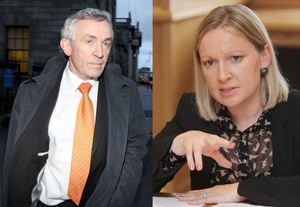
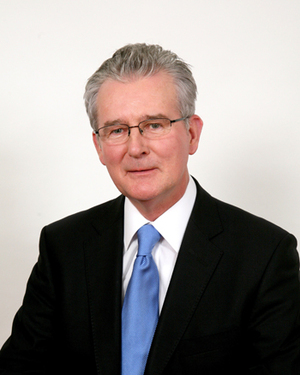
Fine Gael’s Paddy McCartan. (above) ,the “Junior Councillor for the Pembroke Ward” in Dublin South East went on Today with Pat Kenny on RTE R1 this morning to deliver an eleventh hour plea on behalf of Lucinda Creighton’s FG-voting constituents.

She’s losing Dublin 4.

Pat Kenny: “So as the Junior Minister for European Affairs Lucinda Creighton wrestles with her conscience coming up to the vote on the Protection of Life during Pregnancy Bill, her Fine Gael party members in Dublin South East are far clearer on what she should do. Now we will be talking to the minister herself later on in the programme but for now we’re joined by Paddy McCartan, Junior Councillor for the Pembroke Ward in that constituency. Paddy, good morning!”

Paddy McCartan: “Morning Pat!”

Pat Kenny: “Now first of all, what do you want Lucinda Creighton to do?”

Paddy McCartan: “I want Lucinda to support this bill on behalf of the members of the constituency.”

Pat Kenny: “How do you know what the constituency thinks on this particular issue?”

Paddy McCartan: “Well, going back to a meeting I had with Minister Creighton on Friday, I indicated to her that many members had requested a meeting with her and I said I would meet her on their behalf and express their views to her and which I duly did and she responded and then I conveyed those views to what her stand was and I let the members know what she thought.”

Pat Kenny: “Now in terms of what you said to her about what the Fine Gale members in the constituency felt. Clearly you spoke to a lot of active Fine Gael members.”

Paddy McCartan: “Active members. I am not talking about her constituents, I am actually talking about the party membership in Dublin South east or Dublin Bay South as it is now. These members are based in the branches Sandymount, Ballsbridge, Donnybrook, Pembroke and the vast majority of them expressed a wish, while supporting Minister Creighton, that she still, they wanted to see her stay within the party to deal with these issues in the future.”

Pat Kenny: “What is it they believe, that the Bill that is being put before the Oireachtas is a government bill that should be supported by her irrespective of her personal reservations?”

Paddy McCartan: “That would be the view of the vast majority of the members I have spoken to.”

Pat Kenny: “And, do you know if those members have any personal reservations themselves and agree with her but feel…?”

Paddy McCartan: “I think we can all interpret this Bill in different ways. I don’t think there’s any… it’s a complex bill, there’s nothing black and white any more in medical science or in technology, there’s grey areas, Lucinda may be right, I may be right but we think that in the best interests of the government which is pledged to introduce this legislation and pass it that it should be supported, and that would be the view. Now if I could just run through a few of the texts I got from people after I had met the Minister, and I’ll give a fair balance of what was said. One of them said there was a waste of talent, another one said they were very disappointed, another one said they felt let down, another one said fair play to Lucinda, another one said I admire Lucinda, another one said not surprised and another one said does that mean she wants to leave politics. So, I mean there was two of those there that expressed a view fair play to her now but that doesn’t necessarily mean that, the you know the implications of actually losing whip and all that goes with that…”

Pat Kenny: “Would there be a difficulty in her getting a nomination in Dublin Bay South next time round following this action if indeed she does decide to leave the parliamentary party, because that’s what a decision to vote against this Bill would mean?”

Paddy McCartan: “Well, I support Minister Creighton on this, I don’t see anywhere in the Fine Gael rule book that she wouldn’t be allowed to stand and I think there might have been a slight backing down on that position, you can’t prevent someone from putting their name forward at a convention and seeking a nomination and personally I don’t think that’s going to happen, I think two and a half years down the road Lucinda may very well seek a nomination but what I’m saying is that a lot of the people, her supporters who are my supporters, like we’ve worked very closely, Lucinda and I have been involved in active politics, I’ve been involved for over thirty years in Dublin South-East, Lucinda has been there for over ten years, we have worked very closely together and our supporters have worked very closely together but I would certainly think that based on the comments I got a lot of that support base could not be guaranteed in the future.”

Pat Kenny: “Could not be guaranteed in the future. So she’s putting her political future on the line. One last point – is it your view that other people in the party who have decided to support the Bill, perhaps with all the pressure that’s been brought to bear on them with great difficulty supporting the Bill, but they’ve had to suck it up and she as someone who’s enjoyed high office should suck it up as well?”

Paddy McCartan: “Well, there would be. That’s not an unreasonable, that’s not an unreasonable view, I think. I mean I was surprised at the demands for the amendments when Lucinda knows that there’s no possibility of those changes being made.”

Pat Kenny: “So what’s she doing? Grandstanding?”

Paddy McCartan: “No she’s not. As I’ve said and I will say this to you Pat and to your listeners that I have said it to Lucinda and I’m on record as saying it to her that I had a vision, like we’re a ambitious constituency, Dublin South East, John A Costello, Garret Fitzgerald and I had hoped that in time Lucinda would become a cabinet minister, become leader of this party and with all that that would entail become the first female Taoiseach and I’ve said that to her and it’s a great personal disappointment to me if, if this happens and will be a great disappointment to most of the membership and I think I’m correct in that, though you know I think Lucinda may confuse support of the members with actually… we’re all supportive of her but what we want her to do is a different thing.”

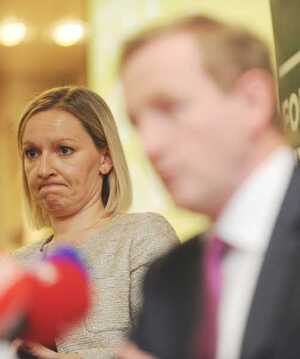
(Fine Gael, Sam Boal/Photocall Ireland)

n504872475_989067_12In an open letter to pro-life, Fine Gael Minister Lucinda Creighton.

Angela Coraccio (above) writes:

Dear Ms. Creighton,

As a non-national resident of Ireland, I do, as you recommend, reflect on the privilege I enjoy every day in this country, particularly as an educated caucasian woman with a loving husband. But when you use that collective “we,” you assume that every woman in Ireland is like you. A short walk around Dublin will prove otherwise. Women in poverty, migrant women, asylum seekers, women in abusive relationships being controlled by their partners, and women too ill to travel live here too. Is it not the duty of us privileged people to ensure that they have the same access to their rights as we do?

You mention that we live in a “free” society here in Ireland while simultaneously trying to argue that women shouldn’t be allowed to have bodily autonomy, which in my opinion is the most basic human right there is.

Furthermore, I am disappointed that you felt the need to claim you have “no respect” for the “hysterical” opinions of Olivia O’Leary in such a public manner, claiming her arguments are not rational.

These are the exact ways in which patriarchy has been characterising women’s opinions as invalid for centuries. To accuse another woman of hysteria rings of self-hatred and serves to give the world permission to dismiss vocal women, including yourself. How can you “respect the right of everyone to speak freely and honestly” immediately after you’ve just said you have no respect for someone else’s honest opinion?

I myself have been trying to conceive a child for nearly two years. However, I would never allow my experiences with infertility colour my views on how other women view their pregnancies. Your implication that because some women can’t become pregnant, women who are pregnant need to carry those pregnancies to term is slightly outrageous, particularly since adoption laws in Ireland are so restrictive. If a disabled person can’t run, she doesn’t demand that all able people should take up running.

But perhaps the most alarming statements in your blog are about late term abortions. You and I both know that the overwhelming number abortions happen in very early stages. I believe your misleading comment comparing late term abortions to premature births was meant to whip up people’s emotions. I suppose that’s what politicians do. But it doesn’t reflect the rationality you claim to own.

Gulp.

More here: An Open Letter To Lucinda Creighton (Angela Coraccio)

Previously: Lucinda To Olivia: Get A Grip

Thanks Mark Malone


Creighton Launch of Ireland’s First Walking App for iPhones

On RTÉ’s Drivetime on Tuesday evening, Olivia O’Leary, above, spoke about Ireland’s abortion laws. During her radio column she called on the Irish government to ‘kick the Taliban out of the Constitution‘.

Some took that personally.

Fine Gael Junior Minister Lucinda Creighton writes on her website today:

“The debate on abortion became a bit surreal this week. Olivia O Leary in a radio piece on Tuesday urged that we “kick the Taliban out of our constitution” while proclaiming that “Ireland is no country for young women.”

“I beg to disagree. I am a relatively young woman and I consider Ireland to be a fantastic, safe, free and open country in which to live. I am proud of my country and I will defend Ireland to the last. We are extremely fortunate to live in a country where human rights are protected by a constitutional and legislative system which is second to none.”

“To compare Ireland or our Constitution to the Taliban is grossly misleading. Olivia O’Leary should, and I’m fairly sure does, know better. Could she really believe that the Shia women of Mazar-e-Sharif, whose husbands were executed and had their throats slit before their eyes and those of their children, would agree that Ireland is a terrible, oppressive place to live? Many of those same women saw their children stuffed into containers and sent to unknown destinations, left to suffocate in a slow and painful death. Would those women, I wonder, condemn the Irish legal system which strives to protect the lives of all children?”

“Does Olivia also wish to compare Ireland and our treatment of women with the Taliban leaders who routinely abduct women and sell them into sex slavery like animals?

“I would kindly ask Olivia O’Leary and the many other people who have been using this Taliban analogy in recent days, to take the trouble to inform themselves.”

“Perhaps read the chilling report ‘The Taliban’s War on Women’ which was published by the organisation Physicians for Human Rights. It graphically outlined the total oppression of women in Afghanistan by the Taliban, with over 50% effectively under house arrest, with no freedom to travel, to drive a car, to wear what they choose, marry whom they wish, with no sexual freedom or economic freedom or any real freedom.”

“She should reflect on just how lucky we are – how privileged we are to live in the free, open, caring, tolerant society that is Ireland. And perhaps reflect on how much we take this for granted.”

“I respect the views of the many people who disagree with me on the question of how we should handle the issue of abortion. But I cannot respect the sort of hysteria and incitement which poured forth from Ms. O’Leary on RTE radio the other day. You may want abortion to be brought in Olivia, but please do not suggest that ours is a country comparable with one ruled by an Islamic fundamentalist terrorist movement. Get a grip.”

“For my part, I am genuinely trying to have a reasoned and rational debate on this issue.”

“I hope that, notwithstanding the strong and genuinely held views on both sides of the debate, we can respect the right of everyone to speak freely and honestly about their hopes and their concerns.”

“I fully support steps (regulatory or legislative) to give certainty to pregnant mothers and doctors in cases where there are medical complications and a woman’s life is at risk. That makes absolute sense. Why would I, or anybody else, want to see a woman’s life endangered in any circumstance?”

“I do have concerns about the proposal to legislate to for suicide as a ground for abortion. Legislating for suicidality worries me, because as 113 consultant psychiatrists said clearly today, such a step has “no basis in medical evidence”. Surely we should legislate on the basis of medical facts, and be guided by the experts who know their patients and their conditions better than anyone else.”

“The statement of the 113 consultant psychiatrists reads:

“As practising Psychiatrists we are deeply concerned at the Government’s stated plan to legislate along the lines of the X-Case, as this will mean legislating for suicidality. We believe that legislation that includes a proposal that an abortion should form part of the treatment for suicidal ideation has no basis in the medical evidence available.”

“I have been accused repeatedly of being some sort of a fanatic or fundamentalist. Anyone who knows me – my friends, my family, my colleagues – knows that is simply nonsense. For the record, I do not come to this debate with any religious or idealogical ‘hang-up’. Like 85% of the population I have been brought up as, and describe myself as a Catholic. I am not a particularly devout one and I am not diligent in attending religious ceremonies. So I suppose I am like most Irish Catholics in that respect.”

“My support for human life is not based on any blinkered ideology. When I was a student, I would have regarded myself as liberal on the issue, being in favour of abortion. I suppose I simply bought into the accepted notion that a foetus is simply an extension of a woman and not a person.”

“However, I have come to believe that I was wrong. And I don’t change my view lightly. My opinion is, I suppose, shaped by a number of factors, personal experience with family members and friends, a more objective analysis of the arguments on both sides and of course the facts, which are all important. The clear view of those practising psychiatrists is most convincing. I cannot ignore either, the very compelling experience of having dealt with so many parents going through adoption procedures, who have been through IVF and are doing everything they can to support human life. Life is precious. We cannot change that.”

“I personally consider this debate, on a very basic level, to be a human rights issue. It is about the human rights of women and of their unborn babies. The fact that a baby is not born does not mean that it is not a life and therefore worth defending. There is a great irony in the fact that we throw all the resources in the world (and rightly so) at saving the life of a premature baby born at 23 or 24 weeks, and yet some may consider the abortion of that baby, at the same stage to be right and just. I don’t.”

“I oppose all intentional taking of human life. I consider the use of the death penalty to be barbaric because essentially it bestows on certain human beings a higher power to determine the right to life of other human beings. I think most of us agree that no person has the right to end the life of anyone else. If we somehow modify that basic core value of humanity, then we start to calculate human life in terms of worth. Is your life worth more than mine? If you are “unwanted” are you fair game? Is one life somehow ranked higher than another? If so who decides? And where does this ranking of human beings end?”

“For me this is a very important core question – whether we choose to protect the fundamental rights of all people, men and women, young and old, babies and adults. Whether we do or not very much informs how we view abortion.”

“I am so glad that I live in a country which does defend life with the full rigour of the law. I accept that there is a need to provide clarity for doctors so that they can ensure that they legitimately defend the lives of pregnant women without fear of legal or criminal sanction. I believe that the medical profession has done this admirably for a long time, within the parameters of the existing Medical Council guidelines. I have no fear of the Oireachtas giving legal underpinning to this. It is of course, also in full alignment with our clear constitutional obligation under Article 40.3.3 to defend and vindicate the rights of the mother and unborn child equally.”

“Unlike Olivia O’Leary, I believe that the Ireland of today is a great country for young women. Thankfully it is also a great country for all people, including young babies.”

Previously: Dr Peter Boylan and Breda O’Brien: The Transcript

Anything Good On BBC News 24?

Sam Boal/Photocall Ireland and Trail Kilkenny

00132560

Labour TD Aodhan O Riordain has described the call from some in Fine Gael for a “sunset clause” to be included in the X Case Legislation as a “nonsense.”
“…Talk of floodgates is incredibly irresponsible. This is cowardice from legislators whose responsibility is to protect women’s lives and their constitutional rights,” he added.
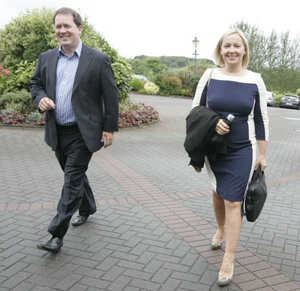
The call has been backed by Junior Minister Lucinda Creighton [above with her husband, Fine Gael Senator John Bradford, a pro-life supporter, in 2011] who said it was constructive and sensible and should be considered by Cabinet.


Call for ‘sunset clause’ in abortion legislation (RTE)

(Eamon Farrell/Photocall Ireland)

http://www.youtube.com/watch?v=3R74D9R0aUE#t=16m25s

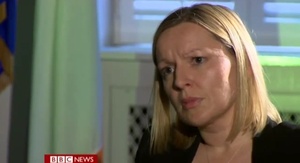
BBC’s HARDtalk was in Ireland this week to meet Minister for European Affairs, Lucinda Creighton.

Only a week ago presenter Stephen Sackur met Hamas leader, Khaled Meshaal.

Did he hear a more moderate voice on women’s rights and marriage equality in Dublin?

You decide.

Stephen Sackur: “I wonder why you have decided to take a couple of high profile positions that maybe wouldn’t fit easily into that notion of modernisation.First one, on gay marriage you’ve said you’re absolutely up for civil partnerships. You believe they’re the right way to go but you do not want to see gay marriage in Ireland. Why?”

Lucinda Creighton: “Well I suppose I have been a supporter of em the notion that em that gay people should have…”

Sackur: “Equality?”

Creighton: “…rights. Of course and have that recognised.”

Sackur: “Surely equality means that should they wish to do so they can get married in just the same way that heterosexual couples can get married.”

Creighton: “Well I suppose it is a matter of opinion, I mean in our constitution and the way it is interpreted by our courts system, marriage is and has been and continues to be defined as marriage between a man and woman.”

Sackur: “So you’re defending this on the basis of tradition?”

Creighton: “Well there’s not always something wrong with tradition I mean you know. I think…”

Sackur: “Well I’m just trying to tease out how this fits with your notion that you know Ireland needs to modernise, needs to look forward to the 21st century, not back.”

Creighton: “Oh absolutely. But I don’t think necessarily that modernisation means that you just totally abandon tradition. I think you can have both in fact, side by side. And there are many ways in which we need to modernise I just don’t believe that that’s one of them. And you know, speaking as somebody who unlike many of my colleagues in our parliament eh spoke eh on our legislation two years ago on civil partnership I spoke
passionately in favour of it because I believe it was the right thing. But that I suppose is a, a matter of opinion. One thing I do think will happen just while we’re on that subject is that I do think there will be a referendum to change the definition of marriage eh in our constitution at some point.”

Sackur: “What do you think they would decide?”

Creighton: “I really don’t know, genuinely I don’t know. Em I think there are very divided opinions.”

Sackur: “Opinions are shifting, aren’t they? And if one is going to be very blunt about it the role and influence of the Catholic Church is changing pretty rapidly in this country.”

Creighton: “Absolutely. Oh yeah I mean I think…”

Sackur: “Which brings me to another point if I may, which is your passionate defence of Ireland’s current laws and practices when it comes to abortion. It’s one of the most draconian countries in Europe when it comes to outlawing abortion em…abortions can only happen in this country if there is a substantial significant risk to the life of the mother. You want the curent status quo to be maintained even though there is a very loud and public argument now with many Irish people now who want it to change. Indeed your own government is talking about legislating to be clearer and actually a little broader about the specifications in which an abortion can be carried out. Why are you so against that?”

Creighton: “Well firstly, I would very much take issue with the view that em having a very restrictive em position on abortion in this country is somehow draconian. We have a very clear position in our constitution…”

Sackur: “What word would you choose?”

Creighton: “Well I wouldn’t call it draconian. No…Well..I…to explain, I mean firstly in our constitution, we as a country, the Irish State, values equally the right to life of mothers and babies and that includes unborn babies so there is no distinction or hierarchy.”

Sackur: “Final point on this, you know better than I do the stats here. Hundreds and hundreds of women over the last three years alone who have left the Irish Republic to get abortions abroad, many in the UK. These include nineteen rape victims, twenty one with severe health problems, more than twenty girls under the age of sixteen.
Now does it seem to you, right that the way the system works right now, those extremely vulnerable young women all have to go abroad to get abortions?”

Creighton: “Well firstly, I don’t know where your information is coming from but I think it’s..I think it’s from my point of view and I’m just speaking from my personal point of view, I feel very strongly em that you know there is virtually, very very few em circumstances that I’m aware of where treatment cannot and should not be provided for..for women who are vulnerable, who are pregnant.
I don’t see abortion as a treatment for vulnerable women em I mean it depends I suppose on your view of life and it depends on your view of unborn children. But I feel very strongly and I support very strongly our constitutional position which is that there is an equal right to life of women and unborn babies and you know that is something I think Irish people have held dear for many many years and it is something I consider to be worth defending.”

A Cork developer told the High Court yesterday he was “absolutely shocked” by comments made about him by Minister of State Lucinda Creighton.

Michael O’Flynn, chairman and managing director of the O’Flynn Group, alleges he was defamed in a speech by Ms Creighton, then a backbencher and now Minister of State for European Affairs, titled Standards in Public Life and Accountability, at the MacGill Summer School in Glenties, Co Donegal.

In her Glenties speech, Ms Creighton had said there could be no room in Fine Gael for “the cute-hoor politics” which she said had tainted Irish public life like “an incurable cancer . . . We cannot be satisfied with low standards in high places.”

She said: “We cannot, on the one hand, condemn Fianna Fáil for entertaining developers in the Galway tent, while on the other hand extend the biscuit tin for contributions from high-profile developers, who are beholden to Nama.”

In her subsequent interview on RTÉ’s News at One, Ms Creighton said what made her uncomfortable was that the golf classic was “supported by a developer who is one of the top-10 indebted developers to Nama in the country”.

Asked if she was referring to Michael O’Flynn, she said “yes”. She said: “That’s the one really that stands out.”

*large popcorn, diet coke, jelly snakes, maltesers*

Developer says Creighton defamed him (Joanne Hunt, Irish Times)

(Sam Boal/Photocall Ireland)