
Tag Archives: Mercille on Monday

CIpwaIQW8AExlDL Athens, Greece this morning

What’s worse than a run on the banks?

Letting the Greek people decide their own fate.

Dr Julien Mercille writes:

Tomorrow [Tuesday June 30], the Greek government is supposed to pay back an IMF loan of €1.5 billion. But Greece doesn’t have enough money for that. So it needs to receive new loans from the European Union to pay it back along with some other loans that will have to be paid in the near future.

However, the EU says it will only lend Greece the new money if Greece agrees to a series of austerity measures. But Greece is not ready to do that to the extent that the EU wants to.

Of course, the whole drama is a scam because austerity measures do not work to revive an economy in a downturn – they actually make it worse. So why are the EU and IMF insisting on those measures, if everybody knows they don’t work? Because they want to restructure the Greek economy in a way that benefits corporate power.

This involves a range of things like privatization of state assets that can be taken over by private interests, cutting salaries and pensions to make labour cheaper for employers, enacting low corporate tax rates, etc.

Therefore, it goes without saying that the troika is very much opposed to ordinary people having any say in this, because it knows full well that such policies would not be accepted. The troika thus has to oppose democratic forces.

This became clear when, tired of negotiating with the EU governments, Greece pulled off a nice trick: a popular referendum. Greek people will vote, next Sunday July 5, on whether they want to accept or reject the latest offer from the troika.

The fact that the very idea of a referendum was greeted as a bombshell in the media shows how unaccustomed we have become to resort to democratic decision making in Europe. In fact, there is nothing wrong in letting people decide on matters that will affect their lives. This should be the norm, not a surprise.

But elites everywhere are horrified, in particular, the Irish government. Enda Kenny reiterated once again that Syriza should get serious and that Ireland wouldn’t support debt write-offs, even though it is obviously what is needed.

Joan Burton said that Syriza is just interested in lecturing the rest of Europe about economics than being serious. Michael Noonan said emergency funding to Greek banks could be cut off unless a deal is reached. And you can safely bet that many other politicians thought the same.

The reason is a classic one in power systems in which a minority of elites seek to control the majority of the population: the threat of a good example. This means that if Syriza is seen to be winning and provide a clear and working alternative to austerity, this is likely to embolden similar forces elsewhere in Europe and could ultimately spell disaster for conservative forces like the Irish government.

Those who think that’s a conspiracy theory don’t understand how power works. For example, Stephen Collins, the conservative Irish Times commentator, does understand, and says exactly the same thing. He wrote a piece that pointed to the threat of “contagion”, i.e., the threat of a spreading Syriza example in Europe:

“If Syriza gets a substantial debt write-off and further financial aid with no serious commitments to political and economic reform, the response of the main Irish parties to the crisis here will be utterly discredited. The political implications of that are obvious. Sinn Féin in Ireland, Podemos in Spain and any number of populist left and right wing parties would be on the march in Europe. Political contagion rather than economic contagion would become a real threat to the euro and the future of the EU itself.”

Since our leaders are opposing the Greek people and Syriza, the only hope to change anything is an international campaign of solidarity and action at the grassroots level.

The Greek Solidarity Committee has just been formed in Ireland and needs members. This week it will organize a series of events and protests. Its facebook page will provide all details. Last week some of its member conducted a sit-in at the offices of the European Union in Dublin in which I participated (only to report for Broadsheet, of course).

Finally, the media has become filled with scare and horror stories of a potential Greek exit from the eurozone. Of course, the potentially destabilising consequences of Grexit are real. However, there are two main reasons why such fears might be exaggerated.

First, in my opinion, it would be very unlikely to see Greece exit the Eurozone because this could well mean closer relations with Russia or even China, for example to obtain needed loans. Greece might leave NATO. Greece could participate in Russian pipeline projects, etc. I find it hard to believe that the United States (and Germany and Europe) will tolerate that.

In fact, there have been press reports that yesterday President Obama spoke to Angela Merkel and that the two agreed that it was “critically important” to find ways to keep Greece in the eurozone.

The White House has issued a statement: “The leaders affirmed that their respective economic teams are carefully monitoring the situation and will remain in close touch. The two leaders agreed that it was critically important to make every effort to return to a path that will allow Greece to resume reforms and growth within the euro zone”.

Moreover, the US treasury secretary, Jack Lew, urged the IMF and European finance ministers to find a “sustainable solution” to Greek recovery in the eurozone, including debt relief is necessary. Lew said it was “important for all parties to continue to work to reach a solution, including a discussion of potential debt relief for Greece, in the run up to the 5 July referendum” planned by Syriza on Sunday.

Second, let’s assume I’m wrong and that Greece does exit the eurozone. Well, that most likely won’t be as catastrophic as we’ve been led to believe. For the first few months, sure, it will be tough and chaotic. But after that, growth could finally kick in and things should get at least better than they are at the moment.

Argentina, which did default and de-pegged its currency from the US dollar in 2001-2002, saw years of strong growth in the years that followed. If Greece even sees half of that growth, it would be amazing compared to the pain austerity has inflicted onto it since the troika got involved.

Such a successful default could actually provide an example to other European countries that exiting the eurozone is not the end of the world, but may actually be the beginning of a better life.

@JulienMercille is lecturer at UCD and the author of The Political Economy and Media Coverage of the European Economic Crisis: The Case of Ireland (2015, Routledge). His new book, Europe’s Treasure Ireland (Palgrave), will be out next month.


00134483

Mercille

A candlelit vigil in memory of Savita Halappanavar (top) and Julien Mercille

It’s Monday.

It’s 9.41am.

It’s Mercille on Monday at 9.41am.

Dr Julien Mercille writes:

Last week, the Irish government got hammered three times because of the way it mistreats its citizens: by Amnesty International on abortion, by the Rape Crisis Network on funding cuts, and by the United Nations on a poor human rights record under austerity. We will have to organise and push back, because rights are not granted—they are won.

(1) First, Amnesty International released a thundering report on abortion, entitled “She is not a Criminal”. It says that Ireland’s approach to abortion is “deeply rooted in religious doctrine”.

Let’s start with this line that summarises it nicely: “The Irish state and religious institutions enforce harmful gender stereotypes and have institutionalized violence against women and girls”.

Or this one: “Ireland’s abortion law continues to criminalize abortion in cases of rape, incest and fatal or severe foetal impairment, perpetuating the suffering of survivors of sexual violence and of women and their partners already grappling with a devastating loss”.

And a last one: “The long history of the criminalisation of abortion in Ireland is part of a broader social and political context in which the state and religious institutions have subjected women and girls to strict, punitive social controls around their sexuality”.

The report underlines that human rights bodies worldwide have repeatedly maintained that “restrictive laws on abortion, including those that exist in Ireland, violate women’s and girls’ rights to life, health, privacy, non-discrimination and freedom from torture and other ill-treatment”.

Ireland’s record is atrocious: it “has long had one of the world’s most restrictive abortion laws” and has refused to reform its laws despite repeated criticisms from numerous human rights bodies.

The recent reform of the Protection of Life During Pregnancy Act 2013 has brought no significant change. In fact, in the first case of denial of a lawful abortion under the new rules (the Ms. Y case), this is what happened: “health care providers coerced a young, suicidal woman, pregnant as a result of rape, who qualified for a lawful abortion on suicide grounds, to continue with her pregnancy to viability and then deliver by caesarean section”.

There is thus a lot of room for improvement on this front.

(2) Secondly, Tusla, the State’s Child and Family Agency, decided to end funding for the Rape Crisis Network of Ireland (RCNI), which is the umbrella body for the country’s 16 rape crisis centres. Last year, they received 18,000 calls, texts and emails and supported 1,900 people through counseling. The cut amounts to €250,000—70% of RCNI’s income.

This comes on top of significant cuts to rape crisis centres around the country since 2008 when austerity started. For example, the annual budget of the Dublin Rape Crisis Centre was cut by €300,000, about 30% of its budget.

Other Centres have been targeted in a similar fashion. Last year, two Rape Crisis Centres (in Clare and Tipperary) even had to close temporarily because of government cuts to their funding.

Those who believe that cutting services to rape victims will “increase Ireland’s economic competitiveness” and will “reassure the global markets” probably believe anything.

A more sensible explanation was provided by the Irish Examiner: it called the cuts “regressive, dangerous and almost a tacit expression of misogyny”. The cuts say to “rape or abuse victims that this service, one they can turn to in a moment of great crisis, is not regarded as important, much less essential”. It noted that “This society’s record in supporting victims of rape, abuse or crime is not enviable”.

(3) Thirdly, the United Nations examined Ireland’s compliance with its international obligations with respect to housing, education, health, non-discrimination and other issues.

Ireland got hammered again. The UN said a referendum on abortion must be held to protect the rights of girls and women. It also said that the division between Church and State seems “to be a little fuzzy” in this country.

It questioned discrimination in schools against disabled children, non-Christians and Travellers, given that schools are dominated by the Catholic Church.

The effects of austerity were also noted. In the words of the Irish Human Rights and Equality Commission, the burden of austerity measures “has fallen disproportionately on those least able to bear its impacts”. In other words, the most vulnerable have been targeted the most.

There are also concerns about “Direct Provision centres for asylum seekers, nursing homes for older people, day and residential services for persons with intellectual disabilities and care services for children—many of which are run on a for-profit basis”.

Many other examples could be added, but it is clear that the government is not in the business of caring about Irish citizens.

The trap in which we must not fall is to sit back and hope that the government will reflect on its actions, recognise its mistakes, and then choose to rectify the situation. Politicians know perfectly well what is going on—they are the ones doing it! In any case, it’s rather obvious that closing a rape crisis centre will affect rape victims. Or that cutting government services will affect those who depend on them.

Therefore, the point is not to “talk to power” and explain to the government that what it is doing is wrong. Popular pressure needs to force political leaders to change what they do. Because rights are won through social action. They are not granted by the powerful out of generosity.

@JulienMercille is lecturer at UCD and the author of The Political Economy and Media Coverage of the European Economic Crisis: The Case of Ireland (2015, Routledge). His new book, Europe’s Treasure Ireland (Palgrave), will be out in July 2015.

90381253

julienm-226x300

Denis O’Brien, top, and Dr Julien Mercille, above

He’s redacted everyone.

EVERYONE!

But NOBODY gags Julien Mercille.

(unless you ask his permission first and use the ‘secret’ word)

Dr Mercille writes:

Last week in the Dáil, Catherine Murphy TD talked about Denis O’Brien and his dealings with IBRC. What she said is obviously of public interest, because the State owns the bank, and we’re thus entitled to know how it is dealing with its customers.

Ms Murphy said a couple of interesting things:

-IBRC apparently made loans to Denis O’Brien on favourable terms, like charging him an interest rate of 1.25% when IBRC could have charged 7.5%. If true, this means a significant loss for IBRC, because we’re talking about loans of up to €500 million.

-The former CEO of IBRC apparently made a verbal agreement with Denis O’Brien to allow him to extend the terms of his expired loans. This verbal agreement never went through the credit committee for approval.

These statements were published on the parliament’s website, so anybody can read them there.

But Denis O’Brien is not happy with the statements being circulated, so he’s now claiming that no media outlet can report them because he has a court judgment (injunction) that says so. But we don’t even know what this court judgment says, because it hasn’t been released.

Nevertheless, most media outlets in the country have chosen not to publish Catherine Murphy’s statements for the moment. They will now ask the courts this week if it’s OK to do so.

The legal issue seems to boil down to this: normally, the Irish Constitution (Article 15.12) allows the media to publish whatever is said in the parliament. But now, there is this court injunction in favour of Denis O’Brien that says the opposite. In short, the issue is: Who has priority, Ireland’s Constitution, or Denis O’Brien? Lawyers will argue over this one and we might know the outcome of their debates in the next few days.

A few points are worth bearing in mind to contextualize the whole controversy.

First, it all goes back to inequality. Ireland is an unequal country. Before anybody denies this, just pick up a copy of the 2015 Irish Rich List, and you tell me if there’s equality in this country. In fact, income inequality has risen in most nations over the last several decades, a result of right-wing economic policies.

Inequality means that a minority of powerful people have significant control over others’ lives. So to prevent this type of scandal from erupting again, we need to reduce inequality.

Second, and related, Ireland’s inequality is reflected in its concentration of media ownership and the lack of a strong alternative press. The situation now is that the owner of the bulk of Ireland’s media is using the courts to prevent the whole media from reporting on his affairs. If Denis O’Brien controlled just a tiny bit of the Irish media, and if nobody controlled more than a tiny bit of Ireland’s media, power would be more dispersed and it would be more difficult for one tycoon to determine much of what we read, hear and watch on TV.

We also need to strengthen the alternative media that prints progressive news stories consistently—and no, that’s not Facebook or Twitter.

Third, the hypocrisy of the mass media should be noted. The media has systematically supported the interests of the rich and powerful. For example, it has cheered on the bank guarantee that made citizens responsible for banks’ liabilities; it has consistently called for austerity even though it doesn’t revive economies in a downturn; it doesn’t talk seriously and to the extent needed about a range of issues like poverty and deprivation, payments to bank bondholders, how a public health care system is the best option, how Podemos and Syriza are rising in Spain and Greece, etc. (I give more details on this in my book on the media’s coverage of the economic crisis, which is now available for free in pdf here)

However, it would not be hard to report the work of those who have looked into this issue. For example, when is the last time you saw the media discussing the work of Michael Taft, the economist of the union Unite, who writes excellent economic analysis at his Notes On The Front website? Why don’t we hear more about the findings of the Nevin Institute or Tasc? Those are arguably the best sources of economic analysis in the country, but the media mostly ignores them.

In short, the mainstream media should be supported in its attempt to report on Catherine Murphy’s statements, but should also be reminded that it is in large part responsible for setting the conditions allowing the powerful to control so much of what goes on in this country.

@JulienMercille is lecturer at UCD and the author of The Political Economy and Media Coverage of the European Economic Crisis: The Case of Ireland (2015, Routledge). His new book, Europe’s Treasure Ireland (Palgrave), will be out in July 2015.

bintruckjulienm

Fade Street, Dublin on Saturday afternoon (top) and Julien Mercille (above)

Women want to be with him.

Men want to marry him.

It’s Monday.

It’s 9.45am

It’s Mercille on Monday at 9.45am.

Dr Mercille writes:

By voting Yes in the marriage referendum, Irish people have taken a giant step in altering popular consciousness. The activism that has taken place over years and culminated in Friday’s vote has made Ireland a more civilised country. The referendum also marked the further erosion of Church control over society, which can only make Ireland saner.

The issue of marriage equality attracted massive media attention. I haven’t done a systematic analysis, but it seems that coverage was roughly equal, so that in the press, a Yes article was usually juxtaposed to a No article.

One could say that this is an example of good, objective media performance. But we need to be careful with that tired notion of ‘balance’ in the media. It’s often a cover for driving conservative agendas.

The issue of marriage equality was a no-brainer. What would we say if we had another referendum on, say, taking away women’s right to vote? Would we want a ‘balanced media’ giving all sorts of arguments claiming that women shouldn’t have a right to vote? That would be odd, and we would recognize at once the conservative nature of the media on that issue. It’s a bit what happened in this referendum, where countless groundless arguments on the No side were given ample space in the media.

In any case, the vote has gone through and it might be more important to look ahead than backwards. Democracy is a full time job, and much remains to be accomplished.

For progressives, it will be important to reject the establishment parties’ attempt at propping up their electoral fortunes through the referendum.

Stephen Collins, the conservative political editor of the Irish Times, wrote an important article on this issue this weekend. He said that the political parties will now try to claim credit for the successful outcome of the referendum. They want to boost their popular support as the general election approaches.

Fine Gael, ironically, could benefit even if it was initially reluctant to hold the referendum: ‘By adopting a cause that is clearly so popular with younger voters Enda Kenny has positioned Fine Gael to add a progressive social image to the Government’, even though it is in fact right-wing and conservative.

For the Labour Party, even two extra percentage points in support ‘could make a vital difference to its electoral prospects in less than a year’s time’.

Fianna Fail, on its part, by ‘taking the progressive and popular side’ has given itself ‘a chance of persuading younger voters to back the party in the election’.

But we need to remember that the main parties are the ones who put the country into such a deep mess. There is a long list of problems, including health care, housing, unemployment and deprivation, which still affects 31% of the population, up from 12% in 2007.

This week provided two other concrete examples of issues to address.

First, believe it or not, Dunnes Stores management struck again. Out of the blue, it announced the ‘immediate closure’ of its Gorey Store in Co. Wexford, putting 100 workers out of work. The workers have no idea what will happen to them.

According to the union Mandate, Dunnes’ behavior is ‘despicable and grossly irresponsible’. The reason for the sudden closure appears to be a petty dispute over a side entrance. Last November, Dunnes Stores opened a door leading directly onto the car park so that customers could bypass the smaller shops on the mall. Dunnes was asked to close that door but refused to do so.

To force Dunnes to close the door, a court injunction was granted a few days ago. Following the court’s decision, Dunnes Stores decided to close the store. Mandate says Dunnes is using the workers as a protest against the court’s decision, effectively using their workers as pawns in the dispute.

Second, we’ve heard a lot about ‘the children’ in the referendum. Actually, Irish children are not doing so well, according to a new report compiled for the United Nations by the Ombudsman for Children’s Office. It shows that the economic crisis and austerity have had serious consequences for thousands of children.

The Irish Times summarized it thus: ‘The Government is tolerating ‘unacceptable’ levels of child poverty, standing over discrimination in schools and failing to protect children from violence, homelessness and bullying’.

A few illustrations:

– 138,000 children are living in poverty, i.e., an increase from 6.8% of children in 2008 to 11.7% in 2013. The government’s target is to lift 70,000 of them out of poverty by 2020, but that will still leave 37,000 in poverty, which is ‘unacceptably high’ and means that the government is willing to accept a higher rate of poverty among children than among the general population.

– 1,054 children in 471 families are homeless.

1,400 children are now spending the formative years of their lives in direct provision.

– Over one-third of young people who need mental health care are accommodated in adult facilities.

– Lack of public spending and investment have contributed to ‘protracted delays’ in dealing with children’s issues and impeded their access to ‘vital health services and education supports’.

Not a great record, to say the least.

In short, Ireland has just taken an important step toward a more progressive society — and now is the time to push further ahead.

@JulienMercille is lecturer at UCD and the author of The Political Economy and Media Coverage of the European Economic Crisis: The Case of Ireland (2015, Routledge). His new book, Europe’s Treasure Ireland (Palgrave), will be out in July 2015.

Top pic: Dongle

Uplift

Mercille

Members of Uplift outside Leinster House, Dublin last month (top) and Dr Julien Mercille (above)

If passed The Transatlantic Trade and Investment Partnership will introduce a new wave of regulation-free trade between America and Europe.

But is it good news for Ireland?

If only we had a smouldering French-Canadian egghead to explain it all….

Dr Julien Mercille writes:

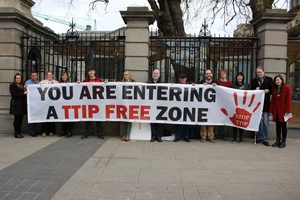
TTIP (pronounced “Tee-tip”) is the Transatlantic Trade and Investment Partnership, a US-EU trade deal that political leaders have been attempting to implement for the last two years. It hasn’t been discussed a lot in the media. One reason is surely that if more people knew about it, popular opposition would rise, although there have already been protests against it.

President Obama is currently attempting to obtain from the US Congress the authority to deliver trade deals faster, including TTIP, but negotiations have been animated as a number of Democrats are opposed. Some in Congress have said an arrangement could be passed this week.

At the same time, the European Parliament will soon vote on TTIP, on June 9th. It will then debate many issues, principles and red lines related to the proposed pact. So the next few days will be interesting.

One of the most important points about TTIP is that although it is often referred to as a ‘trade deal’, in fact, it’s much better to think of it as a deal that seeks to alter regulations to benefit corporations.

Secondly, there has been a big push from politicians to present TTIP as key to revive Europe’s stagnating economies, implying that if we can only pass it, an economic bonanza awaits us and jobs will be created. However, as economist Dean Baker said, this is ‘complete nonsense, unless we define down bonanza to mean finding a quarter on the street’. Therefore, ‘as growth policy, this trade deal doesn’t pass the laugh test’.

An analysis by the UK-based Centre for Economic Policy Research is regularly quoted in support of the deal. What it says is that TTIP would increase the EU’s GDP by €119 billion and US GDP by €95 billion. This represents a 0.5% increase in EU GDP and a 0.4% increase in US GDP.

But this is not at all as fantastic as it might sound, for the following reasons. To start with, it’s based on economic modeling, forecasting and estimating, what some would call guessing. Also, the think tank that produced the study is overall very favourable to the deal.

But let’s say we put all that aside and look at their numbers. The study says that the above GDP increases will be achieved only in 12 years, when TTIP is fully in place. This means that by 2027, EU GDP will have grown by 0.5% due to TTIP. This translates into a very small boost to EU GDP of less than 0.05% annually until 2027. Imagine if a leftist politician presented a growth plan that would boost GDP by 0.5% in 10 years—that would be laughed at in the mass media.

And this is under what the study calls their ‘ambitious’ scenario, in which TTIP could be implemented as fully as possible. Under their ‘less ambitious’ scenario, which presumably means ‘more realistic’, growth would be even smaller.

Finally, the study does not say anything about job creation due to the pact.

Therefore, if the deal is not really about growth, what is it about? Conventional trade barriers between the EU and the US are already very low, and thus there is not much room for improvement here. So, what’s at stake is really non-conventional barriers, i.e., regulations. All the big players in various industrial sectors face some regulations that they wish could be removed, amended or made more flexible so they can maximize profits. And that’s what TTIP is about.

The problem is that in many cases, regulations are good and important to protect customers, the environment, health, and a range of other areas to maintain our quality of life.

The difference between Europe and US regulations is well illustrated in the case of chemicals. In general, Europe uses a precautionary principle that requires companies to demonstrate that new chemicals are safe before they can be sold on the market. But the US approach puts the burden of proof on regulators to establish that there is evidence of danger before action is taken against the chemicals.

Therefore, many chemicals are tightly restricted or simply banned in the EU, but are allowed in the US. A recent analysis found 82 pesticides allowed in the US but restricted or barred in Europe.

From a consumer perspective, those regulations are essential protections. But from the industry’s viewpoint, they’re barriers to trade that if removed could open up markets for more profits.

In this respect, investor-state dispute settlement (ISDS) mechanism that is part of TTIP has attracted much criticism from progressives. ISDS essentially creates special panels that decide on issues that arise in disputes between transatlantic investors and governments. They’re outside the control of governments.

For instance, if a US company claims that a regulation imposed by a European country deprives it of profits by imposing costs on its business, the firm could decide to take its complaint to the special panel, rather than to the government’s legal system. The worry, of course, is that those panels will be pro-business, otherwise, why would corporations want to bypass the regular court system?

One relevant example that illustrates the potentially negative consequences of ISDS is the ongoing action by Big Tobacco firm Philip Morris, which is suing the Australian government. The reason is that in 2011, the government implemented a range of public health measures such as plain packaging for cigarettes. Philip Morris is unhappy because such measures reduce smoking and thus cut into its profits. So it’s using an ISDS mechanism to try to force the government to overturn the public health legislation.

Other similar cases have occurred with other countries and in different industries. It is the kind of legal actions that would now be supported in Europe if TTIP comes to pass. Clearly, ISDS puts profits and the interests of corporations before that of ordinary people.

Do you still want this TTIP?

@JulienMercille is lecturer at UCD and the author of The Political Economy and Media Coverage of the European Economic Crisis: The Case of Ireland (2015, Routledge). His new book, Europe’s Treasure Ireland (Palgrave), will be out in July 2015.

90377429MercilleProtests in Blanchardstown, Dublin last month and Julien Mercille (above)

It’s Monday.

It’s 9.32am.

Do not hit ‘snooze’.

It’s Mercille on Monday at 9.32am.

Dr Julien Mercille writes:

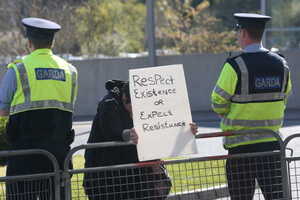
Governments are not moral entities. Water charges policing has given us quite a few demonstrations.

This week the government announced that it is moving to introduce new legislation allowing Irish Water to collect the water charges from those who refuse to pay from their welfare payments or wages.

The government says this will only apply to those who do not want to pay, as opposed to those who are not able to pay. But how do you determine if someone is truly not able to pay, or refuses to pay?

Who knows, but we can bet it will involve hiring an army of consultants and lawyers to ponder over the question, come up with a (flawed) scheme, implement it, monitor it, review it, etc.

The cabinet has also approved a proposal that those who haven’t paid their water charges will not be able to sell their house until they pay what they owe Irish Water. Finally, another plan is to allow landlords to deduct the charges from tenants’ deposits.

Such measures reveal how authoritarian and anti-democratic the government is. It will simply come up with any scheme needed to do what it wants to do.

The government spin on the new measures is that they are “good news” because they mean that nobody will be jailed for not paying the water charges.

That this is presented as a generous move displays the very low standards of morality which characterise the Irish state. While at it, we should also rejoice that imprisonment for life has also been ruled out for those who won’t pay the charges.

Justice is elusive in this state. Punishment is reserved for those who oppose government power, whereas those who defend it are handsomely rewarded and live comfortably. In recent weeks we have witnessed, among other things:

– Six police officers going to Paul Murphy’s house before 7am to arrest him without warning. Three others were also taken in relation to Joan Burton’s two-hour captivity in her car. In total, 23 people were arrested following the Jobstown protest.

– Five protesters were given jail sentences for 56 days (Damien O’Neill, Paul Moore) and for 28 days (Bernie Hughes, Derek Byrne, Michael Batty) for crossing a 20-meter perimeter around the workers installing water meters (they were freed after a little more than two weeks in jail).

– Joan Collins TD was arrested along with 12 others for demonstrating as Irish Water was installing a meter.

And we can add to this: arrests related to Shannon airport while government officials still roam free even if facilitating US militarism; the fact that bankers who played a direct role in bringing about the economic crisis are still free while banks are attempting to repossess thousands of ordinary people’s houses across the state; that TDs and ministers who have shattered the lives of so many by implementing austerity are either still in office or comfortably going about their business.

This only confirms the pattern that the rule of law is political and geared towards protecting those in power.

Indeed, some Garda leaders seem aware of the political nature of the policing going on in the state. In a job interview, Garda Commissioner Nóirín O’Sullivan asked a candidate about his views on “left wing political extremism in Ireland” and on left wing politicians. The candidate said he was “taken aback” and “uncomfortable” with such types of questions, and understandably so.

Moreover, the Garda Representative Association complained that there was a “sinister and dangerous element” in the protest movement and that “anti-water-charge protests are taking valuable resources away from the investigation of crime”— excluding state crimes, of course.

The Garda Association said it wanted to be better armed, for example with Uzi submachine guns and Taser guns. That’s worrying.

When she got arrested, Joan Collins TD said “I break laws that are immoral”. This is seen as outrageous by respectable politicians, but in that, it only follows a long tradition of peaceful civil disobedience which has won rights for people around the world. Many have made similar statements, of which a sample:

“One has a moral responsibility to disobey unjust laws.”
-Martin Luther King Jr.

“Protest beyond the law is not a departure from democracy; it is absolutely essential to it.”
Howard Zinn

“If it is of such a nature that it requires you to be the agent of injustice to another, then I say, break the law.”
Henry David Thoreau

These are people who, if still alive, would be at the water protests—and would probably all be arrested.

@JulienMercille is lecturer at UCD and the author of The Political Economy and Media Coverage of the European Economic Crisis: The Case of Ireland (2015, Routledge). His new book, Europe’s Treasure Ireland (Palgrave), will be out in July 2015.

90356452

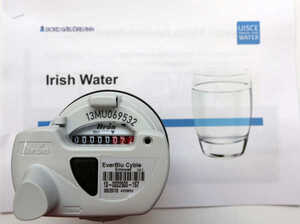
Sierra-LogoWater meter (top) supplied by Sierra (above), a subsidiary of Siteserv


The siteserv transaction.

Everything you wanted to know about the government’s priorities.

Dr Julien Mercille writes:

A lot of attention has been paid to the ongoing Siteserv controversy—but the implications for progressive politics have largely been missed in media commentary.

To begin, let’s recap some basic facts.

Siteserv is a construction services company that borrowed a lot from Anglo Irish Bank between 2006 and 2008 and accumulated a debt of €150 million. When the economic crisis struck, the government took over Anglo Irish and changed its name to IBRC.

The government (i.e., taxpayers) was thus made responsible for Siteserv’s debts and tried to get whatever it could out of those bad loans.

But instead of appointing a receiver to Siteserv to recoup those monies, IBRC let Siteserv handle the process themselves… and in 2012, Siteserv was sold to a company controlled by Denis O’Brien for €45 million.

A number of issues have been reported about the deal (although a full investigation has yet to be conducted).

First, Siteserv shareholders received €5 million from the sale. This is important because normally, shareholders, especially when they invested in a company that couldn’t even pay its debts back, are supposed to be wiped out before the creditors (in this case, IBRC). But here, taxpayers absorbed the losses.

Second, the result from the sale are as follows: shareholders got €5 million; state-owned IBRC got €40 million; and IBRC wrote off €110 million of debt it was owed by Siteserv—so the taxpayer took a hit of €110 million.

Third, it has been reported that there were other, more lucrative offers on the table for Siteserv that were rejected.

Fourth, Davy Stockbrokers and Arthur Cox solicitors acted for both sides of the transaction (Siteserv and Denis O’Brien’s company), which is not a transparent practice as it is difficult to obtain the best deal for the government when those overseeing the process simultaneously work for the buyer and the seller.

Fifth, the Central Bank of Ireland reviewed the deal just after it was finalised, but did nothing. The Irish Stock Exchange was also asked recently about a reported spike in Siteserv shares trading just before IBRC received bids from parties interested in buying Siteserv.

The Stock Exchange refused to comment, saying it was precluded from doing so on such matters.

Sixth, the government now wants to review the 2012 sale of Siteserv by using the audit firm KPMG. That is, even if KPMG was involved in the sale. In fact, so far, KPMG has been paid more than €70 million for its services in the liquidation of IBRC.

So asking KPMG to review itself is not exactly an instance of accountability. Indeed, Transparency International Ireland urged the government to remove KPMG from the review.

But our Minister of Finance, Michael Noonan, appointed a former judge to supervise KPMG in the review process. So, the plan is that a judge-reviewer will review the KPMG reviewer. It seems to be difficult to find an objective and neutral reviewer.

Seventh, in 2013, a year after it was bought by Denis O’Brien, Siteserv won several contracts to install water meters in Ireland (through its subsidiary GMC/Sierra). It was bad enough that taxpayers absorbed losses in the sale as stated above, but now Siteserv is benefiting again from the water charges.

A couple of points may be made about all this.

First, there have been accusations that the whole thing shows once again that the government is incompetent, mismanages everything and doesn’t learn from the mistakes of the past.

For example, Shaun Connoly wrote in the Examiner an article entitled “Incompetent Government will Bury the Controversy” in which he wonders if Enda Kenny “really not understands the laws of this country”? He also complains that we are faced with a “rotten system where nothing gets done properly and no lessons are ever learned”.

But the problem with this view is that it assumes that the government is actually trying to manage things properly for the common good, and that if only it could be more competent at doing so, things would improve.

However, in fact, the nature of the state is not to serve the people and to govern for the population as a whole.  This should be clear after a €64 billion bank bailout, a blanket guarantee making ordinary people responsible for €365 billion of bank liabilities, and six years of harsh austerity directed at the general population and the more vulnerable that has pushed the deprivation rate from 11.8% of the population in 2007 to 30.5% in 2013.

So by that standard government performance in the Siteserv deal is not too bad at all.

Siteserv shareholders have benefited. Denis O’Brien has benefited. Firms that have been paid fees to oversee the process have benefited. Taxpayers absorbed losses instead of private interests and bondholders, thanks to the socialisation of Anglo Irish debts.

And everything was kept quiet for about three years until one TD, Catherine Murphy, asked sustained questions—that’s not too bad, although in an ideal world, the deal would have been kept quiet forever.

Second, and related, how can we make sure this won’t happen again? UCD Professor of Politics David Farrell writes in the Irish Times that the controversy highlights “two major weaknesses in our political system”: first is “a Government that is not held adequately into account by parliament” and second is “a mindset that privileges secrecy over openness”.

Farrell’s solution is thus that “there needs to be a culture shift”, meaning that Ministers and civil servants “need to appreciate the principles that underline Freedom of Information—namely, to provide citizens with the information they deserve to know”.

Therefore, “instead of waiting behind closed doors” for information requests, the government should “simply put the information out there as a matter of course”.

The problem with this approach is that again, it assumes that if we could only convince those politicians to be more aware of the need for openness and transparency, things would get better.

It’s not incorrect per se, but the problem is that those politicians know very well that secrecy benefits them and those in power—that’s why they’re keeping things secret! Therefore, hoping they will change on their own won’t work.

So what are we left with? The way to change things is by redistributing economic and political power in society—that’s how you keep the powerful accountable, and in fact, that’s how you make sure nobody is too powerful relative to others.

If ordinary people had the same economic and political power as elites, there simply wouldn’t be too many elites around, by definition. A minority would not make decisions that affect everybody else’s lives.

Power would be decentralized, not concentrated in the hands of a few. In short, what we need is a drastic reorganization of power in society.

@JulienMercille is lecturer at UCD and the author of The Political Economy and Media Coverage of the European Economic Crisis: The Case of Ireland (2015, Routledge). His new book, Europe’s Treasure Ireland (Palgrave), will be out in July 2015.

STJulien Mercille hi resFrom top: yesterday’s Sunday Times editorial and Dr Julien Mercille

It’s Monday.

It’s Beefcake O’Clock.

It’s Mercille on Monday

Dr Julien Mercille writes:

An important report on the anti-water charge movement was released last week, written by Rory Hearne from Maynooth University. It surveyed 2,556 people and concluded that Ireland is witnessing the ‘birth of a new civil society’, an important development.

The most significant consequence of the anti-water charge protests is that they are democratising the country. This is why elites are worried and have reacted hysterically: they want this popular movement repressed, and quickly.

There is nothing surprising in this. Power always fears real democracy, in which people have a say over what affects their lives. It directly threatens power systems where decisions are taken at the top and imposed on the population.

Yesterday, in yet another example of elites’ hatred of real democracy, the editors of the Sunday Times wrote a revealing piece entitled ‘Politicians “of the People” Doth Protest Too Much’.

They are dismayed that the Dail, ‘the institution responsible for drafting laws which the citizens are expected to obey is increasingly populated by individuals who believe such laws do not apply to them’.

They are appalled that some public representatives, let alone ordinary people, dare challenge government policy and power. They state that ‘this lawless attitude is spreading like a virus, particularly among the “can pay, won’t pay” brigade’, referring to the anti-water charge movement.

The notion of a ‘virus’ spreading and ‘infecting’ the country is a recurrent theme among the powerful. It is code for saying, ‘we need to smash this resistance movement to our rule, otherwise, others could get ideas and join the protests, and we’ll lose control and be kicked out of power’.

That’s how dictators in the Middle East were thinking during the Arab Spring. That’s what demonising Syriza by European and Irish elites is about. That’s what the US war on Vietnam and elsewhere to prevent ‘dominoes’ from falling was about, and there are countless other examples past and present. The point is always the same: don’t give oxygen to incipient protest movements, or they could spread like wildfire.

The editors give a few examples of those they want to see put in their place:

Mick Wallace and Clare Daly, for attempting to search US military airplanes at Shannon airport and refusing to pay their €2,000 fine.

Joan Collins, for being one of 15 people arrested at a protest against the installation of water meters. The editors were outraged that after being released from garda custody, ‘she didn’t go to work—she returned to the protest’.

Richard Boyd Barrett, Tommy Broughan, Gerry Adams, Mary Lou McDonald and Pearse Doherty, for announcing they will not pay their water charges.

And as always, Paul Murphy, who declared, ‘I’m elected to break the law’.

The editors’ conclusion is that such TDs have ‘nothing to offer other than protest’ and that ‘Sinn Fein and a raggle-taggle bunch of left-wing independents are addicted to populism and publicity stunts. They are nowhere near ready to govern, and voters in search of a stable government should reflect on that’.

Another thing we could reflect on is the extreme aversion of elites to democracy and people power. Before anyone says this is conspiracy theory, re-read the above paragraphs: it’s not a conspiracy, it is stated explicitly.

The establishment has indeed good reasons to be worried, as revealed by the survey’s key findings:

54% of respondents had never protested before joining the anti-water charge movement.

This means that the water protests have overcome and eliminated atomisation: people do not feel they’re just alone being frustrated and know there are some channels formed to organise and voice their discontent.

Everybody is aware that people around the country are opposed to Irish Water. In November, more than 100 local Right2Water protests took place in Ireland, gathering over 150,000 people. A third of households liable for water charges still have not registered.

No matter the outcome of the water protests, the human and institutional networks formed will outlast them and serve to organise other campaigns on other issues. This is why the current movement is so significant.

– The main reasons for protesting are that ‘austerity has gone too far’, the need to ‘stop the future privatisation of water’ and to ‘abolish water charges’.

This may sound obvious, but it may still come as a surprise to some politicians so out of touch with popular aspirations that it’s almost comical.

For example, the Labour Party’s Eamon Gilmore declared not so long ago that he could not understand the protests, saying: ‘Well I find them hard to understand because in fact the water meters are being installed to enable households to reduce what they will have to pay’.

Go figure. War is Peace, Freedom is Salvery, and Water Meters Save you Money.

92% said they wouldn’t pay their water charges and 83% said they would vote for broadly left parties in the next election, including the Anti-Austerity Alliance, People Before Profit, independents, and Sinn Fein.

A clear majority said they had voted for government parties in 2011 but would not repeat that mistake again. 78% said the most effective way of changing things in this country is through protesting, against only 28% who said it is by contacting a political representative, pointing to the high level of disillusion about the political class.

In short, if there’s one thing that unites this country, it is lack of trust in the political class. Organising the protests into an effective force for change will remain an ongoing challenge, but with potentially far-reaching consequences for real democracy in Ireland.

@JulienMercille is lecturer at UCD and the author of The Political Economy and Media Coverage of the European Economic Crisis: The Case of Ireland (2015, Routledge). His new book, Europe’s Treasure Ireland (Palgrave), will be out in July 2015.

ncad1
MercilleFrom top: NCAD college, Dublin last month and Julien Mercille

Yes.

They are revolting.

But why?

Dr Julien Mercille writes:

Students are rising. In Quebec (Canada), Amsterdam, London and elsewhere, students are taking matters into their own hands and trying to resist austerity, neoliberalism, and the commercialisation of education.

But the media has been discreet about how it’s also unfolding in Ireland. You could almost call it ‘the propaganda of silence’.

In Quebec, students have been protesting forcefully for several years against hikes in tuition fees and austerity. The current government there is led by the Liberal party, similar to Fianna Fáil or Fine Gael. It’s implementing an austerity programme, including cuts and attacks on education, health care and social services. Like here, austerity seems only to apply to ordinary people, while corporations and the rich are not subject to the same actions by the state.

About 130,000 Quebec students were recently on strike for one day and about 60,000 for many more days. This is nothing new: in 2012, as many as 316,000 went on strike for similar reasons. The police has reacted violently, causing injuries to the protesters.

In the Netherlands at the University of Amsterdam, students have occupied buildings. They propose an alternative to managerial policies that have turned education into a service to the corporate sector.

One slogan in the protests has been: ‘We are not asking for a free university; We are asking for a free society; Because a free university in a capitalist society is like a lecture hall in prison’.

Similar events have taken place elsewhere, at the London School of Economics (LSE) and the University of the Arts in London, as well as at York University and the University of Toronto in Canada. The motives: students want to be creative, not cogs in a machine designed to serve the needs of the powerful while absorbing higher fees.

1

In Ireland, higher education has also suffered under austerity. The chart (above)) shows that real public expenditure per student has dropped by a whopping 27% since 2006 (Central Statistics Office data).

2

Meanwhile, this (above) shows that student fees have increased (Higher Education Authority data). The divergence with decreasing public funding is clear and reveals that students (and their parents) have had to assume an increasing portion of the cost of their education, a trend not unique to Ireland.

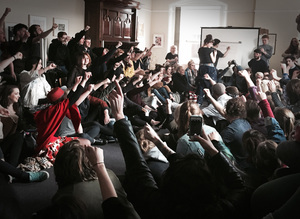
This is what the students at the National College of Art and Design (NCAD) in Dublin reacted to when they conducted a one-day sit-in on the College’s premises and sent a letter to its Director, Declan McGonagle, in which they noted that ‘the administration’s primary concern at present is the management of revenue, rather than the education and welfare of its students’.

NCAD staff back the students, stating: ‘we fully support the student concerns about management of funding, resources and student numbers… the reputation of the college is endangered by the actions of Senior Management, who have presided over a situation which incrementally places the operation and reputation of the college in peril’. Staff then ‘overwhelmingly supported’ a motion expressing ‘no confidence in the leadership of the college’.

The students have also received support from other student unions, Ireland’s biggest union, SIPTU, and academics in Ireland and abroad, who wrote that they ‘are concerned by the continued corporatisation that has consumed higher education in recent years… We urgently need another model of what higher education might be—one guided by the pursuit of learning rather than the pursuit of profit’.

They’ve also received support from the University of Amsterdam and from the University of the Arts in London.

At NCAD, student numbers have increased drastically but staff numbers have been cut: undergraduate numbers have risen by 33% since 2010 (from 780 to 1,033 students), ‘in line with the College’s ambitions’, according to NCAD’s website.

However, staff numbers have dropped by 15%; fees have increased but the extra revenues does not seem to have been directed towards improving educational facilities; there is now even a fee to see the college doctor; fees for some Masters programmes have increased from €2,850 to €3,900; and NCAD says that its core funding had decreased by 50% since 2008.

On top of that, three months ago, the Comptroller & Auditor General told the Public Accounts Committee that NCAD’s accounting practices were ‘not fit for purpose’, including failure to comply with procurement guidelines and delays in preparing its annual accounts.

How has the Irish media reacted to the protests? It simply has not talked about them in any significant way. A search in the Nexis database for news pieces covering the NCAD protests over the past month returned a total of only five short articles in the main newspapers and RTÉ news.

This is not due to a lack of resources to send journalists to investigate the situation, because it is happening right in Dublin. It is not an oversight, because activities at NCAD have been ongoing for days and anybody who cares to know would find out what is going on. It is not because the events are not important, as they are Ireland’s equivalent to worldwide student protests against austerity and funding cuts on education.

Plain and simple, this is a refusal to cover anything that denounces power, unless it becomes too big for it to be ignored, like the water charges protests. The last thing elites want is to advertise the fact that there are ongoing challenges to their rule.

@JulienMercille is lecturer at UCD and the author of The Political Economy and Media Coverage of the European Economic Crisis: The Case of Ireland (2015, Routledge). His new book, Europe’s Treasure Ireland (Palgrave), will be out in July 2015.