

Tag Archives: Mercille on Monday

00141773julienm-226x300

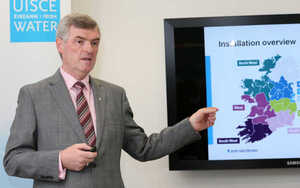
From top: John Tierney, Irish Water managing directo; Dr Julien Mercille


In another colossal waste of money Irish Water will go door to door to find out what they already know.

Dr Julien Mercille writes:

Our domestic troika (Fianna Fáil, Fine Gael and Labour), just like the European troika (European Central Bank, European Commission and the IMF), always claim that they are in favour of efficiency and a lean public sector while being tough on waste in government.

Last week, events around Irish Water revealed again this not to be the case.

As many as 54% of households still have not paid their water charges, which means a rather low 46% payment rate.

Newly released documents obtained by the Sunday Times show that Irish Water had originally estimated that only 20% of customers would not pay their bills — in other words, boycott has been nearly three times larger than expected. It was also predicted that by now, 1.7 million people would have registered, but in fact there are only 1.36 million who have done so.

Another surprise of the released documents is the relative effectiveness of the protests. John Tierney, Irish Water managing director, stated that they have slowed down the rate at which water meters are installed by as many as 1,000 per month.

Apparently taken aback by those unforeseen events, it has now emerged that Irish Water is undertaking private research to find out why so many people are refusing to pay their water charges, as reported by the Sunday Business Post yesterday. It has hired a private company called Behaviour and Attitudes to conduct a study.

The firm is based in Dublin and specialises in market research. It will reportedly go from door to door in the country to ask people if they have paid their bills, and if not, why not? They will be asked if they agree with the statement, “Why should I pay the bill when everyone else isn’t paying?” and if they believe that “water should be free”.

Irish Water has so far refused to reveal how much the study had cost, but it is obviously a waste, since we already know the answer. It is not difficult to understand that people protest the water charges because they are tired of austerity measures.

Also, Rory Hearne at NUI-Maynooth conducted an excellent study of the motivations of water charge protesters. It found that the main reasons for protesting were that “austerity has gone too far” (60% of respondents), to “stop the future privatisation of water” (59%) and to “abolish water charges” (57%).

Why not simply look at this report rather than spend more money on yet another study that will only confirm the obvious? Maybe Irish Water wants more precise information on why people boycott in an attempt to build their next marketing/propaganda campaign to try to convince people to pay?

A few months ago, it spent €650,000 on an advertising campaign to do just that, or in more polite language from its marketing plan, to generate “credible mass acceptance that there is a need to pay for water”.

The advertising agency Rothco created a short clip that was played on the radio, television, movie theatres and elsewhere for eight weeks. The 60-second clip was entitled “The Story of Water from Cloud to Glass” and can be watched here.

On Irish Water’s website, there is what seems to be a follow-up clip entitled “The Story of Water from Drain to Sea”, which can be watched here. Who knows how much it cost?

Another waste is the ongoing prosecution of water charge protesters by the State, through which 27 people will be instructed to appear before the courts, including Paul Murphy TD.

In this legal operation, statements were taken from 100 Garda members, while countless officers have of course been used everywhere in the country to police communities opposed to the installation of water meters. I am not aware of an estimate of the costs of those operations, but the money wasted could have been spent on homelessness, welcoming refugees, reducing waiting lines in hospitals, etc.

Efficiency principles as commonly understood have thus been thrown out of the window. The only way the above can be conceived as efficient is from the viewpoint of those in power. It is efficient to spend taxpayers’ money on trying to put in jail those who protest, because that might enable the domestic and European troikas to achieve their goals. That means it might be efficient for elites, but not for anyone else.

Julien Mercille is a lecturer at UCD. His book Deepening Neoliberalism, Austerity, and Crisis: Europe’s Treasure Ireland is out. Twitter: @JulienMercille

refugeesJulien Mercille hi res

From top: Refugees cross the border from Serbia into Hungary yesterday; Dr Julien Mercille

The refugees crossing Europe should be welcomed as they are fleeing chaos of the west’s creation.

Dr Julien Mercille writes:

We have heard a lot about the hundreds of thousands of refugees flocking to Europe, but much less about Europe’s responsibility for this state of affairs. Indeed, most refugees are fleeing countries in the Middle East that have recently been invaded or attacked by Western forces or seriously affected by the consequences. In short, this is “blowback” from Europe’s own militaristic actions.

It is a no-brainer that a rich continent should help people leaving poor countries out of desperation. And because Europe also bears a direct responsibility for the chaos, it has an even larger moral obligation to do everything possible to fix the problem.

However, media coverage has highlighted personal tragedies and stories such as that of the little boy (Aylan Kurdi) drowned on a beach. Those stories show the human costs of the crisis. However, Europeans could look at thousands of images of drowned children without ever knowing that their governments played a large role in creating the problem through war.

Military interventions for regime change in the wake of 9-11 in Afghanistan, Iraq and Libya have involved the United States, Germany, Britain, France, Italy and Spain. The no-fly zone to remove Muammar Gaddafi from Libya was led by the UK and France, with assistance from Norway, Denmark, Belgium and Canada, among others.

The large majority of refugees come from exactly those places, like Syria, Afghanistan and Iraq.

Ireland played an important role as well by allowing US military flights through Shannon airport on the way to and back from those wars. This is still going on, as the group Shannon Watch reported last week:

“Right now, armed US troops and military planes move through Shannon Airport on a daily basis. We contribute to the NATO-led operations in Afhganistan, a country that has been brought to its knees by the US/NATO invasion, and we supported the equally devastating NATO invasion of Libya. And we provide tax breaks and other supports to companies that develop and manufacture components used in the lethal weapons systems that kill innocent people throughout the Middle East”.

In Syria, the atrocities were triggered partially by the spillovers of the Iraq war. Groups like ISIS and the Al-Nusra Front which are terrorising large areas of the Middle East emerged out of the invasion of Iraq, evolving from al-Qaeda’s activities there.

This is well described by the journalist Patrick Cockburn in his book The Jihadis Return. For example, many of the leaders of the Islamic State movement were incarcerated in an American prison in Iraq called Camp Bucca for a few years during the occupation.

As the Washington Post reported, “Camp Bucca provided a unique setting for both prisoner radicalization and inmate collaboration—and was formative in the development of today’s most potent jihadist force”, ISIS. The radicals’ time in prison “deepened their extremism and gave them opportunities to broaden their following” so that “the prisons became virtual terrorist universities”.

Therefore, as James A. Paul, the former executive director of the Global Policy Forum (based on New York), said, to use the term “regime change refugees” would go a long way to change the media discourse and popular understanding of the situation.

Also, while Europe is procrastinating and dragging its feet to welcome hundreds of thousands of refugees, countries like Jordan, Lebanon and Turkey have already received 3.5 million of them from Syria, and they haven’t invaded Iraq or Afghanistan.

A Sunday Business Post investigation revealed Ireland’s shameful record. During 2008-2014, the total number of people given refugee status in Ireland was only a third of the average across the EU’s 28 member states (relative to population size of European countries). Whereas Ireland accepted only 46 asylum seekers per 100,000 population, the EU average was 148. Ireland has thus the second-highest rejection rate of asylum seekers in the EU, after Greece. Those figures completely undermine our government’s recent claims that it has provided a “very large response” to the crisis.

But hope has come, once again, from ordinary people. There have been numerous actions across Europe supporting the refugees. We will have to pressurise our governments if any sense of morality is to influence the response to the ongoing tragedy.

Julien Mercille is a lecturer at UCD. He is the author of Cruel Harvest: US Intervention in the Afghan Drug Trade (Pluto). Twitter: @JulienMercille

90387073Julien Mercille hi res

From top: Paul Murphy TD; Dr Julien Mercille

The targeting of Paul Murphy TD and the surveillance of Irish Water protesters are part of a Europe-wide attempt to criminalise dissent. A struggle exemplified by Spain’s incredible anti-protest laws.

Dr Julien Mercile writes:

Last week, we heard about yet another example of political policing in Ireland, which is certainly not the only country not to respect its citizens’ right to protest.

The Irish Daily Mail revealed that Gardai have been secretly spying on water protesters for six months, under the codename Operation Mizen. The Operation was established following the Jobstown protests last November.

The Garda team is led by Jim McGowan, the husband of Garda Commissioner Nóirín O’Sullivan. It has compiled profiles of protesters and gathered information on their whereabouts and activity on social media. The Operation is currently restricted to Dublin, but is expected to spread nationally.

The top target is understood to be Paul Murphy TD. The police say the operation seeks to “prevent crime”, but of course, unless you believe in the fantasy that Paul Murphy is the source of crime in this country, it is a clear act of political policing, meaning that its purpose is to track and possibly arrest those who dissent from government-troika policy.

Ireland now looks like a “Big Brother” surveillance state, and an inefficient one at that. How much of taxpayers’ money is spent on Operation Mizen? This illustrates yet again that austerity is very selective. If you have cancer, your health services will be cut. If you’re a deluded police officer plotting to arrest water charge protesters in the belief that this will reduce crime in the country, you’ll get extra funding, and perhaps even a promotion if you catch “ringleader” Paul Murphy.

The Irish Daily Mail strongly opposed Operation Mizen, and rightly so. The newspaper called it “profoundly disturbing” and “not proper in a free and open democracy” because protest is a “fundamental right”. It said, correctly, that placing political protesters under general surveillance is reminiscent of a “police state”.

Minister for Justice Frances Fitzgerald has been questioned about what she knew about the Operation. Of course, if she knew anything, that would make the whole scheme even more outrageous. But we’re still awaiting for answers from her. Government officers have always felt an urgency to implement austerity, but never to answer questions that might make them look bad.

Ireland is not alone in conducting political policing. In Spain, for example, an anti-protest law just came into force on 1 July. Enacted by the pro-troika, right-wing government of Mariano Rajoy, the new law, as in Ireland, comes in the wake of protests that erupted in reaction to austerity.

The law has been criticised by civil society, NGOs, human rights experts and organisations. According to polls, only a small minority of the Spanish population support the law. All opposition parties have said they would repeal the law if they obtain a majority in the general election later this year.

For example, Amnesty International described it as “an assault on the rights of its citizens” because it restricts rights to peaceful assembly, association and freedom of expression. It criminalises some legitimate forms of protest and increases penalties for others.

Human Rights Watch said that the laws “unjustifiably curtail basic human rights protections”.

For example, filming police is now restricted and carries fines of up to €30,000 for those who disseminate footage. (Filming has been essential to prove excessive use of force by the police in recent years during protests).

Other restrictions include demonstrating near the parliament, while police are allowed to fine people participating in peaceful resistance actions if authorities have called for the break-up of the gathering. Also, blocking home evictions is criminalised, an activity that has become very common in Spain during the crisis.

Social media is also targeted. A person writing on Facebook or Twitter that there will be a protest at a given place can be held responsible for the said demonstration.

Minor offences will translate into fines or €100 to €600, serious offences up to €30,000 and very serious offences up to €600,000.

The government maintains that the new law aims to protect the security of citizens. But all opinion polls show that Spaniards are preoccupied by economic problems and political corruption, not by security.

In short, surveillance is growing here and elsewhere. This is a rational strategy on the part of those in power, who use force and spies because they cannot win through debate and argument. Unfortunately for them, the facts do not support their propaganda, and people know it.

Julien Mercille is a lecturer at UCD. His new book, Deepening Neoliberalism, Austerity, and Crisis: Europe’s Treasure Ireland (Palgrave) is out. Twitter: @JulienMercille
(RollingNews.ie)

90250688Mercille

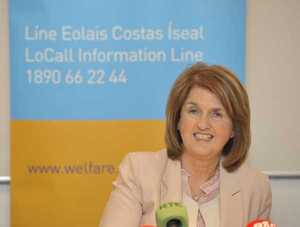
From top: Tanaiste Joan Burton launching a ‘dole cheat’ helpline in 2012 and Dr Julien Mercille

The coalition’s agenda:

Tough on welfare fraud.

Soft on corporate crime.

Dr Julien Mercille writes:

Last week confirmed once again that in Ireland, the government always finds the resources to control ordinary people, while the establishment gets away with it. Indeed, a lot of energy has been put into tackling welfare fraud while corporate crime is left undisturbed.

Transparency International released a report ranking OECD countries for their efforts to reduce corporate bribery and corruption. Among 41 countries, Ireland comes near the bottom, meaning that our government has one of the worst records of all. This is not the first time that international organisations have warned of the lack of progress on fighting corruption in Ireland.

The report investigates the extent to which action has been taken against Irish companies and individuals who bribe public officials abroad to obtain contracts, licences and concessions.

Only four countries are classified as having adopted an “active enforcement” stance, which is good. Six others are deemed to have “moderate enforcement”, and nine “limited enforcement”. Then, 20 countries conduct “little or no enforcement” to ensure their firms do not spread corruption around the world. Ireland, you guessed correctly, is in this last category.

Incidentally, Greece, which has been demonised in the media for its corrupt practices, comes out better than us, in the third category.

Transparency International stated that Ireland pledged to tackle bribery when it ratified the OECD anti-bribery convention 12 years ago. But since then, “there has not been a single prosecution and there are no signs that the law will be enforced”. This contrasts sharply with the top four countries (Germany, Switzerland, the UK and the US), which have completed over 215 prosecution cases in total.

The conclusion: “Precious few resources are invested in tackling corruption or white collar crime in Ireland and it appears that helping fighting international bribery is not a government priority either”.

Now, compare this to our government’s energetic efforts to fight social welfare fraud.

To get an idea of the problem, consider that the Department of Social Protection spends about €20 billion annually in social welfare payments. Fraud amounts to about €40 million a year, or a rather small 0.2% of total spending. Sure, fraud is a problem, but it’s not as if the system is in disarray.

Nevertheless, Joan Burton’s department is conducting a full-scale assault on fraudsters.

Last week, reports came out again that since December 2014, 20 police officers have been assigned to a Special Investigation Unit (SIU) to assist Joan to catch those who commit welfare fraud. The Gardaí are stationed throughout the country.

But this is not all. The Department’s Compliance and Anti-Fraud Strategy proudly lists a number of cutting-edge measures it is now taking, including:

– Over 1 million reviews of welfare claimants conducted in 2014.

– Over 900 staff working on fraud in the department and in communities throughout the country.

– 600 cases now before the courts, and there is even a target to submit 300 fraud cases for prosecution in 2015.

– Inspections at airports, construction sites and road checkpoints.

– Predictive Analytics Modeling: analytical techniques to identify claims that are more likely to be fraudulent.

– Legislation enacted in 2012 now allows for up to 15% of a person’s social welfare entitlement to be deducted without his or her agreement when there has been overpayment in the past.

It is understandable that some steps be taken to reduce welfare fraud. But the problem is that the policy is once again directed at ordinary people, while elites get away with it.

First, as stated above, no significant steps have been undertaken to tackle corruption and white collar crime.

Second, if unemployment was lower, we’d save a lot on welfare payments. Therefore, the austerity implemented since 2009 by Labour, Fianna Fáil and Fine Gael politicians accounts for a significant chunk of welfare expenses since it has raised unemployment and lowered people’s incomes.

Third, corporate welfare is huge in this country. Think of our ultra-low 12.5% corporate tax rate. Think of the €64 billion we injected in the banks to bail them out. Or the €365 billion bank guarantee we provided to banks. When is the police going to investigate that with the same amount of detail as for welfare claimants?

Now imagine the following:

900 staff dedicated to catching white collar crime. Over 1 million reviews this year alone of government and corporate officials’ expenses. 600 cases of bankers brought before the courts and prosecuted for the reckless moves they made that triggered the crisis. Gardaí units investigating the IFSC (International Financial Services Centre) and interviewing bankers.

Predictive Analytics Modeling to spot which bankers are more likely to cause trouble in the future. Inspections in Parliament offices to find out which politicians exactly had the brilliant idea of implementing austerity since 2009. Legislation to take money straight out of those guys’ salaries when fraudulent practices are detected.

Those kinds of policies should be on political platforms in the upcoming elections. It would gather quite a few votes.

Julien Mercille is a lecturer at UCD. His new book, Deepening Neoliberalism, Austerity, and Crisis: Europe’s Treasure Ireland (Palgrave) is out. Twitter: @JulienMercille

(Sasko Lazarov/RollingNews.ie)

imageMercille

From top: Tanaiste Joan Burton during protests in Jobstown, Tallaght, last November, Dr Julien Mercille.

When defending civil disobedience and non-violent protests nothing trumps King.

Dr Julien Mercille writes:

Last week we learned that over 20 anti-water charges protesters are expected to be brought to court shortly in relation to the events in Jobstown last November. You will recall that this is when Joan Burton was held up in her car for about 2 hours and when someone threw a water balloon at her.

The police arrested 40 protesters in the wake of the events in Jobstown, including a number of teenagers and three public representatives. This means that about half of them will be charged with a range of offences, including “violent disorder”, “criminal damage”, and “false imprisonment”. A conviction on the latter charge almost always leads to a jail sentence, and possibly a life term in prison. Yes, you read that right: imprisonment for life for keeping Joan Burton in her car for two hours.

I’m currently traveling in the US South and visited the Center for Civil and Human Rights in Atlanta and related landmarks. The civil rights movement of the 1960s in one of the most important periods in US history as it indeed civilised the country. For example, black people gained important rights through sustained campaigns of organised civil disobedience.

One striking thing about progressive social protests is that the principles they embody don’t change that much historically. Basically, when facing an oppressive structure of power that denies them fundamental rights or opportunities, and when negotiations with the ruling class lead nowhere, people decide to take other means to pressurise political leaders to change.

Protesters are inevitably labeled as ‘deviant’, ‘dangerous’ and ‘radical’ by “respectable” and “very important” people. But well organised and united campaigns are often successful in securing rights that in later years are taken for granted, often forgetting, unfortunately, that they were won through struggle, not because ruling classes granted them out of generosity.

The history of the civil rights movement is fascinating and its lessons it provides for today are numerous.

For example, in 1963, civil rights leader Martin Luther King Jr. was thrown in jail for peacefully protesting. There, he wrote his “Letter from the Birmingham Jail”, which explains some principles directly relevant to the anti-water charges movement and other campaigns. The Letter is a short read and is available here.

First, civil disobedience, or breaking the law nonviolently, is justified if the law is wrong. The law reflects the structure of power in a society and as such often benefits the powerful. After all, as King said, “We should never forget that everything Adolf Hitler did in Germany was ‘legal’”.

Similarly, legal codes in the US made slavery and segregation legal. In the 1950s and 1960s, blacks refused to yield their seats on public buses to whites even though this was what segregation laws ordered. They sat at restaurant counters reserved for whites, against the law. Activists organised ‘freedom rides’ on Greyhound buses through the South with whites and blacks sitting in seats normally reserved for whites only. For all this, they got arrested, beaten, jailed, and killed. They were doing things illegal, but right.

Second, the immediate enforcers of the law are the police. Although often depicted as preserving “order” and “preventing violence”, the police in fact serve power and often arrest those who attempt to win their rights or fight injustice. That’s one reason why our political leaders who have enabled the US military to use Shannon airport on its way to destroying Iraq have never been arrested or imprisoned, but water charges protesters have.

Third, nonviolent direct action seeks to force ruling classes to negotiate when they have refused to do so. Waiting passively for political leaders to change their ways is bound to fail. They know very well that what they are doing is wrong, because they benefit directly from it. Waiting passively only leads to delaying justice indefinitely, and “justice too long delayed is justice denied”.

Indeed, “freedom is never voluntarily given by the oppressor; it must be demanded by the oppressed”. As King stated, “we have not made a single gain in civil rights without determined legal and nonviolent pressure”. Hence the need for organised, effective popular actions including boycotts, sit-ins, marches, etc.

Those principles have guided some of the direct action protests against water charges. Similarly, they may well lead to the imprisonment of a number of activists.

Paul Murphy TD said he hoped he would not be jailed. However, if he is, along with others, this may mark a positive turning point in the water campaign movement. My guess is that this would energise the anti-water charges campaign. Opposition parties would capitalise on the situation. Austerity parties—Fine Gael, Labour, Fianna Fáil—could lose some popular support. International media could cover the story critically, conveying the message that the Irish government can’t handle its domestic affairs. The government could thus shoot itself in the foot.

Julien Mercille is a lecturer at UCD. His new book, Deepening Neoliberalism, Austerity, and Crisis: Europe’s Treasure Ireland (Palgrave) is out now. Twitter: @JulienMercille

Top pic: The Irish Sun

-1x-1julienm-226x300

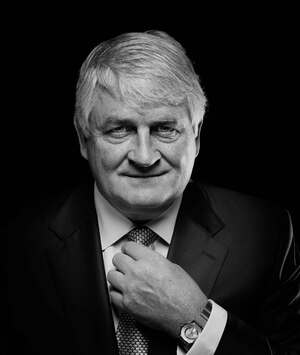
From top: Denis O’Brien, Dr Julien Mercille


Why does Denis O’Brien sue everyone?

Because he can.

Dr Julien Mercille writes:

The number of legal actions Denis O’Brien has launched against free speech over the last several months is dizzying. Let’s summarize them briefly and look at the related problems of media concentration and Ireland’s defamation laws.

1. In May, O’Brien obtained a legal order to prevent RTÉ from reporting on the state-owned bank IBRC (formerly Anglo Irish) and Siteserv. He did not want his banking affairs to be discussed in public. RTÉ abdicated and postponed airing the report.

2. A few days later, Catherine Murphy TD claimed in the Dáil that IBRC had apparently made loans to O’Brien on favourable terms. But he asserted that no media outlet could report on her declarations because he had a court judgment saying so. Almost [but not all; Broadsheet, The Sunday Times and Village magazine] the whole national media abdicated and waited to publish the statements.

3. O’Brien then sued the parliament itself and the State for allowing Pearse Doherty TD and Catherine Murphy TD to make claims about his affairs with IBRC.

4. O’Brien then sued the Dáil’s Committee on Procedures and Privileges (CPP) because it ruled that Catherine Murphy did not abuse Dáil privilege when she made claims about him.

5. Then, last week, O’Brien’s lawyers ordered the satirical news website Waterford Whispers News to take down an article about himself entitled “Denis O’Brien Receives 20 Year Jail Sentence For Mobile Phone Licence Bribe in Parallel Universe”.

6. Broadsheet immediately reproduced the article, and almost as immediately got a similar order to take it down. But it left the piece online.

7. O’Brien’s lawyers then went after Broadsheet’s internet provider, asking to take the article down. As I write these lines, the case is pending.

In short, the whole drama is so exciting that nobody needs to watch soaps and detective stories anymore: it’s all happening in real life.

Two enabling factors for the string of legal actions above are the concentration of media ownership and defamation laws.

Ireland’s mass media landscape is among the most concentrated in developed countries. Notably, we don’t have a single left-of-centre outlet. The Guardian has no equivalent here. The information we receive is thus coming from a quite narrow centre to right-wing spectrum. Sure, there are exceptions and some journalists produce excellent critical progressive stories, but unfortunately, they remain exceptions.

This partly explains why the mainstream media reaction to the above explicit attacks on freedom of speech has been relatively muted. By this I mean that one would have expected a more forceful defense of the right of journalists to investigate and report on matters of great public interest.

It doesn’t help that Denis O’Brien controls a large chunk of our national media. His Independent News & Media (INM) accounts for 40% of all newspaper sales in the country and includes the largest weekly and Sunday broadsheets, the Independent and Sunday Independent. His Communicorp group includes Today FM, Spin, 98FM and Newstalk, the country’s largest supplier of radio news.

But the government has failed to reduce media concentration and increase diversity. In June, Minister Alex White (Labour) issued some “Guidelines” that pretend to address that, but as observers quickly pointed out, they don’t.

The National Union of Journalists described the policy as “an abject failure of the government to tackle powerful media interests in Ireland”. Indeed, “Successive governments have allowed a small group of powerful people to gain control of the media” and the new Guidelines are “incapable of undoing that damage”. All we witness is “the transfer of power from one baron to another in the face of appalling political cowardice”.

The Irish Examiner, in a strongly worded statement, agreed with those criticisms and noted that ironically, the Guidelines had been released in the wake of the political storm that arose when Denis O’Brien prevented the national media from publishing Catherine Murphy’s statements against him. Such context could have provided at least a pretext for the minister to do something that had some bite, but the strategy has remained toothless.

To increase media diversity, progressive alternative media should thus be strongly supported. (And no, that doesn’t mean Facebook or Twitter).

Another issue is to reform Ireland’s defamation laws. In the cases above, such laws govern the balance between the right of the media to make claims about individuals like Denis O’Brien that could end up damaging his reputation (if, say, his banking affairs are exposed) vs. the right of Denis O’Brien to protect his reputation and restrict public debate about him.

The problem is that Ireland’s defamation laws are some of the most plaintiff-friendly in Europe: in other words, they really benefit the likes of Denis O’Brien when the media says something critical about him. In other countries where the value of free speech is more important, like the United States, it is the opposite situation: the law makes it difficult for people like Denis O’Brien to sue the media and win and it is thus easier to challenge powerful people.

The problem with Ireland’s laws is that they benefit the wealthy. That’s because launching a legal action against the media is often costly because lawyers need to be hired and cases can last for a long time. Therefore, it’s unlikely that an ordinary person will take the risk of launching and getting involved in convoluted legal processes.

And so we go back to the government’s role again, which has upheld defamation laws. It should reform them to protect freedom of speech, which is essential in a democracy.

Julien Mercille is a lecturer at UCD. His new book, Deepening Neoliberalism, Austerity, and Crisis: Europe’s Treasure Ireland (Palgrave) is out. Follow him on twitter:  @JulienMercille

Previously: Everyone Must Get Sued

donald_tusk550Mercille

From top: Donald Tusk, President of the European Council; Julien Mercille

There is a dangerous spectre haunting Europe.

But it’s not from the left.

Dr Julien Mercille writes:

What does it mean to be a “radical” in politics?

A “radical” is simply someone who wants to achieve social change that is thorough and fundamental. It is contrasted to those who believe that the current system is largely fine and that only minor improvements are needed.

The term is often used by conservatives to make progressives look dangerous, as in “those radicals are a threat to the stability of our country”.

For example, Stephen Collins, the Irish Times political editor, had an article this weekend echoing Donald Tusk, the European Council President and former Prime Minister of Poland.

Both of them discussed European elites’ real worry about the rise of Syriza in Greece: “political contagion”. This just means that if Syriza is successful, it will empower “radicals” elsewhere, so that progressive parties could grow in other countries, including Ireland. This is because people in Europe will see that it is possible to challenge successfully the troika and bring to power governments that reflect people’s interests to a greater extent.

Therefore, the European and Irish establishments seek to discredit progressives by labeling them as “radicals”. It is supposed to make you think that radicals = extremists = no stability, and therefore I should vote for the traditional parties.

A look at a few examples from Collins’ and Tusk’s articles illustrates how this tactic works.

Collins states that “a spectre is haunting Europe… and that spectre is political chaos”. In Ireland, almost half of voters have now deserted the traditional parties and moved towards independents.

Collins labels those emerging politicians as “radicals”, including Sinn Féin, the Anti-Austerity Alliance, and People Before Profit. They are “extremists” who threaten the “political stability” provided to us by Fianna Fáil, Fine Gael and Labour. Indeed, between 1932 and 2007, Fianna Fáil won approximately 40% of the vote, but is now at about 20%. The “radicals” have thus stepped in to fill the void. The same thing happened in a number of European countries.

Tusk voices similar concerns. He says the stand-off between Syriza and the European establishment has given “new energy to radical political groups”, and created a “pre-revolutionary atmosphere”. He says he fears “ideological or political contagion” from the Greek crisis, not “financial contagion”.

He thus reveals the real reason that motivates European and global elites to humiliate Greece. It has very little to do with economics and everything to do with nipping in the bud the threat of an example that could inspire progressives elsewhere. If the motivations were purely economic, the crisis could be solved relatively quickly and easily: give new loans to Greece, stop austerity, cancel part of the debt, and allow the economy to recover.

Tusk says just as much: he is “concerned about the far left”, which is advocating “this radical leftist illusion that you can build some alternative” to the current EU economic model.

In short, the traditional parties are pictured as embodying “stability” and “moderation” while leftists are depicted as “radicals”.

In fact, the traditional parties are radicals too, but conservative ones. They have sought, and have been successful, in reorganizing society drastically during the crisis, so that those in power dominate ordinary people to a greater extent than before.

Consider the following few examples among the policies enacted by the ruling parties that have contributed to raising the deprivation rate from 11.8% of the population in 2007 to 30.5% in 2013 (the latest available data).

– Cutting or freezing employees’ wages: a new Central Bank survey shows that 84% of Irish firms either froze wages (60%) or cut wages (24%) between 2008 and 2013. This is so drastic that when compared with other European countries, Ireland comes second only to Estonia for the extent of wage cuts during the crisis. This is of enormous benefit to employers.

– Transfering the private debts of banks onto the shoulders of ordinary people by orchestrating a €64 billion bank bailout and a blanket guarantee that made us responsible for €365 billion of bank liabilities.

– Keeping our ultra-low corporate tax rate at 12.5% and opposing a financial transaction tax that would raise much-needed revenues for public services.

– Implementing JobBridge and other similar cheap labour schemes to provide employers with low-cost workers.

– Privatising a number of public services to allow the corporate sector to increase its profits while often leading to worse services for people.

– Cutting numerous community and public services that make it more difficult for citizens who need them to access them. The effect is to disempower people. This applies to cutbacks of about 40% to all of the following: Rape Crisis Centres, Violence against women programme, projects for youth, drugs programmes, Family Support Agency, etc.

Those moves, and many more, are by definition very radical, in the conservative direction. It is thus not true that the traditional parties are “moderate”, nor do they provide “stability”. In fact, they alienate people, and this is why we have witnessed all over Europe the rise of progressive forces.

It is thus conservative radicalism that is dangerous. Progressive radicalism is good because it calls for an in-depth transformation of society in a way that would reduce inequality.

For example, the corporate sector would pay its fair share of taxes, bankers would pay their own debts, the economy would have started growing way earlier by stimulating it instead of asphyxiating it with austerity, and quality services would be provided.

Julien Mercille is a member of the Irish Greek Solidarity Committee. His new book, Deepening Neoliberalism, Austerity, and Crisis: Europe’s Treasure Ireland (Palgrave) is out now. Follow him on twitter:  @JulienMercille

greeceMercille2

From top: Busking in Athens, Greece; Julien Mercille

The most vulnerable people in the European Union will bear the brunt of the failure of austerity.

For years to come.

From Greece, Dr Julien Mercille writes:

The inhumanity of austerity is made particularly clear through the pain it inflicts on children. This is especially true in Greece, where children have absorbed much of the negative effects of the troika’s assault on the country.

As I write this, in Athens, the Children’s Hospital Aglaia Kyriakou’s radiotherapy department for children with cancer is at risk of closing due to lack of funding. The centre is reportedly unique in Greece for the type of treatments it offers.

The troika should reflect on its responsibility in this state of affairs. And so should Enda Kenny, who has sided unashamedly with Brussels and Berlin in negotiations with Greece. This is why Yanis Varoufakis, the former Greek finance minister, described Ireland as one of Greece’s “most energetic enemies”.

Children will suffer the consequences of austerity for years to come, with their lives likely affected permanently. This is because living in households affected by unemployment or large drops in income means a deterioration of their diets; increased levels of stress; some humiliations in front of friends and classmates; difficulty in doing well at school; and so on.

Unsurprisingly, those impacts are not measured with any degree of urgency. The most recent data often goes back to 2012 and in some cases to 2013. Contrast this with the flood of economic and financial information released daily and monthly and you begin to understand what matters to those in power.

A Unicef report from last year based on official data paints a dark picture of children’s suffering in Greece and in other developed countries due to austerity.

Surveying 41 affluent countries, it states that since 2008, 2.6 million children have entered poverty on a net basis, for a total of about 76.5 million in all countries surveyed. It concludes that the Great Recession ‘had the greatest impact on the weakest, and possibly for the longest time… The progress made in education, health and social protection over the last 50 years is now at stake’.

Also, youth unemployment has skyrocketed. Compared to 2008, there are now 1 million extra young people not in education, employment or training in Europe, for a total of 7.5 million. This ‘epidemic of youth unemployment’ is a ‘pathology of austerity’.

Greece consistently ranks among the worst affected countries. Add to this the fact that the situation now is undoubtedly much worse because the report is based on data that is two or three years old, and the picture is even darker.

The report compared how various indicators changed between 2008 and 2012. Here are some key results.

Child poverty increase: Greece comes 40th out of 41 countries (i.e., almost the worst one). Greece’s child poverty rate zoomed from 23% to 40.5%. Countries that did better include Mexico, Chile, Estonia, Lithuania and Turkey, which would not be considered as developed or European as Greece. Ireland is ranked 37th with an increase of almost 11 percentage points, from 18% to 28.6%.

Youth unemployment increase: The youth unemployment rate (for 15-24 year olds) has gone up in Greece and currently stand at over 50%. Greece also ranks 40th in terms of its worsening rate of youth who are not in education, employment or training (NEET), which increased almost 9 percentage points, from 11.7% in 2008 to 20.6% in 2013.

[The unemployment rate of 50% is higher than the NEET rate because the latter divides the number of NEET youth by the total population in their age group, whereas the unemployment rate divides the number of unemployed youth by the number of youth who are part of the labor force, a smaller number than the total number of youth because those in education are not counted as part of the labor force].

Severe material deprivation increase: The rate doubled in Greece to reach over 20%, a worsening surpassed only by Hungary in Europe. Children are considered to be severely materially deprived when they live in households that cannot afford 4 of 9 determined items such as paying rent, keeping the house warm, eating meat or proteins regularly, etc.

For example, since 2008, the percentage of households with children not able to afford a meal with meat, fish, chicken or a vegetable equivalent has more than doubled, reaching 18% in 2012.

Four questions were asked to people in the 41 countries on the subject “how has your life changed between 2007 and 2013?” as follows:

(1) Do most children in your country have the opportunity to learn and grow every day, or not?

(2) Are there times in the last year that you have not had enough money to buy food for your family?

(3) Did you experience stress today?

(4) Overall satisfaction with life?

Overall, Greece ranked 41st, and the ranks per question were (1) 41st, (2) 39th, (3) 39th, (4) 41st. Ireland ranked 38th overall. Clearly, austerity is not a success.

In short, our political leaders like to take pictures with kids when they run for election. That makes them look gentle, generous and considerate. However, the facts speak for themselves. Children are not a priority, and the European establishment couldn’t care less about them.

Julien Mercille is a member of the Irish Greek Solidarity Committee. His new book, Deepening Neoliberalism, Austerity, and Crisis: Europe’s Treasure Ireland (Palgrave) is out this month. Follow him on twitter: @JulienMercille

greece

julienm-226x300

From top: The Acropilis, Athens; Julien Mercille

The vultures are circling.

The looting of Greece has begun.

Everything must go.

Dr Julien Mercille writes:

The new agreement of 12th July between Greece and European authorities robs Greece of its sovereignty and confines it to a neo-colonial status, i.e., a protectorate of the troika.

The agreement requires Greece: to repeal all progressive legislation it had passed since coming to power six months ago; to seek approval from the troika before enacting important pieces of legislation; to commit to automated austerity by introducing “quasi-automatic spending cuts” in case primary surplus targets are not met; to expedite foreclosures, evictions and liquidation of businesses and homes that cannot repay their debts; and to ensure that collective bargaining is weakened or not allowed.

But perhaps the most humiliating clause is that Greece is required to privatise a mind-boggling €50 billion of public assets. These will be sold off to private investors, many of which will be foreigners.

In short, the vultures are coming, and they’re hungry.

The funds raised will be used to pay back debt and recapitalise banks, and there’s also a mention that some of the proceeds will be used for investment in Greece, but it remains to be seen how much monies will end up fulfilling that purpose.

The deal has been described as “a desperate yard sale of whatever Greece can find”. One adviser to the Greek government summarised it thus: “It’s basically saying sell the memory of your ancestors, sell your history”.

In particular, the agreement states explicitly that the electricity transmission network operator (ADMIE) must be privatised, likely to be sold off to overseas interests.

The body that will manage the privatisation process will be located in Greece, but in practice, it will be controlled by the troika.

This is not the first time European authorities attempt to drive through such a deal. In 2011, Athens had also agreed with the troika to raise €50bn in privatisation proceeds, but didn’t achieve this—it only privatised €3.2bn of assets, falling well short of the target.

Therefore, in practice, it is unlikely that the €50bn mark will be reached this time, but it is still very revealing of European authorities’ intentions.

It seems unlikely that archeological treasures like the Acropolis will go, due to the furore it would provoke. However, two German politicians recently suggested that even that should be included in the fire sale, so who knows. Less important ruins, however, could well be sold.

In order to understand how rapacious the deal is, one can look at what exactly could be included in it.

A good place to start is the website of the privatisation agency set up in 2011 to handle the previous €50bn privatisation program. It’s called the Hellenic Republic Asset Development Fund (HRADF) and its fascinating website  lists just about everything Greece can sell, with pictures, maps, and descriptions.

It is a real flea market where one can find monuments, beaches, airports, ports, postal services, utilities, and so on. And the site is in English: after all, global investors have to understand what they’re going to buy.

Here is a sample. Prices are not displayed but I include descriptions of the assets from the website.

1. Beaches
The property has the potential to be developed into a large scale integrated tourism, leisure, residential project around the existing golf course on a well established vacation destination such as Rhodes.

2. Castles
Castello Bibelli is a property of significant historical and cultural value. The main building “CASTELLO” of 1.968 m2 built area, is of neo-Gothic style, made from stone with tile roofs and its distinctive feature are the two turrets and patio. The property also includes other four auxiliary buildings, with a total built area of 457 m2. Built at the beginning of the century by Italian Admiral Bibelli, in a wooded hillside, within an area of 77 acres.

3. Thermal Springs
Greece is endowed with natural mineral springs and geothermal waters which form an integral part of the country’s national wealth. Their therapeutic properties are well recognized since ancient times, offering treatment opportunities for various ailments in a natural way (hydrotherapy).

4. Stadiums
The Peace and Friendship Stadium is a characteristic example of the last 20 years of the 20th century architectural style and a worldwide well-known building, having hosted multiple international and national sporting and cultural events.

5. Ports
The Greek state portfolio contains 12 ports, including the ports of Piraeus, Thessaloniki, Volos, Rafina, Igoumenitsa, Patras, Alexandroupoli, Iraklio, Elefsina, Lavrio, Corfu and Kavala.

6. Athens water supply and sewerage company
The Athens Water Supply and Sewerage Company has the exclusive right to offer water and sewerage services in the Greater Attica Area. The term of this right, as well as its renewal, is regulated by a a 20-year Agreement.

7. Olympic assets
This includes the Schinia Rowing Center, Markopoulo Equestrian Centre and Galatsi Olympic Center.

In short, the message is clear: start shopping quickly—or you risk losing the prize. Conversely, progressives must organise resistance without any delay, or Greece will be looted.

Julien Mercille is a member of the Irish Greek Solidarity Committee. His new book, Deepening Neoliberalism, Austerity, and Crisis: Europe’s Treasure Ireland (Palgrave) is out this week. Follow him on twitter: @JulienMercille

90385807

Mercille

From top: demonstrations outside Leinster House last week; Julien Mercille

The water charges movement has changed the political landscape in Ireland.

With little or no help from the unions.

Dr Juien Mercille, in his first words since the beatdown, writes:

The anti-water charges movement is the biggest popular mobilisation this State has seen since its foundation. Together with Sinn Féin and progressive politicians, it is our Podemos and our Syriza.

And just like Syriza is now under attack by the European establishment because it presents an alternative to the troika’s austerity strategy, the Right2Water movement is once again being demonised by our conservative government and media and ignored by some large trade unions that have chosen to side with the Government.

To be clear, the anti-water charges movement is not about calling for free water provision. Everybody recognises that water services have to be paid for – the issue is about how we pay for it.

We already pay for our water through general taxation, which is the right way to do it because it is more progressive than by paying at the point of use through water charges.

If more money and investment are needed to maintain the water provision infrastructure, then we just need to make general taxation more progressive and raise taxes on the better off or increase our low 12.5% corporation tax and close tax loopholes that allow the rich to get away with paying their just part.

Or even better: stop austerity and stimulate the economy to allow it to grow, which will automatically generate more income and tax revenues.

In any case, the government is now pushing two important bills through parliament which, once enacted into law, will reinforce its ability to force people to pay their water charges.

The first is the Environment (Miscellaneous Provisions) Bill. It will make it impossible to sell your house if you haven’t paid your water charges; will force tenants to pay their water bills while landlords will have to provide Irish Water with the identity of their tenants; and it will establish a database that will include much information about Irish Water customers.

In this process, opposition parties have accused the government of bypassing normal parliamentary procedures to allow enough time for debate by pushing through 37 pages of amendments at very short notice. Clearly, democracy is not a priority in the Dáil.

The second is the Civil Debt (Procedures) Bill. It will allow a court to order deductions from social welfare payments or from wages in order to pay for the water charges.

The demonisation of the water movement has also continued in recent days with two main events that happened just as the above legislation was being pushed in parliament.

First, during a protest against water charges and in support of Greece at the Dail, former minister for justice Alan Shatter remained trapped in his car among the protesters for 15 minutes as he tried to drive through them.

So the media brought back the “kidnapping the minister” story that was used when Joan Burton had also been trapped in her car at Jobstown in a similar situation last year.

Shatter said the protesters were “thugs, intolerant, anti-democratic and fascist”. He even criticised the police for letting the situation get out of hand, when it’s clear that the gardai have consistently protected Government interests against anti-water charges protesters since the emergence of the movement.

Second, in another poor public relations performance by those we elected, Fine Gael TD Catherine Byrne (Dublin South-Central) told the Dail during the debate on the Civil Debt Procedures Bill that many people were “stacking up their trolleys with drink and wine” at the grocery store while they allegedly refused to pay their water charges.

The image was clear: those annoying people on welfare just use the money given to them generously by the State to pay for booze but are still too selfish to pay for water, because they “believe everything should be free”.

The Government strategy is thus obvious.

First, implement austerity that throws the economy in recession and forces people to emigrate in the face of skyrocketing unemployment.

Then, just blame all that on “the poor” and make all sorts of wild claims about them. It must be them, after all, who created an out-of-control banking system, inflated a housing bubble, decided on a bank guarantee, took taxpayers’ money to pay for bondholders in Germany and Britain, and had the brilliant idea of implementing austerity to depress the economy further.

But the attacks on water charges protesters are not only coming from Fine Gael and Labour.

They also originate from some trade unions that have remained quite apathetic toward the movement. Indeed, Right2Water includes only five trade unions, the two biggest ones of which are Unite and Mandate. Why are the others not joining this historical movement?

For example, ICTU (the umbrella group for Irish trade unions) and the unions SIPTU and IMPACT haven’t been very proactive to say the least. Perhaps their mindset is best illustrated by David Begg, who was general secretary of ICTU from 2001 to 2015.

A few months ago, I asked him about the anti-water charges protesters and why the trade union leadership did not support them more strongly.

Hold your breath.

David Begg described the protesters who do more than just marching as “the dark forces in Irish society”… and added that we had to guard against such excesses because “once the toothpaste is out of the tube, you can’t put it back in”. That’s from a trade union leader who is supposed to defend the interests of ordinary people.

And then we wonder why there’s a Syriza government in Greece, a rising Podemos in Spain, but an Enda Kenny in power in Ireland.

The real dark forces in Irish society need to be kicked out of power at the next general election. For this, people will need to get to the streets, and progressive politicians will need, for once, to unite, and to do so now.

@JulienMercille is lecturer at UCD and the author of The Political Economy and Media Coverage of the European Economic Crisis: The Case of Ireland (2015, Routledge) and a member of the Greek Solidarity Committee. His new book, Europe’s Treasure Ireland, is published this month.

(Sam Boal/Photocall Ireland)