
Tag Archives: Mooney on Monday

foster:mayandmcguinnessderek

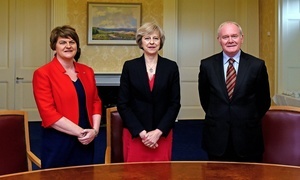
From top: Northern ireland First Minister Arlen Foster, UK prime Minister Theresa May and deputy first prime minister of Northern Ireland, Martin McGuinness this afternoon in Stormont buildings; Derek Mooney

The political dynamic in Northern ireland is set to change and leaders North and South need to be prepared.

Derek Mooney writes:

The new British Prime Minister Theresa May is in Northern Ireland today to meet with the First and Deputy First Ministers to discuss the potential impact of Brexit on the North and its implications on this island North and South.

Standing on the steps of Stormont Castle Theresa May repeated what she said on her first day as Prime Minister, reminding those present that she would govern “for the whole of the United Kingdom – of which Northern Ireland is a valued part”.

Fortunately, no one was so unchivalrous as suggest that it may not be quite “as valued” as other parts and point out that today’s Belfast trip comes over a week after Mrs May had already travelled to Edinburgh to meet the Scottish First Minister, Nicola Sturgeon and to Cardiff to meet the Welsh First Minister, Carwyn Jones.

Without a doubt the position of the North and the economic and political relations between the North and the South will dominate political debate between the sovereign governments of these two island the EU for the next few years.

These have not gotten off to a great start with the UK Minister responsible for the Brexit negotiations David Davis MP telling on Sky News’ Murnaghan programme that “one of our really challenging issues… will be the internal border we have with southern Ireland”.

Davis then went on to add that… “we are not going to go about creating other internal borders inside the United Kingdom”.

The internal border? Could it be that he just misspoke due to some lisp-like speech impediment that makes “ational” sound like “al”, ergo “international” comes out sounding like “internal”?

If only that were the case.

Sadly, this is not the only example of Davis failing to grasp the significance or complexity of the issues thrown up by the UK vote to leave the EU.

Indeed, when you look back over Davis’s statement and comments during the referendum it is hard not to conclude that his difficulties were not with EU membership as much as they were with globalisation, but back to the matter in hand.

Not only will Brexit dominate discussions between the British and Irish governments, it will also dominate political discussions in the North, though not necessarily at Stormont as that may not suit the DUP or Sinn Féin.

Though 56% of those who voted in Northern Ireland voted to remain in the EU, it is also significant that many more people voted in the Brexit referendum than voted in the Northern Ireland Assembly election held just seven weeks earlier.

Almost 90,000 more people voted in the referendum than in the Assembly election: 790,523 at the referendum versus 703,744 at the assembly.

I am not suggesting that all these 90,000 were in favour of remaining in the EU, clearly they weren’t – but – I have heard anecdotal reports from experienced tally people of significantly higher voter turnouts in middle of the road nationalist/republican areas than seen in the last few elections.

One possible reason for this increase, apart from dissatisfaction with the political choices on offer to them, is that many of these returning middle-class, broadly nationalist voters had been reasonably content with the status quo up to the referendum.

They saw the UK and Ireland’s common membership of the EU as driving forces behind the gradual normalisation of their daily lives. They were seeing peace, stability and progress being delivered and the border slowly disappearing, so they felt no need to become politicised.

At the May 2016 Assembly election Sinn Féin’s vote dropped by 3% and the SDLP’s vote dropped by 2%.

Now, they see their vote to remain in the EU and continue that progress being frustrated and blatantly ignored by a Government at Westminster that does not share their outlook.

It is something that the Ulster Unionist Party leader Mike Nesbitt recognised in his post Brexit result comments when he said that

“There are quite a number of nationalists who over recent years have been relaxed about their aspiration for a united Ireland and have seen it as an aspiration, rather than something they want to act to make a reality, and they are very angry.”

As the Brexit process continues and as its negative implications for this island – North and South – emerge we can expect to see that anger turn into something more constructive and the re-politicisation of this middle ground cohort within the North grow.

Couple this shift with the higher Remain vote among younger voters and you can see that the political dynamic in the North is set to change and political leaders North and South need to be prepared.

As part of that process of preparation we need to have an all-island Forum on Europe up and running before the end of the year.

Invitations to attend and take part should be extended to all, but participation should be voluntary and no-one should have a veto.

The Taoiseach and the government fumbled the Forum idea once, they need to regroup, steady their nerves and get it right.

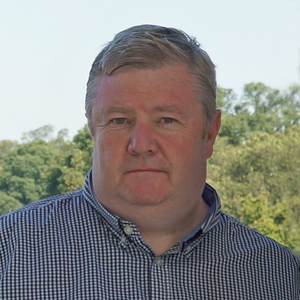
Derek Mooney is a communications and public affairs consultant. He previously served as a Ministerial Adviser to the Fianna Fáil led government 2004 – 2010. Follow Derek on Twitter: @dsmooney

Top pic: Charles McQuillan/AFP/Getty Images
572cc574c36188b7568b456dderek

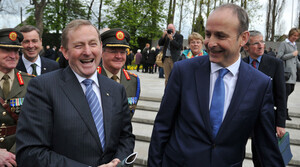
From top: Enda Kenny and Micheál Martin; Derek Mooney

The real danger to Fine Gael seats does not come from a quick general election but from this Dáil and this Government lasting for two or three budgets.

Derek Mooney writes:

“The answer is, mate – because I wanna do you slowly…”

This was Australian Prime Minister Paul Keating’s 1992 acerbic put down to the opposition leader John Hewson’s claim that Keating, who had just become PM a few months earlier, was shying away from facing him in an early general election.

Though the positions are somewhat reversed here, and our own dear Michéal Martin would never be uncouth as the great Keating, there is a slight hint of the same approach, though it is Fine Gael doing Fine Gael.

During the very brief course of the even briefer heave against Enda Kenny, unnamed Fine Gael back bench TDs were confiding to the army of Leinster House political correspondents how fearful they were that Martin and his newly engorged phalanx of Fianna Fáilers would quickly pull down the Government and plunge the country into a snap general election from which, they reasoned, Fianna Fáil would emerge even bigger and stronger.

If this is the level of their insight, then it is easy to understand why Enda Kenny didn’t select these back benchers for high, medium or even low office.

The real danger to Fine Gael seats does not come from a quick general election but from this Dáil and this Government lasting for two or three budgets.

The threat to those seats does not come from gridlock, lost Dáil votes or delayed decisions. The threat does not even come from Enda Kenny’s leadership, though it is tempting to add the word ‘alone’ there.

The threat comes, instead, from Fine Gael’s failure to grasp that its recent losses were not just part of the ups and downs of the Irish political cycle, but rather because it failed to realise that politics has changed and that the voters have changed.

In 2011 Fine Gael styled itself as the party of political reform. It was going to change the way politics was done forever, it was going to end the Punch and Judy dynamic and show cronyism the door.

Its support levels rose to the heights it had reached under Garret Fitzgerald on the back of that promise of reform.

But, just like Garret’s crusade, it proved to be all spin and precious little action.

Instead of trying to aim for real reform Fine Gael looked backwards and determined that strong government is good government and that people would think that too if you told them it enough times.

It didn’t even grasp the basic rule of coalitions that the majority partner needs to give the junior partner, particularly its back benchers, sufficient space to exert its own identity – though they were, in fairness, aided and abetted in this by some Labour Ministers.

The irony of Fine Gael’s current predicament is that it is now operating in a system of ‘new politics’, but it is one that it did not design or propose. It is a ‘new politics’ primarily engineered by Fianna Fail and foisted upon the Government by Dáil arithmetic.

It is a ‘new politics’ that is still being talked about, but is not yet truly up and running.

The two key organisational elements of it, a committee system that is not an arm of government, in which every TD’s voice matters and a budgetary system that includes full oversight and scrutiny will not ready to properly start working until after the Summer recess.

Though there will doubtless be teething problems and institutional resistance to both, the success or failure of ‘new politics’ is predicated on these working properly over time.

The longer that Fine Gael, as a party, is seen to be reluctantly and unenthusiastically embracing these reforms, the longer it will prolong the pain for itself.

While its recalcitrant backbenchers may be right in identifying Enda Kenny’s leadership as part of its woes, its problems run much deeper.

They include clear identity and purpose and the longer Fine Gael delays addressing these issues the longer it allows itself to be Keating.

Derek Mooney is a communications and public affairs consultant. He previously served as a Ministerial Adviser to the Fianna Fáil led government 2004 – 2010. Follow Derek on Twitter: @dsmooney

90424330derek

From top: Taoiseach Enda Kenny at yesterday’s National Day of Commemoration Ceremony, Kilmainham Hospital, Dublin; Derek Mooney

Enda Kenny may be not a great Taoiseach, but he does understand power politics and has a honed instinct for survival: particularly his own.

Derek Mooney writes:

“Don’t tell a man to go to Hell unless you can send him there.”

This basic rule of politics should be carved into the walls of Fine Gael’s fifth floor parliamentary party room, perhaps somewhere prominent where Deputy Brendan Griffin can see it.

The rule itself comes from no less a political master than President Lyndon B. Johnson and appeared as one of his ‘rules for life’ in a 1987 People magazine article.

The implications of the rule for Enda Kenny’s current travails are obvious enough.

While Fine Gael backbenchers can hope to see Enda Kenny quit as much as they want. They can even send one of their number on to Morning Ireland to say it but, until they have the means and the wherewithal to do the deed, then it doesn’t matter.

About 34 of the 50 Fine Gael TDs returned to the Dáil are now on the government payroll (i.e. as Ministers, Junior Ministers or Committee Chairs) and while not all of them are absolutely committed Kenny-ites; neither are they about to put their current sinecures at risk in an unsuccessful heave.

But while Enda Kenny is undoubtedly damaged by the events of the last few weeks – indeed, of the last few months – he is not ready to go just yet.

It is not his first time facing a leadership challenge. Questions about Kenny’s leadership that had been rumbling for years erupted into a full blown heave following an Irish Times poll published on June 12 showing Fine Gael in second place, 4% behind the Labour Party.

Yes, you read that right: in June 2010 an Ipsos MORI poll showed Labour as the most popular party with 32% support. What a different 6 years of Gilmore, Howlin, Burton, Quinn, Rabbitte and Kelly in government can make.

The Ipsos MORI poll numbers appeared on Friday night. By Monday Kenny had sacked Richard Bruton as Deputy Leader.

A day later ten of the nineteen members of his own frontbench had withdrawn support and were publicly questioning his leadership. None more devastatingly than Leo Varadkar who told RTÉ’s Prime-time:

“I have had to ask myself that key question, the 3am question, if we are in government and there is a national crisis, if there is a sovereign debt crisis for example and Patrick Honohan rings the Taoiseach and who do I want to answer that phone, I want Richard Bruton to answer that… The people are saying to us they don’t have confidence in Enda Kenny.”

Even with over half his frontbench and almost all his likely successors publicly lined up against him – Kenny won out.

While his challengers were making their way to TV3, Newstalk and RTÉ to tell everyone else why he had to go, he and his supporters were working the phones and digging out every contact they could find to put pressure on the people with the votes: the TDs, Senators and MEPs to stick with Enda.

Though Fine Gael never revealed the result of the secret ballot, most believe it was a tight squeeze, but a win counts as a win and Kenny, whose leadership was nearly ended in June 2010, continued on to become the first Fine Gael to be returned to a second term as Taoiseach.

Meanwhile five out of the ten frontbenchers who said in 2010 that they had no confidence in Enda Kenny, now serve around the Cabinet table with him: Fine Gael’s: Richard Bruton, Simon Coveney, Michael Creed and Leo Varadkar and the now independent Denis Naughten.

So, do these and other Fine Gael TDs believe today’s Enda Kenny is a better and more skilled leader than the 2010 one?

Possibly they do …or …just maybe, they perceive that Enda is not yet as weakened as he was back in 2010?

Though there are several candidates interested in succeeding Enda, there is no clear favourite. Most of them fall into the the successor category: someone not too critical of the outgoing leader and hopes to seamlessly take over from him with a minimum of fuss.

Arch-successors would include the likes of Simon Coveney, Frances Fitzgerald or even Paschal Donohoe or Simon Harris.

On the other end of the scale, Varadkar might reasonably be considered a challenger, someone who sees themselves as challenging the status quo and wanting to take the party in a different direction from their predecessor.

The successors will not strike out against Kenny, they will wait a little more until he is almost ready to go, while the challenger will not move and send out a stalking horse to take on Kenny until he is sure he has more votes than the successors.

It is this stalemate that will keep Enda and his Government drifting on its road to nowhere for a while more.

It will take more than statements from a handful of backbenchers to take Kenny out – the ground under Enda is undoubtedly shaky but it has not shifted… well not just yet.

Derek Mooney is a communications and public affairs consultant. He previously served as a Ministerial Adviser to the Fianna Fáil led government 2004 – 2010. Follow Derek on Twitter: @dsmooney

Rollingnews

cityhall

derek

From top: Dublin crest on the floor of City Hall, Dublin; Derek Mooney

In his column last week the author suggested re-constituting the Forum on Europe on an all island basis. Now it’s nearly government policy. He’s that good.

This week: the hazards of a directly elected Dublin Mayor.

Derek Mooney writes:

What is it about bad political ideas? When it comes to tenacity and resilience they put the cockroach to shame. While the cockroach simply trundles along looking loathsome and malodorous, bad ideas manage to get worse over time and yet somehow develop an enticing perfume.

So it is with the idea that Dublin should have a directly elected Mayor. Once again this superficially alluring proposal is being promulgated by some, including – though not exclusively – the Green Party.

It is as if its proponents had looked across the Irish sea, seen the absolute mayhem that the first two elected Mayors of London: Ken Livingstone and Boris Johnson, have wrought on the political scene so far this year and thought: hmm, how could we get some of that here.

It is not as if this is a new idea either. It has been trotted out in a couple of incarnations over the past decade and a half.

The first to run it up the flagpole was the former Fianna Fáil Minister, Noel Dempsey who provided for it in his 2001 Local Government Act. No one saluted, so it was wound back down.

It was then resuscitated by John Gormley in 2008, by way of a Green (discussion) paper and a subsequent draft piece of legislation, but it never made it into law.

Perhaps on the basis of three times is a charm, Big Phil Hogan wheeled out the proposal for a directly elected mayor again via his June 2012 local government reform document: Putting People First.

He envisaged the people of Dublin getting to vote on the idea in 2014 – but only if the members of the four Dublin Councils agreed. Three Councils did: Dublin City, Dun Laoghaire/Rathdown and South County, but the fourth: Fingal didn’t and so no plebiscite was held.

While the broad policy objective of giving more power to Dublin and having decisions about Dublin being made by people who are answerable to Dubliners is laudable, it appears to me that the directly elected mayor model is one with the least hope of delivering on that goal.

Any directly elected Mayor of the Dublin region would, after the President, have the biggest electoral mandate in the State, except that it would, unlike the President’s, be explicitly political.

Even on a turnout of only 50%, a directly elected Mayor for the Dublin Region (equal to the Dublin European constituency) would need to get over 200,000 votes.

That is some electoral mandate for one elected official to have and could potentially position them in opposition to the Taoiseach of the day, particularly where the Mayoral election was mid-way through a Dáil term.

Indeed it is hard not to imagine that Mayoral elections would be hi-jacked by opposition politicians as a platform to attack the Government of the day.

It is like having a referendum in Dublin on the policies of the government after two years, mid way through their implementation, but without the means to amend or change them?

Political gridlock in the Capital would almost be inevitable with a directly elected Mayor of Dublin, claiming to speak for about one third of the country, questioning and challenging the policies of the elected government.

Not that this capacity for political gridlock is limited to situations where the Mayor and Taoiseach were from opposite sides.

Look at the tension there was between Boris Johnson as Mayor and David Cameron as Prime Minister or between Ken Livingstone and Tony Blair/Gordon Brown as each operated what were effectively rival courts across the Thames.

Indeed the likelihood of political gridlock would be all the greater if the Dublin Mayor has no real responsibilities or powers to occupy themselves.

Most of the directly elected models that have been suggested thus far have envisaged the Mayors having co-ordinating roles, such as chairing the Transportation Authority. That is not going to keep them so busy that they won’t have time to make mischief for the government of the day.

The other question is what is to be done with the current tranche of 171 City and County Councillors across the four separate Dublin Councils?

You would hardly need all those directly elected Councillors sitting on four separate councils when you have a directly elected Mayor as that would be unnecessary duplication and waste, so how many do you cull? 80%? That would leave 34/35 to populate a regional Assembly.

Say you only cut 65% of them – leaving you with a regional consultative assembly of about 60 Councillors – that still means reducing the level of direct democracy and direct linkages between the citizens of Dublin and their elected representatives.

But isn’t part of the aim of having a directly elected Mayor to have greater linkages and answerability.

The case for greater joined up thinking and more decisions about being made by those answerable to Dublin is clear, but the directly elected mayor/super mensch is not the way to achieve that.

We need a model of city government that is based on the transfer of actual authority and finance raising power not just one individual’s ego and ambition.

Derek Mooney is a communications and public affairs consultant. He previously served as a Ministerial Adviser to the Fianna Fáil led government 2004 – 2010. Follow Derek on Twitter: @dsmooney

220616-northern-ireland-brexit-mderek

From top: Sinn Féin Remain poster in Northern ireland earlier this month; Derek Mooney

We have not spent decades of painstaking negotiation to break down barriers for them to be risen higher by a battle for the leadership of the Tory party.

Derek Mooney writes:

For as long as I can recall it has been a central tenet of Unionism that the status of Northern Ireland should not change without the political consent of the majority of the people living there.

Yet, that it precisely what is set to happen over the coming years, with senior members of the DUP cheering it on

Despite the fact that a clear majority – some 56% – of the people of Northern Ireland who voted, including large numbers from both traditions, stated that they wanted to remain in the EU, their wishes are about to be ignored.

It seems that a majority in the North is only a majority when the DUP is a part of it.

Thursday’s referendum result has changed things dramatically for the North and for the whole island. There will be the immediate implications, including many of the ones for which the Government has prepared, as set out in its contingency plans published last Friday.

But there are others, two of which I would like to set out briefly here.

First, is the integration of the economic interests of communities across this whole island. As the SDLP leader Colum Eastwood has said:

“…there can be no return to a physical border across this island. There must remain freedom of movement for people, goods and services across Ireland… we must ensure that any border is only operational around the island of Ireland, not across it.”

This last point is vitally important. Though the Brexiteers, including the Secretary of State for Northern Ireland, Teresa Villiers, dismissed any suggestion of implications for the border during the campaign, it is clear that there will.

If and when the UK eventually leaves the EU that border would potentially become a frontier between an EU State and non-EU State.

This is ominous as the EU is already looking at ways of increasing security at its external boundaries, as evidenced last week by the European Parliament’s LIBE committee vote to “systematically check all EU citizens entering or leaving the EU”

There is an overwhelming economic, social and political case against resuscitating the 499km border between the two parts of this island as an international boundary.

We have not spent decades of painstaking negotiation to break down barriers for them to be risen higher by a battle for the leadership of the Tory party.

The EU has been an important, though unheralded, part of the peace building process. Between 1995 and 2013 the EU spent €2 billion on promoting reconciliation in Northern Ireland and the border counties.

But it has done more than that. It has provided a supra-national cross border framework and support that has avoided any major policy cleavages across this island.

Rather than having the EU border across this island, let it run around the island with the customs and border controls sensibly located at ports and airports.

But we need to go further. We need to recognise that despite differences in identity, that Northern Ireland has and will continue to have a great deal of economic and social common interest with the Republic.

To give expression to this common interest the Irish Government to needs to fashion an all-island EU strategy and use its seat at the Council of the European Union to champion the interests of Northern Ireland, particularly the border regions, along with the interests of the 26 counties.

The government should start reaching out now to civic society across the North to become its connection to the EU and should formalise these relationships, perhaps initially through re-establishing the Forum on Europe on an all island basis.

Second, is the loss of the UK as a valuable EU ally. In two or three years’ time we will no longer have the UK to help us act on a brake on EU measures of which we disapprove.

Given our similar structure and similar outlooks, in the area of social dialogue for example, our two governments have – regardless of political hue – worked together. During the recent discussions on the introduction of an EU wide system of Data Protection, Ireland and the UK worked together to make significant and sensible changes.

But the UK has opted to go and so we need to look for new allies. We need to look to the smaller EU states who would share our concern at the excessive influence of the larger states, but also to the other like-minded nations on these islands.

To this end an Taoiseach should be reaching out to Scottish First Minister Nicola Sturgeon in the coming weeks to see how Ireland and Scotland could work together in our mutual benefit as the fate of the UK, Scotland and Northern Ireland in the EU unfolds.

Enda may have no choice but to start talking with Nicola Sturgeon, as she seems to be the only leader on the neighbouring island with anything even approaching a plan for the future..

Derek Mooney is a communications and public affairs consultant. He previously served as a Ministerial Adviser to the Fianna Fáil led government 2004 – 2010. Follow Derek on Twitter: @dsmooney

90422150

derek

From top: Joan Burton at a candle light vigil for slain Labour MP Jo Cox; Derek Mooney

A rush to simplification and the urge for immediate commentary and analysis and you have a dangerous mix.

Derek Mooney writes:

As people struggle to come to terms with how Jo Cox MP could be so brutally and slain outside her constituency clinic, many have focussed on the coarsening of public debate and the abuse, both actual and online, aimed at politicians.

Though there has undeniably been a coarsening of public debate in recent years, we should not delude ourselves that there was once a golden age when all political discussion was genteel and free from ad hominem attacks.

There wasn’t.

Politics has always been a rough trade where vigorous and full bodied exchanges are the order of the day. Take this robust response from Frank Aiken T.D. in Dáil Éireann in July 1959, which I found while doing some research on Irish diplomatic history.

Incensed by Fine Gael claims that he was too supportive of Chinese representation at the U.N. and that he had chosen to attend a U.N. meeting instead of the funeral of Pope Pius XII, Aiken, who was Foreign Minister at the time, fumed:

He [Deputy McGilligan] is a low type who would climb on the body of a dead Pope to have a crack at Fianna Fáil.

Can you imagine the memes if someone said that today?

But blaming Social Media alone for the eroding of civility in public discourse, as some have done in recent days, is to miss a bigger point.

Of course there are armies of irresponsible anonymous online warriors out there ready to pour a stream of bile and abuse on anyone who disagrees with them or points out that their heroes have feet of clay.

They are on both the left and right. Indeed, some of the most illiberal vitriol can come from those styling themselves as liberal, but whose social media output is anything but.

There are lone wolves and there are organised hoards. Our own domestic example of the hoard are the Shinner-bots, a virtual battalion of anonymous trolls (with the emphasis on ‘anonymous’).

Within minutes of Gerry Adams being criticised online for his disgraceful ‘Django’ tweet, the Shinner-bots were insulting and lambasting anyone who dared to question the actions of the dear leader.

Their goal: smother the critics by saying and posting anything necessary to shut down the discussion and drive their opponents offline.

Sadly, politicians and journalists, particularly female, come in for equally appalling treatment on social media. The attacks on journalists are probably more pernicious, as the aim is to influence their reporting not by weight of facts and debate, but by simple bullying.

But the point to remember is that the vast majority of people do not post or talk about politics on social media. Just in the same way as the majority of the people who vote for an individual TD do not contact them by email, letter or phone.

Most people are part of what Richard Nixon (OK, not the first name to leap to mind when talking about open dialogue) termed: “The Silent Majority”, the people who are following events, but who are not protesting, speaking out or expressing their political opinions beyond the ballot box or the odd discussion at home or in the pub.

Blaming the coarsening of debate on social media alone is akin to attributing the rise of Hitler to the invention of valve radio.

It is a factor, particularly the facility for anonymous posting which certainly has helped the erosion of mutual respect in discussion, but there are other significant ones, including the dumbing down of political debate.

This dumbing down is practised by politicians and journalists alike.

In the 1968 U.S. presidential election the average candidate soundbite used on the TV evening news was 42 seconds. By the 2000 election, that had shrunk to about 7 seconds.

The trend was not limited to broadcast media. During the same period the average quote from a candidate appearing on the front page of the New York Times went from 14 lines to about 6.

We now do politics as if it was a skills test on a reality show: Your task is to set out how you will sort out Irish healthcare in 30 seconds… explain the rational for the UK remaining the EU in 140 characters.

Couple this rush to simplification with the urge for immediate commentary and analysis and you have a dangerous mix. In the days before social media, talk radio and rolling 24-hour news, politicians and journalists alike had the time to consider their responses and the space to expand on them.

Political analysis and political responses are now expected be immediate, hurried and brief. But what is the virtue of the immediate short response, be it in a radio interview or online?

If expecting a Minister to give their immediate gut response to a particular issue is now the norm, then how can we slam others for doing the same online, when they do it under their own name?

Derek Mooney is a communications and public affairs consultant. He previously served as a Ministerial Adviser to the Fianna Fáil led government 2004 – 2010. Follow Derek on Twitter: @dsmooney


donald

derek

From top: Donald Trump; Derek Mooney; Twitter spat.

Tragedy brings the worst out of Donald Trump and his supporters.

Derek Mooney writes:

When faced with a massive tragedy the natural inclination of most democratic political leaders, from across the spectrum, is to put partisan politics aside for a time and stand together in solidarity and grief.

Campaigns are put on hiatus, genuine political differences are temporarily put aside while the country mourns and tries to cope with the enormity of what has befallen it.

It is what happened in the wake of recent terrorist attacks in France and in Belgium and countless times in the USA in the aftermath of yet another mass slaying of innocent victims.

Yet, last night, even before the names and details of the 50 men and women callously slaughtered in the Pulse Nightclub in Orlanda had been released, the Republican Party’s presumptive candidate for the US Presidency chose to take the other route, going was online to whip up anger and score political points off the worst instance of US domestic terrorism.

Within minutes of the news emerging, Trump took to Twitter to express his commiserations and grief saying: “Horrific incident in FL. Praying for all the victims & their families. When will this stop?”. He was expressing a sentiment shared by countless millions learning the news of the horrific homophobic attack.

But Trump could not leave it there. Within the hour he was back to acknowledge the messages he had received from his supporters. Now his focus was not on the yet unidentified Orlando victims and their families: he was shifting it back on him.

His tweet began: “Appreciate the congrats for being right on radical Islamic terrorism…”. One hour out of the spotlight was too much for him to handle. Donald the Ego was back. His descent deep into the quagmire continued, actually it worsened, shortly after President Obama went on TV to express the grief and outrage of the American people.

Where President Obama sought to be measured calm and reassuring, Trump was reaching for the dog whistle both on twitter and in an intemperate statement calling for Obama’s resignation.

On Twitter he said: “What has happened in Orlando is just the beginning. Our leadership is weak and ineffective. I called it and asked for the ban…”

I responded to him on Twitter pointing out that a ban on Muslim immigrants would not have stopped the Orlando attack as the reported perpetrator was a US citizen, born in New York city.

Within minutes Trump’s online supporters were attacking me from all sides. Apart from their collective abhorrence of the prospect of more gun control, their arguments and rebuttals flatly contradicted each other.

Some said that I was missing the point and that an immigration ban would have stopped the killer’s parents from immigrating (though they were somewhat sketchy on how a ban imposed in 2017 could be backdated to prevent them entering 30+ years ago).

Others, the more hard-line ones, said that Trump would not just introduce a temporary ban on Islamic immigrants, but that he was in favour of banning Muslims – full stop.

Some of these talked about how they could set up internment camps like (according to one deluded soul) those set up in WW2 or perhaps, even, deport them.

Another smaller set of Trump supporters, identifying themselves as immigrants for Trump, harangued me saying that it was me who was implying that all Islamic immigrants were terrorists and that Mr Trump had never said that.

It was hard not to be struck by the glaring inconsistencies and absolute contradictions between these most steadfast and passionate of Trump advocates and to reflect on how it is not the detail of what Trump says, but its vagueness and hollowness that attracts them.

He presents them with a blank platform upon which they can unload their own prejudices, grievances and bigotry without reference to what their fellow Trump supporters say or think.

While ugliness and confusion of these yelped Twitter responses can possibly be explained by the anger, ignorance and frustration of those involved, no such excuse can be applied to the man who lets loose this anger by, in the guise of leadership, blowing the dog whistle on this tragedy.

One of the reasons political leaders come together in the face of crisis or attack, be it internal or external, is that there know that there is strength in unity. They know the importance of being strong in the face of attack and signalling that there is more that unites us, than divides us.

Trump took the opposite course last night. In comments that might have been viewed, in days gone by, as treasonous and unpatriotic, Trump went well beyond usual partisan politics and dismissed America’s leadership as weak and ineffectual. He as good as said that the terrorists are winning.

How can you ever hope to make “America great again” by publicly talking it down in the wake of an attack?

Prof Simon Schama’s Tweet in the midst of the anger and turmoil last night summed it up best: “…we have a cultural civil war now in USA”.

Derek Mooney is a communications and public affairs consultant. He previously served as a Ministerial Adviser to the Fianna Fáil led government 2004 – 2010. Follow Derek on Twitter: @dsmooney

Pic: Getty

cameronderek

From top: UK Prime Minister David Cameron; Derek Mooney

Enough John Bull, says the author.

Britain will stay but Cameron must go.

Derek Mooney writes:

“Great Britain has lost an empire and has not yet found a role”

This withering assessment of Great Britain’s place in the post war world was made by former US Secretary of State, Dean Acheson in his famous 1962 West Point Academy speech.

The quote has been echoing in my head over the past few week as as I listened to a number of the key Brexit proponents making the case for Britain leaving the EU.

As the former Greek Finance Minister, Yanis Varoufakis, who strongly favours the UK remaining in the EU, said over the weekend; a legitimate case can be argued for the UK exiting on the basis of sovereignty and democracy.

But that is not what we hear from the key spokespeople on the leave side.

Not only have they increasingly concentrated on the nastier side of the argument, focusing, Donald Trump-like, on immigration, regulation and spurious statistics, they been employing the outdated jingo-ism of little Englanders.

The leave arguments deployed by such people as Iain Duncan Smith, Boris Johnston and Nigel Farage seem more suited to the last decade of the 19th century than they do to the second decade of the 21st century.

They campaign as if they had each stepped just out of a Pallisers novel, totally unaware that Great Britain was no longer at the head of a global empire upon which the Sun never set.

Not only do they use the inflated rhetoric and hyperbole of a long past era, it is as if they blame the EU for the decline in British power and influence that had been a fact of life long before Britain joined the (then) EEC.

The historical analogies they invoke are at best exaggerated and at worst, bogus.

Take Boris Johnson’s outlandish assertion that President Obama was urging the UK to remain due to Obama’s “part-Kenyan” heritage and “ancestral dislike of the British empire”.

Similarly, consider Duncan Smith’s response when asked who might be the UK’s main trading partners trade post Brexit. He suggested India, Hong Kong and several other places with whom, he said, Britain had such historic ties.

“Historic ties” in this context being a euphemism for former colony – hence why Acheson’s quote comes to mind.

The post empire “role” that Britain has found for itself, as a leader in the EU, is one that sits badly with those at the top and and at the bottom of the leave campaign. Perhaps because it is a role they must share with others, rather than impose.

The issue is not whether UK will or will not survive outside the EU.

The UK is the fifth largest economy in the world and had been for the past few years – just behind Germany as the fourth largest and just in front of France as the sixth largest.

The British economy is not going to implode outside the EU, but it is naïve in the extreme to imagine that Britain’s economic success is not due, in some measure, to its membership of the EU trading bloc and the access that gives to a market of 500 million plus people?

Could the UK attract the same degree of investment and interest if it only offered access to a market of 65 million?

Surely it is incumbent on those who urge a leave vote to produce something more to support their call for a leap into the dark than mere rhetoric and John Bull.

Contrast the leave arguments of the self anointed grandees with the Remain case being made by a real grandee such as Sir Nicholas Soames, M.P., a grandson of Winston Churchill.

Soame’s Twitter account has become one of the big hits of the referendum campaign, as he daily takes the Brexiteers to task, dismissing their little englander arguments with wit and aplomb:

Perhaps it is the wisdom of age and the experience of bitter political infighting on Europe, but it is now Soames, along with other Tory grandees, such as John Major, Ken Clarke and Michael Heseltine who are the Tory voices of common sense, realism and the future.

Whatever the outcome of the referendum – and I strongly believe it will be remain – Cameron has managed to both damage his leadership and divide his party.

While he may have hoped an In/Out referendum may put an end to the decades long Tory division on Europe, he has mishandled both the project and the process from the start.

Less than a year ago he was telling voters that he would have no difficulties urging voters to leave the EU if he did not get the key reforms he needed to stay, particularly on the right to free movement.

Despite the hype and drama, the reforms he actually got are no where near the demands he had made, so how can he credibly claim that those now urging Leave are reckless for saying now what he said a year ago?

He has turned a national referendum on a vital political question into a proxy battle for the identity of the Tory party. Not only that, but he has managed to do it at precisely the same time as the main opposition party is having a major identity crisis of its own.

It is not only Britain that is still looking for a role, so are its two (and a half) main parties.

Derek Mooney is a communications and public affairs consultant. He previously served as a Ministerial Adviser to the Fianna Fáil led government 2004 – 2010. Follow Derek on Twitter: @dsmooney

90418806derek

From top: Brendan Howlin and Alan Kelly at Labour Party’s Annual James Connolly Commemoration at Arbour Hill Cemetry yesterday; Derek Mooney

Labour’s Alan Kelly rose without trace and now won’t go away.

Derek Mooney writes:

“There’s no Labour problem that Ken (Livingstone) can’t make worse.”

This was Alan Johnson’s response to the former London Mayor’s latest unwelcome intervention in a UK Labour row.

Substitute the name “Alan Kelly” for “Ken Livingstone” and Johnson’s axiom could just be as applicable here.

Perhaps it’s his pugnacious ‘I tell it like it is’ style, but Alan Kelly has come to be personally identified with two of the last government’s biggest political failures: Irish Water to the housing crisis, not to mention his “power is a drug… it suits me” interview or his penchant for adding to his own party’s travails.

While Kelly’s supporters can argue that he inherited the policy messes that were Irish Water and housing/homelessness, he knew what he was getting into and still decided that the best approach was the one he adopted: the unpopular populist.

So, why is the Labour party giving even the slightest consideration to making Kelly its next leader?

The sad reality for Ireland’s oldest political party is that the choices facing it are severely limited. While it can opt for the safe pair of hands that it is Brendan Howlin, Howlin comes with a lot of baggage, not least over 20 years as a political insider, even when Labour was in opposition, Howlin managed to hold office as Leas Ceann Comhairle 2007 – 2011.

Sean Sherlock may seem, in contrast, like a more likeable and fresher option, indeed the 400+ people who replied to my Twitter poll rated him much higher than Kelly, but that very freshness that may be his biggest weakness.

Sherlock has never been seriously tested and does he possess the gravitas or presence to carve out a niche for Labour against so many bigger opposition beasts? The same questions hang over Jan O’Sullivan.

So does Labour have to take another look at Kelly?

It’s the question Labour TDs will be asking themselves over the coming days and – depending on their decision – it may be the question that party members will have to wrestle with thereafter, if Kelly’s nomination can get past the parliamentary party.

Given that Kelly secured over 50% of the vote when he won the Deputy Leadership back in July 2014, the parliamentary party would be unwise to deny members the right to have the final say.

To deny Kelly the right to run, in favour of a Howlin coronation, may look like a good idea on paper, but it is the last thing that a party – that is now closer to extinction than Fianna Fáil was back in early 2011 – should do
.

Labour needs to reconnect itself with its members and supporters – finding a way to cut the membership out of deciding on who should lead the fightback, is no way to start that fightback.

If they handle it right Labour can benefit from having a leadership contest, with plenty of constituency hustings, where members get to grill those looking to lead them back from the wilderness.

Let Kelly run. Let him explain his record as deputy leader and his central role in the party’s demise and – most importantly – allow him the opportunity to show if there is something… anything… more to him than political ambition and hunger.

How much do we really know about Kelly, even after last Friday’s Late Late Show interview and his July 2015 Saturday Night with Miriam one?

No a lot, I suspect – well not anything substantive. There is more than a hint of the “rose without trace” about Kelly.

It is as if he arrived fully formed on the political scene back in 2007 when he became a Senator.

His progress to the Cabinet table was fast-tracked thereafter in two-yearly steps: in 2009 he was elected to the European Parliament; in 2011 he returned from Europe to become a T.D. (managing to jump two steps in one bound by becoming a Minister of State within a month of becoming a TD), leading finally to his becoming deputy leader and Minister for the Environment in 2014.

Though his supporters may point to his less than flattering media coverage as a counter argument, to the outside observer Kelly has had a charmed political career to date.

He has moved seamlessly up the political ranks and achieved senior ministerial office in the same time that it has taken others to manage to just make it on to the local Council (or not, in the case of yours truly).

Has that all been due to his drive and ambition alone?

Perhaps it has – and as other pundits have observed, drive energy and ambition are in desperately short supply in the Labour party right now.

But so too is humility and the capacity to recognise just how far out of touch the Labour Party became with its voters under Gilmore Burton and Kelly.

Are these traits readily associated with Kelly? That’s a matter the Labour party members will have to consider in the weeks ahead – if they are given the chance.

Derek Mooney is a communications and public affairs consultant. He previously served as a Ministerial Adviser to the Fianna Fáil led government 2004 – 2010. Follow Derek on Twitter: @dsmooney

Rollingnews