Tag Archives: Tonight with Vincent Browne

16/6/2010 Anglo Irish Bank Protests

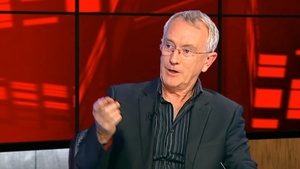
Alan Dukes (left), public interest director of IRBC (formerly Anglo Irish Bank) with Mike Aynsley, former CEO of IRBC will be on TV3 from 11:05pm.

(Mark Stedman/Photocall Ireland)

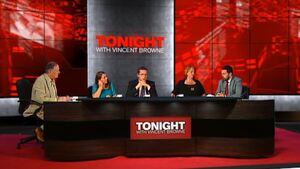
vinbvincentlouisedmcTop: (L-R) Vincent Browne, Louise Bayliss, John McGuirk, Mary Coughlan and Daniel McConnell)

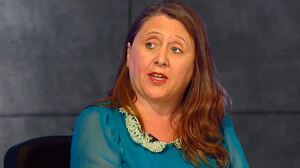
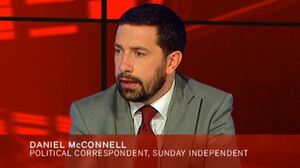
Joining Vincent on last night’s ‘Tonight with Vincent Browne’ were Louise Bayliss of SPARK, pro life media consultant John McGuirk, singer and actress Mary Coughlan and Sunday Independent political correspondent Daniel McConnell.

We pick it up from the 28:25 mark and the criminalisation aspect to the Protection of Life During Pregnancy Bill.

Later, Mary Coughlan asks John McGuirk as to what pro-life people want women who are contemplating having a termination should do?

Daniel McConnell: “I mean this is the fundamental problem with the pro life side in my view is that they seem to have no problem whatsoever with people going over to England and dealing…or people going across the border. They seem to traditionally have liked to bury their head in the sand and think that no issue has existed.”

Vincent Browne: “I don’t think that’s fair, Daniel. They’re are a lot of pro-life people deeply regret the fact this happens but don’t see a way of stopping it.”

John McGuirk: “Vincent, can I say something?”

Browne: “No, no, let Daniel talk.”

McConnell: “No, Vincent we might come from different points of view. This is an issue I have studied at length and ah we have seen a pro-life campaign dogged and kind of shredded in religious dogma and I think what I’ve sought from the get-go from Savita’s death is that we park everyone’s ideology at the door and let medical fact and evidence you know be at the core of any discussion we’ve had. But I’ve been very alarmed by a lot of the noises from the pro-life side and I’m not either one or the other. I’ve very particular views on this but I’m alarmed at the number of people who seem to think it’s no problem for people to go over to England and deal with this, as long as it’s just not on our own doorstep. And I think Billy Kelleher raised a very interesting and very very pertinent point there this evening, I mean what happens when a 14 year old girl you know, with the access to the internet ah and can go off to get this stuff, does she not run the risk of not dobbing her doctor in or, or getting herself into trouble for fear of criminal prosecution?”

McGuirk: “It’s the worst provision in the bill. It’s one of the, if not the worst provisions in the bill and it is in there and it is specifically in there and Labour TD’s have been telling their people this everytime they’re asked to placate the pro-life side because that’s what they think we want. They think we want to lock women up. It is an absolutely..every word that Billy Kelleher said there is accurate. That is a provision in the treaty, in this bill that is designed first of all Enda who genuinely thinks his backbenchers are, by the way the people wo are putting down amendmenents tonight are Colm Keaveney, he’s pro-life and voting no to the bill. Lucinda Creighton who’s pro-life and voting no to the bill. They’re the people voting for this and it’s the Labour pro-choice people who are voting to keep it in the bill and that is utterly wrong. It should not be in the bill, it should never be in the bill. In relation to the point that you made about pro-lifers being happy about people to go abroad, I regard abortion and I think nearly everyone who is pro-life is a grave wrong and something I do not want to see happen in Irish hospitals, performed by Irish doctors, happen in this country because I think we have principles as a nation and we should defend. I do not think it is practicable for me or anyone else to stand at the gates of Dublin airport and interrogate women for the reasons they’re travelling abroad anymore than it would be to interrogate a student travelling to Holland, “Are you going to smoke drugs do you know that’s illegal here?”. Or a guy travelling to Thailand to pursue whatever activities that are legal there but may not be legal here.”

McConnell: “But John just because people are travelling to England doesn’t mean the problem doesn’t exist, it just means that we’re exporting it.”

Mary Coughlan: “It’s a problem that exists now and has done for many many years. What is it that you would have us do?”

McGuirk: [Silent pause]

Coughlan: “What is it you would have us do?”

McGuirk: “This problem..”

Coughlan: “What is it you would have me do?”

McGuirk: “Well I, well I…what I’d have you do right now is…”

Coughlan: “I’m a little old now you know…I’m a…”

McGuirk: “What I’d have you do right now is, let me answer the question, which is this. Em, what I would have us do in this country which is something by the way, for a debate that is so divisive Mary, I think that if you and I can agree on nothing else this evening we should be able to agree on the fact and Louise as well, that the services that we provide to women in a crisis pregnancy in this country are not good enough. That the supports we provide to people who have pregnancies where and by the way, I’m not taking about fatal foetal abnormalities here. I’m just talking about foetal abnormalities, people who are carrying children with Down’s Syndrome or very serious issues because a lot of the abortions that happen in the UK these days happen because a child has an abnormality that is not necessarily fatal but may cause problems.”

Coughlan: “I don’t know anything about that.”

Louise Bayliss: “Do you have statistics on that because I’m not sure that’s true?

Coughlan: “I’m not sure either.”

Bayliss: “I have never heard of a woman travelling to have an abortion because she found out she had a disabled child or a special needs child. The only reason a woman travels to the UK to have a child is because it’s not wanted for whatever reason, a violation of her body or whatever, financial. I have never in my life heard a woman say…”

McGuirk: “One in every six prenatal diagnoses of Down’s Syndrome in the United Kingdom end with a live birth. One in every five prenatal diagnoses of a child with Down’s Syndrome in the United States…”

Bayliss: “How many..? We’re talking about in Ireland. How many women get on the boat in Ireland?”

McGuirk: “Since…since Roe..”

Coughlan: “How do you know that?”

McGuirk: “Since Roe versus Wade, since Roe versus Wade in the United States the number of people with Down’s Syndrome has fallen by 75%. That is a factual reality.”

Coughlan: “Do you know another fact?”

McGuirk: “A factual reality.”

Coughlan: “Do you know another fact? That people of mixed race and people of a bigger gene pool and the gene pools are getting bigger and bigger.”

McGuirk: “You want to talk about mixed races? You want to talk about mixed races? 60% of every African American pregnancies [indecipherable]”

Browne: “I’m sorry, I’m sorry John we want to go over to the Dail Lucinda Creighton is speaking.”

Watch here

Earlier: A Thousand Words

vincentSenator Healy tweetz:

If this image doesn’t sum up the Irish abortion debate I don’t know what does.


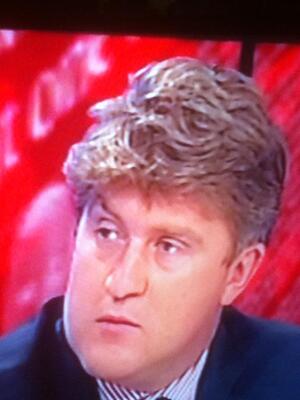
Singer and actress Mary Coughlan and pro-life media advisor John McGuirk on last night’s ‘Tonight with Vincent Browne’.

Update: Transcript here

bernard

Give it a rest.

Sandwiched between Mattie McGrath, Independent TD and Fionnan Sheahan, Irish Independent political editor and dressed like a 1970s telly detective…

It’s Bernard Durkan, veteran Fine Gael TD, out-haranguing, harrumphing and generally failng to pipe down on Tonight with Vincent Browne.

They don’t make them like this anymore.

Thanks Mark Moloney

Last night’s Tonight with Vincent Browne with economists Steve Keen and Constantin Gurdgiev and journalists Laura Noonan, Irish Independent banking correspondent, and Dan O’Brien. Irish Times Economics Editor.

We join the debate as the panel discuss the topical subject of debt relief and moral hazard.

Mind-altering confusion ensues.

Vincent Browne: “If you’re cutting household debt, it means that the
banks take a further hit.”

Laura Noonan: “It means that the banks take a hit and there’s also a real problem. There’s a real fairness argument to that because you hear all the time people,  say who are on social welfare, who never borrowed for their houses they will ultimately end up getting lower social welfare payments because the taxpayer is paying the bank to take a hit.”

Constantin Gurdgiev: “That’s nonsense. Hold on a second, Laura. That is pure nonsense because what you’re assuming is that the taxpayer in this scheme will be recapitalising the banks and…”

Noonan: “The taxpayer owns the banks.”

Gurdgiev: “This is. Hold on a second. That is. You are.”

Continue reading →

Denis O’Brien and INM, media diversity and good news versus bad news. Last night’s Tonight with Vincent Browne featuring Gavan Titley, George Hook and Carol Hunt.

Gavan Titley: “If you look at what [Sunday Independent editor] Anne Harris is arguing she’s saying there’s an absolute firewall between management and editorial. In this instance [Mahon and Moriarty tribunals], it hasn’t been proven to the final legal point that corruption took place. But what these give us together is  a highly oligarchic.”

Vincent Browne: “Final criminal…”

Titley: “Exactly..a highly oligarchic picture of Irish public life. We come to these issues around media ownership and normally, in other countries, when they debate issues of media ownership, it’s in relation to the impact of different percentages of media ownership, cross media ownership, the accumulation of power in relation to democracy. When we get here to start talking about the impact of media coverage on the media, it immediately comes back down to these angels-on-a-pinhead debates.
What we can see from the tribunals and what we can see from the way in which this story is covered is a small network of people with immense power, immense power which has been beneficial to each other over long periods of time. Immense power which has not been beneficial to vast swathes of the population in this country. And the real questions come down to this. We now have some form of public accounting of what happened in governance in Ireland, through the tribunals, with all their wastage, over a significant period of time. What we have now is an indication of the kinds of values, as we can see in these articles, that inform the way in which mainstream media, a lot of mainstream media in this country, approaches their job in relation to holding power to account, representing plurality or the public or whatever it might be. So we don’t need to prove, for example, that there isn’t a firewall between editorial and management, this is always one of the most difficult things to prove when it comes to looking at the impact of major media coverage. Looking for the smoking gun, or looking for causal factors have always been difficult to prove. But what you can look at over periods of time is what are the questions that are asked, what are the issues which are addressed, whose identities, whose social experiences, whose lives simply don’t feature in any of these newspapers or media coverage? And that’s what we should be talking about in an Ireland that’s in crisis. Not looking at this kind of royal court of oligarchs.

George Hook: “Who do you want to own the Independent?”

Titley: “I really don’t care who owns the Independent.”

Hook: “But you just said that it would benefit the Irish people. That’s what you actually said. How does a newspaper benefit the Irish people, in terms of the information it prints?”

Titley: “But when you talked about who benefits from this. You were mainly talking about the shareholders. The traditional, and somewhat quaint, idea of a newspaper, is that it informs people and that it informs people so they can act as citizens. These don’t feature in our debates in media in Ireland at all. We’re extremely comfortable with…

[They Talk over each other]

Hook: “So you don’t want it to be a public company anymore then?”

Titley: “That doesn’t follow from what I said at all. It really doesn’t bother me whether the current arrangements in the Independent Media group persist or whether Denis O’Brien takes over. What bothers me is the overall picture in terms of media diversity and it’s very interesting to look at that, in terms of the recent conference in which Nessa Childers (Labour MEP) had on media diversity where one of the things that she did for that, and I looked at the report earlier, was she did a survey of 100 journalists.
Now 100 journalists in Ireland, when you look at it is a reasonable-sized survey and what she asked them was: Has Ireland got adequate media diversity as things stand? 32% of them strongly agreed but 36.6% disagreed strongly and 20.4% disagreed quite generally. 77.5% thought that media diversity is at risk due to trends in media ownership. So while most journalists in this survey, who are quoted, would very much agree with you that when it comes to the day-to-day work of what they do and what they produce that there isn’t any kind of direct hand on their shoulder what they do see is that under current conditions we have problems with media diversity. And that has knock-on impacts on democracy. And that’s putting in brackets the fact that we don’t actually live in a proper democracy.”

[Later]

Titley: “John Lloyd, one of the editors of the Financial Times, who was also speaking at this conference on media diversity, made the point exactly as you said, strong regulation is one dimension of it. But regulatory frameworks in Europe, and elsewhere, are in trouble at the moment because of changes in the media economy. How do you regulate properly across media, how do you regulate digital media? This is quite difficult at the moment. But the other point that he makes which is well worth making is, as he put it, the reasons why owners own media rather than Apple shops is important. Now let’s go back to looking at that nexus between politics and media in Ireland. The Ireland First document, if you remember the Irish Times turned over part of its online section to this massive PDF, which was put together kindly for us by three tax exiles, who nevertheless wanted to tell citizens how they want to rejuvenate our democracy. Tony O’Reilly, O’Brien, Dermot Desmond, there were many others involved in it. Ray McSharry, John Bruton, Peter Sutherland. One of their recommendations for political reform was to look at the media and, to quote, “There needs to be a positive engagement between editorial and ownership senior management of media organisations in order to ensure we have balanced coverage and good news stories are covered”. Now, as one element of political reform what this group of politicians, and former politicians, media owners and consultants, were arguing, was that there need to be, essentially, political interference in the media in Ireland to guarantee good positive stories. We know what good positive stories means. They mean you don’t report in anyway the fact that we have a massive crisis of capitalism in Europe or elsewhere because a report on that would endanger the conditions for the sovereignty of profit, which is ultimately all they are interested in. Now that’s why this is of interest in this discussion, more than Murdoch in the States. Because this is particular to Irish democracy at this moment in time.

Browne: “There’s an issue that arises out of what Gavan has just said. The coverage of our circumstances and the economy right now. Eamon Gilmore said, at the Labour party conference that the present Government can turn the economy around. Enda Kenny said more or less the same at the Fine Gael party conference a few weeks ago. The reality is that we are in dire circumstances yet again. Last year, by the most reliable measurement of economic performance, namely GNP, the economy contracted again by 2.5 per cent. And in the last quarter of last year, it contracted by 7 per cent. Now how is it that that hasn’t got much attention in the media at all, that we are in the midst of a really vicious double-dip recession. It’s a bit odd.”

Hook: “Do you want an answer to that?”

Browne: “Yeah.”

Hook: “The reason is that people don’t actually want to hear it. And that’s the primary reason. People don’t want to hear it. That you cannot start at dawn in radio, television or newspapers, until nighttime, with a diet of bad news.”

Carol Hunt: “Or excessively good news, unless it’s true.”

Hook:” The old idea that bad news sells newspapers no longer exists. Because such is the nature of the bad news that people are actually turning off their radios and are ceasing to buy newspapers.”

Browne: “But is that good enough? If we have an obligation to tell it how it is, how come we’re not telling it how it is? How come the media are not telling it how it is?”

Watch here