Dr Edel McGinnity
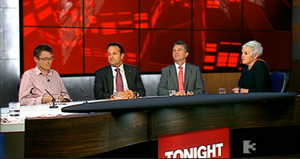
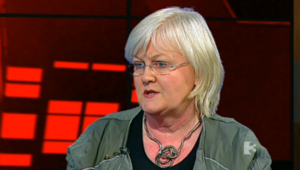
Dr Edel McGinnity, of Riverside Medical Centre, Mulhuddart Village, Mulhuddart, Dublin 15, spoke on Tonight with Vincent Browne last night about what it’s like being a GP in her area.
Dr McGinnity had given a presentation for the Irish Cancer Society about the chaos in the health service’s primary care and the inequality this represents for people from disadvantaged communities.
Edel McGinnity: “I’m a GP in northwest Dublin, in Mulhuddart. I’ve been there since 1995. I trained in Dublin, worked in Mozambique for a few years and then came to work in northwest Dublin.”
Vincent Browne: “What’s it like in Mozambique?”
McGinnity: “Well, it was very different, it was very interesting, it was a really stimulating place to work. It was the poorest country in the world at the time but it had a very, highly developed primary care system so I actually loved it there. It was very tough work, it had very high mortality there but I really liked working there.”
Browne: “Like, better than working where you work now?”
McGinnity: “No but, as I say, different. But I didn’t expect to find, that I would find the work just as challenging when I came back to Ireland. I had expected that it would be easier because Ireland is such a better off country.”
Browne: “Ok, how is it challenging?”
McGinnity: “Well, people who live in areas of most disadvantage in this country are three times more likely to die from cancer than people who live in the most affluent areas. They’re more likely to die from all causes, they’re twice as likely to die from all causes but they’re three times as likely to die from cancer. And they die younger and they get multiple illnesses at a much earlier age. So that’s been a difficult thing to deal with over the years.”
Browne: “Tell us about you practising medicine and what do you come across in relation to all that?”
McGinnity: “Well, for example, in my practice last year, in people under 65, where the mortality is more noticeably higher in these areas, there were 10 deaths in my practice last year, in people under 65, where you would expect the national average, now not the most affluent, but the average death rate you would expect between four and five deaths a year and in mine there were 10. So that reflects the part of northwest Dublin that I’m in, it actually has the highest cancer rate mortality in the country from a recent health-geo-infomatics study, from Maynooth….Inequality is the biggest predictor of early mortality.”
Later
McGinnity: “If you have a health service that’s distributed according to numbers, as opposed to need, then what you have is, for example in southeast Dublin, which is an affluent area – you have, we’ll say 1,000 patients. So you’ve got one GP, one public health nurse, one service, one physio, for those 1,000 patients.
But if you have the same service then, in northwest Dublin, one GP, one physio, one whatever service but you have twice as many people who are going to die within those 1,000 people. Twice as much sickness. So, in fact, you have twice as much sickness but you still have only the same number of health service provision, so you’re actually offering people half the service. And I’ll explain to you in a moment that, in north Dublin, there isn’t even one professional GP for 1,000 patients because the provision of GPs in northwest Dublin is so poor. So that’s a sort of double whammy.”
Browne: “And the reason for that is because of the extension of GP care to over-70s people and to people over-70s and people in the higher income, that GPs will look after the people who are better off and have medical cards, get paid more for looking after those people than they get paid for looking after people who are less rich?”
McGinnity: “Yes, that’s one factor. That’s definitely one factor.”
Browne: “It’s quite astonishing.”
McGinnity: “It is astonishing, yeah.”
Browne: “It’s led to a situation where GPs have migrated from the poorer areas into richer areas.”
McGinnity: “Yes and there’s a number of reasons why GPs won’t work in areas where I work – the work is complicated, there are more people, they are more sick, there’s a lot of risk involved, risk with mental health problems, with addiction, with child protection – it’s very stressful work. The medical card system is paid according only to age with no provision for need. So, whether a patient attends once, ten or 100 times, or no matter how complicated that visit is, the payment is still the same and because it’s age-related, in big parts of the peripheries of the major cities, where the populations are very young, the payment is actually 30% less than the average. So you have a lot of people who are much sicker and the payment is actually 30% less. So that’s why it’s impossible to get a GP. There’s one GP for 2,500 people in the greater north Dublin area. In northwest Dublin, it’s one GP for 3,500 people and the national average is one GP for 1,600. So in northwest Dublin you have half the GPs for people who are twice as likely to die and twice as sick. That’s the inverse care law.
Later
McGinnity: “We have a whole other type of Tiger mother out in Blanchardstown, just busy, out, hunting and foraging and protecting their kids and their families and they don’t put their own health needs first. So they don’t respond well to screening. Then, when they do have a GP, as I said, in parts of northwest Dublin, many of them don’t have access to a GP.
Even when they have a GP, it’s not so easy to actually do things like cancer screening and prevention because of the nature of the problems that these people come in with. So a typical patient in my practice, for example, I’ll call her Catherine. Fifty-three-year-old lady, comes in with, she has diabetes, she’s chronic lung disease, and she has eczema. Now that’s very typical of any patient, anywhere across the country. We don’t just do blood pressures like people think, we all manage chronic illness and complex illness, all the time. But what makes it different is that there are more of these patients, they’re younger, with their multiple illnesses and they’re really complicated by social problems.
So, in the case of Catherine, it’s that she has a 14-year-old who has behaviour problems. In the background, she’s still smoking, her diabetes isn’t controlled, and her smear has been overdue for a year. So before I call her in, my computer system tells me, this smear is overdue, you’ve got to do it. She’s missed her nurse’s appointment. So she comes in, she has a chest infection today and a flare-up of eczema and we start dealing with all of those. And then the phone rings, this is very typical of a day in my practice, the phone rings and you wouldn’t dream of answering the phone when a patient was with you but, in this case, it’s child protection social worker, these things crop up all the time and I have to take the call. So Catherine has to leave the room, I take the call, I make the notes, Catherine comes back in and then she tells me that her niece died three weeks ago and she’s really upset about that and she hasn’t been sleeping. She needs a letter for clothing which is really urgent and she needs it today. And her son has just been suspended from school. So she’s really worried about that. So we start into all of that and meanwhile, the waiting room is filling up, there’s more Catherines outside, waiting to get all these things done.
So we work our way through all that. We deal with the chest infection, the eczema, we look at her diabetes medications but, actually, she was eating very badly all around the time of her niece’s funeral so we postpone that until things are better. We talk about her sleep and the bereavement and all the other bereavements. We talk, at great length, about her son, and I undertake to do a letter later for the child psychiatry service and for the school. We make another appointment, we do the clothing letter because that has to be done right there and then. So we do all that and then we remember the smear and that we haven’t talked about her smoking. But I don’t feel like talking to her about her smoking today after her story about the bereavement. And I say to her, ‘we’ve got to do this smear’, ‘oh’, she says, ‘I’m just not in the humour, doctor’. And, you know what, I’m not in the humour for the smear either, after all that. And that’s how it is, these patients don’t get the care that they should have because they have two many acute health problems and acute social problems for us to be able to deal with all of that in the ten minutes that’s allocated to a GP consultation.”
Later
McGinnity: “The vast majority of GPs in this country are available every day for people so we are very accessible to people. We could reach the hard to reach but we’re too busy dealing with the day-to-day stuff to be able to do the really important work so, even if you do suspect cancer then, when you get a patient who..it’s really important to say that if you seriously think somebody has cancer, you get that patient seen. If I contact any of my hospital colleagues with a fax or a phonecall saying, ‘I think I’ve somebody here that has cnacer, they will be seen very quickly’. But there are 24 million consultations in general practice every year – you can’t send everybody for scans and tests and to the hospital. So if you’ve a patient who’s in that inbetween group where you’re this worried, but you’re not sure…say, for example, you had a middle-aged patient who has abdominal pain, out of the blue, a tiny bit of blood test changes in their liver for example and you’d really like an ultrasound, it could be something simple. It could be gallstones, it could be just fatty liver, it could be nothing at all but it could be pancreative cancer, it could be ovarian cancer in a woman. So an ultrasound is really helpful.
My patients in northwest Dublin wait an average 11 months for an ultrasound. If you live in southeast Dublin, and you have a medical card, you can have an ultrasound in eight weeks and, if you have health insurance, you will have an ultrasound tomorrow. Or, if you can pay, you can have it tomorrow…
The inequality within the public system. I mean, if you have private health insurance, that’s another level of inequality but even within the public system there are huge differences. So my part of the city, where people have the highest death rate from cancer, have the least access to healthcare. Colonoscopies are another example of a service that is really good for diagnosing colon cancer – the second most common cancer in this country. I had a patient last November who presented, again with not a definite worry – you know it wasn’t the so-called red flag, didn’t have weight loss, didn’t have bleeding but he had a change in bowel habits and, you know, essentially, I needed to know well why is this happening. I’d like him to have a colonoscopy. He waited seven months for that colonoscopy publically. And if he had been a public patient in South East Dublin, it would have been done in three months.”
Browne: “If he was a private patient?”
McGinnity: “If he was a private patient,”
Browne: “Or a public patient…”
McGinnity: “Yes, a public patient. If he’d been a private patient, he’d have had it in two weeks. So, you know, so that’s the kind of barriers you’re up against when you work in these areas. And, finally, and even when people do get into the hospital system, that’s not so easy either because they’re notoriously unreliable. Patients, we’re accused of having them where they don’t, where there’s been disappointments. And, you know, the hospitals then, it’s kind of one strike and you’re out now. If you miss one appointment you’re out, you’re back to the bottom of the list.
And I mean the reason people miss appointments…it’s obviously very frustrating for the hospital but the hospitals are rigid, they’re set up to suit themselves, they don’t make any provision for the kind of complications that people have in their lives, like I mentioned about the screening, moving house, there’s a huge flux in housing in the area that I work in or phone numbers changing or simply the vicissitudes of life. I mean, in the area that I’m in, a couple of weeks back, three young men died in the space of a week. And the whole community was devastated, you know, so people were too busy going to funerals that week to keep appointments. Now, in our practice, we have a system for that where, if we know they have an appointment – which we don’t always know, because the hospitals don’t always tell us – we will take the time to phone them and text them about those appointments to remind them because it’s coming from us ,and they trust their GP, they’ll often respond to that and go but that’s very time consuming for us.”
Browne: “So what can be done?”
McGinnity: “Well the most important thing that can be done is to allocate resources according to need and not according to numbers. There are, you know, we know there’s no money – that has been repeatedly stated, although there is money for bridges and road and stuff, whatever about that. But even within the health service, where there’s no money, I would challenge where the money goes. For example, the new proposals to give free GP care to under sixes. I mean it sounds good, it sounds equitable and universal and all children of the country will be treated equally but actually that’s a direct aggravation of this inverse care law. While there are patients getting half a service, people with the highest mortality are getting half a health service and yet money is being targeted at the healthiest people in the country, under sixes with, you know, higher incomes. There are examples of targeting resources where they’re needed. My practice is involved in a methadone protocol which is a special system where resourcing care for drug users who have the highest mortality of anybody under 65 and it’s a fantastic scheme that has made a huge difference to patients and all their families so I would, that would be the biggest thing, to direct resources to where they’re needed most, to where the people are sickest and most likely to die.”
Watch back in full here