
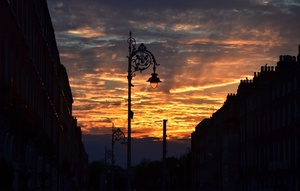
 [Click to enlarge]
Oh my.
Wayne F writes:
Taken by DFC Photography (otherwise known as my wife).



[Click to enlarge]
Oh my.
Wayne F writes:
Taken by DFC Photography (otherwise known as my wife).
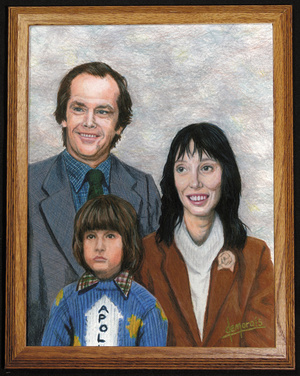
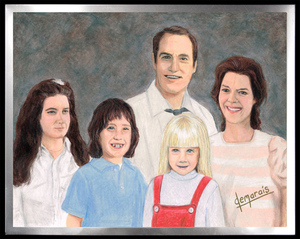
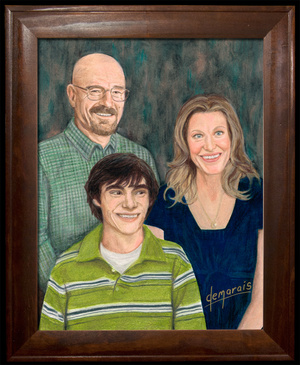
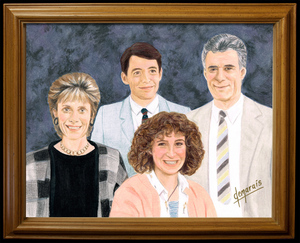
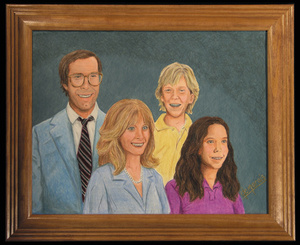
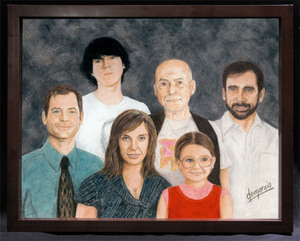 These portraits of fictitious movie and TV families by Kirk Demarais occupy a curious nexus point between technically good and not quite right, affectionate and unnerving, FTW and WTF.
Whatever it is, we can’t stop looking at them.
Go to his site right now. You’ll see. Oh, you’ll see all right.
 Fair enough.
Thanks Katriona Furey
httpv://www.youtube.com/watch?v=YXXXwYGEX8k
UK-born, Galway-bred and Berlin-based writer Julian Gough and Olaf Tyaransen – in a short GAF TV [Galway Arts Festival] film – gently tripping around some old Galway haunts, including the dole office and The Warwick.


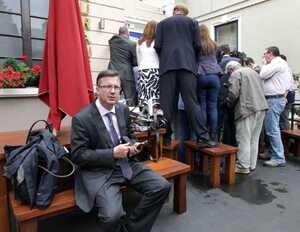 Members of the press interview Enda Kenny outside the Mansion House, Dublin, this afternoon following The National Standards for the Protection and Welfare of Children launch. That’s Kenny’s chief of staff Mark Kennelly texting something important.
(Mark Stedman/Photocall Ireland)

The best review I saw of the book was by then editor of 2000AD Andy Diggle declaring that if it had passed his desk he’d have rejected it as yet another badly executed virtual prison story.
I hated the book so much I’m surprised I didn’t burst into flames with the heat of a thousand suns from the rage it induced.
Release Date (Ireland): Whenever. I don’t care [December 21]


 A new city guide from Hot Press.
Launching tonight. On sale tomorrow.
Paul Trainer writes:
his special magazine is a snapshot of Dublin right now and a showcase for the best of the city over 114 pages. Guest restaurant critic Shane MacGowan reveals his top ten Dublin restaurants, Rachel Allen gives her recipe for an ideal Dublin picnic and Kathryn Thomas describes her perfect Dublin day. Best of Dublin will also feature recommendations from Irvine Welsh, Rosanna Davison, Shay Healy, Paul Howard, Angela Scanlon, Ruth Scott, Stuart Clarke, Niall Stokes, Louise Johnston, Daniella Moyles, Abie Philbin Bowman and Ross Lewis.
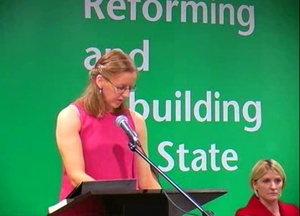 Dr Elaine Byrne (above) spoke at the MacGill Summer School in Glenties, Co Donegal On Monday on the module entitled The Mahon & Moriarty Tribunal Reports- How Was It Allowed To Happen?
“The title of my short speech is Official Ireland and how official Ireland has tended to see things in the past.
So the title of this is Why Mahon and Moriarty Was Allowed To Happen? But this is not about Mahon and Moriarty. This is about the Ryan Report, the Murphy Report, the Ferns Report, the Cloyne Report. It’s about the Morris Tribunal. It’s about what happened with that Dr Neary in Drogheda and it’s about every single inquiry in public life that we’ve had in Ireland in the last 15 years because a lot of the same things happened.
For instance, in the Ryan Report, you have this incredible piece of testimony from a guard. A policeman. A man, the upholder of law and order, where he writes to the Department of Education in 1949 about his concerns about an industrial school. A guard is writing to the Department of Education about his concerns about an industrial school. Not the other way around.
‘For some time past I’ve been receiving complaints from parents having children in Greenmount Industrial Schools. They look cold and miserable looking. Now I’m a particular friend of the brothers in Greenmount and have no wish to do them any injury to them and their good work. I do hope this matter will be treated in confidence as I do not wish it to be known that it was I that brought that matter to attention.’
That’s what Official Ireland did in the 1940s, 50s, 60s, 70s and 80s in relation to child sexual abuse in this country. And when people, like, awkward people, people that kept asking questions, people like Frank Crummey, the social worker.
He kept writing to the departments in social welfare and kept confronting the people who were involved. He was threatened with physical violence and social ostracisation that his family first endured when he spoke about child abuse in the Christian Brothers 40 years ago.
And the other interesting thing that I found out about the Ryan Report was the Department of Education’s attitude to people who complained such as Tim O’Rourke. And, according to the Ryan Report, it was not about how to investigate his complaint but what to do about a troublemaker who had complained. And that really was Official Ireland’s attitude to many things in public life – whether it was the church or the other inquiries that I’ve listed.
And often it was outsiders who spoke the truth. It was people like Eugene McErlean, from Northern Ireland, the former head of the AIB who blew the whistle on fraudulent practices within the AIB in the early 2000s.
Or a man like Patrick McGuinness, who was the accountant for Larry Goodman who was interviewed by Susan O’Keeffe when Susan O’Keeffe was a journalist in the UK. Not a journalist in Ireland, a journalist in the UK.
And Patrick McGuinness had emigrated to Canada. He wasn’t able to say what he wanted to say from Ireland. And you had people like Joe Murray and Padraig Mannion who demonstrated how there was fraud within the meat industry.
And for their troubles an apology – I’ll come back to apologies in a moment – an apology was demanded and they were disciplined for their troubles.
And there’s a whole series of people in Irish public life, like those people I’ve mentioned and, in particular, someone like Joe McAnthony.
In 1973 he wrote about the stuff that Michael [Smith,Village magazine] spoke about, the stuff we already knew. But 40 years later it took for the Moriarty Tribunal, the Mahon Report and the McCracken Tribunal to confirm what he had already said.
‘My life was pretty much over as a journalist. Everything I worked on in RTE was closed down. I couldn’t work in the Independent anymore. Nobody would hire me. I had four children. So we had to go. I was essentially expelled from Ireland.’
And that’s what Official Ireland has done to individuals who have tried to speak the truth. And I would argue that perhaps we’re still doing it. And I would also argue that people like Joe McAnthony and Padraig Mannion and Joe Murray and Sheenagh McMahon, who was the whistleblower in the Morris Tribunal.People like Michael Smith, and other people – there should be some official acknowledgement for their duties and citizenship that they have done and the service they have given to this country over a number of years.


 A branding concept for Copenhagen fashion store PARISTEXAS by Danish design agency Scandinavian Design Lab what sez:
With this contrast-filled universe, the solution seeks not only to break with the traditional perception of beauty and fashion – it also challenges the classic approach to working with identity. The primary identity element is not only a logo, but also a symbolic universe with a life of its own.
Fair enough so.


